The Big Picture Before Considering a Minpaku Investment in an Otaru Traditional House
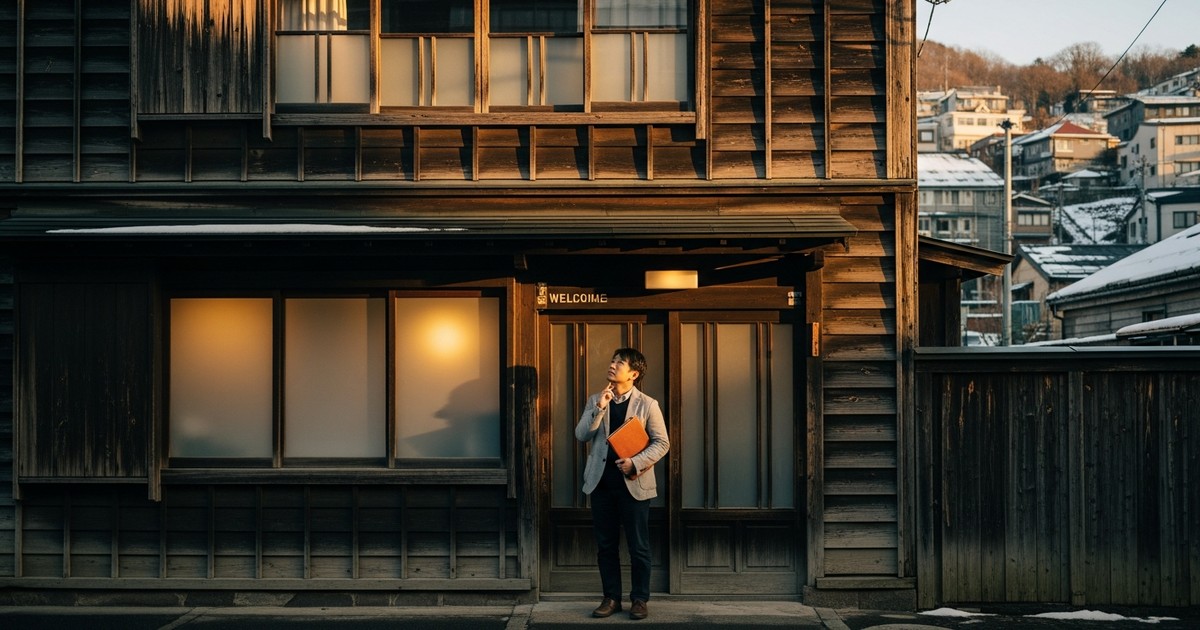
For anyone looking to start a minpaku (vacation rental) investment in Otaru, running a rental in a traditional Japanese house is an appealing option. The historic port town of Otaru still boasts numerous stone warehouses and wooden merchant houses built during the Meiji and Taisho eras, and projects to revive these buildings as accommodation facilities are attracting growing attention. However, because traditional houses come with their own renovation costs and regulatory hurdles, it’s essential to carefully calculate the cost-benefit balance before diving in.
This article walks through the acquisition costs, renovation costs, operating expenses, and projected returns for using a traditional house in Otaru as a minpaku investment property, backed by concrete figures. Rather than starting out on a vague sense that “this seems profitable,” we’ll break down each element in detail so you can make decisions based on realistic simulations.
Please note that the figures used in this article are estimates based on general market rates and past case studies, and will vary depending on the specific property and timing. Before making any investment decisions, be sure to conduct an on-site inspection and consult with professionals.
Market Rates for Acquiring a Traditional House Property in Otaru
The Relationship Between Building Age and Price Range
Traditional houses in Otaru that are 50 years old or more can often be acquired for around 2 million to 8 million yen. In particular, properties in areas more than a 10-minute drive from Otaru Station, or in the Asari and Shioya districts, are sometimes available for prices in the 1-million-yen range. On the other hand, properties near the main tourist areas—such as Sakaimachi Street or around the canal—can command prices from 10 million to 20 million yen.
Stone warehouse-style properties over 80 years old carry significant historical value, but often come with structural issues. It’s important to conduct an inspection (building condition assessment) before purchase to check the condition of the foundation, roof, and plumbing. Inspection costs typically run between 50,000 and 150,000 yen.
Property Tax and Maintenance Costs
Because traditional houses in Otaru tend to have low assessed values, annual property tax in most cases falls between 30,000 and 100,000 yen. However, if you undertake major renovations for minpaku use, the assessed value of the building may rise, potentially increasing your tax bill—sometimes to as much as 150,000 to 200,000 yen annually, depending on the scope of the work. It’s wise to consult a tax accountant at the renovation planning stage.
Another maintenance cost unique to Hokkaido is snow removal. Otaru is a heavy snowfall region with annual accumulation exceeding 600 cm, and clearing snow from the roof and grounds typically costs 100,000 to 300,000 yen per year. This is a point that remote owners often overlook.
Breaking Down the Cost of Renovating a Traditional House for Minpaku Use
Structural Reinforcement and Insulation Work
When converting a traditional house into a lodging facility, seismic reinforcement and insulation upgrades are typically the first priorities. Winters in Otaru can see temperatures drop below minus 10 degrees Celsius, so ensuring adequate insulation performance directly affects guest satisfaction. Seismic reinforcement typically costs 1 million to 3 million yen, while insulation work (insulating walls, floors, and ceilings, and installing double-pane windows) runs 1.5 million to 4 million yen.
When repurposing a stone warehouse in particular, since the stone walls themselves offer no insulation, a new insulating layer must be installed on the interior, which tends to push costs higher. With wooden traditional houses, on the other hand, it’s sometimes possible to keep costs down by blowing insulation material into the existing wall cavities.
Renovating Plumbing and Fixtures
Renovating the kitchen, bathroom, and toilet is one of the most critical investment areas for minpaku operations. Plumbing in older houses is often deteriorated, and cases requiring a complete overhaul of water supply and drainage pipes can cost 800,000 to 1.5 million yen. As a general breakdown, installing a new unit bath runs 500,000 to 1.2 million yen, converting to a Western-style toilet with a heated washlet costs 200,000 to 400,000 yen, and installing or renovating a kitchen costs 600,000 to 1.5 million yen.
Since minpaku guests generally prefer having a space where they can cook for themselves, you’ll also need to install appliances such as an induction cooktop, refrigerator, microwave, and a full set of cookware. Budget around 300,000 to 500,000 yen for the initial investment in appliances and furnishings.
Interior Design and Furnishings
What sets a traditional-house minpaku apart is interior design that makes the most of its historic charm. The technique of intentionally exposing beams and pillars—showcasing the “old wood”—can create atmosphere while keeping additional costs down. Refinishing flooring costs 200,000 to 600,000 yen, re-plastering walls with lime plaster runs 150,000 to 400,000 yen, and lighting design costs around 100,000 to 300,000 yen.
For furniture and interior items, sourcing from local antique shops and recycle shops can help keep costs down while building an authentic Otaru atmosphere. Bedding (futons and beds) costs 30,000 to 80,000 yen per set, and you’ll need enough for your maximum occupancy. For a property that sleeps 6, bedding alone will cost 180,000 to 480,000 yen.
Fire Safety Equipment and Regulatory Compliance
You’ll need to either file a notification under the Private Lodging Business Act (the minpaku law) or obtain a license under the Hotel Business Act. Regarding fire safety equipment, installing an automatic fire alarm system costs 300,000 to 800,000 yen, guide lights cost 50,000 to 150,000 yen, and fire extinguishers cost a few thousand to 20,000 yen. Since required equipment varies depending on total floor area and building structure, it’s essential to consult with your local fire department in advance.
If you obtain a simple lodging business license under the Hotel Business Act, some municipalities relax the requirement for front desk facilities, but you’ll still need to comply with Otaru City’s specific ordinances. The fee for having a licensed administrative scrivener (gyoseishoshi) handle the license application typically runs 150,000 to 300,000 yen, and you should expect the process from application to approval to take one to three months.
Total Renovation Cost Simulation
Adding up all the items covered so far, and depending on the condition and scale of the traditional house, total renovation costs generally fall within the following ranges: 5 million to 8 million yen for a relatively well-maintained property requiring only minimal renovation, and 10 million to 18 million yen for a property requiring major structural reinforcement and a full facilities overhaul. Including the property acquisition cost, a total initial investment in the range of 7 million to 25 million yen is a realistic benchmark.
One way to reduce costs is to take advantage of subsidy programs offered by Otaru City or Hokkaido. Subsidies aimed at preserving historic buildings, or grant programs related to utilizing vacant houses, are sometimes available, potentially covering several hundred thousand to several million yen. Since applications typically require submitting a project plan in advance, be sure to check with the municipal office before starting renovation work.
Simulating Payback Based on Projected Revenue and Occupancy Rate
Setting Nightly Rates and Occupancy Assumptions
Nightly rates for minpaku properties in Otaru vary significantly depending on location, capacity, and season. For a whole-house rental traditional house near the canal or Sakaimachi area that sleeps 6, a good benchmark is 25,000 to 40,000 yen per night during peak season (July–August, the December–February ski season, and Golden Week), and 12,000 to 20,000 yen per night during the off-season. Let’s assume an average annual nightly rate of 18,000 yen.
Occupancy rate depends heavily on the quality of operations and marketing capability. For a property with a solid review history on platforms like Airbnb, a realistic target is an annual occupancy rate of 60–70%, or 40–50% during the first year of operation. Here, we’ll run our simulation using a 60% annual occupancy rate (219 nights per year).
Estimating Annual Revenue and Expenses
At a nightly rate of 18,000 yen × 219 nights per year, annual revenue comes to approximately 3.94 million yen. The main expenses deducted from this are as follows: platform fees (3–5% of revenue) at around 120,000–200,000 yen; cleaning fees (5,000–8,000 yen per cleaning × 219 times) at around 1.1 million–1.75 million yen; utilities at 300,000–500,000 yen annually; consumables and linen replacement at 150,000–250,000 yen annually; and, if using a property management service, fees ranging from 10% to 30% of revenue (depending on the company and scope of service), amounting to roughly 790,000–1.18 million yen.
When using a property management service, total annual expenses come to approximately 2.46 million–3.88 million yen, putting operating profit in the range of 60,000–1.48 million yen. If you handle operations yourself and eliminate management fees, operating profit improves to roughly 850,000–2.3 million yen. That said, self-management requires considerable effort for guest communication, cleaning coordination, and handling issues, making a management service the more practical choice for owners based remotely.
Estimated Payback Period
Assuming an initial investment of 15 million yen and annual operating profit of 1 million yen (using a management service, mid-range estimate), a simple calculation puts the payback period at 15 years. If initial investment can be kept to 8 million yen, that shortens to 8 years, and if profit reaches 1.5 million yen, payback comes in around 5 years and 3 months. This is a somewhat longer payback period compared to typical real estate investments, but when you factor in the potential appreciation in property value and rising nightly rates driven by growing inbound tourism demand, it’s a level of return well worth considering.
Also note that if you operate under a notification filed pursuant to the Private Lodging Business Act, the number of operating days per year is capped at 180, which will reduce revenue compared to the estimates above. Obtaining a simple lodging business license under the Hotel Business Act removes this day cap, but raises the bar for obtaining approval. When building your payback plan, be sure to clearly decide which operating format you’ll use before running your simulation.
Practical Tips for Succeeding with a Traditional House Minpaku Investment in Otaru
Criteria for Choosing a Location
The main tourist route in Otaru runs from Otaru Station through the canal area and Sakaimachi Street to Minami-Otaru Station. Properties within a 15-minute walk of this route tend to have higher occupancy rates and can more easily maintain strong nightly rates. On the other hand, there’s a solid segment of travelers drawn to the concept of “staying in a traditional house in a quiet setting,” so properties further from the station can still be a winning bet depending on how you position your target market.
Whether a property has parking is also an important factor. Many domestic travelers visiting Otaru arrive by rental car from Sapporo, so a property with free parking already has a competitive edge. If securing parking space is difficult, consider partnering with a nearby coin-operated parking lot.
Differentiation Strategy and Pricing
The minpaku market in Otaru still has more limited supply compared to Sapporo or Niseko, but differentiation is still essential to avoid getting dragged into price competition. Effective ways to leverage the unique experiential value of a traditional house include installing a wood-burning stove (initial cost of 300,000–600,000 yen), incorporating Otaru glass lighting fixtures and tableware, and offering welcome sets made with local ingredients.
When it comes to pricing, introducing dynamic pricing (adjusting rates based on demand) is directly linked to maximizing revenue. During the Snow Festival period and ski season, you can set rates 1.5 to 2 times higher than usual. Conversely, offering discounted rates during quiet weekdays to attract workation guests, and other flexible pricing strategies, will help raise your overall annual occupancy rate.
For Minpaku Management Support, Talk to Stay Buddy Inc.
If you’re considering turning a traditional house in Otaru into a minpaku investment property, consult with Stay Buddy Inc., a company with a proven track record in minpaku property management. We provide one-stop support that covers everything from property selection and renovation planning to license applications, and guest communication and cleaning management once operations begin.
For owners living far from the property, managing operations on-site can be a significant burden. Stay Buddy Inc. handles reservation management, guest communication, review responses, cleaning coordination, and issue resolution all in one package, making it possible to run a stable minpaku operation even while maintaining your primary career.
We also offer individualized proposals for cost-benefit calculations and revenue simulations based on specific property information. Please feel free to contact us at any time. We’re committed to being the partner that helps make your minpaku investment in Otaru a success.