Leave Your Minpaku Management to the Experts
100% Free Online ConsultationCan You Still Operate on a Road Narrower Than 4 Meters? Why Treating a Property as “Housing” Under the New Minpaku Law Can Save Your Back-Alley Property
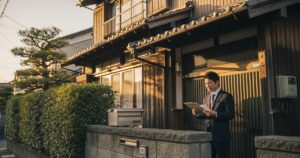
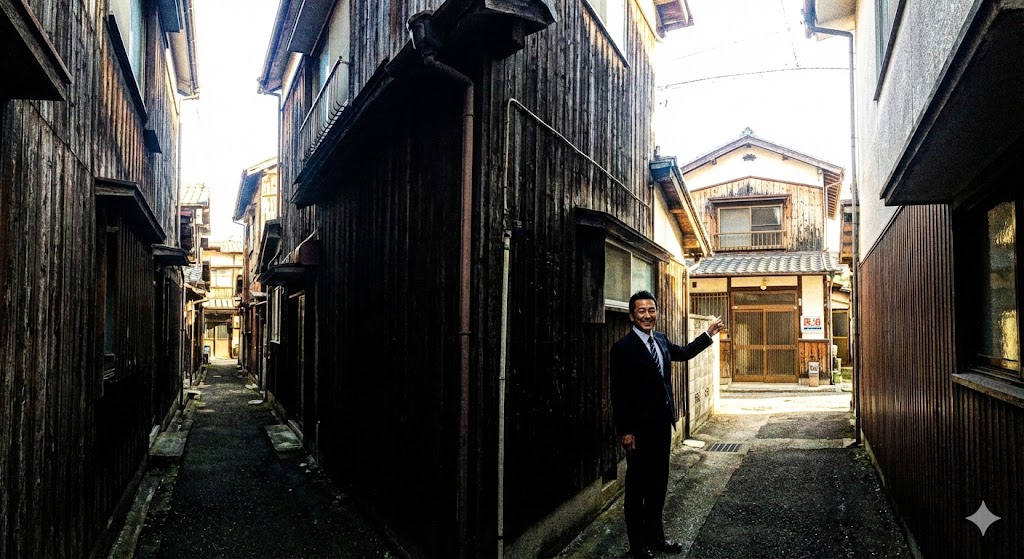
Walk through the streets of Osaka and you’ll come across charming old machiya townhouses and row houses tucked away at the end of narrow alleys—alleys so tight not a single car could pass through. In the post-Expo inbound tourism market, properties that offer this kind of “deep Japan” experience are in extremely high demand among foreign visitors. And yet, many investors and operators simply won’t touch them.
The biggest reason? The road in front of the property is narrower than 4 meters—a violation of the setback (road access) requirement—which means the property can’t obtain a hotel or simple lodging license under the Hotel Business Law. In the real estate industry, these are known as “properties that cannot be rebuilt,” treated as troublesome assets that can neither be reconstructed nor have their use changed.
But there’s no need to give up. Let’s cut to the conclusion of this article right away.
Even a property with a substandard road frontage of less than 4 meters can legally operate as accommodation by leveraging the Private Lodging Business Act (Japan’s “new Minpaku Law”). By using this legal mechanism—which allows a building to remain classified as “housing” while sidestepping the “change of use” requirement mandated under the Hotel Business Law—you can dramatically transform a bargain-priced back-alley property into a high-yield income asset.
In this article, we’ll explain the legal background behind why narrow roads block hotel conversion, the mechanism within the new Minpaku Law that overcomes this barrier, and concrete strategies for turning a “problem property” into your most powerful investment asset.
The Hotel Business Law and the “4-Meter Wall”: Why Back-Alley Old Houses Can’t Become Hotels
First, let’s properly understand the mechanics of the “Building Standards Act wall” that trips up so many operators.
What Is the “Road Access Obligation” Under the Building Standards Act?
Japan’s Building Standards Act imposes strict rules to ensure that fire trucks and ambulances can respond quickly during disasters like fires or earthquakes, and that residents can evacuate safely. The core of this is Article 43, the “road access obligation.”
As a general rule, **”a building’s lot must front a road at least 4 meters wide, with at least 2 meters of frontage.”**
In Osaka’s older neighborhoods and traditional shitamachi districts, countless homes face narrow alleys (private roads or passageways) only 2 or 3 meters wide. These were built before current regulations were established, and once demolished, they can never be rebuilt because they don’t meet today’s standards. This is why they’re called “properties that cannot be rebuilt.”
The Current Regulatory Barrier Facing “Change of Use”
Many people think, “If I can’t rebuild, why not just renovate the existing old building and turn it into a hotel (simple lodging facility)?”
However, converting a standard detached house into accommodation under the Hotel Business Law requires a legal procedure called **”change of use,”** switching the building’s designated purpose from “residence” to “hotel/inn.”
When you file a change-of-use application with the local government, the building is strictly examined to confirm it “complies with the current Building Standards Act.” This is where the “substandard road access”—a road narrower than 4 meters—becomes a fatal flaw, and the change of use is denied. As a result, obtaining a hotel business license for a back-alley old house is, in practice, virtually impossible.
The Groundbreaking Mechanism That Lets You Operate as “Housing” Under the New Minpaku Law
If you can’t obtain a hotel business license, does that mean a back-alley old house is doomed to sit vacant and decay? This is where the savior appears: the Private Lodging Business Act (commonly known as the “new Minpaku Law”), which took effect in 2018.
The Biggest Advantage: No Change of Use Required
The biggest revolution the new Minpaku Law brought to the world of real estate investment comes down to this: **”you can host paying guests while keeping the building’s designated use as ‘residence.'”**
Because you’re not converting the use to “hotel/inn” as you would under the Hotel Business Law, you don’t need to undergo the strict current-code compliance review that a change of use under the Building Standards Act would trigger. In other words, if a long-standing house still legally exists as “housing” today, it can be interpreted as continuing to be used as housing—even if it doesn’t meet the road access obligation (i.e., even if it’s a legally nonconforming existing structure).
A Simple Notification Opens the Path to Legalization
The new Minpaku Law operates on a “notification” system rather than a “permit” system from the authorities.
As long as you meet the facility requirements (having the four essentials: kitchen, bathroom, toilet, and washbasin) and submit the necessary documents to the prefectural governor’s office, you can start operating as a legal minpaku.
Back-alley properties with roads narrower than 4 meters—once written off as “can’t be rebuilt, can’t become a hotel”—are suddenly brought back to life as inbound-ready accommodation through this law.
3 Reasons Why “Back-Alley Property × New Minpaku Law” Is a Delicious Investment
Some of you might wonder: “I understand it’s legally possible, but can you really turn a profit under the new Minpaku Law’s 180-day annual operating limit?” In fact, the combination of back-alley properties and the new Minpaku Law creates an extremely capital-efficient (high-ROI) business model, for the following reasons.
1. Dramatically Low Acquisition Costs
Properties with substandard road access—the “cannot rebuild” type—struggle to secure mortgage financing and are typically avoided by ordinary home buyers. As a result, they’re often dumped at fire-sale prices: half the market rate, or in some cases just a few million yen.
Because the initial investment (acquisition cost) is kept so extraordinarily low, even with the annual operating cap of 180 days, the speed of capital recovery far outpaces that of expensive newly built hotels or minpaku in downtown condominiums.
2. A “Deep Japan Experience” That Delights Foreign Guests
To Japanese people, an “old row house down a car-inaccessible alley” might seem like nothing but an inconvenience. But to visitors from the West or elsewhere in Asia, it’s a premium entertainment space—an authentic, immersive slice of Japan you won’t find in any guidebook.
By preserving the retro exterior charm and warmth of the wood construction while renovating just the plumbing, fixtures, and beds to modern, spotless standards, you can confidently set premium rates—think tens of thousands of yen per night for a whole-property rental—and still fill your bookings.
3. Beating the 180-Day Cap with a Hybrid Monthly-Rental Model
The most powerful operating strategy for overcoming the new Minpaku Law’s 180-day cap is a hybrid model combining it with monthly (fixed-term lease) rentals.
During peak seasons—cherry blossoms, autumn foliage, long holiday weekends—you operate the property as premium-priced minpaku accommodation. Then, during the off-season or once you’ve hit the 180-day cap, you switch to monthly rentals leased out on a month-to-month basis. Because monthly rentals are classified as standard “leasing,” they don’t count toward the 180-day limit. This lets you keep the property fully operational year-round, capturing revenue you’d otherwise leave on the table.
Essential Precautions When Converting a Back-Alley Property to Minpaku
Even this clever workaround comes with important considerations. Just because you can start on a shoestring budget doesn’t mean you can neglect safety management or consideration for the local community.
Fire Safety Equipment Requirements Still Apply
While you can sidestep the Building Standards Act wall, you cannot escape the requirements of the Fire Service Act.
Even when operating under the new Minpaku Law, fire safety equipment to protect guests’ lives is mandatory. This includes automatic fire alarm systems (for small detached houses, wireless “small-scale specific facility” systems are often sufficient), evacuation guide lights, and flame-resistant materials.
Back-alley properties in particular pose a challenge, since fire trucks can’t pull directly up to the building, making initial fire suppression and reliable evacuation guidance all the more critical. Be sure to consult thoroughly with your local fire department in advance and reliably install any required equipment.
Soundproofing and Trouble Prevention for Neighboring Residents
In old row houses and densely packed residential neighborhoods, walls tend to be thin, and everyday noise carries easily.
The sound of foreign guests rolling suitcases late at night or chatting loudly can be a major source of stress for neighbors who’ve lived quietly in the area for years. In addition to hardware measures like soundproofing materials and double-glazed windows, it’s essential to thoroughly communicate house rules—such as “keep quiet at night” and “no smoking on the street”—in multiple languages.
To prevent the risk of a suspension of operations due to neighbor complaints, support from a professional management company that can respond immediately when trouble arises is indispensable.
Conclusion: Turn Your Back-Alley “Burden Asset” Into a “Wealth Asset”
Under conventional real estate investment wisdom, a property fronting a road narrower than 4 meters was simply “off limits.” But now that the times—and the legal framework—have changed, a shift in perspective reveals it as a hidden gold mine of opportunity.
- Properties with substandard road access can’t become hotels, blocked by the strict “change of use” wall under the Hotel Business Law.
- The new Minpaku Law (notification-based) treats the building as housing, letting you bypass Building Standards Act restrictions and legally operate as minpaku.
- Rock-bottom acquisition costs combined with a hybrid monthly-rental strategy deliver high yields.
An old vacant house sleeping in an Osaka back alley. Will you let it sit as a burden asset, or revive it into a wealth asset that captivates guests from around the world? With the right legal knowledge and strategy, there’s a business opportunity here capable of generating extraordinary investment returns.
From Navigating Complex Regulations to Delivering High-Yield Operations—Leave It to Stay Buddy
“I’ve found an interesting old house down a back alley, but I want an expert to verify whether it can really be registered under the new Minpaku Law.”
“I want a quote for fire safety equipment installation and renovation costs.”
“I want to hand off the entire hybrid minpaku-and-monthly-rental operation—from guest acquisition to cleaning—as a complete package.”
Whatever your concern, leave it all to us.
We are Stay Buddy Inc., a team of professionals specializing in minpaku management and real estate utilization exclusively within Osaka City.
We have an outstanding track record of successfully reviving numerous challenging “back-alley properties.”
- Reliable legal-compliance and fire-safety diagnostics before you acquire a property, conducted with our partner architects and administrative scriveners
- “Old house × modern” spatial design and renovation direction that captures the hearts of inbound travelers
- Seamless hybrid operation management combining minpaku with monthly-rental guest acquisition, perfectly offsetting the new law’s 180-day cap
- 24/7/365 guest support and strict cleaning management to prevent neighbor disputes unique to densely populated areas
Don’t let a valuable investment opportunity slip away just because of legal hurdles or the challenges of neighbor relations.
The moment you think, “How can I make the most of this property?”—don’t hesitate, reach out to Stay Buddy. We’ll propose the strongest business plan to maximize the value of your asset. Contact us now for a free property assessment and business consultation.