Leave Your Vacation Rental Management to Us
Free Online ConsultationVacation Rentals: Growing Demand, Growing Risk
As both domestic and international travelers increasingly seek accommodations that go beyond hotels and traditional inns—looking instead for freedom and individuality in their stays—vacation rentals (minpaku) have become a major trend in the hospitality space. By putting an empty room or property to use, owners can offer guests a quality lodging experience while also generating solid income for themselves.
This is especially true in urban centers and areas near popular tourist destinations, where the number of overseas visitors keeps climbing. Traditional accommodations in these areas are often at capacity, while guest demand grows for something different: staying somewhere with a “lived-in” feel, or experiencing daily life the way locals do.
That said, once you actually try to launch a vacation rental business, you’ll find there’s a lot to handle—legal procedures, safety measures, guest communication, marketing strategy, and more. Owners who go in underprepared often run into unexpected trouble. For example, some hosts have operated without meeting legal requirements, only to be hit with administrative guidance later and forced to shut down.
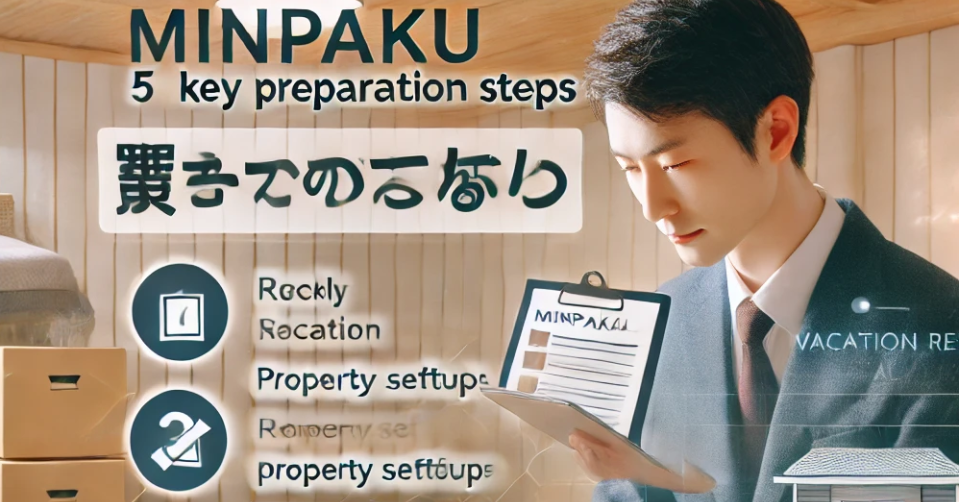
There’s also the risk that inadequate cleaning leads to a string of negative reviews, causing occupancy rates to plummet and making it impossible to turn a solid profit. With that in mind, this article takes a comprehensive look at “5 essential preparations to avoid failure” when running a vacation rental. Specifically, we’ll cover:
- Completing the proper legal procedures
- Implementing thorough fire and crime prevention measures
- Boosting guest satisfaction through interior design and amenities
- Setting rates and building a marketing strategy
- Building a management structure and handling potential issues
By preparing thoroughly on each of these fronts ahead of time, you’ll find that day-to-day operations run far more smoothly, and you’ll be much better positioned to maintain strong revenue and guest satisfaction over the long haul.
Unlike running a hotel, vacation rental operations don’t require the massive investment of a major chain—but that also means the owner personally handles many more responsibilities, calling for careful planning and flexibility. That’s exactly why gathering solid information and preparing thoroughly from the outset can make or break your success. Read on to the end, and put these insights to work in your own vacation rental business.
1. Completing the Proper Legal Procedures
The very first thing to check before starting a vacation rental is your legal compliance.
Operating without proper authorization is considered an “illegal” vacation rental, and can lead to disputes with local government or neighbors. In recent years, systems like the Private Lodging Business Act (the so-called “minpaku law”) and the National Strategic Special Zone program have made it easier for individuals to run legitimate vacation rentals. Even so, moving forward without a solid grasp of the rules can put you at risk of a business suspension order or corrective guidance down the line.
1-1. Filing Under the Private Lodging Business Act
Under the Private Lodging Business Act, which took effect in 2018, operators can run a private lodging business for up to 180 days per year, but only after filing a notification with their local municipality.
Some municipalities impose additional restrictions by ordinance—limiting the days or nights you can operate—so be sure to check with your local government office or municipal website beforehand. When filing, you’ll need to submit documents such as a floor plan and a description of your management structure, and each property is reviewed individually. Keep in mind that incomplete paperwork or failure to meet facility requirements can result in your application being rejected.
1-2. Simple Lodging Permits Under the Hotel Business Act
Another route is obtaining a “simple lodging” permit under the Hotel Business Act, rather than filing under the minpaku law.
This option removes the cap on operating days, but comes with stricter requirements around fire safety and floor space, which often means renovations or additional facilities are needed. If you’re considering this path, consult with your local health center or the relevant municipal department to confirm the required documents and inspection standards. As with restaurants, you’ll need to meet certain hygiene management standards.
1-3. Special Zone Minpaku System
The Special Zone Minpaku system allows operators in designated National Strategic Special Zones to run vacation rentals under relaxed conditions, per that zone’s own local ordinance. That said, this doesn’t mean the process is entirely hands-off—municipalities still set their own rules. Even under this system, you’ll still need to meet other legal requirements, such as fire safety equipment and crime prevention measures.
2. Implementing Thorough Fire and Crime Prevention Measures
Fires, accidents, and crime are among the biggest risks associated with vacation rentals. If something goes wrong and it turns out “the necessary fire equipment wasn’t in place” or “security measures were lacking,” the owner’s management responsibility—and the impact on neighbors—will be called into question. Guests today place real weight on safety, so creating an environment where they can stay with peace of mind is fundamental to good hospitality.
2-1. Compliance with Fire Safety Regulations
If you’re operating a simple lodging or special zone minpaku property, you must meet the fire equipment standards required by law.
Common requirements include smoke detectors, fire extinguishers, clearly marked evacuation routes, and emergency exit signage. Depending on the structure of your property, you may also need fire doors or sprinklers. Consult with your local fire department ahead of time, and have them conduct a site inspection and review your floor plans. Once you clear the standards, you’ll pass the fire safety inspection and be one step closer to approval.
2-2. Crime Prevention and Guest Conduct
Pay close attention to how you manage and hand off keys. If spare keys end up circulating, the risk of break-ins or unauthorized use by repeat guests goes up significantly.
Installing a smart lock lets you restrict access per guest using PIN codes or a smartphone app, greatly reducing the chance of lost keys. Security cameras are also effective for strengthening safety in shared spaces and on the property grounds, but be sure to limit their placement and angle to protect guest privacy.
2-3. Emergency Response Manuals for Disasters
Japan is prone to natural disasters like earthquakes and typhoons. International guests, unfamiliar with local language and customs, often don’t know evacuation procedures—so it’s reassuring to provide clear, multilingual guidance on emergency contacts and evacuation sites. It’s also worth preparing a plan for communicating during power or water outages, along with stocking emergency supplies like flashlights, non-perishable food, and a radio.
3. Boosting Guest Satisfaction Through Interior Design and Amenities
Running a vacation rental is about far more than simply “renting out a room.” Guests often choose vacation rentals specifically because they offer something different from hotels—a sense of individuality, everyday livability, and the host’s personal touch. That means your interior design concept, the quality of your amenities, and how thoroughly the space is cleaned all directly shape your review scores. To avoid negative feedback like “dirty” or “outdated,” put real effort into your interior and amenities.
3-1. Renovation and Thorough Cleaning
If your property is older, renovating the plumbing fixtures and wallpaper should be a top priority.
Bathrooms and toilets in particular are prone to mold and odor issues, and they’re also the areas guests tend to scrutinize most closely. Even if walls or flooring show signs of age, simple repairs or replacement can make a dramatic difference in overall impression. Hiring a professional cleaning service can also help you tackle spots that are hard to clean yourself, such as inside air conditioners or ventilation fans.
3-2. Concept and Design
Whether you go for a modern look in an urban property, lean into a traditional Japanese aesthetic, or renovate a standalone house while preserving its retro charm, having a clear concept makes it much easier to stand out from competing listings.
Creating a photogenic corner somewhere in the room can also generate free promotion through social media posts. Guests are often looking for “an experience they can only have here,” so using design and interior styling to express a distinct personality is key.
3-3. Well-Stocked Amenities and Supplies
Beyond basics like bath towels, sheets, toothbrushes, and shampoo/conditioner, how far you go with things like Wi-Fi, drinking water, and seasonings is ultimately up to you—but it’s worth thinking from the guest’s perspective about what they simply can’t do without, and providing it proactively.
This is especially true for international guests, who may struggle to rely on international roaming—making stable, high-speed Wi-Fi essentially non-negotiable. Having sightseeing brochures and local maps on hand also helps guests feel confident exploring the area, which tends to translate into stronger reviews.
Leave Your Vacation Rental Management to Us
Free Online Consultation4. Setting Rates and Building a Marketing Strategy
Success in vacation rentals hinges on setting the right price and marketing effectively.
Pricing far above market rate just because you’re in a popular area can leave your bookings stagnant, while pricing too low may prevent you from covering costs and turning a real profit. Most guests search for stays through booking platforms like Airbnb or Booking.com, so how you present your listing there matters a great deal.
4-1. Researching the Market and Finding Price Balance
Start by researching rates for nearby properties with a similar concept to get a feel for the market.
Many hosts compare room size, amenities, and location, then start with slightly lower rates early on to build up positive reviews. Once you’ve accumulated strong reviews, you can gradually raise prices while still maintaining occupancy. On the flip side, setting prices too high before you have any reviews can scare guests away.
4-2. Seasonal Pricing Strategies
“Dynamic pricing,” a strategy widely used in the hotel industry, can also be applied to vacation rentals.
Raise your rates during high-demand periods—long weekends, tourist seasons, or local events—and offer discounts or extended-stay plans during weekdays or off-peak times. This helps you strike a balance between revenue and occupancy. Most booking platforms include tools for setting rates by season or day of the week, so take advantage of these features for efficiency.
4-3. Making the Most of Multiple Marketing Channels
Of course you’ll want to list on major booking sites and OTAs (online travel agencies), but it’s also worth considering additional channels—social media, your own website, or local tourism information sites—to widen your reach.
Since so many guests rely on reviews and word of mouth, it’s important to prepare attentive guest communication along with compelling photos and descriptions. Quick responses and thoughtful follow-up before and after a stay leave a strong impression, and as your review scores climb, you’ll naturally rank higher in search results.
5. Building a Management Structure and Handling Potential Issues
Finally, let’s talk about how to actually run your vacation rental day-to-day once it’s up and running, and how to handle problems as they arise.
Unlike a hotel, a vacation rental doesn’t come with front-desk staff or an on-site manager, so you’ll need to build systems for guest communication, cleaning, and check-in/check-out procedures. Without proper preparation, owners often end up fielding requests day after day, which can take a real toll mentally.
5-1. Guest Communication and Multilingual Support
As the number of international guests grows, many owners struggle with multilingual inquiries and troubleshooting. Fortunately, translation apps and online interpretation services have become widely available, making it possible to communicate reasonably well even without fluent English.
Property management companies that specialize in vacation rentals can also help, often offering 24-hour call centers and multilingual support. The faster and more attentively you respond to guest inquiries, the better your reviews tend to be—which in turn drives repeat visits and positive word of mouth.
5-2. Consistent Cleaning and Linen Service
Cleanliness is, without question, the single biggest factor affecting your reviews.
Every guest checkout requires a full cleaning and linen change, but it’s simply not realistic for owners to handle this themselves indefinitely. Outsourcing to a dedicated cleaning company or linen supplier lets you maintain quality while turning rooms around quickly. Adopting a system to manage your cleaning schedule is also worthwhile, helping prevent mistakes and delays.
5-3. A Manual for Handling Problems
Noise complaints, equipment breakdowns, disputes with neighbors—unexpected issues are simply part of running a vacation rental.
To handle these quickly, put together a manual ahead of time with a clear response process. Small preparations—like briefing guests at check-in on the local area and quiet-hours rules, or keeping a list of vendor contacts ready for equipment repairs—add up to make problem-solving far smoother when something does come up.
Success in Vacation Rentals Comes Down to Preparation
Vacation rentals offer an appealing way to generate income from your home or an investment property, and they’re only gaining more attention thanks to growing inbound tourism and the increasing diversity of travel styles.
That said, simply listing a room without proper preparation won’t just fall short of good results—it could expose you to serious losses from legal violations or unresolved disputes.
That’s why it’s so important to thoroughly cover these five areas of preparation: 1. legal procedures, 2. safety measures, 3. interior design and amenities, 4. pricing and marketing, and 5. management structure and problem-solving.
Following through on each of these steadily is the shortest path to higher guest satisfaction and stable occupancy and revenue.
Most owners who succeed in vacation rentals do thorough research and preparation from the very start, then keep refining their operations over time.
Rethinking your cleaning process, or upgrading interior design and equipment based on guest feedback—these small, ongoing efforts are what build a strong reputation over the long term.
Put in the initial investment and effort to get things right, and vacation rentals can become a business model that delivers real value to both hosts and guests alike.
Contact Stay Buddy Co., Ltd.
If you’re thinking about starting a vacation rental but aren’t sure how to navigate the legal procedures, feel uneasy about setting up fire safety equipment and cleaning management, or worry that multilingual guest communication might be too difficult, please reach out to Stay Buddy Co., Ltd.
From application support to interior coordination, and even outsourced cleaning and guest communication services, we draw on extensive operational experience to provide comprehensive support. Whether you’re just launching your vacation rental or looking to maximize returns, we’ll propose the best solution tailored to your property and goals—so feel free to reach out with confidence.