Leave your minpaku management to us
Free Online ConsultationBy configuring a minpaku property to appeal to digital nomads, hosts can secure not only short stays but also stable mid- to long-term bookings. The number of digital nomad workers who travel the world while working remotely continues to grow year after year, and what they look for in accommodation differs significantly from typical tourists. High-speed internet, a comfortable desk setup for working, and a quiet living space are all essential features that allow guests to balance work and daily life.
This article explains the fundamental points minpaku hosts should keep in mind when preparing a property for digital nomad workers, including specific equipment investment costs and practical know-how. By reassessing your property from a perspective different from that used for typical tourist-oriented minpaku, you can aim to improve occupancy rates and stabilize revenue.
Why Preparing a Minpaku Property for Digital Nomads Matters
The digital nomad market continues to expand, with research indicating that approximately 35 million people in the United States alone are active as digital nomads. In Japan too, as remote work becomes more widespread, an increasing number of nomad workers—both domestic and international—are searching for long-term accommodations. While the average stay for typical tourists is just 2–3 nights, digital nomads often stay anywhere from one week to more than a month, resulting in significantly higher revenue per booking.
In addition, because digital nomads travel and stay year-round rather than only during peak tourist seasons, demand is less susceptible to seasonal fluctuations. For example, even during the January–February low season or the rainy season when tourist numbers drop, bookings remain steady as long as a proper work environment is in place. By offering mid- to long-term plans priced around 100,000–200,000 yen per month, hosts can also reduce cleaning frequency, lowering operating costs while securing stable revenue.
Prioritizing Internet Connectivity
Recommended Connection Speeds and How to Choose a Provider
Internet quality is the single most important factor for digital nomads. Since they regularly use video conferencing and cloud services, a minimum measured speed of 100 Mbps for both download and upload is required. If installing fiber-optic internet, it’s advisable to choose a provider known for reliable measured speeds, such as NURO Hikari or au Hikari. Monthly fees typically range from 4,500 to 5,500 yen, and installation costs can often be waived through promotional campaigns.
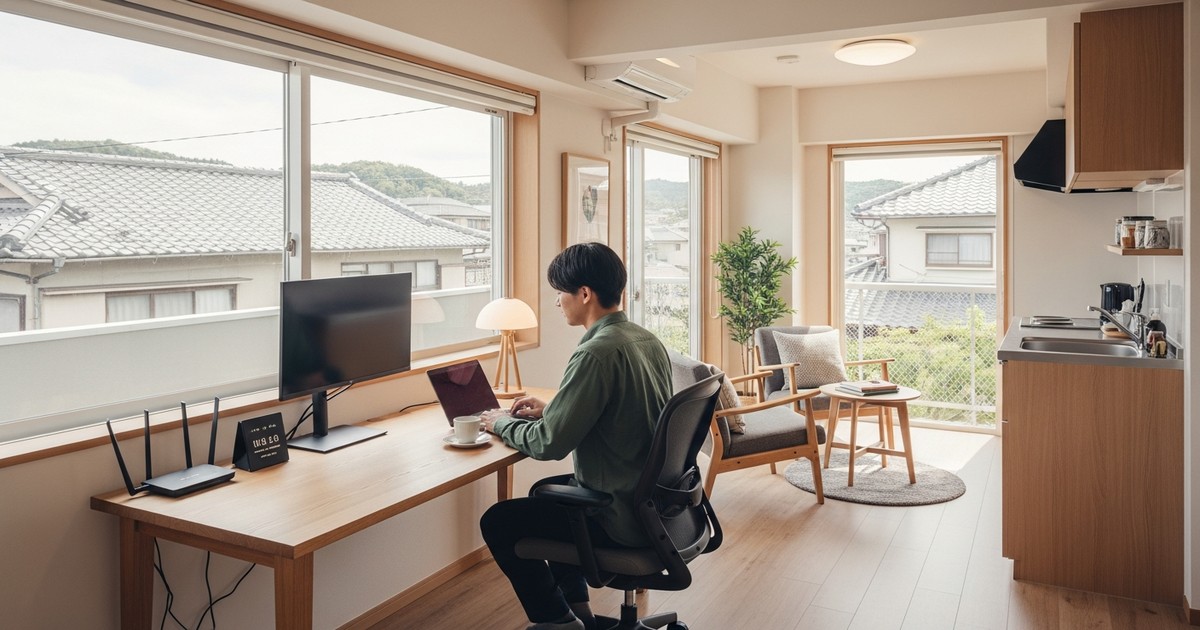
The Wi-Fi router is another crucial element. Assuming five or more connected devices, a Wi-Fi 6-compatible router should be installed. Models in the 8,000–15,000 yen range are more than sufficient. Ideally, the router should be placed within 5 meters of the work desk, without walls in between, to prevent speed degradation. Posting actual Speedtest results on your listing page also helps build guest trust.
Preparing a Backup Connection
If the main internet connection goes down, it directly impacts guests’ work and can lead to serious complaints. Keeping a mobile Wi-Fi router or a tethering-capable SIM card on hand provides peace of mind. Contracting an unlimited data plan for around 3,000–4,000 yen per month and keeping the device in the room as a backup is a wise precaution. This small investment can have a major impact on your review ratings.
Designing the Workspace and Choosing Furniture
Criteria for Selecting a Desk and Chair
For nomad workers who spend eight or more hours a day at a desk, the quality of the work desk and chair can be a deciding factor in choosing accommodation. The desk should be at least 100cm wide by 60cm deep, large enough to comfortably fit both a monitor and a laptop side by side. Cost-effective options such as IKEA’s MICKE desk (around 12,000 yen) or Nitori’s system desk (around 10,000 yen) are more than adequate.
Be sure to provide a proper office chair. Substituting a dining chair will not hold up to extended work sessions and is likely to result in negative reviews. Choose a model with lumbar support and armrests, budgeting around 15,000–30,000 yen. Brands like Ergohuman and GTRACING offer durable options that can withstand frequent use in a rental property.
Adding a Monitor and Peripherals
Simply installing one external monitor can significantly boost your property’s competitiveness. A 24-inch Full HD monitor can be purchased for around 15,000–20,000 yen, and pairing it with an HDMI cable and a USB-C adapter ensures compatibility with most laptops. Power strips are equally important—installing two 6-outlet strips with built-in USB ports (around 2,000 yen each) near the desk allows guests to charge multiple devices simultaneously.
Kitchen and Living Amenities for Mid- to Long-Term Stays
Building Out a Proper Cooking Setup
Most digital nomads staying a week or longer prefer to cook their own meals. Relying solely on restaurants can push food costs up to 90,000–120,000 yen per month, making a well-equipped kitchen an important factor in a guest’s choice of accommodation. At minimum, provide a two-burner induction cooktop, a refrigerator (150L or larger), a microwave, a rice cooker, and a basic set of cookware (frying pan, pot, knife, and cutting board).
Simply stocking four basic seasonings—salt, pepper, soy sauce, and cooking oil—creates a good impression. A coffee maker and kettle are also essential items, catering to guests who prefer to focus on work in their room rather than heading to a café. A Nespresso-compatible capsule machine can be introduced for around 15,000 yen and significantly boosts guest satisfaction.
Installing a Washing Machine and Drying Equipment
A washing machine is essential for mid- to long-term guests. While directing guests to a shared coin laundry is one option, whether or not there’s an in-unit washing machine makes a clear difference in booking rates. A washer-dryer combo unit eliminates the need for drying space, making it suitable even for compact studio or 1LDK layouts. Used units can be sourced for around 30,000–50,000 yen, making this one of the faster investments to pay for itself.
Soundproofing and Livability Considerations
Practical Soundproofing Measures
Outside noise interrupting a video call can disrupt work, so soundproofing should be a consideration from the property selection stage onward. For existing properties, installing soundproof curtains (5,000–8,000 yen each) and laying thick rugs or interlocking floor mats can substantially reduce perceived noise levels. In buildings with thin walls, attaching 4–6 acoustic panels (2,000–3,000 yen each) around the desk area can also reduce echo during calls.
When acquiring a new property, prioritize reinforced concrete (RC) construction. Its sound insulation performance is far superior to wood or lightweight steel-frame buildings, and simply noting “RC construction” in your listing tends to increase inquiries from nomad workers. Avoid properties along major roads or railway lines, or consider renovating with double-pane windows (50,000–100,000 yen per window).
Lighting and Temperature Control
Lighting quality also affects work comfort. A desk illumination level of at least 500 lux is recommended, so install a daylight-white desk lamp (3,000–5,000 yen). Ceiling lighting alone often leaves the work surface too dim, contributing to eye strain. Air conditioning is a must—choose a unit capable of maintaining a room temperature of 22–26°C year-round. For a 6–8 tatami-mat room, installation including labor typically costs around 50,000–80,000 yen.
Listing Strategy and Pricing
Choosing the Right Listing Platform
Airbnb is the most commonly used platform among digital nomads searching for accommodation, followed by Booking.com, Flatio, and Nomad Stays. Airbnb offers a “Remote Work Friendly” filter, and listings that meet three conditions—fast Wi-Fi, a desk, and a quiet environment—are more likely to appear in this category. Including keywords like “Remote Work Friendly” or “Fast WiFi & Desk” in your listing title also increases visibility in search results.
Be sure to set up weekly and monthly discount pricing as well. On Airbnb, you can offer discounts of 10–15% for stays of 7 nights or more, and 20–30% for stays of 28 nights or more. For example, for a property priced at 8,000 yen per night, a common structure would be a weekly rate of 7,000 yen per night (49,000 yen per week) and a monthly rate of 5,600 yen per night (168,000 yen per month). A price point of 150,000–200,000 yen per month remains competitive even compared to monthly apartment rates in Tokyo or Osaka.
Strategies for Earning Strong Reviews
Digital nomads place enormous weight on reviews, particularly comments about Wi-Fi speed and the work environment. Providing concrete information—such as leaving a printed Wi-Fi speed test result at check-in or including multiple photos of the desk area from different angles in your listing—can boost booking rates. Until you’ve collected your first 5–10 reviews, it can also be an effective strategy to price 10–15% below market rate to concentrate bookings early on.
Legal Compliance and Operational Considerations
Complying with the Private Lodging Business Act
Operating a minpaku property requires either registration under the Private Lodging Business Act (the “minpaku law”) or a license under the Hotel Business Act. Under the minpaku law, annual operating days are capped at 180, so if you accept long-term digital nomad bookings, keep in mind that a single reservation could use up 30–60 of those days. You’ll need to plan your bookings carefully around your remaining available days for the year. Obtaining a simple lodging license under the Hotel Business Act removes this day limit, but requires meeting fire safety and structural standards, typically increasing initial investment by 500,000–1,500,000 yen.
Some municipalities also impose ordinances restricting the days of the week or areas in which minpaku operations are permitted. Before filing your registration, check with your local health center or municipal office to confirm required documentation and facility standards. If your property is in a condominium, it’s also essential to confirm that the building’s management regulations don’t prohibit minpaku use—violations can lead not only to disputes but also to the revocation of your registration.
Insurance and Security Measures
The longer the stay, the greater the risk of equipment damage. Be sure to enroll in minpaku-specific liability insurance (approximately 20,000–50,000 yen per year) to cover furnishings and equipment. Installing a smart lock (15,000–30,000 yen per unit) not only eliminates the hassle of key handovers but also enhances security by allowing you to change the access code for each guest. Security cameras should only be installed in common areas, and privacy considerations should always be respected.
For Minpaku Management Support, Contact Stay Buddy Inc.
Preparing a minpaku property for digital nomads requires specialized knowledge and meticulous equipment planning that differs from standard minpaku operations. From selecting the right internet setup and designing the workspace to navigating legal requirements and pricing strategy, every decision directly impacts occupancy rates and revenue.
Stay Buddy Inc. draws on extensive experience in minpaku management to provide comprehensive, one-stop support—from the property planning stage through to ongoing operational assistance after launch. We offer practical advice tailored to specific challenges, including property planning aimed at the digital nomad market, listing improvements for existing properties, and revenue simulations.
Whether you’re unsure which equipment to invest in, uncertain how to price for long-term guests, or would simply like help with legal procedures, please feel free to reach out with any questions. We’re here to help you unlock your property’s full potential.