Which Countries Should You Target? Osaka’s Inbound Market and Hotel Targeting, Backed by Data
Osaka’s accommodation market is booming like never before. Walk through the city streets and you’ll hear a mix of languages from around the world—clear evidence that inbound (foreign visitor) demand has not only recovered but continues to grow.
However, for hotel and vacation rental owners, a vague awareness that “foreign visitors are increasing” isn’t enough to fully capitalize on this business opportunity. What matters is understanding, with real precision, “which country’s guests are coming to Osaka, and what are they looking for”—and then targeting the guests who match your property’s specific strengths.
Let’s get straight to the conclusion of this article.
When it comes to maximizing revenue in Osaka’s inbound market, your targeting strategy ultimately comes down to matching your property’s characteristics (size, location, amenities) to one of two polarized guest needs: **going after the “East Asian segment,” known for overwhelming volume and high repeat rates**, or pursuing **the “Western/Australian segment,” known for long stays and high per-guest spending**.
In this article, we’ll draw on the latest data and trends to break down the characteristics of foreign visitors to Osaka by country, and give you a thorough guide to determining “who” your hotel should be attracting—along with concrete targeting strategies and marketing tactics to make it happen.
The Current State of Osaka’s Inbound Market: A Tale of Two Needs
Looking at Osaka’s inbound market from a bird’s-eye view, there are two major groups. The first is travelers from “East Asia”—primarily South Korea, Taiwan, China, and Hong Kong. The second is travelers from “Western countries and Australia”—primarily the United States, Australia, and Europe.
These two groups differ significantly in their travel purposes, length of stay, and spending behavior.
The first step in effective targeting is to stop lumping all “foreign tourists” into one category and clearly recognize this distinction.
The High-Volume Segment: East Asia (South Korea, Taiwan, China, Hong Kong)
This is Osaka’s largest inbound segment by far. Thanks to geographic proximity, many travelers in this group visit casually using low-cost carriers (LCCs).
- Characteristics: A high proportion of repeat visitors who are already familiar with Japan (and Osaka in particular). “Food” and “shopping” are often the main purposes of their trip.
- Stay style: Typically short stays of 2 to 4 nights. They’re active during the day and may treat their accommodation as simply “a place to sleep,” but they’re strict when it comes to checking cleanliness and convenience.
The High-Spending, Long-Stay Segment: Western Countries and Australia (US, Australia, Europe)
Fueled by the weak yen, this group’s presence has grown rapidly in recent years. They come to Japan seeking unique cultural and historical experiences.
- Characteristics: They spend significantly on a single trip. Many use Osaka as a “hub” base for day trips to Kyoto, Nara, Hiroshima, and beyond.
- Stay style: Stays of a week or longer are common. They tend to prioritize the comfort of the accommodation itself, along with authentic Japanese experiences and spacious rooms.
Detailed Analysis by Country/Region and How to Win Them Over
So what specific approaches are effective for each target group?
1. South Korea, Taiwan, Hong Kong (Shopping & Food-Focused)
These guests love Osaka’s food scene and shopping. Access to areas like Shinsaibashi, Dotonbori, and Umeda is their top priority.
- What they want:
- Location: Near a train station, within walking distance of entertainment districts.
- Amenities: Space to lay out shopping purchases, Wi-Fi, and clean bathroom facilities. Korean guests in particular tend to be sensitive to room temperature in winter—likely influenced by the underfloor heating (ondol) culture back home.
- Information: Recommendations for cheap, delicious local spots that aren’t in guidebooks.
- Winning strategy: In your OTA (booking site) photos, visually highlight nearby convenience stores, drugstores, and Don Quijote outlets. Well-stocked beauty appliances (hair dryers, hair irons) are also a powerful hook, especially for female guests.
2. China (Family Travel & Experience-Focused)
While the shift from group tours to independent (FIT) travel continues, family trips remain especially common among Chinese visitors.
- What they want:
- Space and amenities: Enough room for the whole family to stay together, plus household appliances like kitchens and washing machines.
- Payment methods: Support for QR code payments like Alipay and WeChat Pay is essentially mandatory.
- Winning strategy: Chinese-speaking guests place enormous weight on reviews from Chinese social platforms like RED (Xiaohongshu). Create “Instagrammable” spots within your property and offer thorough Chinese-language guidance to encourage social sharing.
3. US, Australia, Europe (Cultural Experience & Comfort-Focused)
For these guests, a trip to Japan is a major life event. They’re willing to invest in a space that helps them recover from travel fatigue and fully enjoy an extraordinary experience.
- What they want:
- Space and beds: Rooms spacious enough to unpack a suitcase and leave it open, plus large beds like king-size. Cramped business-hotel-style rooms are a turn-off.
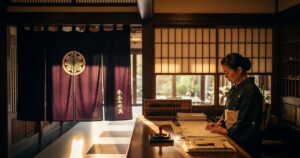
- Japanese cultural elements: Tatami mats, shoji screens, yukata robes, and other quintessentially Japanese touches. That said, they generally prefer beds over futons—a blend of Japanese and Western style works best.
- Long-stay amenities: Washer-dryer combos, kitchens for self-catering, and high-speed Wi-Fi (for remote work).
- Winning strategy: Strong English communication skills and a detailed house manual are essential. Offering information about nearby restaurants with vegetarian or vegan options also demonstrates attention to dietary diversity, which is highly appreciated.
By Property Type: Which Targets to Pursue and How
What type of property do you have? The right target audience naturally follows from your property’s specifications.
Case A: A Roughly 25㎡ Studio or 1-Bedroom (Urban Area)
- Target audience: Korean or Taiwanese couples, girls’ trips, and solo travelers
- Strategy: Turn the small size into an advantage by competing on “location” and “value for money.” Since guests won’t spend much time in the room, focus on quality bedding and well-stocked beauty appliances to boost satisfaction. Messaging like “even if you overshop, it’s an easy walk back since you’re right by the station” works well here.
Case B: 50㎡+ Apartments (Family-Style)
- Target audience: Chinese/Asian families, and Western/Australian couples or small groups
- Strategy: Center your positioning around “staying like a local.” Highlight practical living conveniences such as a fully stocked kitchen and on-hand laundry detergent. For Western and Australian guests especially, having a comfortable living room sofa and a dining table is a major plus.
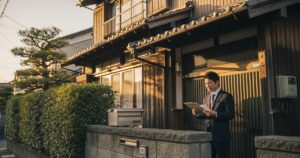
Case C: Whole-House Rentals and Traditional Japanese Homes
- Target audience: Western/Australian families, groups, and affluent travelers
- Strategy: Put the building itself front and center. The experience of “renting an entire traditional Japanese house” resonates most strongly with Western and Australian guests. Premium pricing is achievable, but it needs to be backed by high-quality interior design and attentive, concierge-level service.
3 Concrete Tactics to Accelerate Your Inbound Bookings
Once you’ve identified your target, it’s time to implement tactics that help them find you.
1. Optimize and Prioritize the Right Overseas OTAs
Focus your efforts on different OTAs depending on your target audience.
- Agoda: Overwhelmingly strong in Asia. Coupon promotions tend to be effective here.
- Booking.com / Expedia: Essential for attracting Western and Australian guests.
- Airbnb: Strong appeal among Western and Australian long-stay guests and those seeking unique experiences.
Optimize your photo order and listing language (English, Chinese, Korean) to match each platform’s specific audience.
2. Highlight Osaka’s Role as a Travel Hub
Western and Australian guests often use Osaka as a base for day trips to Kyoto, Nara, Hiroshima, and Koyasan.
Emphasizing convenience in English—phrases like “X minutes to Shin-Osaka Station” or “X minutes direct to Kyoto”—positions your property as an ideal base for broader sightseeing, making it more likely to be chosen for longer stays.
3. Tailor Your Review Strategy by Language
Guests place the greatest trust in reviews written in their own language.
Send post-checkout thank-you emails in the guest’s native language to encourage them to leave a review. As positive reviews accumulate in a particular language, bookings from that country will naturally increase.
Conclusion: Deciding “Who” You Want to Host Is the Fastest Path to Full Occupancy
A “one-size-fits-all” approach that tries to appeal to “any foreign guest” will simply get lost in Osaka’s crowded, competitive market.
Ask yourself: which country, and what kind of people, will value your property’s strengths—its location, size, and atmosphere—the most?
Picture that “one ideal guest,” design your amenities to appeal to them, and communicate in language that speaks directly to them. That approach is ultimately the fastest route to attracting a large volume of inbound tourists and achieving high occupancy and high profitability.
With the 2025 World Expo approaching, Osaka’s inbound market is set to expand even further. Now is the time to clarify your target and evolve into a hotel that guests actively choose.
Let Our Experts Build That “Targeting Strategy” for You
“I don’t know which country’s guests would love my property the most…”
“I’m not confident managing overseas OTAs or handling multilingual inquiries.”
“I want expert advice on interior design and amenities specifically geared toward inbound guests.”
Whatever your concern, we’d love to hear from you.
Stay Buddy Inc. is a team of professionals based in Osaka, specializing in hotel and vacation rental management with a focus on attracting inbound guests.
Here’s what we offer:
- ① Data-driven targeting: Using our extensive accommodation data from the Osaka market, we identify the ideal target countries and a winning pricing strategy tailored to your specific property.
- ② Native-speaking staff in English, Chinese, and Korean, available 24/7 to respond perfectly to guest inquiries and prevent missed booking opportunities.
- ③ Expert OTA management: We deeply understand the algorithms behind Booking.com, Airbnb, Agoda, and other overseas platforms, allowing us to boost your search ranking and maximize your visibility.
You focus on welcoming guests from around the world with a smile.
Leave the complex marketing and day-to-day operations to our professional team here in Osaka.
Ride the wave of inbound demand and maximize your property’s revenue. Start with a free current-status assessment and revenue simulation—get in touch with us today.