Leave Your Minpaku Management to Us
100% Free Online ConsultationTo achieve stable income from minpaku (private lodging), it’s essential to think beyond domestic guests and tap into inbound (foreign visitor) demand. According to Japan’s Tourism Agency, the number of foreign visitors to Japan exceeded 31.88 million in 2019. Although numbers dropped sharply during 2020–2022 due to COVID-19, a rapid recovery is expected from 2023 onward. Inbound demand is likely to return with momentum that could surpass pre-pandemic levels.
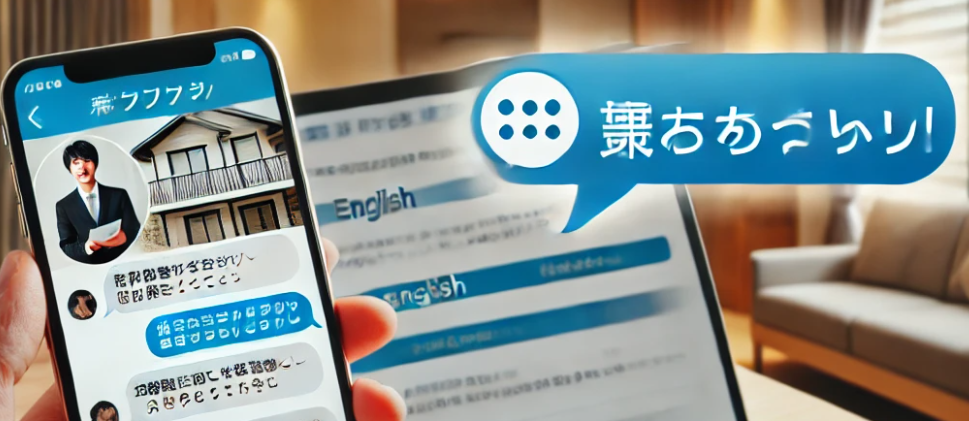
This article is written for those taking on minpaku management for the first time, with a special focus on “English communication” and “message exchanges” with foreign guests. We’ve included numerous concrete example messages and practical tips so that even those who aren’t confident in English—or who are just starting to build out their English support—can follow along easily. Reading this will help you achieve the following benefits:
- Smooth communication with foreign guests
- Preventing trouble before it happens and boosting guest satisfaction
- Higher occupancy rates and revenue, leading to a more stable business
We hope you’ll read through to the end so your property can grow into a minpaku that’s highly rated not just domestically, but by guests from around the world.
Why English Support Is Essential for Minpaku Operations
Current Trends and Forecasts for Inbound Demand
Over the past several years, Japan has seen a significant increase in foreign visitors, driven by the government’s tourism-oriented policies and economic growth across Asia. While the number of visitors plummeted temporarily during the pandemic, the recovery since has been remarkable—the Japan Tourism Agency projects that annual visitor numbers could once again surpass 30 million by 2025. With international events and expanded overseas flight routes adding further momentum, guests are expected to arrive not only from across Asia but from Europe, the Americas, and Oceania as well.
Foreign tourists tend to seek more flexible lodging experiences than what hotels and traditional inns offer. In particular, renting an entire villa or house for a short stay is popular among families and group travelers. Against this backdrop, attracting foreign guests through minpaku platforms represents a tremendous business opportunity for property owners.
What Foreign Guests Expect and Look For
While foreign travelers seek an authentic “Japanese” experience, they also place great importance on smooth communication and peace of mind about a trouble-free stay. Even guests from non-English-speaking countries tend to rely on English as a common international language, so hosts are generally expected to provide at least basic English support.
Foreign guests are especially eager to know the following information:
- Check-in and check-out procedures
- Directions from the nearest station or bus stop
- Information on nearby restaurants and tourist spots
- Disaster preparedness info and emergency contacts
If these are only explained in Japanese, there’s a much higher risk of confusion or complaints during the stay. Communicating clearly in English can significantly boost guest satisfaction.
The Benefits of Offering English Support
Setting up proper English support can bring the following benefits:
- Higher booking and occupancy rates
More reservations from foreign guests mean steadier occupancy, even during the off-season. - Improved guest satisfaction and reviews
Eliminating communication anxiety leads to more positive reviews. - Potential for higher rates
Being able to accommodate long-term stays from overseas guests makes it possible to set higher nightly rates.
In fact, there are reported cases where average occupancy rates rose by 20–30% after English support was introduced. What’s more, the more positive reviews accumulate, the higher a listing tends to rank and appear in platform searches—creating a synergistic effect that further boosts guest acquisition.
The Basics of English Support: Keys to Effective Message Communication
Many people feel intimidated by the idea of “English support,” but in practice, what matters most is conveying necessary information clearly and concisely. When exchanging messages with guests, keep the following points in mind:
- Use simple English
Avoid difficult vocabulary and long sentences; convey key points in short, clear language. - Standardize with templates
Prepare pre-written messages in advance for common scenarios—pre-booking inquiries, check-in instructions, responding to questions during the stay, and so on. - Aim for quick replies
Foreign guests can easily feel anxious due to time differences and cultural gaps. Prompt responses help build trust. - Use images and photos
For things that are hard to explain in text, such as check-in procedures, including photos makes instructions clearer and more reassuring.
These points are consistently mentioned by experienced hosts on minpaku platforms who have found success.
Sample English Messages and Templates
Here are some concrete English message templates. While you’ll need to adjust them slightly depending on the guest and property situation, having a solid base to work from will make responding much smoother.
Responding to Pre-Booking Inquiries
Sample Text
Thank you for your inquiry about our property.
We are happy to host you and would like to confirm a few details about your stay.
How many guests are you traveling with, and what are your expected check-in and check-out dates?
If you have any special requests or questions, feel free to let us know.
- Key Points
- Open with a warm greeting and express thanks.
- Clearly ask how many guests will be staying and for what dates.
- Confirm whether there are any special requests.
Message After Booking Confirmation
Sample Text
Thank you for booking our property! We look forward to hosting you.
Please note that check-in time is after 3:00 PM, and check-out time is by 10:00 AM.
We will send you detailed instructions on how to check in soon.
If you have any questions, please feel free to contact us at any time.
- Key Points
- Express a warm welcome once the booking is confirmed.
- Clearly state the check-in and check-out times.
- Let them know how to reach you and that further details will follow.
Check-In Instructions
Sample Text
We have a self-check-in system.
Here are the steps to check in:
- When you arrive at the building, use the passcode “XXXX” to open the front door.
- Take the elevator to the 3rd floor and turn left.
- The apartment number is 303. Your room key is in the lockbox beside the door. The lockbox code is “YYYY”.
- Once you enter the room, you will find the house manual on the table.
If you have any trouble, please call or message me immediately.
- Key Points
- Present steps in a clear, numbered format wherever possible.
- Including actual photos of the building and room makes instructions even more helpful.
- Always include a contact number for emergencies.
Support Messages During the Stay
Sample Text
How is your stay so far? If you need any assistance or have any questions, please let me know.
Here are a few recommendations for local restaurants:
- Sushi Taro (Great sushi, 5 minutes walk)
- Ramen Master (Famous ramen shop, 10 minutes walk)
- Café Sakura (Cozy café, 7 minutes walk)
Enjoy your stay!
- Key Points
- Check in periodically during the stay to ask about any concerns or requests.
- Providing information on nearby facilities in English elevates the level of hospitality.
Thank-You Messages and Review Requests After Check-Out
Sample Text
Thank you for staying with us! We hope you had a wonderful time.
If you enjoyed your stay, we would greatly appreciate a positive review on Airbnb.
Safe travels, and we hope to host you again in the future.
- Key Points
- A thank-you message after check-out leaves guests with a positive final impression.
- Requesting a review politely tends to increase the number of reviews you receive.
- You can subtly mention the possibility of a repeat visit as well.
Using Tools and Services to Streamline English Support
If you’re not confident in your English, or if you’re managing multiple properties and don’t have time to carefully write out every message by hand, consider leveraging the following tools and services:
- Translation tools (Google Translate, DeepL, etc.)
These can instantly translate simple sentences, though nuances may occasionally get lost, so it’s worth double-checking. - Chatbot features (third-party services)
Automatically responding to routine questions (such as check-in procedures) reduces the workload for hosts. - Professional translation/interpretation services
Useful when you want to improve text quality or need urgent assistance during a problem. Pricing varies—anywhere from a few yen per word to a few yen per character, depending on the service.
Tips for Choosing the Right Option
- When using automated translation tools, double-check your work by translating Japanese → English → back to Japanese and comparing.
- If you manage many properties, consider setting up an ongoing arrangement with a translation service to ensure stable, reliable support.
- Building out your templates thoroughly before sending them to a translation service can help you get high-quality text while keeping costs down.
Using English Support to Prevent Trouble and Boost Hospitality
How to Clearly Present House Rules and Terms of Use
Japanese rules and etiquette can be unfamiliar territory for foreign guests. To help them follow Japan-specific rules and regulations—such as trash sorting, noise restrictions, and smoking policies—keep the following points in mind when presenting your house rules:
- Summarize concisely in bullet points
Example: “No smoking inside the property” / “Separate trash as Burnable / Non-burnable / Recyclable” - Use illustrations or photos to convey ideas
Attaching images is especially effective for things like the location of trash bins or specific labeling. - Clearly state any potential penalties
Example: “If you smoke indoors, you may be charged a cleaning fee of 10,000 JPY.”
Using Messages to Prevent Problems
- Confirm early and follow up
For example, on the morning of check-in day, send a message like “We look forward to your arrival. Please let us know your expected arrival time.” to reduce the chance of delays or miscommunication. - Ensure guests can reach you during their stay
To avoid problems like guests missing messages or not being able to find their key when you’re unavailable, share Wi-Fi details and contact methods with them in advance. - Respond to complaints promptly
If a guest points out a cleaning issue or broken amenity, apologize right away and promise a swift resolution, then arrange for repairs or replacements accordingly.
The Importance of Preparing Emergency Contacts and Procedures in English
In the event of an emergency such as an earthquake or fire, it’s crucial that guests can reference response instructions in English. Providing English-language guidance on emergency exits and fire extinguisher locations, along with a list of emergency contacts, offers guests real peace of mind.
- Clearly state Japan’s emergency numbers (Police: 110, Fire/Ambulance: 119) in English
“In case of emergency, call 110 (police) or 119 (fire/ambulance).” - Contact information for the nearest hospitals or support desks
Ideally, include details on English-speaking medical facilities and insurance information as well.
Success Stories and Data on English Support
Here, we introduce real cases of owners who successfully implemented English support.
Case Studies from Successful Owners
Case 1: Ms. A, who converted a house in Tokyo into a minpaku and actively welcomed short-term foreign guests
- Background: She renovated a vacant house in the Tokyo suburbs and listed it on Airbnb. Initially, she could only communicate in Japanese, and often couldn’t respond to inquiries from foreign guests.
- English support measures:
- Prepared simple template messages in advance to respond quickly to inquiries.
- Created an English house manual, including a map and recommended nearby spots also written in English.
- Results: Within a year, about 70% of her guests were foreign visitors. Occupancy rose from 40% to 80%, and revenue more than doubled.
Case 2: Mr. B, who runs a villa in a rural tourist area as a weekend minpaku
- Background: He rented out a villa in a rural resort area only on weekends. A key challenge was that occupancy dropped significantly during the off-season.
- English support measures:
- Used a translation service to create a professional-quality English website and guest guide.
- Standardized all communication, from booking through check-out, using templates, and responded promptly.
- Results: He received numerous glowing reviews from foreign guests praising the chance to “experience Japan’s natural beauty.” Occupancy remained at 50–60% even in the off-season, stabilizing his annual revenue.
Concrete Data on Occupancy and Revenue Improvements
You may be curious just how much of a difference English support actually makes in the numbers. According to data published by domestic minpaku management companies, comparing properties without English support to those with it revealed the following differences:
- Occupancy rate: Roughly 1.3x to 1.5x higher on average
- Average Daily Rate (ADR): Properties with English support could typically charge ¥1,000–¥2,000 more per night
- Repeat rate: The reassurance of being able to communicate in English led to more repeat visits and referrals
These figures naturally vary depending on the property and location, but they clearly show that offering English support can boost a host’s credibility and drive revenue growth.
An Example of Reduced Complaints
In another case, an owner running a traditional Japanese house as a minpaku in Kyoto saw complaints drop dramatically after strengthening English support.
Specifically, the following issues improved:
- Guests didn’t know how to use the room → Provided a detailed house manual in English, complete with photos
- Guests couldn’t find the key during late-night check-in → Explained check-in procedures in advance via English messages and video
- Trouble due to not understanding how to dispose of trash → Explained trash sorting rules in English with real photo examples
Fewer complaints mean less operational hassle and better reviews—ultimately leading to smoother operations and greater profits overall.
Steps for Beginner Owners to Start Offering English Support
By now, you probably understand how important English support is, but may still be wondering where to start. Here are some steps to help guide you:
- Translate the basic information
Translate your property name, address, check-in/check-out times, and Wi-Fi details into English.
Include an English description when listing your property on platforms like Airbnb. - Create an English version of your house rules and manual
Compile information on trash disposal rules, how to use appliances, and nearby attractions, and print it out to place inside the property.
Post the same information online so guests can review it in advance. - Prepare template messages
Draft messages for various scenarios—pre-booking, post-booking, check-in instructions, and post-checkout thank-yous.
If using a translation tool, verify accuracy by translating back into Japanese to check for errors. - Consider translation services or a management company
Leave areas where you lack confidence to professionals to ensure quality.
Some management companies offer packaged English support services, so weigh the cost against the benefits. - Fine-tune based on actual communication
As you interact with real foreign guests, identify common questions or points of confusion, and continue updating your templates accordingly.
Summary and Future Outlook
When it comes to minpaku management, properly setting up English support has shifted from being merely “nice to have” to being nearly essential. As the number of foreign visitors to Japan continues to grow, international competition among properties will only intensify. Listings with high-quality English support tend to earn better word-of-mouth reviews and rank higher in platform searches—which ultimately boosts occupancy and revenue.
For real estate owners leveraging vacation homes or vacant properties in particular, this represents a major opportunity to showcase the unique charm of their property to overseas guests. Demand for experiences like “wanting to experience rural Japan” or “wanting to relax surrounded by nature” continues to grow year by year across Europe, the Americas, and Asia. Building a solid English support system is essential to meeting these needs.
Finally, let’s recap the key points covered in this article:
- The inbound market is expected to keep expanding, further increasing the need for English support.
- Creating English message templates and translating your house manual are approachable first steps, even for beginner owners.
- It’s important to gradually improve quality by making use of translation tools and professional services.
- Success stories show clear results, including significant increases in occupancy and fewer complaints.
Going forward, you may find increasing demand for support in other languages, such as Chinese, Korean, or Spanish. However, by first establishing solid English support—as the world’s most widely used common language—you’ll be able to reach the vast majority of visitors to Japan.
We hope the content of this article helps your property grow into an appealing lodging option loved by guests both in Japan and abroad. There’s no need to perfect your English support overnight—by building it up gradually, you should steadily see results in the form of better guest reviews and improved revenue.
We hope you’ll use this article as a resource to move forward with your English support efforts. Once you’re able to communicate smoothly with foreign guests, hosting becomes far more enjoyable, opening up new possibilities for your business. We hope that, in time, “hospitality in English” becomes one of your key strengths in running a successful minpaku.
If you’d like detailed advice on English support, or if you’d feel more at ease entrusting your management to professionals, please feel free to contact Stay Buddy Co., Ltd. With extensive experience and know-how supporting minpaku operations across the board, we provide comprehensive support—from setting up English support to boosting bookings and revenue. Please don’t hesitate to reach out to us.