When operating a minpaku (private lodging) or ryokan business in Hokkaido, winter preparation is an unavoidable and critical challenge. Snowfall levels far exceed anything seen on Japan’s main island, temperatures in some regions drop below -20°C, and heating costs can skyrocket. Without adequate preparation, not only is guest safety put at risk, but equipment damage and heating cost deficits can threaten the very continuity of the business.
In fact, it’s not uncommon for snow removal costs alone to exceed ¥100,000 per month during winter, or for kerosene expenses to balloon to 3-5 times summer levels. On the other hand, winter in Hokkaido brings extremely high inbound demand from travelers seeking ski resorts and snowy landscapes, meaning proper winter operations can significantly boost annual revenue.
This article provides a detailed explanation of the three major winter challenges—snow removal, freezing, and heating costs—along with specific countermeasures and cost estimates, for owners currently running minpaku or ryokan businesses in Hokkaido, as well as those considering entering the market.
Why Winter Countermeasures Are Necessary and the Risks Unique to Hokkaido
Winter in Hokkaido lasts roughly five months, from late November through the end of March. Sapporo City receives an average annual snowfall of about 600cm, while Asahikawa City reaches around 700cm, and building damage from accumulated snow on roofs and grounds is reported every year. Furthermore, in regions where the minimum temperature drops below -10°C for dozens of consecutive days, frozen and burst water pipes are common occurrences, with repair costs often ranging from ¥50,000 to ¥300,000 per incident.
These risks are particularly serious for minpaku properties without an on-site manager. A typical example is when room temperature drops sharply during the gap between guest checkout and the next check-in, causing pipes to freeze. Additionally, if snow is not cleared from the entrance or parking area and a guest slips and is injured, the owner’s management liability may be called into question. Winter countermeasures are fundamentally important to the business, both in terms of safety management and cost control.
Snow Removal Challenges and Specific Countermeasures
Ways to Establish a Snow Removal System on Your Property
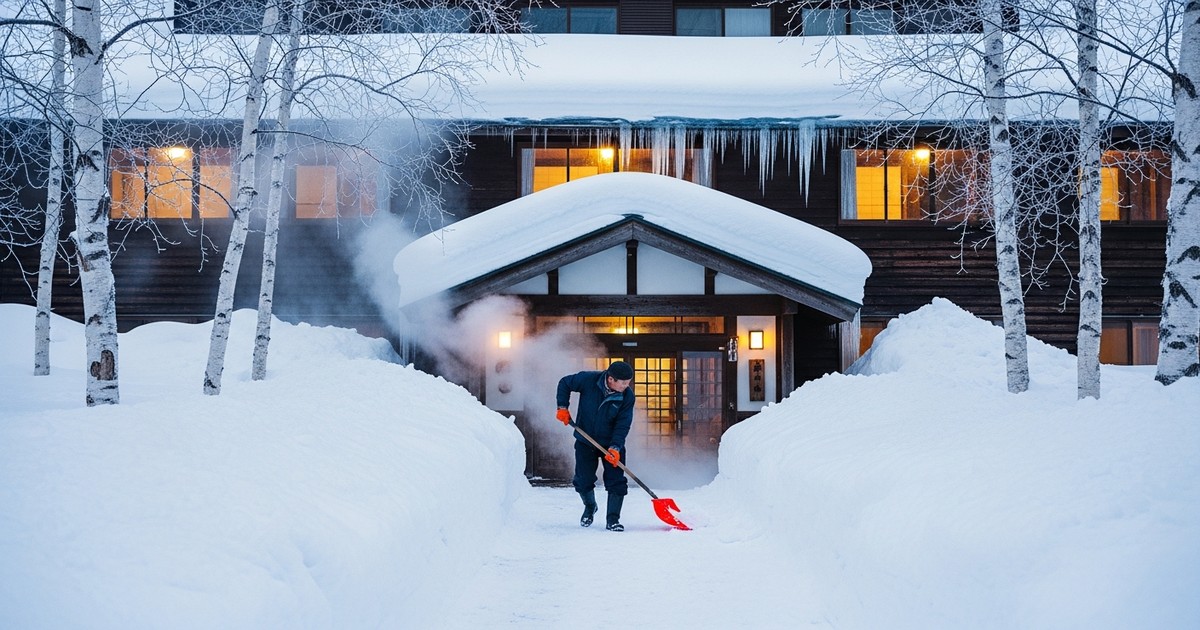
Snow removal on minpaku property grounds generally falls into three categories: “handling it yourself,” “outsourcing to a snow removal company,” and “installing road heating.” For DIY handling, the cost of a snow blower ranges from ¥150,000-¥300,000 for a small home-use model, and ¥500,000-¥800,000 for a mid-size model. However, it’s simply not realistic for owners with remote properties to visit the site every time snow needs clearing.
Outsourcing to a snow removal company typically involves a seasonal contract, with monthly costs of approximately ¥20,000-¥80,000 depending on property size and snowfall amount—totaling ¥100,000-¥400,000 for the full season. In heavy snowfall areas like Niseko and Furano, costs can exceed this range. When selecting a contractor, it’s important to specify in the contract how many hours after snowfall they will respond. If snow removal isn’t completed before guest check-in, it directly leads to lower review ratings.
Roof Snow Removal and Falling Snow Prevention
In Hokkaido, there’s a risk that the weight of accumulated snow on the roof can damage the building. For wooden houses, once the snow load on the roof exceeds 150kg per square meter, it’s considered to enter a structurally dangerous range. Wet snow at 100cm of accumulation can easily reach this threshold. Hiring a contractor for roof snow removal typically costs ¥30,000-¥80,000 per visit, and it’s often needed 2-4 times per season.
To prevent accidents from falling snow, installing snow stoppers (snow guard brackets) or renovating to a snow-free roof design are effective measures. Snow stopper installation costs approximately ¥100,000-¥250,000, while a full renovation to a snow-free roof runs about ¥1,000,000-¥2,000,000. Consider which option offers better cost-effectiveness based on your property’s location and roof shape. This is especially essential for properties close to neighboring buildings, where falling snow could injure neighbors or passersby.
Guest Snow Removal Guidance and Keeping Shovels On-Site
Even with a contractor arrangement, guests will sometimes need to clear snow from the entrance themselves during the first few hours after a snowfall. Be sure to keep shovels (both metal and plastic varieties), a snow brush, and de-icing agent on hand at the property. The total purchase cost is approximately ¥5,000-¥10,000.
Additionally, preparing a house manual in multiple languages (Japanese, English, Chinese, and Korean) that explains how to use the snow removal tools and where they’re stored can reduce trouble with international guests. It’s also effective to include photos in the manual showing “where to pile snow in the parking area” and “areas to watch out for falling snow from the roof.”
Preventing and Responding to Freezing Issues
Water Pipe Freezing Prevention Measures
The most common winter trouble at Hokkaido minpaku properties is frozen and burst water pipes. The basic preventive measure is “water draining” (mizunuki), and homes in Hokkaido come standard with water drain valves. If there’s a gap of several days between one guest’s checkout and the next guest’s arrival, be sure to drain the water.
To automate water draining, installing an electric water drain valve is effective. Installation costs approximately ¥30,000-¥70,000 per location, and remote-controllable models are also available. Another option is wrapping exposed pipes with freeze-prevention heating tape (electric heaters), which costs ¥3,000-¥8,000 per unit, with electricity costs of roughly ¥500-¥1,500 per month. Given that repair costs for a frozen pipe (¥50,000-¥300,000) are far higher, investing in prevention is overwhelmingly more economical.
Preventing Water Heater and Boiler Freezing
Water heaters and boilers are also equipment with a high risk of freezing. Many water heaters have a built-in freeze-prevention operation feature, but this function only works when the breaker is switched on. Every year, cases occur where the breaker is turned off during vacancy periods, causing water inside the water heater to freeze and damage the unit. Since replacing a water heater costs ¥150,000-¥400,000, it’s essential to enforce a rule that the breaker is never switched off during winter, even when the unit is vacant.
It’s also important to select cold-climate-rated boilers. Installing a standard-spec product risks it failing to operate properly below -15°C. When choosing a boiler, always check the operating temperature range and select a model whose specifications don’t fall below the property location’s lowest recorded temperature over the past 10 years.
Preventing Freezing and Slips at Entrances and Outdoor Areas
When entrance approaches, stairs, or parking areas freeze, it can lead to guest slip-and-fall accidents. Keeping de-icing agent (calcium chloride) on hand is essential, costing approximately ¥2,000-¥3,000 for a 25kg bag. However, since it carries a corrosion risk for concrete and metal, it’s important to choose urea-based or acetate-based de-icers, or to carefully manage the amount applied.
As a more fundamental solution, installing road heating at the entrance approach is an option. For electric systems, installation costs run about ¥300,000-¥600,000 per 10 square meters, with monthly electricity costs of roughly ¥5,000-¥15,000. While the upfront investment is significant, it eliminates the need for daily snow and ice removal work, dramatically improving guest satisfaction and safety. For those planning long-term operations, this is an equipment investment worth considering.
Countermeasures for Rising Heating Costs and Energy-Saving Tips
Choosing a Heating System and Estimating Fuel Costs
The main heating options in Hokkaido are kerosene central heating, kerosene stoves, cold-climate air conditioners, and electric panel heaters. With the most common option—kerosene central heating—a 2LDK to 3LDK property typically consumes 300-600 liters of kerosene per month in winter. At a kerosene price of ¥110 per liter, that comes to a monthly fuel cost of ¥33,000-¥66,000. Over the full 5-month winter season, heating costs alone can reach ¥160,000-¥330,000.
Cold-climate air conditioners have improved significantly in performance in recent years, with some models now able to operate even at -25°C. While electricity costs tend to be higher than kerosene, these units offer advantages such as easier temperature adjustment for guests, lower fire risk, and simpler maintenance. Choose your heating system based on the property’s insulation performance and its balance with nightly rates.
Improving Heating Efficiency Through Insulation Renovations
To fundamentally reduce heating costs, renovations that improve the building’s insulation performance are effective. In Hokkaido homes over 20 years old, heat loss through windows is said to account for 30-40% of total heat loss. Installing interior storm windows (double-glazing) costs ¥50,000-¥150,000 per window, and the air layer created between the new and existing windows significantly improves insulation performance. Some cases have reported a 20-30% reduction in heating costs after installing interior storm windows on all windows.
Adding insulation material to walls and ceilings is a larger-scale renovation, but for a 100-square-meter property, an investment of ¥800,000-¥1,500,000 can be expected to yield annual heating cost savings of ¥50,000-¥100,000. While the payback period is around 10 years, this also contributes to increased property value and improved guest comfort, making it worth actively considering for properties intended to be held long-term.
Clarifying Heating Usage Rules for Guests
Guests frequently leave windows open while running the heater at full blast, or turn off the heat entirely when going out, causing a sharp drop in room temperature. This not only wastes heating costs but also creates freezing risks due to the temperature drop. Clearly state specific instructions in your house rules, such as “do not turn off the heat while out; keep it set to at least 18°C” and “only open windows briefly for ventilation.”
Installing a smart thermostat allows for remote monitoring and control of room temperature. Device costs run about ¥10,000-¥30,000 and can be operated from a smartphone via Wi-Fi. By setting up an alert for when room temperature drops below 15°C, you can simultaneously prevent freezing and save energy. Many owners also set a “winter heating surcharge” added to the nightly rate, typically ¥1,000-¥3,000 per night.
Winter Marketing Strategy and Optimizing Nightly Rates
Capturing Winter Demand in Hokkaido
Winter in Hokkaido offers a wealth of content with strong appeal both domestically and internationally, including skiing and snowboarding, snow festivals, drift ice viewing, and hot springs. In areas around ski resorts such as Niseko, Rusutsu, Furano, and Tomamu in particular, winter nightly rates can jump to 1.5-3 times summer rates. In these areas, even with higher heating and snow removal costs, the revenue potential can easily outweigh those expenses.
In your listing photos and descriptions, be sure to highlight winter comfort with specific details—cozy interior scenes, a cleared parking area, and a drying space for ski gear and clothing. Specific details like “10-minute drive to the ski resort,” “two free parking spots, snow-cleared,” and “underfloor heating throughout—comfortable even barefoot” directly boost booking rates.
Winter-Exclusive Value-Added Services
To boost guest satisfaction and make your property stand out even at premium rates, winter-exclusive value-added touches are effective. For example, installing a ski gear drying room or boot dryer (cost: ¥10,000-¥30,000), providing disposable hand warmers and cold-weather gear free of charge (about ¥500 per set), and offering discount information for nearby ski resort lift tickets are all well received by guests.
For international guests, providing safety-related information is also a valuable addition—such as notes on driving in snowy conditions, guidance on confirming that rental cars have studless winter tires, and information on the nearest snow removal stations. This kind of thoughtful attention to detail is reflected in review ratings and has a positive impact on bookings in future seasons as well.
A Checklist for Successful Winter Minpaku Operations
Based on everything covered so far, here’s a seasonal breakdown of the measures needed for winter operations. By mid-October, complete your contract with a snow removal company, check that water drain valves and freeze-prevention heating tape are working properly, inspect and test-run your heating equipment, and restock supplies like de-icer and shovels. In November, switch to your winter-version house manual, update listing photos and descriptions for the winter season, and set your winter heating surcharge rate.
Throughout the season, continuously monitor room temperature remotely, regularly check on snow removal status, and check kerosene levels (for a tank with a 490-liter capacity, place an order before the remaining amount falls below 100 liters). At season’s end in late March to April, follow the shutdown procedure for heating equipment, disconnect power to the freeze-prevention heating tape, and maintain and store snow removal tools in preparation for next season. Making these tasks a yearly routine can significantly reduce the incidence of trouble.
If You’re Struggling With Winter Minpaku Operations, Consult Stay Buddy Inc.
Winter operations in Hokkaido cover a wide range of areas that need attention—snow removal, freeze prevention, heating cost management, and marketing strategy. For owners living far from their property, or those with little experience managing operations in winter, handling everything alone can be a heavy burden.
Stay Buddy Inc., a minpaku property management company, provides one-stop support for all the tasks required for winter operations—from on-site property management to arranging snow removal contractors, and developing winter pricing strategies and marketing plans. We’ve accumulated extensive know-how in operating properties in cold regions like Hokkaido, helping owners maximize revenue while ensuring high guest satisfaction.
Whether you’re unsure how to manage your property during winter, struggling with heating costs eating into your profits, or looking to boost your winter occupancy rate—whatever your concern, please feel free to reach out to us first. We’ll propose the optimal plan based on your property’s specific situation and location.
You can reach Stay Buddy Inc. for consultations and inquiries through the contact form on our official website or by phone. Let’s work together to solve your winter operation challenges and lead your Hokkaido minpaku business to success.