Leave your vacation rental management to us
100% Free Online ConsultationHow to Start a Kominka (Traditional Japanese House) Vacation Rental in the Countryside—and Tips to Avoid Failure
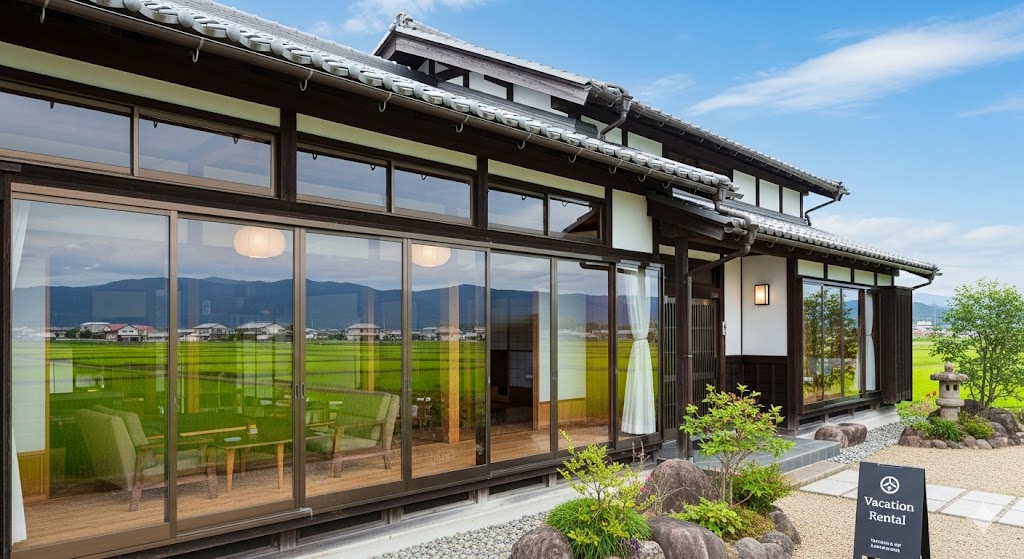
Far from the hustle and bustle of the city, restoring a historic kominka nestled in Japan’s timeless rural landscape and running it as a lodging business—it’s a dream that resonates deeply with many.
More and more people are drawn to this kind of lifestyle and business venture. A vacant house that was once nothing but a “negative asset” costing property taxes now holds the potential to become a “treasure” that captivates inbound and domestic travelers alike.
At the same time, however, there are no shortage of cases where people give up halfway through, saying “I started, but it’s not profitable at all” or “It’s far more difficult than I imagined, and I can’t keep going.”
Let us share the conclusion of this article upfront.
The key to succeeding with a kominka vacation rental in the countryside lies in letting go of urban norms and the pursuit of “convenience,” and instead thoroughly designing a concept and business plan that turns “inconvenience” and “age” themselves into “experiential value.”
In this article, we’ll walk you through, from a professional perspective, the concrete steps for getting started and the essential tips you absolutely need to avoid failure—so that your kominka vacation rental dream doesn’t remain just a dream.
Why Are “Rural Kominka” in Demand Right Now?
Before discussing strategies for success, it’s important to understand why rural areas—and old vacant houses in particular—represent such a significant business opportunity right now.
- 1. Overwhelming Demand for “Experiences”: Today’s travelers increasingly seek “authentic experiences” that connect them deeply with local culture and ways of life, rather than staying in a generic hotel room. Experiences unique to kominka—gathering around an irori hearth, gazing at the garden from the engawa veranda, heating a bath with firewood—are the perfect content to meet this demand.
- 2. The Value of the “Extraordinary”: Silence, beautiful nature, a sky full of stars, and a richness found within inconvenience—these are things you simply cannot find in the city. For people worn down by our information-saturated modern society, these represent an “extraordinary” value worth paying for.
- 3. Achieving Higher Rates Through Whole-House Rentals: Kominka are exceptionally well-suited to whole-house rental, allowing you to capture the demand from families or groups of friends traveling together. This makes it possible to set a high per-night rate—often tens of thousands of yen—which boosts overall profitability.
[7 Steps to Opening] How to Start a Kominka Restoration and Vacation Rental Business
Restoring a kominka can’t be driven by passion alone. Steadily working through the following seven steps, one by one, is the path to success.
STEP 1: Define the “Concept” at the Core of Your Business
- Clarify Your Target Audience: Picture concretely “who” you want to spend “what kind of time” in this space. Whether it’s “a family enjoying quiet, quality time across three generations,” “a group of friends who want to gather around the irori and talk long into the night,” or “a creative professional seeking a quiet environment to focus”—the clearer your target, the more consistent your space design and marketing strategy will be down the line.
- Put the Experience into Words: Express the appeal of your property in a short, resonant phrase, such as “the luxury of doing nothing in a 100-year-old kominka” or “a farm stay where you can experience life in a satoyama village.”
STEP 2: [Most Critical] Finding a Property and Assessing “Restoration Costs”
- How to Find a Property: The “vacant house banks” (akiya bank) run by local municipalities are your most valuable source of information, potentially offering properties below market price. Local real estate agencies and NPOs may also have leads on hidden gems.
- The Restoration Cost Trap: The most important thing in kominka restoration is not to be lured in by a low purchase price. The real cost lies in the **”renovation expenses”** that come after the purchase. In particular, ① seismic reinforcement, ② improving insulation performance, and ③ a full renovation of the wet areas (bathroom, toilet, kitchen) are essential for guaranteeing your guests’ safety and comfort—and it’s not unusual for these combined to cost several million yen or more, sometimes exceeding ¥10 million. Accurately estimating this as part of your initial investment is the foundation of your entire business plan.
STEP 3: Confirming Legal Regulations and Assembling a Team of Experts
- Confirm the Legal Framework: If you’re aiming to operate 365 days a year, obtaining a **”Hotel Business Act (simple lodging) license”** is essential. From the property-hunting stage onward, you’ll need to confirm whether the zoning (generally prohibited in residential-only zones) and the building’s structure can meet Hotel Business Act requirements. (Under the Minpaku New Law, which caps operation at 180 days per year, running a full-scale business is difficult.)
- Build a Team of Experts: Kominka restoration and obtaining a lodging business license aren’t things you can handle alone. Assembling a trustworthy team early on—including an architect experienced in kominka restoration, an administrative scrivener (gyoseishoshi) well-versed in lodging business regulations, and skilled local carpenters or contractors—is key to your project’s success.
STEP 4: Data-Driven Business Planning and Financing
- Financial Simulation: Research the room rates and occupancy rates of nearby competing properties to project realistic revenue. From there, subtract your initial investment (including renovation costs) and all operating expenses to calculate your payback period and rate of return.
- Financing: Based on this business plan, make full use of loans from the Japan Finance Corporation and **”vacant house renovation subsidies”** offered by national and local governments to cover any shortfall beyond your own capital.
STEP 5: [Restoration] Translating Your Concept into “Space”
- Deciding What to Keep and What to Change: While preserving as much as possible of the “character” found in the kominka’s pillars, beams, and fittings, pursue thorough modern comfort in areas guests interact with directly—such as the wet areas and the insulation of the bedrooms that affects sleep quality. This “fusion of old and new” is what elevates guest satisfaction.
- Amenities as Experience Devices: Features like an irori hearth, a wood-burning stove, a goemonburo (cast-iron bath), an engawa veranda, or a wooden deck are more than mere functional elements—they’re crucial “experience devices” that immerse guests in the story of “kominka living.”
STEP 6: [Most Critical] Building “Good Relationships” with the Local Community
A rural business simply cannot survive without coexisting with the local community.
- Advance Greetings: Before construction begins, and again before opening, be sure to visit the local district leader and neighboring residents to politely introduce yourself, explain your business, and work to earn their understanding. Easing their concern over “not knowing who’s coming to stay” is the first priority.
- Contributing to the Community: Actively participating in local festivals and cleanup activities, and adopting the mindset of becoming “a member of the community,” builds long-term trust. Establishing and clearly communicating strict rules to prevent noise complaints and trash-disposal problems caused by guests is also a critical responsibility of any host.
STEP 7: Marketing Strategy – Building a Fanbase Beyond OTAs
- Sharing Your Story on Social Media: Keep sharing your kominka’s restoration journey, daily life in the countryside, and the beautiful surrounding scenery via Instagram, note, and other platforms. This isn’t just promotion—it’s an activity that builds a base of “fans” who resonate with your values.
- Building Your Own Booking Channels: Encouraging direct bookings through your own website or social media DMs reduces the commissions you pay to OTAs and boosts your profit margin. Offering “direct booking perks” can also be effective.
- Partnering with Local Media: Getting featured by local tourism associations or regional information sites is another important way to engage the community in spreading the word.
3 Tips to Avoid Failure
- Maintain Strict Cost Discipline (Especially Restoration Costs): Don’t let passion alone carry you forward—maintain the calm, clear-eyed perspective of a business owner, constantly and rigorously reviewing the business and financial plans you created in Steps 2 and 4.
- Never Take Legal Regulations (Hotel Business Act, Fire Service Act) Lightly: Amateur assumptions like “this should be fine” can directly derail your entire business. Always follow the guidance of the expert team you assembled in Step 3 and of the relevant authorities.
- Make “Coexisting with the Community” Your Top Priority: Your business cannot survive for even a single day without the understanding and cooperation of local residents. Continuing the efforts from Step 6 even after opening is the ultimate secret to success.
Conclusion: Kominka Restoration Is Work That Creates a “Future” for the Community
Whole-house kominka rental isn’t just a real estate strategy. It’s a deeply creative, socially meaningful “business” that protects Japan’s fading, beautiful rural landscapes, breathes new life and energy into local communities, and etches unforgettable memories into the hearts of every guest who visits.
The path is by no means easy, but along it awaits a profound sense of fulfillment and a genuine richness that urban business ventures simply cannot offer.
Let’s Turn That “Dream” Into a “Business,” Together
“I’m drawn to the idea of restoring a kominka, but I have no idea where to even start…”
“I can’t even begin to guess how much the renovation will cost.”
“Getting a lodging business license seems far too complicated to handle on my own…”
Please bring those hopes and worries to us.
We at Stay Buddy Inc. are operations professionals who have led numerous vacation rentals to success in urban Osaka—and at the same time, we’re business development professionals dedicated to turning your dream into a sustainable **”business.”**
We will:
- ① Elevate your dream into a data-backed “business concept,”
- ② Work alongside our partner experts (architects, administrative scriveners) to clear the complex “legal regulations,”
- ③ Support you in creating a “business plan” that will convince financial institutions, and in securing financing.
- And ④ carry through to your **”marketing strategy” after opening,**
We’ll be your one-stop partner through **every process needed to realize your dream of “kominka restoration.”**
When your “passion” is combined with our “know-how in business development,” a truly wonderful lodging is sure to be born.
Please reach out to us for even the very first step in drawing up your blueprint. We look forward to hearing from you.