Leave Your Minpaku Management to the Experts
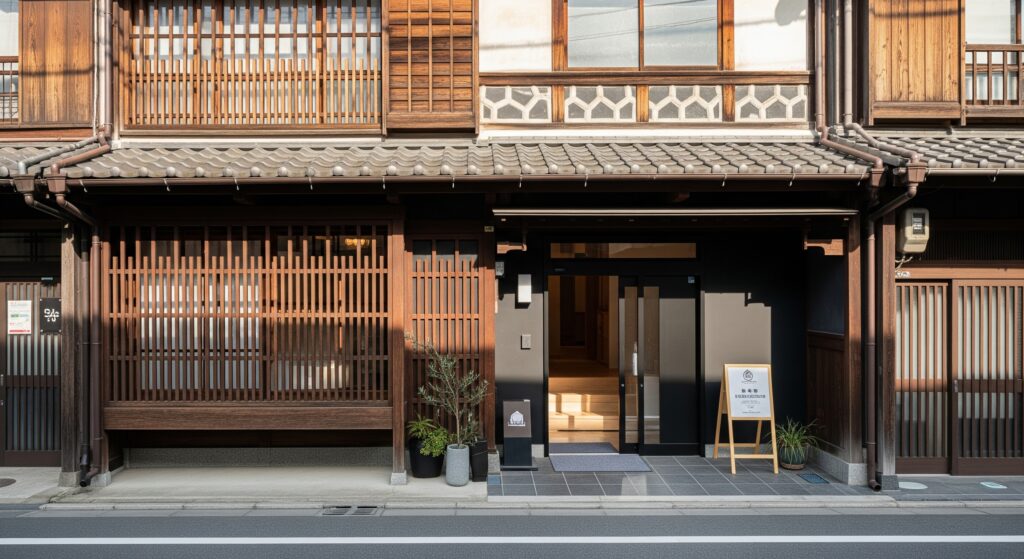
Free Online ConsultationThe combination of “Special Zone Minpaku” and “nagaya” (traditional Japanese row houses) is drawing considerable attention. Special Zone Minpaku is a lodging business recognized as an exception to the Hotel Business Act under the National Strategic Special Zones Act, designed specifically to meet the long-term stay needs of inbound foreign tourists. Nagaya, meanwhile, hold tremendous potential to offer both domestic and international visitors a distinctly Japanese stay experience thanks to their historical, cultural background and unique architectural style.
However, converting a nagaya property into a minpaku operation raises specific legal challenges rooted in its unique structure. In particular, compliance with regulations such as the Fire Service Act and the Building Standards Act can make or break the success of the business. This article takes a deep dive into “special exception approval”—an essential mechanism for operating Special Zone Minpaku in a nagaya both legally and efficiently. Understanding and properly applying this special exception approval serves as a practical guide for avoiding potential legal risks and steering your business toward success.
Due to its legal nature, a nagaya differs from ordinary multi-family housing and does not fall under the category of “special-use buildings” as defined by the Building Standards Act. As such, it is normally treated the same as a detached single-family house 3. However, when converting a nagaya into a “minpaku” for use as lodging, new regulations under the Fire Service Act and the Building Standards Act may come into play. It is the “special exception approval” that bridges the legal gap between this traditional classification and the new intended use.
Whether or not this special exception can be applied has a direct impact on a business’s profitability and feasibility. Special exception approval is not merely a relaxation of requirements—it represents an important regulatory design that accounts for the unique characteristics of nagaya as a specific type of architecture while ensuring guest safety and promoting diversity within the minpaku industry. Proceeding with a business venture without a thorough understanding of this system carries the risk of unintentionally illegal operations or unnecessarily excessive equipment investment, making a solid grasp of it extremely valuable.
1. The Basics of Special Zone Minpaku and Nagaya
1.1. What Is Special Zone Minpaku? How It Differs from the Hotel Business Act and the Minpaku Law
Special Zone Minpaku is a lodging business permitted under the National Strategic Special Zones Act, which exempts certain regions from portions of the Hotel Business Act 1. This system aims to boost local economic activity and tourism, and it can only be operated within areas designated as National Strategic Special Zones where the local municipality has also enacted a Special Zone Minpaku ordinance 1.
One of the biggest advantages of Special Zone Minpaku is that, in many cases, there is no limit on the number of operating days per year 1. While standard “minpaku” (private lodging businesses under the Private Lodging Business Act) are capped at 180 operating days per year, Special Zone Minpaku faces no such restriction. This allows operators to secure stable revenue year-round and design flexible operating plans aligned with tourist seasons, offering a distinct advantage for maximizing profitability 1. That said, a minimum stay of two nights and three days is required 1.
To operate a Special Zone Minpaku, you must obtain certification from the local municipality where the property is located (such as Osaka City or Ota City) 1. Key certification requirements include a room floor area of at least 25㎡, lockable entrances and windows, and a system in place for providing foreign-language guidance and emergency information 1.
The table below summarizes the main differences between Special Zone Minpaku and the standard minpaku system. This comparison offers a clear, concise understanding of the legal and operational advantages of Special Zone Minpaku and its overall positioning. In particular, whether or not there’s a cap on operating days is a critical piece of information that directly shapes business planning and is essential to sound decision-making.
| Item | Special Zone Minpaku (National Strategic Special Zones Act) | Minpaku (Private Lodging Business Act) |
| Legal Basis | National Strategic Special Zones Act | Private Lodging Business Act |
| Overview/Purpose | Provides mid- to long-term lodging facilities for inbound tourists within special zones, aiming to stimulate the economy and revitalize the local area | Provides temporary use of part of a residence for tourists and travelers |
| Eligible Operating Areas | Municipalities designated as National Strategic Special Zones that have also enacted a Special Zone Minpaku ordinance | Operable nationwide outside of industrial zones (may vary by municipality) |
| Cap on Operating Days | No limit (can operate year-round) 1 | Up to 180 days per year 1 |
| Minimum Stay | 2 nights, 3 days or more 1 | 1 night, 2 days or more 2 |
| Mandatory Outsourcing of Management (Owner-Absent Type) | No special rules (owner can handle it themselves) 2 | Mandatory (must outsource to a management company) 2 |
| Fire Equipment Relaxation Measures (Owner-Occupied Type) | None 9 | Available 9 |
| Obligation to Explain to Neighboring Residents | Mandatory (scope and method regulated by each municipality) 2 | Mandatory |
| Key Advantages | No cap on operating days, making it easier to maximize profitability 1 | Can be operated nationwide; fire equipment relaxation available for owner-occupied type |
| Key Disadvantages | Eligible operating areas are limited; fire equipment standards tend to be stricter | Cap on operating days applies; owner-absent type requires mandatory outsourcing of management |
1.2. What Is a Nagaya? Legal and Structural Differences from Multi-Family Housing
A nagaya is a type of multi-unit housing in which several units share walls but each has its own independent entrance, with no shared spaces like hallways or staircases 11. The main entrance of each unit must face directly onto either a public road or an on-site pathway with an effective width of at least 3 meters 11. This structure is closer in concept to a row of connected detached houses, and the absence of shared common areas is a major point of distinction from multi-family housing such as apartments or condominiums 3.
Under the Building Standards Act, nagaya—unlike multi-family housing—do not fall under the category of “special-use buildings” 3. Multi-family housing, due to its structure and how it’s used, is classified as a special-use building subject to stricter regulations than ordinary housing, including fire resistance and fire suppression equipment standards 3. Nagaya, however, are treated the same as detached houses, meaning fire prevention and evacuation regulations tend to be more lenient compared to multi-family housing 4.
This legal characteristic of nagaya carries significant implications when considering conversion to minpaku use. Because a nagaya is not classified as a “special-use building” under the Building Standards Act, it is normally “treated as a detached house,” and fire equipment installation requirements are typically lenient. However, once converted for use as “minpaku”—that is, “lodging facilities”—it becomes classified as a designated fire-protection facility under the Fire Service Act (Category (5)-i of the Attached Table). This change in use creates a legal gap: fire equipment that was previously unnecessary suddenly becomes mandatory. “Special exception approval” exists specifically to bridge this gap and enable minpaku operations that make the most of a nagaya’s unique characteristics.
There is a direct causal relationship between how a nagaya is classified under the Building Standards Act and how it is treated under the Fire Service Act once converted to minpaku use. Special exception approval functions as a legal adjustment valve that resolves this contradiction and enables minpaku operations that leverage the nagaya’s inherent qualities. Nagaya owners need to move beyond the conventional understanding that their property is simply “not a special-use building,” and instead deeply grasp that converting to minpaku use changes its legal standing and gives rise to new obligations. While special exception approval is a system designed to support this transition, its application conditions are strict, so hasty judgments should be avoided.
2. A Thorough Breakdown of “Special Exception Approval” Under the Fire Service Act and Building Standards Act
The most critical factor in leveraging a nagaya as a Special Zone Minpaku is understanding and applying “special exception approval” under both the Fire Service Act and the Building Standards Act. These exceptions can dramatically reduce the large-scale equipment investment that would otherwise be required, serving as the key to making the business viable.
2.1. Special Exception Approval Under the Fire Service Act and Its Conditions
When converting a nagaya for minpaku use, its treatment under the Fire Service Act varies significantly depending on its floor area and structure.
Conditions for a Nagaya to Be Treated as “Ordinary Housing” (The Under-50㎡ Exception)
When part of a nagaya is used for Special Zone Minpaku, there is an exception under which, if the total floor area used for minpaku purposes is under 50㎡, that portion is considered “part of an ordinary residence,” significantly easing fire equipment installation requirements 12. In such cases, a residential fire alarm—required for all housing—must be installed, but in many cases, equipment such as automatic fire alarm systems and emergency exit lights are not required 12. Voluntary installation of a fire extinguisher is strongly recommended 12.
By keeping the minpaku portion under 50㎡, the property qualifies for “ordinary housing” treatment, greatly reducing fire equipment requirements. This lowers initial investment costs and significantly reduces the barrier to starting the business. While this exception is extremely advantageous for small-scale nagaya minpaku, it has been noted that if minpaku operations begin in another unit within the same nagaya, the entire nagaya may then be regarded as a “lodging facility,” triggering requirements such as automatic fire alarm system installation 12.
This points to a chain-reaction risk unique to nagaya: developments in a neighboring unit can affect your own business. During the business planning stage, it’s essential to account for future expansion possibilities and potential changes in how neighboring units are used. While the cost savings from applying this exception are appealing, this means that long-term risk management and maintaining good relationships with neighboring units are essential.
The Exception Allowing an Entire Nagaya to Forgo Fire Equipment (Lessons from an Osaka City Case)
In Osaka City, there have been cases where, if the combined total floor area of all units in a nagaya is under 1,000㎡ and certain specific conditions are met, an exception is granted allowing fire equipment to be installed only in the minpaku portion 14. This represents a flexible approach that takes into account the structural characteristics unique to nagaya.
The main conditions for this exception to apply are as follows 14:
- The total floor area of the entire nagaya must be under 1,000㎡.
- The entrance of every unit must face directly onto a road usable for evacuation.
- There must be no shared common areas—such as stairways or hallways—between units.
- Ownership or management rights must be separately held for each individual unit (the owner or tenant of each unit must be a different person).
- The minpaku portion must account for less than half of the total residential floor area of the entire nagaya (an important condition inferred from the context of 15).
If you wish to apply this exception to a nagaya with multiple units, all five of the strict conditions listed above must be satisfied. In particular, “separation of ownership” and “presence or absence of shared spaces” are complex factors tied to the property’s structure and registration, requiring specialized knowledge to verify. If these conditions cannot be met, fire equipment may need to be installed throughout the entire nagaya, potentially causing costs to skyrocket.
While special exception approval is designed to accommodate the diversity of nagaya architecture (number of connected units, ownership structures, etc.), its application—though seemingly simple at first glance—is actually highly complex, making detailed, property-specific verification essential. In particular, confirming that ownership rights are held separately requires reviewing legal documents such as property registration certificates, which calls for specialized expertise.
While this exception can lead to substantial cost savings compared to treating the entire nagaya as a lodging facility, determining whether it applies is difficult for non-experts to judge. This underscores how crucial it is to consult in advance with professionals such as administrative scriveners (gyoseishoshi) and fire equipment specialists to avoid wasted investment and costly do-overs down the line.
Types of Required Fire Equipment and Installation Standards
Even when the exception applies, certain equipment may still be required—or may become fully required if the exception does not apply.
- Automatic Fire Alarm System: For buildings with a total floor area under 300㎡, a simplified automatic fire alarm system for specific small-scale facilities may be installed 13. Heat detectors should be installed in kitchens and washrooms, and smoke detectors elsewhere 16.
- Emergency Exit Lights: Installation may not be required if certain conditions are met regarding visibility of the exit and walking distance, but typically these must be installed in shared spaces such as hallways and staircases 13.
- Fire Extinguishers: If the total floor area of the minpaku portion is 50㎡ or more, installation is required on each floor 13.
- Flame-Retardant Items: Curtains and rugs (2㎡ or larger) must carry a flame-retardant label and meet flame-retardant standards 12. This is a key item checked during fire safety inspections.
- Evacuation Route Diagrams: Bedrooms are required to have an evacuation route diagram posted 13.
- Electrical Fire Alarms: Required for buildings with certain structures (lath-and-mortar construction) that meet specific conditions regarding contracted electrical current and total floor area 16.
- Fire Safety Manager: If a minpaku facility can accommodate 30 or more guests, appointing a fire safety manager is mandatory 2. This role can be outsourced to a specialized company, reducing the practical burden 16.
Fire-Resistant Upgrades to Party Walls and the Importance of Prior Consultation
In row-house style nagaya, the fire resistance of the “party wall” (the wall shared with the neighboring unit) can become an issue 17. When used for minpaku purposes, this party wall may need to be upgraded to quasi-fire-resistant construction, making prior consultation with the fire department essential 13.
Because nagaya units share walls, converting a unit to minpaku use may be seen as increasing fire risk. This can create a requirement to upgrade the party wall to quasi-fire-resistant construction in order to prevent fire from spreading to neighboring units. However, since the party walls in existing nagaya often fail to meet current standards, renovation work is frequently required. Proceeding with construction without first consulting the fire department carries the risk of being ordered to redo the work due to non-compliance, resulting in significant losses of time and money.
There is an interrelationship in which the structural characteristics of a nagaya (shared walls) give rise to new legal obligations (enhanced fire resistance) when converted to minpaku use. This may involve not just the installation of fire equipment, but intervention in the building’s actual structure, requiring coordination with the Building Standards Act as well. Since renovating party walls can become a large-scale project involving significant time and expense, it’s critically important to factor in this possibility at the property selection stage and to conduct thorough preliminary surveys with experts in order to avoid later trouble and wasted expenditure.
The table below summarizes the conditions for applying special exception approval under the Fire Service Act for nagaya, along with the fire equipment required in each case. This table is organized so you can see at a glance which exception applies to your nagaya property and what fire equipment is required as a result. This helps organize the complex fire safety regulations by linking specific conditions to the equipment needed, deepening understanding and making it easier to develop a concrete action plan.
| Case | Applicable Conditions | Required Fire Equipment | Notes |
| 1. Minpaku Portion Under 50㎡ in Total Floor Area | The area used for minpaku purposes is under 50㎡ 12 | Residential fire alarm (required), fire extinguisher (voluntary installation recommended), flame-retardant items (required), evacuation route diagram (required) 12 | Treated as ordinary housing, resulting in significantly relaxed requirements. However, if a neighboring unit begins minpaku operations, it may affect the entire building 12. |
| 2. Exception Applied to the Entire Nagaya (Osaka City Case) | Total floor area of the entire nagaya is under 1,000㎡; every unit’s entrance faces a road; no shared common areas; ownership is separate for each unit; minpaku portion is under half of the residential floor area (inferred) 14 | Automatic fire alarm system for the minpaku portion only (a system for small-scale facilities is acceptable), emergency exit lights (along the entire evacuation route), fire extinguishers, flame-retardant items, evacuation route diagram, fire safety manager (if capacity is 30 or more) 13 | May apply when only part of a multi-unit nagaya is converted to minpaku use. Upgrading the party wall to quasi-fire-resistant construction should also be considered 17. |
| 3. Cases Where the Above Exceptions Do Not Apply | Neither of the above sets of conditions is met 15 | The entire building is treated as a “lodging facility,” requiring stricter fire equipment (automatic fire alarm system, emergency exit lights, fire extinguishers, flame-retardant items, evacuation route diagram, fire safety manager, etc.). Standards similar to those for multi-family housing are likely to apply 13. | The application bar is significantly higher. Consulting with a professional is essential 15. |
2.2. Key Considerations Under the Building Standards Act and Change of Use
Using a nagaya for minpaku purposes may require a formal “change of use” procedure, converting its designation from “residence” to “lodging facility” 18. When carrying out this change of use, fire resistance standards under the Building Standards Act can become an issue 17. Multi-family housing is classified as a special-use building, subjecting it to stricter fire resistance and fire suppression equipment standards, but nagaya typically do not fall under this category 3. However, once converted for minpaku use, part of the property may be treated in a manner similar to a “special-use building,” which is something to keep in mind.
For row-house style nagaya, it’s absolutely essential to verify whether the “party wall” shared with a neighboring unit meets the fire resistance standards set out in the Building Standards Act 17. This is a critically important point, as it directly relates to preventing fire from spreading in the event of an emergency.
When considering a change of use to minpaku, the need for a “change of use” procedure under the Building Standards Act emerges, which in turn requires a reassessment of fire resistance standards. This particularly puts the spotlight on the nagaya’s shared wall (party wall), which is closely linked to the requirements for upgrading party walls to quasi-fire-resistant construction under the Fire Service Act.
This creates a complex challenge requiring compliance verification under both the Building Standards Act and the Fire Service Act. These two laws are closely interconnected, meaning a change under one can affect the other. Converting a nagaya to minpaku use is a textbook example of how a single project can generate compound legal challenges spanning multiple laws at once.
Coordination with experts in both the Building Standards Act and the Fire Service Act (architects, fire equipment specialists, and administrative scriveners) is essential. This is especially true when renovating an existing nagaya, since the building may have been constructed before certain legal amendments, making compliance with current law potentially difficult—another reason why early consultation with professionals is a critical step in avoiding risk.
Leave Your Minpaku Management to the Experts
Free Online Consultation3. From Application to Operation: Practical Tips for Avoiding Trouble
Successfully running a Special Zone Minpaku in a nagaya requires not only an understanding of the relevant regulations, but also careful attention to practical matters ranging from the application process through day-to-day operations.
3.1. An Essential Step Before Applying: Preliminary Consultation with Relevant Authorities
Before beginning the application process, it is absolutely essential to first consult with the relevant public health center, fire department, and building department (if necessary) 9. Since applicable laws and their interpretation can vary depending on the region and the specific property, individual guidance is needed. Prior consultation with the fire department, in particular, is essential for confirming whether special exception approval applies and determining what fire equipment will be required 13.
You will be asked to bring elevation drawings and floor plans of the property to the preliminary consultation 9. This allows for a smoother confirmation of equipment placement and evacuation routes. Skipping this preliminary consultation increases the risk of proceeding with preparations based on a mistaken interpretation, only to discover non-compliance issues at the formal application stage. This can lead to major rework and additional construction, ultimately resulting in wasted time and money. Preliminary consultation is not merely a fact-finding exercise—it’s an opportunity to align your understanding with that of the authorities, and it’s a critical step for ensuring a smooth application process later on.
It’s also important to take steps to avoid “he said, she said” disputes—for example, by keeping records of verbal guidance received, or getting confirmation in writing whenever possible. Since government agencies base their decisions strictly on the law, it’s essential for business operators to accurately convey their intentions and provide all necessary information without omission in order to receive appropriate guidance. Having a professional present can facilitate more constructive discussions, increasing the feasibility of the business.
3.2. Building Relationships with Neighbors and Reviewing Management Regulations
Before launching a minpaku business, you are legally required to provide an explanation to neighboring residents 2. The scope of residents who must be informed and the method of doing so are regulated differently by each municipality, so this must be confirmed during the preliminary consultation 9. In Osaka City, for example, this requirement covers all households in the building where the minpaku facility is located, all households in buildings on adjacent land, and all households in buildings within 10 meters, even across a park or road 2.
Because nagaya units share walls, noise from guests can easily become a problem 17. Recommended measures include posting notices inside the unit asking guests to “please keep noise to a minimum,” thoroughly briefing guests on the house rules in advance, conducting nighttime noise measurements, and strengthening soundproofing measures as needed 17. Since nagaya residents often have close relationships with one another, it’s important to proactively communicate your intent to operate a minpaku and secure their understanding beforehand 17. If there is significant opposition, you may need to reconsider your operating approach.
Trouble with neighboring residents can lead to complaints filed with the municipality, potentially resulting in administrative guidance or an order to improve operations. In the worst case, this chain of events could lead to revocation of your certification or a business suspension, making it impossible to continue operating. The relationship with neighboring residents is not simply a matter of etiquette—it’s a critical factor directly tied to the legal stability and continuity of the business.
This is especially true in closely packed living arrangements like nagaya, where noise transmission through shared walls and changes in lifestyle patterns can easily become a breeding ground for conflict. Explaining your plans to residents isn’t just a formal obligation—it’s an important strategic investment in reducing business risk. This means that careful, proactive communication and concrete countermeasures (noise mitigation, emergency contact systems, etc.) hold the key to long-term business success, far more so than how you respond after trouble has already occurred.
If the building has a management association, you’ll need to check whether the management regulations permit minpaku operations 17. Since some management regulations explicitly prohibit minpaku, prior confirmation is essential. Notably, even if the regulations state the property is to be used “exclusively as a residence,” it may still be possible to apply for Special Zone Minpaku certification if you obtain a written consent for minpaku use from the management association (as seen in an Osaka City case) 10.
If the management regulations explicitly state that “minpaku is prohibited,” operating a minpaku business is generally not possible. However, if the wording is more ambiguous—such as “exclusively for residential use”—there may be a path forward by obtaining the management association’s consent. In such cases, careful negotiation is needed to secure a written consent.
Management regulations are a private-law contract, constraining the business at a different layer than the public-law Special Zone Minpaku system. Interpreting existing regulations, in particular, requires specialized expertise, and the outcome may well depend on how negotiations unfold. Thoroughly reviewing the management regulations during the initial property selection stage is essential. If the wording is ambiguous, it’s wise to consult a lawyer or administrative scrivener and develop a negotiation strategy with the management association—this can help prevent legal trouble down the road.
3.3. Facility and Equipment Requirements, and Building an Operating System
Special Zone Minpaku requires a room floor area of at least 25㎡, lockable entrances and windows, walled partitions between spaces, and appropriate ventilation, lighting, natural light, moisture control, drainage, heating, and cooling equipment 1.
A kitchen, bathroom, toilet, and washbasin facilities are also mandatory. In Osaka City specifically, additional requirements apply: the kitchen and washbasin facilities must be separate, there must be running water suitable for drinking, cooking equipment capable of heating food (such as a microwave or stove), and cleaning tools such as a vacuum cleaner, cleaning cloths, and a trash can must be provided 10.
To accommodate foreign tourists, you must provide foreign-language guidance on how to use the facility, a system for providing emergency information in foreign languages, and a system capable of providing the services needed to support the stay of foreign guests 1. Even for owner-absent minpaku, since Special Zone Minpaku has no special rules regarding outsourcing of management duties, the owner can personally handle emergency response and cleaning (a point that differs from the standard minpaku system) 2.
The table below summarizes examples of equipment requirements for Special Zone Minpaku in Osaka City. By listing out concrete equipment requirements, this table serves as a practical checklist you can reference when planning property renovations or purchasing supplies. Osaka City in particular is a pioneering example of Special Zone Minpaku, and its detailed requirements can serve as a useful reference for other regions—making this table extremely helpful for getting a concrete picture of what’s needed.
| Item | Requirement Details | Related Info |
| Room Floor Area | Must be at least 25㎡ | 1 |
| Entrances and Windows | Must be lockable | 10 |
| Boundaries Between the Room and Other Spaces | Except for entrances and windows, boundaries between the room and other rooms, hallways, etc. must be constructed as walls | 10 |
| Equipment (Basic) | Must have appropriate ventilation, natural light, lighting, moisture control, drainage, heating, and cooling equipment | 10 |
| Plumbing Facilities | Must have a kitchen, bathroom, toilet, and washbasin facilities | 10 |
| Plumbing Facilities (Osaka City Additional Requirement) | Kitchen and washbasin facilities must be provided separately, with running water facilities capable of supplying tap water or other water suitable for drinking | 10 |
| Bedding and Furniture | Must have bedding, a table, chairs, and storage furniture | 10 |
| Cooking Equipment | Must have equipment or tools necessary for cooking. Must be capable of heating food, such as a microwave or stove (Osaka City additional requirement) | 10 |
| Cleaning Tools | Must have tools necessary for cleaning. Must have a vacuum cleaner, cleaning cloths, and a trash can (Osaka City additional requirement) | 10 |
| Foreign-Language Information Postings | Must post various information regarding how to use the facility in foreign languages | 1 |
| Foreign-Language Emergency Support | Must have a system for providing emergency information in foreign languages | 1 |
| Service System for Foreign Guests’ Stay | Must have a system in place capable of providing the services necessary to support the stay of foreign guests | 1 |
4. Conclusion: A Final Checklist for a Successful Nagaya Special Zone Minpaku
Operating a Special Zone Minpaku in a nagaya can be an extremely attractive business opportunity, provided you understand its unique characteristics and follow the proper legal procedures.
In particular, making the most of “special exception approval” under the Fire Service Act and Building Standards Act is critical for keeping initial investment low and boosting the profitability of the business. The significant relaxation of fire safety requirements available when the minpaku portion is under 50㎡, and the exceptions that apply to multi-unit nagaya when certain conditions are met, can have a major impact on your business plan. However, applying these exceptions is complex, and individual, property-specific judgment is essential.
Attempting to navigate these complex regulations and exception approval conditions on your own—without expert guidance—carries the risk of application rejection due to misjudgment, illegal operations, or substantial additional costs. By working with a professional, on the other hand, you gain access to accurate information, proper procedures, and the ability to avoid potential risks—ultimately saving time and money while stabilizing your business. Given the wide range of specialized knowledge and practical experience required—covering legal interpretation, preparing application documents, selecting and installing fire equipment, and explaining your plans to neighbors—it’s well worth emphasizing the importance of partnering early on with professionals such as administrative scriveners, fire equipment specialists, and architects.
In particular, having a professional present during preliminary consultations with the fire department allows for smoother and more accurate information gathering. The initial investment in hiring a professional can be thought of as “insurance” against far greater losses down the line—such as trouble, wasted expenses, or, in the worst case, the business falling through entirely.
This is especially true given that regulations are frequently revised and interpretations can vary by municipality, making a professional’s up-to-date knowledge and experience indispensable. Nagaya Special Zone Minpaku represents an attractive business opportunity, but its success hinges on accurately understanding and properly responding to the relevant regulations. Recognizing that a professional is not merely someone who handles paperwork on your behalf, but rather a vital partner in risk management and strategic planning for your business, is the shortcut to success.
Before launching your nagaya Special Zone Minpaku business, we recommend using the final checklist below to ensure your preparations are thorough and nothing is overlooked.
- Legal Confirmation of the Property
- Does your property meet the legal definition of a nagaya? (Confirmed under the Building Standards Act)
- Is it located within an area eligible for Special Zone Minpaku?
- Are there any issues in the management regulations regarding minpaku operations? (Can you obtain consent from the management association?)
- Fire Service Act-Related Confirmation
- Is the minpaku portion under 50㎡? (Potential eligibility for the fire safety exception)
- Does the property meet the conditions for the whole-nagaya exception (under 1,000㎡, entrance requirements, no shared common areas, separate ownership, etc.)?
- Is the fire resistance of the party wall shared with the neighboring unit acceptable? (Prior consultation with the fire department and building department is essential)
- Have you identified the necessary fire equipment (residential fire alarms, fire extinguishers, automatic fire alarm systems, emergency exit lights, flame-retardant items, evacuation route diagrams, etc.) and planned for their installation?
- Is a fire safety manager required? If so, do you have a plan for appointing one?
- Operations and Neighbor Relations
- Have you developed a concrete plan for explaining your business to neighbors and addressing noise and potential trouble?
- Facility and Equipment Requirements
- Can you meet the requirements for the room, plumbing facilities, cleaning tools, and foreign-language support?
- Administrative Procedures
- Have you already held preliminary consultations with the public health center, fire department, and building department?
- Professional Partnerships
- Have you consulted with professionals such as administrative scriveners and fire equipment specialists?
By comprehensively reviewing these points and preparing thoroughly, you’ll be well-positioned to operate a Special Zone Minpaku business in a nagaya with confidence and success.