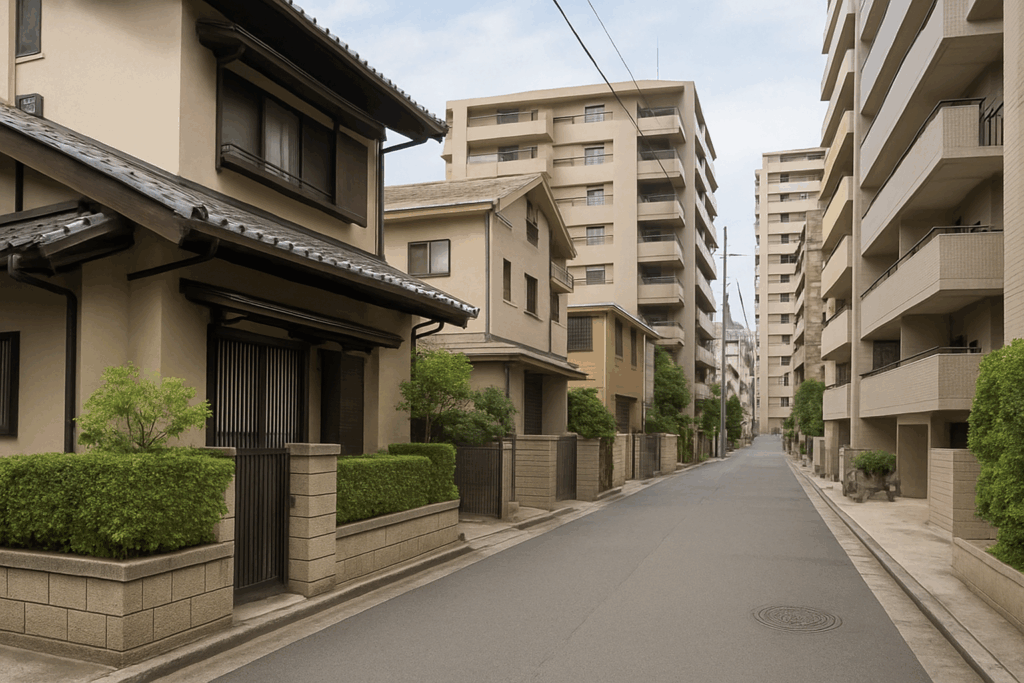
Kita Ward in Osaka City (the Umeda area) is one of the Kansai region’s premier business and tourism hubs, and in recent years demand for vacation rentals (minpaku) here has grown dramatically. With the surge in inbound tourism, hotels across Osaka City have been recording high occupancy rates day after day, leaving the city with a shortage of accommodation options. As a result, vacation rentals (private lodging facilities) have gained attention as an alternative to hotels, and Kita Ward now hosts a large number of operating vacation rental properties. With Expo 2025 Osaka Kansai and the subsequent Integrated Resort (IR) plans on the horizon, demand for accommodation is expected to expand even further.
This article explains the current state of vacation rental demand in Kita Ward, Osaka City, along with the benefits and considerations of operating Special Zone Minpaku (tokku minpaku) in both detached houses and condominium units. We’ll also cover key points for maximizing profitability in the vacation rental business, along with concrete figures based on the latest data. Technical topics are explained in an accessible way, so if you’re considering entering the vacation rental market in Kita Ward, this guide is well worth your time.
The Current State of Vacation Rental Demand in Kita Ward, Osaka City
Kita Ward serves as Osaka’s gateway, located close to Shin-Osaka Station (in Yodogawa Ward), where the Shinkansen bullet train stops, and the area around JR Osaka Station and Umeda Station is packed with commercial facilities and office buildings. Since Kita Ward draws both business travelers and tourists, accommodation demand here is extremely strong, with hotels maintaining high occupancy rates on weekdays and weekends alike.
According to statistics from the Japan Tourism Agency, following the recovery from the pandemic, Osaka Prefecture recorded approximately 18.48 million foreign guest-nights in 2023, ranking second nationwide after Tokyo. This figure surpasses pre-pandemic 2019 levels, showing that travel demand to Osaka has fully bounced back. Hotel occupancy rates in Osaka Prefecture are also among the highest in the country, reaching around 80% by the end of 2024—the highest in Japan. Against this backdrop, hotels alone can’t keep up with the robust demand, making the role of vacation rentals increasingly important.
Indeed, the number of vacation rental properties in Osaka City continues to rise. According to city announcements, driven by growing inbound demand, vacation rental properties within the city have surged, and across Osaka Prefecture as a whole, registrations for Special Zone Minpaku and residential lodging businesses combined surpassed 6,000 as of the end of March 2024. In Kita Ward alone, an estimated 500 vacation rental properties are currently in operation, making it one of the most concentrated areas for vacation rentals among any single administrative district nationwide. This reflects both Kita Ward’s excellent location and its relative ease of operation from a regulatory standpoint.
Furthermore, Expo 2025 Osaka Kansai is currently underway. The Expo is projected to draw approximately 28.2 million visitors, meaning an enormous number of travelers from Japan and abroad will flock to Osaka during the event period. Hotels throughout Osaka City are likely to remain fully booked for much of this time, raising concerns about accommodation shortages even in the areas surrounding Kita Ward.
Expo visitors are expected to stay not only in hotels near the bayside venue but also in large numbers in the conveniently located Umeda area. Operating a vacation rental in Kita Ward ahead of the Expo represents an excellent opportunity to capture this special demand. And even after the Expo ends, the planned opening of an Integrated Resort (IR) on Yumeshima Island between 2029 and 2030 is expected to bring roughly 20 million new visitors annually, meaning accommodation demand in Osaka City is expected to remain elevated over the long term as well.
As outlined above, Kita Ward, Osaka City is an area where vacation rental demand is strong right now, with continued growth expected going forward. While many vacation rentals already operate to meet this robust accommodation demand, supply still hasn’t fully caught up in some respects. Given this backdrop, entering the vacation rental business in Kita Ward carries considerable value and potential.
Why Kita Ward, Osaka City Is Well-Suited for Vacation Rental Operations
Beyond high demand, Kita Ward is also an excellent area for operating vacation rentals. Let’s look at the main reasons why.
Excellent Access and Location
Kita Ward (Umeda) serves as a transportation hub for the Kansai region, offering convenient access from Kansai International Airport and Shin-Osaka Station. From the Umeda area—where Osaka Metro, JR lines, and private railways all converge—day trips to Kyoto, Nara, and Kobe are easy, making it a popular base for longer stays. Since it’s “a convenient place to stay no matter where you’re headed” for travelers, properties in Kita Ward can expect high occupancy. The Umeda area is also packed with commercial facilities, restaurants, and sightseeing spots (such as the Umeda Sky Building’s Floating Garden Observatory and Osaka Tenmangu Shrine), creating an environment where guest satisfaction comes easily.
A Blend of Business and Tourism Demand
Kita Ward is home to numerous major corporate offices, giving it a strong identity as one of Osaka’s premier business districts. As a result, there’s substantial demand from business travelers on assignment, creating stable year-round demand—business use on weekdays, tourism on weekends.
While business travelers tend to gravitate toward hotels, more of them are now opting for condominium-style vacation rentals, driven by corporate cost-cutting and the convenience they offer during extended business trips. Some companies are also eyeing condominium-type accommodations near Umeda as a base for workation-style remote work stays. Kita Ward’s ability to capture both tourist and business demand means occupancy rates rarely dip due to seasonality or day of the week—a major advantage for vacation rental operators.
Regulatory Advantages
Osaka City has been designated a National Strategic Special Zone, which means that beyond operating under the Minpaku Act (Act on Private Lodging Business), operators can also run vacation rentals year-round through the unique Special Zone Minpaku (tokku minpaku) system. Furthermore, Osaka City has not established any additional local ordinances layering extra restrictions onto the Minpaku Act, making the barrier to entry relatively lower compared to other regions.
For example, while some municipalities in Tokyo’s 23 wards have ordinances banning weekday operations, no such restrictions exist in Osaka City. Since much of Kita Ward consists of commercial zones, it’s relatively easy to obtain hotel business licenses or Special Zone Minpaku certification here, creating fertile ground for launching a legally compliant vacation rental business. That said, for condominium properties, it’s necessary to confirm whether the building’s management regulations prohibit vacation rental use (more on this later). In any case, Osaka City’s Kita Ward offers a regulatory environment that’s genuinely favorable to the vacation rental business.
As outlined above, Kita Ward, Osaka City checks all three boxes for an ideal vacation rental location: strong demand, an excellent location, and relatively few regulatory hurdles. These combined factors explain why, as mentioned earlier, Kita Ward boasts one of the highest concentrations of vacation rentals within the city. Even for those new to vacation rental operations, this is an area where success is well within reach with proper property selection and preparation.
What Is Osaka City’s Special Zone Minpaku System? (The Basics of Regulations and Requirements)
To generate profit from a vacation rental in Kita Ward, you first need to choose an operating format that complies with the law. In Japan, there are broadly two ways to legally rent out a residential property as accommodation:
- Registration under the Residential Lodging Business (Minpaku Act) … Allows vacation rental operation for up to 180 days per year. The registration process is relatively straightforward, but the number of operating days is capped.
- Certification as Special Zone Minpaku (National Strategic Special Zone Business for Accommodating Foreign Visitors) — This system is only available in National Strategic Special Zones and allows lodging operations with no annual limit on operating days. Osaka City has been designated as one of these special zones.
When operating a vacation rental in Osaka City, obtaining Special Zone Minpaku certification is recommended if you want to maximize revenue. Under the Residential Lodging Business registration (the so-called Minpaku Act), you can only operate for up to 180 days a year, whereas Special Zone Minpaku status allows year-round operation with no days off required. This matters especially in Osaka, where inbound demand is so strong that being limited to just half the year would mean significant lost opportunity—which is why many owners choose to take advantage of the Special Zone Minpaku system.
So what exactly is Special Zone Minpaku? Put simply, it’s “a vacation rental business operated in designated areas under relaxed provisions of the Hotel Business Act.” Osaka City’s Special Zone Minpaku system establishes the following unique requirements:
Minimum Stay Length Requirement
Single-night stays (one night, two days) are prohibited; guests can only be accepted for two nights, three days or longer. This rule exists to discourage trouble arising from very short-term use. This means that even when listing on platforms like Airbnb, you cannot accept single-night bookings—reservations must be set for two nights or more.
Minimum Floor Area Requirement
The guest room (living space) must have a floor area of at least 25 square meters. Properties measuring less than 25㎡ (based on wall-center measurement) are not eligible to apply for Special Zone Minpaku certification. This rule is designed to prevent poor-quality accommodations that cram too many guests into cramped spaces. While this requirement is often difficult to meet for studio-type condominium units, if a property exceeds 25㎡, it doesn’t matter whether it’s divided into multiple rooms or not.
Zoning Restrictions
In principle, operations are only permitted in zoning districts where the construction of hotels and inns is allowed.
In Osaka City, certification is possible in commercial zones and some semi-residential zones, but Special Zone Minpaku is not permitted in purely residential areas such as Category 1 Exclusive Low-Rise Residential Zones (with some exceptions). While much of Kita Ward consists of commercial and office districts—meaning zoning is generally not an issue—it’s still important to verify the zoning classification for any specific property.
Holding an Information Session for Neighbors
Osaka City requires holding an explanatory session for nearby residents before submitting a Special Zone Minpaku application.
This process is designed to ease local residents’ concerns about vacation rental operations and build understanding. In practice, this means notifying residents and neighborhood associations within 100 meters of the property and explaining the business plan along with crime-prevention and noise-reduction measures. In urban areas like Kita Ward, where condominiums are densely packed, this resident briefing is mandatory—taking the time to do it thoroughly and carefully will help prevent trouble down the line.
These are the main conditions for Osaka City’s Special Zone Minpaku. In addition, you’ll also need equipment to comply with fire safety regulations (fire extinguishers, smoke detectors, and in some cases sprinkler systems), as well as proper sanitation management systems. To obtain Special Zone Minpaku certification, you must submit an application to Osaka City and undergo an on-site inspection before receiving official “special certification.”
These requirements are quite technical, but consulting with professionals such as administrative scriveners (gyoseishoshi) or vacation rental management companies can make the process go smoothly. Keep in mind that running a safe, legally compliant operation is ultimately the shortest path to stable revenue.
Detached House vs. Condominium Vacation Rentals: Which Should You Choose?
When starting a vacation rental business, the type of property you choose will shape your strategy and the points you need to watch out for. In Kita Ward, Osaka City, you’ll find both “converting an entire detached house into a vacation rental” and “converting a single unit in a condominium or apartment building into a vacation rental.” Each approach comes with its own pros and cons, so let’s compare them.
Pros and Cons of Detached House Vacation Rentals
Detached house vacation rentals in Kita Ward typically involve renovating a formerly residential house and offering it as a whole-house rental for a single group of guests. Recently, there’s also been growing interest in renovating traditional-style detached houses to offer a Japanese-style lodging experience.
Advantages
Relatively Easy to Obtain Approval
Detached houses (especially two-story or shorter buildings) tend to face lower hurdles under fire safety regulations, making it easier to obtain Special Zone Minpaku certification. According to expert reports, “for two-story detached houses, roughly 80% or more of cases receive fire safety approval (a certificate of compliance), whereas for condominiums, only about 25% of properties meet the requirements”—meaning detached houses have a structural advantage. In other words, clearing legal requirements tends to be easier, increasing the likelihood of a smooth path to opening for business.
Higher Capacity, Higher Profitability
Detached houses tend to have larger total floor areas, and depending on the layout, a single property can accommodate around 7 to 10 guests. By contrast, a single condominium unit typically accommodates only 4 to 6 guests, meaning detached houses allow you to set a much higher ceiling on per-night revenue. In fact, a two-story detached house can accommodate families or group travelers all at once, making it possible to target rates of ¥20,000–30,000 or more per night. Since guests can split the cost among several people, bookings tend to come in even at higher price points, and rates can be pushed even higher during peak seasons—giving detached houses a clear edge in profitability.
Fewer Conflicts with Neighboring Residents
Since a detached house is a standalone building, it also has the advantage of rarely causing neighbor complaints related to noise or trash disposal. In condominiums, other residents live above, below, and beside you, so late-night noise or improper trash disposal quickly leads to complaints—but with a detached house, issues generally stay contained within your own property boundary. Even neighbors unfamiliar with vacation rentals often feel less psychological resistance toward a standalone house than toward a condominium-style setup where strangers come and go within the same building. As a result, operational stress is often reduced.
Disadvantages
High Property Acquisition Costs
Securing a detached house in a central urban area like Kita Ward requires substantial capital. Even older properties command high prices due to land value, meaning purchase typically requires an investment in the tens of millions of yen. Renting a detached house also tends to come with higher rent than a single condominium unit. In terms of upfront costs, the barrier is higher compared to condominium vacation rentals.
Higher Maintenance Costs
Because detached houses have larger total floor areas, cleaning and facility maintenance costs also increase. More rooms mean more time and expense for cleaning, and maintenance covers a wider range of areas—plumbing, air conditioning, and other systems throughout the entire building. According to estimates from one vacation rental management company, a standard detached-house rental incurs roughly ¥100,000 per month in operating costs (utilities, consumables, cleaning outsourcing fees, etc.). Be careful to ensure sufficient revenue to justify this cost burden.
Greater Exposure to Zoning Restrictions
Since detached houses are often located in residential neighborhoods, some properties may sit in zones where Special Zone Minpaku operations aren’t permitted.
Even in Kita Ward, quiet residential areas slightly removed from the office districts may not receive approval under the Hotel Business Act. In such cases, you’d need to operate under the Residential Lodging Business framework (capped at 180 days per year) or abandon the vacation rental plan altogether. Carefully checking the zoning classification when selecting a property is essential.
Pros and Cons of Condominium Vacation Rentals
In Kita Ward, it’s also common to see condominium or apartment units converted into vacation rentals. The Umeda area has numerous studio-type condominiums, and it’s increasingly common for vacant units to be converted into vacation rentals or purchased specifically as investment properties.
Advantages
Abundant Location Options
Since condominium properties exist in large numbers even in central urban areas near train stations, it’s easier to secure well-located properties. A condominium within walking distance of Osaka Station or Umeda Station instantly gains tremendous drawing power as a vacation rental. Whereas detached houses are limited to certain areas, condominiums are scattered throughout the buildings of bustling commercial districts, giving you a wider selection of locations that tourists tend to prefer.
Lower Startup Costs
A single condominium unit generally costs less to purchase than a detached house, and rent for a leased unit tends to be relatively affordable as well. Since the space is more compact, renovation and furnishing costs are also lower. For example, for a studio or 1LDK unit, it’s sometimes possible to complete the interior and equipment setup for vacation rental use with a budget of several hundred thousand to just over a million yen. This makes condominium vacation rentals an accessible entry point even for those with limited capital.
More Efficient to Manage
In terms of cleaning and maintenance, smaller units like studios require dramatically less effort. Cleaning staff can finish the job in just one to two hours, allowing for faster turnaround and lower labor costs. Since the space and equipment you’re managing is more limited, handling reservations and guest inquiries is also simpler, with fewer complications when issues arise. Some condominiums also offer concierge services or security features, which can give guests extra peace of mind during their stay.
A Strong Fit for Demand
Many guests are looking for affordable accommodation for groups of 2 to 4 people, and condominium-type vacation rentals meet that need perfectly. Pricing at around ¥10,000 per night can attract bookings from couples and small groups. While these units aren’t as spacious as detached houses, the lower price point makes them easy to book casually, resulting in solid occupancy even on weekdays. Solo business travelers on assignment are another promising customer segment.
Disadvantages
The Management Regulation Hurdle
For condominiums, the building’s management regulations often stipulate that units must be “used exclusively as a residence,” effectively prohibiting short-term rentals (lodging business). Violating these regulations means you won’t receive legal approval, regardless of the circumstances. Even if the unit owner is fully supportive, you can’t operate a vacation rental unless the building’s management association gives its approval as well—meaning this significantly narrows your options right from the property-selection stage.
While some properties are indeed marketed for lease as “minpaku-OK” units, they’re not particularly plentiful. Before starting a condominium vacation rental, be sure to carefully check whether management association consent or a change to the regulations is required.
Risk of Friction with Other Residents
Operating a vacation rental within a condominium always carries the risk of complaints from other residents. You might hear complaints such as “foreign tourists were chatting loudly late at night,” “trash disposal rules are being violated, causing odors and crow problems,” or “I’m uneasy about strangers coming and going through the auto-lock entrance late at night in large numbers.” You may receive warnings via the building manager, and in the worst case, complaints could be escalated to the management association or local government demanding a halt to operations. This calls for even more careful attention to noise-prevention measures and enforcing house rules than with detached-house operations.
Possible Need for Additional Fire Safety Investment
For condominium units, particularly those on the third floor or higher, operating a vacation rental may require upgrading evacuation routes and alarm systems to meet fire safety regulations. Depending on the building’s structure, this can mean renovation costs for things like installing evacuation ladders for upper floors or an automatic fire alarm system. In some cases, existing building infrastructure simply can’t meet fire safety standards, forcing owners to abandon their plans. To avoid discovering “we failed the fire safety check” after already acquiring the property, it’s important to have an expert assess the property beforehand.
As you can see, detached houses and condominiums each come with their own set of trade-offs. Broadly speaking, the tendency is: “choose a condominium if you prioritize low upfront costs and ease of entry,” and “choose a detached house if you prioritize ease of obtaining approval and high revenue potential.” Of course, it ultimately depends on the specific property, so it’s best to choose based on your funding plan and the guest demographic you’re targeting.
Note that since Kita Ward attracts many families and group travelers, there’s real value in offering spacious accommodations through a detached-house vacation rental. On the other hand, a clean, well-maintained condominium rental in a convenient location near Umeda can achieve stable occupancy from business travelers and weekend couples’ trips. In either case, consideration for neighbors and a solid management framework are the shared keys to success. Choose the right property and commit to operating within the rules.
Key Points for Maximizing Revenue in Your Vacation Rental Business
Once your property selection and legal preparations are in place, the next challenge is maximizing profit through day-to-day operations. Even in a promising area like Kita Ward, Osaka City, revenue can vary widely depending on how well the operation is run. Here we’ll cover key points for boosting profitability and achieving stable operations in your vacation rental business.
Setting Appropriate Rates and Managing Occupancy
One of the appeals of vacation rentals is the ability to flexibly set nightly rates. Unlike hotels, you can maximize revenue by dynamically adjusting prices based on peak and off-peak seasons and days of the week. For instance, in popular areas of Osaka City, nightly rates of ¥10,000 or more are far from unusual.
It’s common to set a price difference of roughly 20–30% between weekdays and weekends—for example, ¥8,000 on weekdays and ¥12,000 on weekends—allowing you to avoid excessively low weekday occupancy while securing higher rates on weekends. Especially during peak tourist seasons like cherry blossom season, summer festivals, and the New Year holidays, bookings can come in even at rates more than double the usual price.
If profits from these high seasons can offset dips during slower periods, you can maintain strong overall revenue for the year.
As a target occupancy rate (OCC), aiming for around 70% annual average is a reasonable goal in the Kita Ward area. Given that Osaka City hotel occupancy rates exceeded 70% on a monthly basis during the latter half of 2023, it’s entirely feasible for vacation rentals to achieve comparable occupancy.
In fact, some experienced vacation rental hosts have achieved occupancy rates above 80%. The key lies in pricing adjustments and sales-channel strategy. By listing on multiple booking platforms (Airbnb, Booking.com, Rakuten Travel, etc.) and dynamically adjusting rates based on booking pace, you can minimize vacancies. Channel manager tools—which allow centralized inventory management—have become increasingly popular recently, and using one can help you efficiently maintain optimal pricing while reaching a wide customer base.
Providing Added Value Tailored to Your Target Customers
Guests staying at vacation rentals in Kita Ward come from a wide variety of backgrounds—foreign tourists, domestic travelers from other regions, business travelers, and event attendees—each with slightly different needs. To boost revenue, it’s important to identify your property’s primary target demographic and offer added value tailored to their specific needs.
For example, for a detached-house rental targeting families or groups, you might prepare multiple bedrooms to comfortably accommodate large families, or stock up on cookware and dishware to differentiate your property as “a place where everyone can cook together during their trip.” Units with kitchens genuinely appeal to guests, especially long-term stayers looking to cut down on dining-out costs. Offering Japanese-style interiors or tatami rooms to give foreign guests an authentic taste of Japanese culture can also boost your ratings and justify higher rates.
Meanwhile, if you’re targeting business travelers with a condominium-type property, equipping it with high-speed Wi-Fi and a desk space, and marketing it as “remote-work friendly” or “ideal as a base for business trips” is a smart approach. Offering discounts for extended stays is also effective for attracting travelers on assignments lasting a week or more. Since Kita Ward is a dense urban area, you can’t expect to offer parking, but you can instead emphasize convenience—like being just a few minutes’ walk from the station—and the ease of heading straight to your accommodation after work. Optimizing your property’s appeal for each target segment will help your listing stand out even as competition increases.
Cost Management and Operational Efficiency
Since profit equals revenue minus costs, optimizing your cost structure is equally important.
Costs involved in running a vacation rental span a wide range: property rent or loan payments, utilities, water bills, consumables (amenities, etc.), cleaning fees, labor costs, platform commission fees, and property tax (if you own the unit). Cleaning fees in particular—a variable cost incurred with every booking—shouldn’t be overlooked. Outsourced cleaning typically costs several thousand yen per visit, but for multi-night bookings, you can reduce this cost ratio by skipping mid-stay cleaning. This is why encouraging longer stays pays off not just in occupancy but in cost efficiency as well.
Additionally, running a vacation rental in Kita Ward calls for high-quality host support, including multilingual communication and 24-hour emergency contact availability. If handling all of this yourself proves difficult, you might consider outsourcing to a vacation rental management company. Hiring a management company typically involves a fee of around 20% of revenue, but comes with the benefit of professional expertise that can boost occupancy rates, along with reduced time burden on your end. Especially if you’re managing multiple properties or juggling a demanding day job, letting professionals handle operations—rather than overextending yourself—can be a smart strategy for reducing problems and improving guest satisfaction.
You can also achieve economies of scale by leasing linens or bulk-purchasing cleaning supplies. There are even communities where neighboring vacation rental owners exchange information and recommend reliable cleaning vendors to one another. Since Kita Ward has a large concentration of vacation rental operators, building a network through social media or local meetups can be a great way to pick up tips for improving operational efficiency.
Achieve Success with Vacation Rental Revenue in Kita Ward, Osaka City
Kita Ward, Osaka City is riding strong tailwinds for the vacation rental business, driven by rising inbound tourism and the special demand generated by major events. If you secure a property in the prime location of Umeda and take advantage of the Special Zone Minpaku system to operate year-round, you can achieve stable revenue through high occupancy and strong nightly rates. With bright prospects ahead—the Expo and the future IR opening—the surge in vacation rental demand appears to be more than a temporary blip; it’s expected to persist going forward.
Each property type has its own strengths: detached houses are well-suited to capturing demand from large groups and enjoy an edge in obtaining approval, while condominiums offer an easy entry point and access to prime locations. The essential foundation is choosing the format that matches your resources and operating in full compliance with the law. In particular, Osaka City’s Special Zone Minpaku system becomes a powerful tool when its conditions are properly followed. Many of its rules—such as requiring stays of two nights or more and ensuring at least 25㎡ of floor space—actually preserve guest comfort, which in turn tends to lead to strong reviews and repeat bookings.
What should never be forgotten is “hospitality” and “consideration for neighbors.” By offering cleanliness and attentiveness that rival hotels, along with prompt, responsive communication, you can boost guest satisfaction, which translates into strong reviews and greater booking power through word of mouth. Building good relationships with neighboring residents—greeting them, avoiding disturbances through soundproofing measures, and strictly following trash disposal rules—and truly integrating into the community is also a key to long-term success. Given Osaka’s famously warm and welcoming character, approaching things with sincerity should earn you plenty of local support.
Starting a vacation rental in Kita Ward also carries social significance—providing comfortable accommodations for the many visitors who come to Osaka. You’ll be helping to ease the hotel shortage and contributing to the local economy. Balancing profit with community contribution, while personally experiencing the vibrancy of Osaka as a tourism destination, is truly the reward of running a vacation rental business. With careful preparation and the right expertise, we hope you succeed in generating strong revenue from a vacation rental in Kita Ward, Osaka City.
For Special Zone Minpaku in Kita Ward, Osaka City, Trust Stay Buddy Inc.
At Stay Buddy Inc., we draw on extensive experience to provide comprehensive support—from launching a vacation rental tailored to its local area all the way through to full management services. If you’re aiming to succeed with Special Zone Minpaku in Kita Ward, Osaka City, please don’t hesitate to reach out. We’ll be happy to propose the plan best suited to your needs. We look forward to hearing from you.
References
- Osaka City Health Bureau, Environmental Health Division, “For Businesses Considering Starting a Vacation Rental” (updated December 16, 2024)
- Japan Tourism Agency, “Accommodation Travel Statistics Survey: 2023 Annual Figures (Preliminary)” results (Fukuripa, March 16, 2024 article)
- JLL Japan, “Osaka Real Estate Investment Market Booming Along with Expo 2025 Osaka Kansai” (April 9, 2025)
- Diamond Online, “Expo 2025 Osaka’s Projected Attendance of ‘28.2 Million’—Can You Explain What That Really Means?” (2023)
- Asahi Shimbun Digital, “Government Moves Toward Approving Osaka’s IR, Aiming for Japan’s First Casino to Open in 2029” (April 2023)
- Plays Inc., “Is Kita Ward Easy for Vacation Rental Operations? Explaining Demand and Key Operating Points in Kita Ward” (vacation rental management company blog)
- Japan General Policy Fund, “Is Vacation Rental Management in Osaka Profitable? Explaining the Pros and Cons” (Vacation Rental Investment Info Navi, January 18, 2025)
- Partners Osaka Legal Office, “Vacation Rental Application Q&A (Which Is Better for Osaka City Vacation Rentals: Detached House or Condominium?)