Leave Your Vacation Rental Management to Us
Completely Free Online ConsultationUtilizing a Vacant Single-Story House? The Hotel Business License Is Your Only Choice: Steps and Cautions Before Opening
An inherited single-story family home, or a charming old traditional house you found in the countryside.
“It has good vibes with a garden, but the rent would be too low to make renting it out worthwhile, and demolition costs too much…”
Many owners find themselves puzzling over how to make use of a single-story house in just this way.
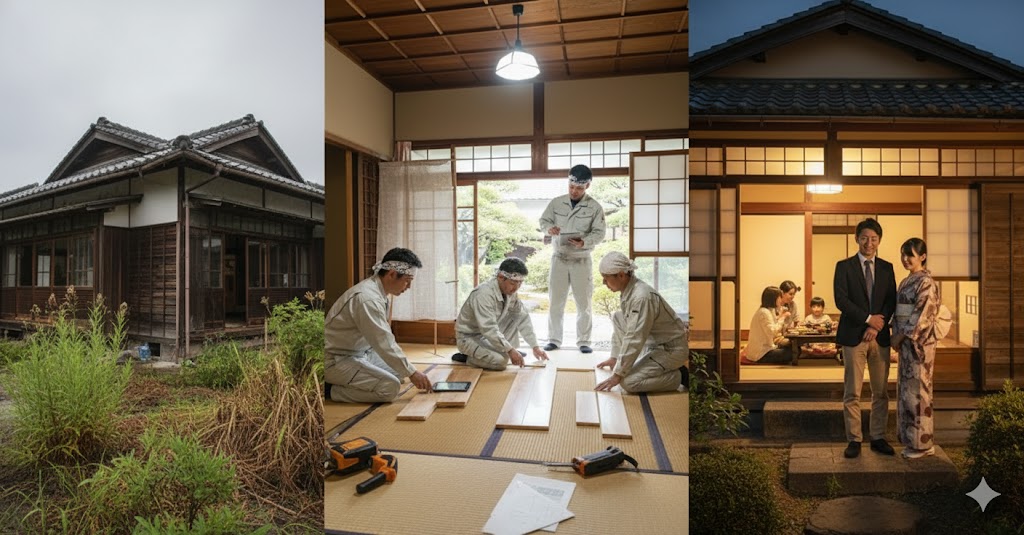
But let us state this clearly: from a real estate investment perspective, a “vacant single-story house” is an asset with extraordinarily high potential—a diamond in the rough.
And the one and only path to maximizing that value is to obtain a “hotel business” (simple lodging) license and operate it as a 365-day-a-year accommodation facility.
Why a “single-story house” rather than a condo or a two-story building? And why should you go with the more demanding “hotel business” license instead of the simpler Private Lodging Business Act route?
In this article, we’ll thoroughly explain the overwhelming strengths of single-story houses, the concrete steps to transform one into a highly profitable business, and the pitfalls you need to watch out for along the way.
Why “Single-Story House × Hotel Business License” Is the Ultimate Investment Strategy Right Now
Let’s unpack why this combination is a winning formula, looking at both market demand and the property’s inherent characteristics.
1. “No Stairs” Is a Universal Value Proposition
The single-story house’s defining feature—a completely flat flow throughout—becomes an enormous asset when operating it as an accommodation facility.
- Elderly guests and three-generation trips: Elderly travelers with limited mobility can stay comfortably, letting you capture demand from family trips honoring parents.
- Families with young children: With no risk of falling down stairs, the property becomes a reassuring choice for families.
- Inbound travelers: Not having to haul heavy suitcases up a staircase is a major draw for foreign visitors on extended stays.
2. Freedom from Noise Complaints
The most persistent headache in vacation rental operation is noise disputes between floors. A single-story house eliminates this problem entirely.
Whether kids are running around or friends are chatting late into the night, there’s no upstairs or downstairs neighbor to worry about. This **complete sense of privacy** doesn’t just boost guest satisfaction—it also gives operators peace of mind by significantly reducing the risk of neighbor disputes.
3. Maximizing Revenue Through 365-Day Operation
Under the Private Lodging Business Act, which caps operations at 180 days per year, recovering fixed costs and turning a profit is an uphill battle. This is especially true for standalone properties like single-story houses, which come with their own maintenance costs.
That’s exactly why obtaining a **”hotel business” (simple lodging) license**, with no cap on operating days, is essential. To capture every last day of peak-season and weekend demand and maximize revenue, there really is no other option.
[Complete Roadmap] 7 Steps to Opening Your Single-Story House as a Licensed Hotel Business
Now let’s walk through, step by step, how to actually revive a vacant single-story house into a licensed accommodation facility.
Step 1: [Most Critical] Investigate “Zoning Designation” and “Road Access”
Before purchasing a property or drawing up renovation plans, you must confirm the “legal barriers” that apply.
- Zoning designation: In principle, hotel businesses cannot operate in “exclusive residential zones.” Check with your municipality’s urban planning division to confirm whether the location falls within a permitted area (such as a commercial zone or neighborhood commercial zone).
- Road access requirement: Does the property face a road recognized under the Building Standards Act for at least 2 meters? Without this, a change of building use or renovation/extension may not be approved.
Step 2: “Pre-Consultation” with Government Agencies
Starting construction based on your own judgment is strictly off-limits. Bring your floor plans and consult with the following offices:
- Public health center: Regarding Hotel Business Act standards (guest room floor area, number of toilets, washbasins, etc.).
- Fire department: Regarding Fire Service Act standards (automatic fire alarm systems, exit signage, etc.).
- Building administration division: Regarding Building Standards Act requirements (natural lighting, ventilation, procedures for change of use). This is where you’ll clarify **exactly what construction work is needed to obtain the license.**
Step 3: Develop a Renovation Plan and Get Estimates
Based on the guidance from authorities, refine your plan further to bring out the unique charm of the single-story house.
- Unity with the garden: Make the most of the single-story house’s signature privilege—the garden—by designing sightlines from the living room, adding a wood deck, and so on.
- Updated plumbing and bathroom fixtures: A sense of cleanliness is essential. Replace old bathtubs and toilets with modern equivalents.
- Cost management: Fire safety equipment installation costs in particular tend to run high. Get quotes from multiple contractors and simulate whether the numbers will work out profitably.
Step 4: Begin Construction and Install Fire Safety Equipment
Once the plan is finalized, construction begins.
- Interior and facility work: Consider not just design appeal but also ease of maintenance.
- Fire safety construction: Fire safety equipment is the single most important factor in obtaining a hotel business license. Have a licensed fire equipment technician reliably install systems—such as automatic fire alarm systems designed for small-scale facilities—sized appropriately to your building.
Step 5: Prepare and Submit License Application Documents
Alongside construction, you’ll need to prepare a substantial stack of application documents.
- Hotel business license application
- Application for fire code compliance notification
- Structural and equipment specification documents, floor plans, and more—since these require specialized expertise, it’s common and reliable to have a licensed administrative scrivener (gyoseishoshi) handle them.
Step 6: On-Site Inspection by Authorities
After construction is complete, officials from the public health center and fire department will visit the property to rigorously check whether it matches the application and meets all legal standards. Any deficiencies found here will require corrective work, delaying your opening.
Step 7: Receive Your License and Begin Operations
Once you pass inspection, you’ll finally be issued your “Hotel Business License.”
- Register with OTAs: List your property on platforms like Airbnb and Booking.com to start attracting guests.
- Activate your operations team: Coordinate with cleaning companies and property management partners to begin welcoming guests.
3 Cautions for Success When Converting a Single-Story House Into a Licensed Hotel Business
1. Don’t Underestimate “Fire Safety Equipment Costs”
When converting a typical residential home into an accommodation facility, fire safety equipment is usually the biggest expense. In particular, if the total floor area is large or the layout makes securing evacuation routes difficult, construction costs can run into the millions of yen. It’s crucial to get a rough estimate of these costs at the property-selection stage.
2. The Risk of Properties Without a “Certificate of Completion Inspection”
With older single-story houses, it’s common for the original “certificate of completion inspection” (proof that a completion inspection was conducted at the time of construction) to be lost, or for the inspection to have never taken place at all. Depending on the municipality, without this certificate, your hotel business license application (change of use) may be denied, or you may be required to conduct a costly “legal compliance status survey.”
3. Consideration and Communication with Neighbors
Single-story houses are often surrounded by other standalone homes, meaning proximity to neighbors tends to be close. There’s a real risk of opposition arising from anxiety over “strangers coming and going.”
Making the rounds to greet neighbors politely before construction and before opening, and sharing an emergency contact—this kind of sincere, community-minded approach is the lifeline that will let you sustain your business for the long haul.
Conclusion: Single-Story House × Hotel Business License Is a “High-Yield Asset” Worth the Effort
The path to reviving a single-story house as a licensed hotel business facility is by no means smooth. Zoning restrictions, fire safety equipment costs, complex application procedures…
But once you clear these high hurdles, what awaits is **”rarity”**—a competitive edge that rivals can’t easily replicate—and **”high profitability,”** with enthusiastic, repeat demand from families and inbound travelers alike.
Turning an ordinary old house into a treasure that’s beloved by the local community and brings you wealth.
That challenge is sure to become one of the best investments of your life.
We’ll Help You Clear Those “High Hurdles” Together
“I’m interested in making use of my single-story house, but the legal requirements and procedures seem so complicated that I’m ready to give up…”
“I want to know whether my vacant property could actually qualify for a hotel business license.”
“I want to entrust everything—from renovation to operation—to a partner I can trust.”
If any of this resonates, please reach out to us.
We are Stay Buddy Inc., a team of professionals who have revived countless old traditional houses and vacant properties, primarily in Osaka, into highly profitable licensed accommodation businesses.
Here’s what we offer:
- ① We conduct thorough legal research on your property (zoning, Building Standards Act, Fire Service Act) and diagnose whether a license can be obtained.
- ② We propose renovation plans that keep costs down while maximizing the single-story house’s unique appeal.
- ③ We fully handle the complex and tedious “hotel business license application” process, working alongside our partner administrative scriveners.
- And ④ we provide one-stop support after opening, covering guest acquisition, operations, and cleaning.
As the business owner, all you need to focus on is receiving the profits.
We’ll take care of all the troublesome paperwork and on-site coordination. Why not join us in unlocking the full potential of your single-story house?
Start with a free diagnosis—feel free to reach out anytime.