Leave Your Minpaku Management to the Experts
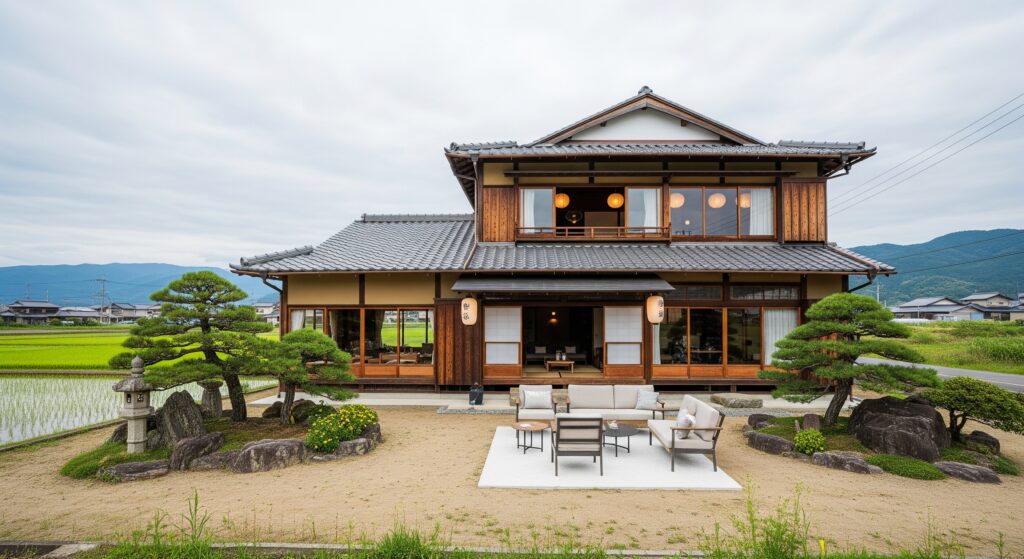
100% Free Online ConsultationLeaving behind the hustle and bustle of the city to run a stylish inn renovated from an old farmhouse, surrounded by nature… More and more people are drawn to this kind of lifestyle, wondering, “Could that vacant house back in my hometown actually generate income if I turned it into a minpaku?”
At the same time, though, practical doubts creep in: “Does rural minpaku actually turn a profit?” and “What’s a realistic profit margin to expect?”
To cut to the chase: there’s **no such thing as a “standard” profit margin for rural minpaku.** Profit margins can hover in the low teens, or with the right strategy, climb above 40%. It’s a business with an enormous range of outcomes.
In this article, to help you turn your vacant house from a “liability” into an “asset,” we’ll break down the profit structure of rural minpaku and walk you through concrete simulations and success secrets for building stable income.
The Bottom Line: There’s No “Standard” Profit Margin for Rural Minpaku — But There Is a Winning Formula
Unlike urban business hotels, where you can look up average profit margins by area, the world of rural minpaku offers no such benchmark. That’s because the unique “character” of each individual property has a massive impact on its profitability.
- Property appeal: Is it a 100-year-old farmhouse, or a sleek designer home?
- Location: A stunning ocean view, or a quiet spot deep in the forest?
- Value offered: Just a place to sleep, or does it include “experiences” like farm work or a sky full of stars?
These factors dramatically shift nightly rates, occupancy, and operating costs alike. What matters isn’t knowing the industry average — it’s figuring out how to build a “winning formula for high profit margins” tailored to your own property.
The 3 Variables That Determine Rural Minpaku Profitability
Before thinking about profit margin, there are three key numbers you need to understand.
① Nightly Rate
Rural minpaku typically operates on a **”whole-house rental”** model, where a single group rents out an entire house. Unlike a single room in an urban apartment, this gives guests exclusive access to a private space, allowing you to set a higher nightly rate. It’s not unusual for rates to run 20,000–50,000 yen or more per night. You’ll want to determine this rate by researching local tourism draws, the experiential value you can offer, and competitor pricing.
② Occupancy Rate
Occupancy rate is the biggest challenge in rural minpaku. Compared to urban areas, there’s less “convenient” or drop-in demand, so occupancy tends to run lower. While typical hotels in tourist areas see 60–70% occupancy, a realistic target for rural minpaku is more like 30–50% — and figuring out how to push that number higher is where your skill as an operator really comes into play.
③ Operating Costs
Costs fall broadly into two categories.
- Initial costs: Renovating the vacant house makes up the largest share, often running from several million yen up to 10 million yen or more. Then there’s furniture and appliances, fire safety equipment installation, and permit application fees.
- Running costs: OTA commission fees (3–15% of revenue), cleaning fees (starting at 8,000 yen per visit), utilities, communication costs, consumables, property tax, and fire insurance. Older standalone houses in particular tend to rack up higher utility and maintenance costs.
[Profit Simulation] How Much Could Your Vacant House Actually Earn?
Let’s use these variables to run a concrete simulation of income, expenses, and profit margin.
[Assumed Conditions]
- Nightly rate: ¥25,000 / night
- Target nights booked per month: 10 nights (approx. 33% occupancy)
- Cleaning fee: ¥10,000 / visit
[Monthly Income & Expense Simulation]
▼Revenue
- ¥25,000 × 10 nights = ¥250,000
▼Expenses
- OTA commission (assumed 15%): ¥250,000 × 15% = ¥37,500
- Cleaning fees: ¥10,000 × 10 visits = ¥100,000
- Utilities and communication costs: ¥30,000
- Consumables, insurance, and miscellaneous: ¥20,000
- Total expenses: ¥187,500
▼Profit
- Revenue ¥250,000 − Expenses ¥187,500 = Monthly profit ¥62,500
▼Profit Margin
- Profit ¥62,500 ÷ Revenue ¥250,000 × 100 = 25%
In this simulation, the profit margin comes to 25%. But if you could raise your booked nights to 15 (50% occupancy), revenue would climb to ¥375,000 and profit to ¥131,250 — pushing the profit margin up to 35%.
As you can see, how well you manage occupancy has an enormous effect on your overall profit margin.
3 Secrets to Boosting Profit Margin and Achieving Stable Income
So how do you raise occupancy and achieve strong profit margins? Successful rural minpaku properties tend to share three things in common.
Secret 1: Shift from “Staying” to “Experiencing” — Offer Something Truly One-of-a-Kind
Guests who choose rural minpaku aren’t simply looking for a cheap place to sleep. They’re seeking “an experience they can’t get anywhere else.”
- Farming experiences: Harvesting vegetables in the field and eating them fresh on the spot.
- Traditional culture experiences: Learning pottery, indigo dyeing, or soba-making from a local master.
- Nature experiences: Night tours to gaze at a sky full of stars, canoeing, or fishing.
- Culinary experiences: Meals around an irori hearth, or cooking classes featuring local specialties.
By building this kind of **”experiential value”** into your stay packages, you can break free from price competition and win over guests even at a premium nightly rate.
Secret 2: Targeted Marketing and Messaging
A message that tries to speak to “everyone” ends up speaking to no one.
- Define your target: Get specific — think “urban families raising kids,” “international travelers seeking Japan’s classic countryside scenery,” or “couples who want to work remotely somewhere peaceful.”
- Get the word out: Share your property’s charm and the experiences it offers in a way that resonates with your target audience, through channels like Instagram, Facebook, or specialized travel blogs. Beautiful photos and videos carry far more weight than words alone.
Secret 3: Rigorous Cost Control and a DIY Mindset
Raising your profit margin isn’t just about increasing revenue — smart cost-cutting matters just as much.
- DIY renovations: Doing what you can yourself — painting walls, building simple furniture — can significantly reduce your initial costs.
- Streamlined operations: Smart locks and templated guest messaging cut down on the time and hassle of day-to-day management.
- Tapping local networks: Hiring local senior worker programs or trusted individuals for cleaning and minor repairs — instead of city-based contractors — can help keep costs down.
Conclusion: Rural Minpaku Is a Business — And with the Right Strategy, the Potential Is Limitless
Turning a vacant countryside house into a minpaku isn’t just real estate leasing. It’s a creative **”small business”** — one where you uncover what makes the local area special, craft your own unique value, and deliver it to the right audience.
There’s no fixed benchmark for profit margins, but flip that around and it means your profit potential is essentially uncapped — it all comes down to your strategy.
“I want to build out a more concrete business plan and financial simulation.”
“Permit applications and legal procedures feel overwhelming to tackle alone…”
“I don’t have the marketing know-how to feel confident about raising occupancy.”
If you can see the huge potential in rural minpaku but feel stuck when it comes to the technical, specialized side of things, we at Stay Buddy Inc. are here to give you that final push forward.
We’re not just a property management company. We’re business-development specialists who take the raw potential of a vacant house and polish it into a “sparkling gem” — a property beloved by guests and generating stable revenue. From building out your business plan and supporting you through complex permit applications, to crafting marketing strategies that maximize your profit margin, we support your journey end-to-end.
Use the contact form below to tell us about your vacant property and the vision you have in mind — no pressure, just a conversation. We’ll help you turn that vision into real, stable income.