Accommodations in Asahikawa are undergoing a major transformation driven by the growth of inbound tourism. As Hokkaido’s second-largest city, Asahikawa and its neighboring town of Biei boast rich tourism resources such as Asahiyama Zoo, the Blue Pond, and lavender fields, drawing large numbers of visitors from both Japan and abroad throughout the year. However, the guest demographics differ significantly between winter and summer, meaning accommodation operators need to adjust their management strategies season by season.
In recent years, the number of foreign visitors to Hokkaido has exceeded 3 million annually, and the Asahikawa-Biei area has benefited greatly from this trend. What makes this region unique is how the nationality mix of visitors shifts with the seasons: travelers from Australia and Southeast Asia flock here in winter seeking powder snow, while visitors from Taiwan, Hong Kong, and mainland China come in summer for the flower fields and natural scenery.
This article is intended for accommodation owners and those considering entering the vacation rental business in the Asahikawa-Biei area. We’ll break down the differences between winter and summer guest demographics using concrete data, and provide detailed guidance on the inbound strategies you should optimize for each season.
The Current State of the Inbound Market in Asahikawa’s Accommodation Sector
Asahikawa’s annual guest volume stands at roughly 3 million overnight stays, with the proportion of foreign guests recently climbing to around 15-20%. A major driver of this inbound growth is Asahikawa Airport, which offers direct international flights from Taipei and Seoul, allowing visitors to bypass New Chitose Airport entirely. Additionally, JR Asahikawa Station serves as a rail hub for Furano and Biei, and its convenient location—about 1 hour and 25 minutes from Sapporo by limited express train—further boosts accessibility.
By accommodation type, business hotels dominate within Asahikawa city, while pensions, cottages, and whole-house vacation rentals are on the rise in and around Biei and Higashikawa. Whole-house rentals in particular pair well with inbound travelers, who often travel in groups, and many such properties maintain occupancy rates above 70% at price points of ¥20,000-50,000 per night. According to Airbnb data, the number of vacation rental listings in the Asahikawa-Biei area has grown roughly 1.8x over the past three years, signaling a shifting competitive landscape.
Winter Guest Demographics and Accommodation Needs
Nationality Breakdown of Winter Visitors
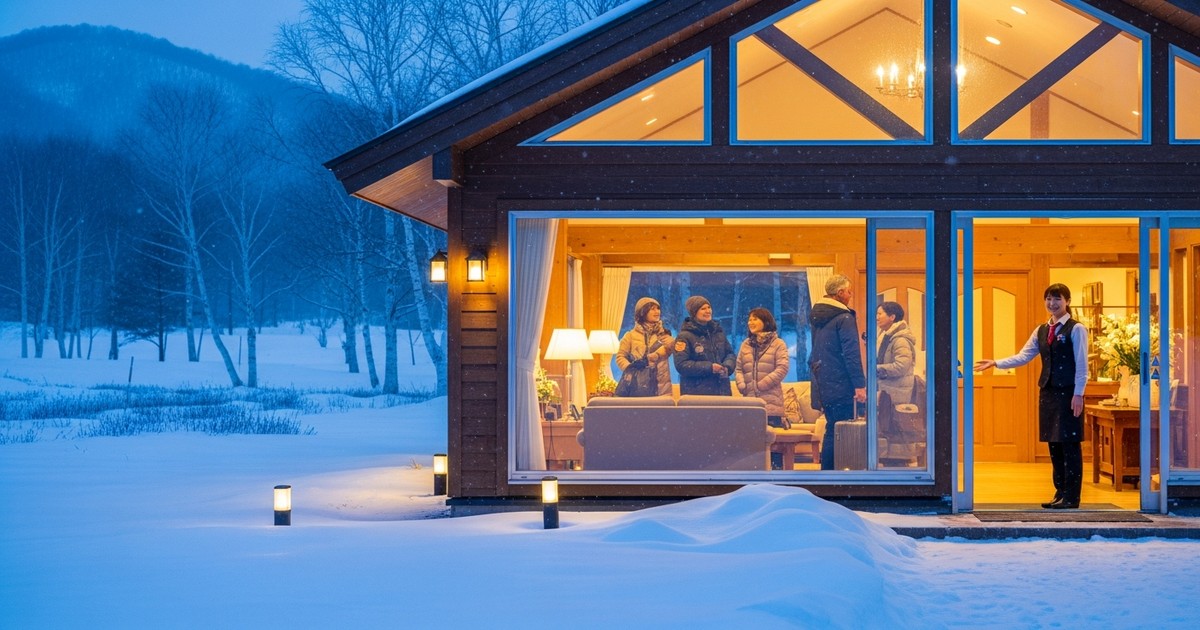
During the winter season (December-March) in Asahikawa-Biei, notable visitor groups include travelers from Australia, Singapore, Thailand, and Malaysia. Australians in particular concentrate heavily in the December-February period, which coincides with their summer holidays, and tend to stay for extended periods to ski and snowboard at Asahidake or Kamui Ski Links. Their average stay length is 5-7 nights—longer than other groups—resulting in higher revenue per booking.
For Southeast Asian travelers, the “snow experience” itself is often the primary purpose of their trip, with activities like playing in the snow, ice-related attractions, and the famous penguin walk at Asahiyama Zoo being popular draws. These guests typically stay for shorter periods of 2-3 nights, but since they often travel as families or groups, demand for spacious rooms or whole-house rentals accommodating 3-4 people rises significantly.
Facilities and Services Required for Winter Accommodations
When it comes to what inbound winter guests expect from accommodations, heating performance is non-negotiable. Travelers from Southeast Asia are unaccustomed to temperatures below -10°C, and there have been documented cases where review scores dropped simply because room temperatures fell below 20°C. Installing floor heating or oil heaters and upgrading to double-paned windows are high-ROI improvements. While initial costs run around ¥150,000-300,000 per room, even a 0.5-star increase in winter review ratings can translate into a 10-15% difference in booking rates.
Installing ski racks and drying rooms is also effective for ski-focused guests. Simply having a space to dry out ski gear and boots can encourage repeat visits. In addition, thorough snow removal in parking areas and around entrances is essential for safety, and preventing slip-and-fall accidents should be recognized as part of an operator’s responsibility. Snow-melting mats cost roughly ¥30,000-50,000 per unit and pay off both by reducing liability risk and improving guest satisfaction.
Summer Guest Demographics and Accommodation Needs
Nationality Breakdown of Summer Visitors
During the summer season (June-September), visitors from Taiwan, Hong Kong, and mainland China overwhelmingly dominate the Asahikawa-Biei area. Taiwanese travelers are drawn by Biei’s rolling hills and the lavender fields at Farm Tomita, and touring Instagram-worthy spots has become a standard part of their itinerary. Taiwanese travelers have a high rate of independent (FIT) travel, with the majority booking through OTAs like Booking.com and Agoda.
South Korean visitor numbers also tend to rise in summer. Short 2-night, 3-day trips using flights from Seoul to Asahikawa Airport are popular, with many travelers focused on food-related experiences like Asahikawa ramen and local cuisine. While the average summer stay of 2-3 nights is shorter than in winter, the higher room turnover rate means monthly revenue can match or even exceed winter levels in some cases.
Facilities and Services Required for Summer Accommodations
A certain number of accommodations in Hokkaido still lack air conditioning, but in recent years, even Asahikawa has seen an increasing number of days with highs exceeding 30°C in summer. In 2023, Asahikawa recorded temperatures above 35°C on some days, and properties without cooling now face a heightened risk of poor OTA reviews. Installing a single air conditioning unit, including labor, costs roughly ¥80,000-150,000—an investment that has become essential for maintaining summer occupancy rates.
Since summer foreign visitors are more likely to rent cars, securing parking and providing clear directions is essential. Some vacation rentals around Biei are difficult to reach accurately even with GPS navigation, so setting an accurate pin on Google Maps and preparing photo-based access guides in English, Traditional Chinese, and Korean can dramatically reduce check-in trouble. In fact, one property that introduced multilingual access guides saw inquiries about getting lost drop from 15 per month to just 2.
Inbound Strategies to Implement Year-Round
Prioritizing Multilingual Support and Practical Approaches
Given the nationality mix of inbound visitors to the Asahikawa-Biei area, the most efficient priority order for multilingual support is English, Traditional Chinese, Korean, and then Thai. There’s no need to translate everything perfectly—simply translating five key items (the OTA listing description, check-in instructions, house rules, Wi-Fi connection details, and garbage sorting rules) can significantly reduce the workload of handling guest inquiries. Professional translation services typically cost around ¥20,000-40,000 per language.
Using pictograms (icon-based symbols) for in-house signage is also effective. Things like where to remove shoes, how to sort garbage, and how to use the bathroom are often communicated more clearly through illustrations than through text, transcending language barriers. These can be sourced affordably from 100-yen shops or online resources, making them a low-cost way to improve the guest experience.
OTA Management and Dynamic Pricing
In the Asahikawa-Biei area, peak seasons fall during the winter New Year/Lunar New Year period (late January to early February) and the summer lavender season (mid-July to early August). During these periods, bookings often fill up even at 1.3-1.8x standard rates, while off-peak months like May and November may require 30-40% discounts to maintain occupancy. Multiple case studies show that implementing dynamic pricing has boosted annual revenue by 15-20% for some properties.
OTA selection should also be tailored to the season and target demographic. Booking.com performs strongly with winter visitors from Australia, while Agoda and Trip.com see higher usage among summer visitors from Taiwan. Airbnb maintains steady traffic year-round and pairs particularly well with whole-house rentals and unique properties. Listing on at least 2-3 OTAs simultaneously, combined with a channel manager to centralize inventory control, helps maximize exposure while preventing double bookings.
Cashless Payments and Internet Infrastructure
Most foreign travelers expect to pay by credit card or mobile payment. While cashless payments have become standard at convenience stores and restaurants within Asahikawa city, some rural vacation rentals still accept cash only. Mobile payment terminals like Square can be introduced with no setup fee and processing fees around 3.25%, supporting Visa, Mastercard, and UnionPay. UnionPay support in particular is essential for travelers from mainland China, and its availability can be a deciding factor in booking decisions.
Regarding internet connectivity, upgrading to high-speed fixed Wi-Fi on-site should take priority over lending out pocket Wi-Fi devices. While some rural areas of Biei lack access to fiber-optic lines, installing Starlink (satellite internet) can secure download speeds of 50-200 Mbps. At roughly ¥6,600 per month with an initial equipment cost of about ¥55,000, this investment tends to pay for itself quickly, since reviews praising fast Wi-Fi have a direct positive impact on a property’s overall rating.
Adjusting Marketing Channels and Promotions Between Winter and Summer
Effective Marketing Strategies for Winter
To attract winter ski and snowboard guests, listing on specialized ski information sites like PowderHounds and Snow-Japan is highly effective. These sites are widely used by skiers from Australia and Europe for trip research, with listing fees typically ranging from ¥50,000-150,000 annually. On Instagram, the hashtag “#japow” (Japan Powder Snow) has become well established, and posting photos of snowy views and activities visible from the property can strengthen appeal to this target audience.
For Southeast Asian travelers, partnering with activity booking platforms like Klook and KKday is effective. Creating packages such as “snow play experience + accommodation” and pricing them at ¥15,000-25,000 per person can achieve higher per-guest revenue than accommodation alone. One pension in Biei that introduced such package deals saw a 40% year-over-year increase in winter sales.
Effective Marketing Strategies for Summer
Summer visitors from Taiwan and Hong Kong tend to research their trips heavily through blogs and YouTube beforehand, making partnerships with Taiwanese travel influencers highly cost-effective. Micro-influencers with 10,000-50,000 followers can often be engaged for a complimentary stay plus a fee of ¥50,000-100,000 to produce articles or videos, generating a longer-term boost in bookings that can continue for 3-6 months after the post goes live.
For South Korean travelers, a presence on Naver Blog and Naver Map is essential. Naver is used more widely than Google in South Korea, and properties that aren’t registered on Naver Map simply won’t appear in search results. Since registration itself is free, creating a Korean-language property description and registering it effectively adds an entire new marketing channel at no cost. Additionally, Korean travelers tend to prefer inquiries via KakaoTalk, so setting up a KakaoTalk contact point can improve booking conversion rates.
Need Help with Inbound Strategy for Your Accommodation? Talk to Stay Buddy
Operating an accommodation in the Asahikawa-Biei area requires managing a wide range of tasks—from serving distinct winter and summer guest demographics to handling multilingual support, OTA management, and equipment investment decisions. Inbound tourism in particular presents language and cultural barriers that make it genuinely difficult for individual owners to optimize on their own.
Stay Buddy Inc., a full-service vacation rental management company, provides end-to-end support including multilingual guest communication, OTA optimization, dynamic pricing implementation, and cleaning coordination. We can also propose pricing strategies and promotional plans tailored to seasonal guest demographics.
If you’re facing challenges like “I have a property but lack the know-how for inbound tourism,” “there’s a huge gap in occupancy between winter and summer,” or “I don’t have time to manage OTAs properly,” please feel free to reach out to Stay Buddy Inc. for a consultation. We’ll propose concrete improvement plans tailored to the unique characteristics of your area.