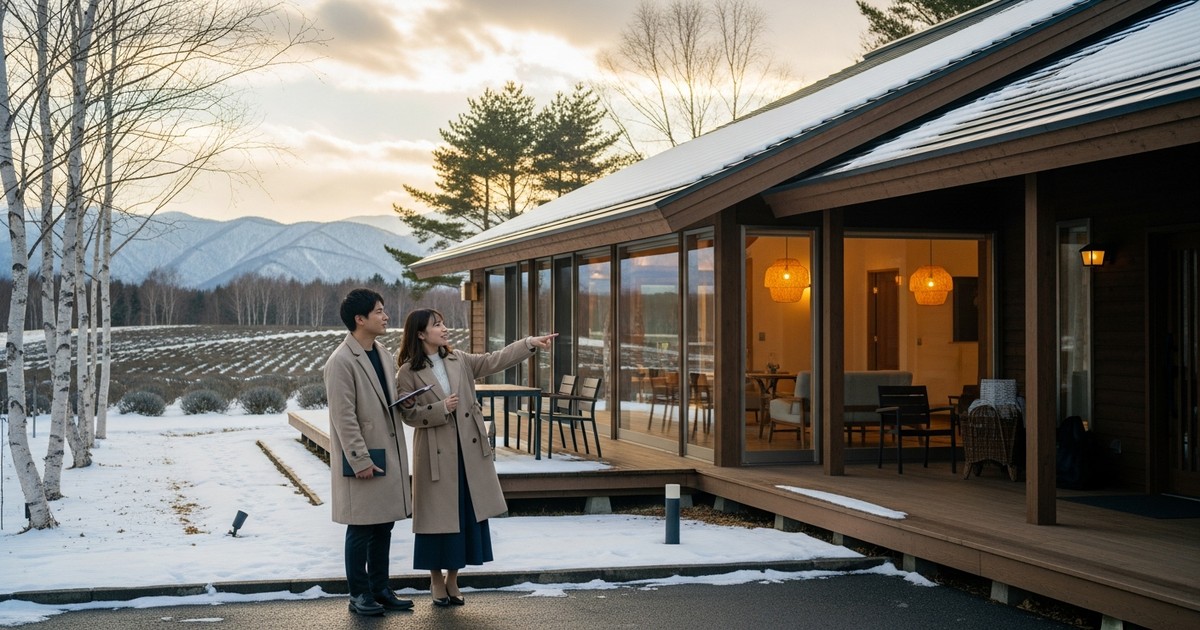
When considering a minpaku (vacation rental) investment in Furano, the question on everyone’s mind is likely: “Will this actually generate a profit?” As one of Hokkaido’s premier tourist destinations, Furano is a rare area blessed with two distinct high-demand seasons—summer’s lavender fields and winter’s ski season. However, simply buying a property because it’s in a tourist area doesn’t guarantee profitability.
Resort properties in the Furano area range widely, from villas and pensions built during the bubble economy era to recently developed condominiums. Prices span from a few million yen to tens of millions of yen, and the potential for success as a minpaku varies greatly depending on location and building age. This article explains the concrete conditions required for a Furano resort property to succeed as a minpaku investment, along with revenue simulations and operational precautions.
Rather than vaguely assuming “Furano is popular, so it must be profitable,” the first step to avoiding investment failure is having numbers-based decision criteria.
Why Furano Minpaku Investment Is Gaining Attention
The biggest reason Furano is attracting attention as a minpaku investment destination is its year-round tourism demand. In summer (June to September), the lavender fields and Farm Tomita draw visitors from Japan and abroad, while in winter (December to March), Furano Ski Resort sees a surge of inbound tourists from Australia and Southeast Asia. This “double-cropping” tourism structure gives Furano a distinct advantage over winter-only resort destinations like Niseko or Hakuba.
Furano City’s annual tourist numbers have held steady at around 2 million, with overnight stays showing solid growth. As inbound demand recovers, existing hotels and ryokan alone can no longer absorb the accommodation demand. On platforms like Airbnb, average nightly rates for Furano-area properties during peak season can reach ¥20,000–¥50,000 per night (for whole-house rentals accommodating 4–6 guests), meaning that with the right property selection and management, high profitability is achievable.
Revenue Simulation: Finding the Break-Even Point
Estimated Property Acquisition Costs
In the Furano area, secondhand villas over 30 years old can be acquired for approximately ¥3–8 million. On the other hand, newer condominiums near Furano Ski Resort typically fall in the ¥20–50 million range. For those wanting to minimize initial investment, renovating a secondhand property is an option, but you should budget approximately ¥3–6 million for renovation costs. In other words, a realistic minimum initial investment is roughly ¥6–14 million.
Projected Annual Revenue
For a whole-house rental property accommodating around 6 guests, assuming a 70% occupancy rate at an average nightly rate of ¥30,000 during summer peak season (July–September), a 65% occupancy rate at an average nightly rate of ¥35,000 during winter peak season (December–March), and a 30% occupancy rate at an average nightly rate of ¥15,000 during the off-season (April–June, October–November), annual revenue comes to approximately ¥4.5–5.5 million. Of course, this figure will vary depending on location and property appeal, but it is not far off from actual results seen in the Furano area.
Calculating Expenses and Net Profit
Annual expenses typically include: management/operation fees (10%–30% of revenue, depending on the company and scope of services), cleaning fees (¥8,000–¥15,000 per cleaning), utility costs (¥400,000–¥600,000 annually due to the cold climate), property tax (¥100,000–¥300,000), fire insurance and repair reserve funds (¥100,000–¥200,000 annually), and communication/consumable expenses (¥100,000–¥150,000 annually). Adding these together, annual expenses generally amount to 50–65% of revenue, leaving a realistic net profit of approximately ¥1.6–2.5 million per year. With an initial investment of ¥10 million, this translates to a gross yield of roughly 16–22% and a net yield of roughly 8–12%.
5 Conditions That Determine Success or Failure in Property Selection
Access to the Ski Resort or Major Tourist Attractions
Ideally, the property should be within a 10-minute drive of Furano Ski Resort, or within 30 minutes of Farm Tomita or the Biei hills area. Since winter travel is essentially rental-car based, being located along a main road with reliable snow removal is also an important criterion. Bargain properties in remote mountainous areas away from tourist attractions, while attractively priced, carry a high risk of struggling to attract guests.
Ensuring Adequate Parking
Since public transportation is limited in Furano, nearly all guests rely on rental cars. A property without space for at least 2 cars—ideally 3—will directly impact booking rates. Also consider that parking space shrinks during winter due to snow accumulation, so you should choose a property with enough room to spare even at its summer capacity.
Checking Plumbing and Insulation Performance
Furano winters can see temperatures drop below -20°C, making freeze-prevention measures for water pipes and overall insulation performance critical factors in property selection. Many bubble-era villas have inadequate insulation, and it’s not uncommon for heating costs to exceed ¥100,000 per month in such properties. Before purchasing, always check the condition of the insulation material, the type of window sashes (whether double-glazed), and when the water heating and heating systems were last updated. If insulation upgrades are needed during renovation, budget an additional ¥1–2 million.
Optimizing Capacity and Floor Plan
Minpaku demand in Furano is centered around families and group travelers. A whole-house rental accommodating 4–8 guests is easier to price higher and maintains more stable occupancy than a studio for 2 guests. Specifically, a 2LDK to 3LDK layout with 2–3 bedrooms offers the most versatility. Placing a sofa bed in the living room also allows for flexible adjustment of maximum capacity.
Navigating the 180-Day Limit Under the Minpaku Business Act
Under Japan’s Private Lodging Business Act (the “Minpaku Law”), annual operating days are capped at 180. If a Furano-area property can instead obtain a Simple Lodging (Kan’i Shukusho) license under the Hotel Business Act, it becomes possible to operate 365 days a year, dramatically improving profitability. It’s essential to confirm in advance whether the property meets zoning restrictions and fire safety equipment requirements. Obtaining a Simple Lodging license generally requires an additional ¥300,000–¥800,000 for fire safety equipment installation.
Furano-Specific Operational Risks and Countermeasures
Declining Occupancy During the Off-Season
Since tourist demand in Furano concentrates in summer and winter, occupancy rates drop significantly during April–June and October–November. Effective countermeasures for this period include offering long-stay discounts (20–30% off for stays of one week or more), capturing workation demand (by enhancing Wi-Fi and adding desk setups), and running promotions tied to local events. Simply raising off-season occupancy from 20% to 40% can improve annual revenue by ¥500,000–¥800,000.
Maintenance Costs Unique to Cold-Climate Regions
Winter snow removal costs approximately ¥150,000–¥300,000 per season if outsourced to a contractor. Additionally, heating must be kept running at a minimum level even while the property is vacant to prevent freezing, meaning utility costs never drop to zero even during unoccupied periods. Given the risk of damage to exterior walls and equipment from roof snow removal and falling snow, we recommend setting aside an annual repair reserve equal to 1–2% of the property’s value.
Building a Management System from a Remote Location
For owners who don’t live in Furano, having a reliable local operating partner is essential. Selecting a property management company that can handle check-in support, cleaning, and troubleshooting (equipment failures in winter are especially urgent) in one package can make or break the investment. Without a trustworthy local partner, delays in guest response will directly lead to negative reviews and declining occupancy.
Investment Decision Checklist
When considering a resort property minpaku investment in Furano, confirm whether you can check off all of the following: Can you achieve a net yield of 7% or higher relative to your total initial investment (property price + renovation costs + licensing fees)? Can the property obtain a Simple Lodging license under the Hotel Business Act (avoiding the 180-day limit)? Is it within a 15-minute drive of the ski resort or major tourist attractions? Are there no issues with winter insulation and freeze-prevention measures? Can you secure parking for at least 2 vehicles? Do you have a trustworthy local operating partner?
Among these conditions, licensing and location are factors that cannot be changed after the fact, so they must be thoroughly investigated before purchasing a property. Conversely, interior finishes and equipment can be improved through investment, so what’s needed is an eye for identifying a property with good underlying “bones.” Rather than chasing yield alone and jumping at bargain properties, the key to successful investment in Furano is comprehensively judging “whether this property can actually be operated as a minpaku.”
For Minpaku Management Consultations, Contact Stay Buddy Co., Ltd.
Minpaku investment in resort areas like Furano requires extensive expertise and local networks—from property selection to obtaining licenses and building an operational structure. Especially for investments made from a remote location, having a trustworthy operating partner can make a significant difference to your profitability.
Stay Buddy Co., Ltd. has extensive experience in minpaku property management, providing comprehensive support from profitability analysis to licensing application assistance and day-to-day guest support and cleaning arrangements. We welcome inquiries even at the earliest stage—when you’re simply asking, “Would minpaku investment work for this property?”
If you’re considering purchasing a resort property in Furano, or if you already own a property but are unsure about using it as a minpaku, please feel free to contact Stay Buddy Co., Ltd. We’ll help support your investment decision with a concrete revenue and expense simulation.