Why Vacation Rental Management Services Are Gaining Attention in Hokkaido
Stay Buddy’s vacation rental management services in Hokkaido have earned strong support from property owners across four key areas: Sapporo, Otaru, Asahikawa, and Furano. As inbound tourism demand continues to recover, Hokkaido has seen growing investment interest in accommodation properties, with more individual owners entering the vacation rental business than ever before. However, given Hokkaido’s vast geography, tourist flow patterns and peak seasons vary dramatically from region to region, making it clear that a one-size-fits-all approach to management simply cannot maximize revenue.
The number of foreign visitors to Hokkaido has consistently exceeded 3 million annually, with skiers from across Asia and travelers drawn to the summer lavender fields generating steady demand for accommodations. At the same time, running a vacation rental requires specialized expertise—multilingual guest communication, cleaning coordination, dynamic pricing optimization—that makes it unrealistic for owners to handle everything on their own. Against this backdrop, demand for management companies with deep knowledge of local market conditions has grown rapidly.
This article takes a detailed look at exactly why Stay Buddy is the preferred choice across Hokkaido’s four key areas, exploring the strategies and track record behind each location. Whether you’re considering a vacation rental investment or already own a property that isn’t performing as well as you’d hoped, we hope you’ll find valuable insights here.
The Unique Potential of Hokkaido’s Four Vacation Rental Markets
Sapporo: Year-Round Urban Tourism Demand
As Hokkaido’s largest city, Sapporo functions as the hub of Hokkaido tourism thanks to its excellent access from New Chitose Airport. The city welcomes roughly 15 million overnight stays annually, and with year-round seasonal events like the Snow Festival (February) and outdoor beer gardens (summer), it’s relatively easy to maintain steady occupancy for vacation rentals throughout the year. Business travel demand is also robust, with average nightly rates running ¥8,000–¥12,000 for studio-type units and ¥15,000–¥25,000 for family-oriented 2LDK-or-larger units.
That said, downtown Sapporo has seen a wave of new hotel openings, making it a highly competitive market. To stand out, properties need optimized OTA listings (Airbnb, Booking.com, etc.) to rank well in search results, along with management quality strong enough to maintain review scores of 4.8 or higher. For properties in the Sapporo area, Stay Buddy provides professional photography and multilingual listing creation as standard services, building a framework designed to boost booking rates within the first month of listing.
Otaru: Historic Streetscapes and Short-Stay Demand
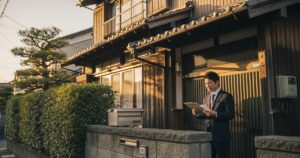
Known for its retro canal-side streets, glasswork craftsmanship, and renowned sushi district, Otaru sits just 40 minutes from Sapporo by train—an ideal location. While many visitors still come as day-trippers, demand for overnight stays has been rising in recent years as more travelers seek to “take their time and enjoy Otaru,” driving particular interest in whole-house rentals converted from traditional houses and historic buildings. Average nightly rates for whole-house rentals run ¥20,000–¥35,000, making them attractive options that can command higher prices than Sapporo’s apartment-style units.
That said, winter snowfall and snow-removal costs directly impact operating expenses in Otaru. Snow removal typically runs ¥30,000–¥50,000 per month from December through March, and neglecting this can compromise guest safety and directly hurt review scores. Stay Buddy maintains annual contracts with local snow removal contractors, delivering one-stop management that includes emergency response during heavy snowfall.
Asahikawa: Home to Asahiyama Zoo and a Winter Tourism Gateway
As Hokkaido’s second-largest city, Asahikawa attracts roughly 1.4 million visitors annually to Asahiyama Zoo. In winter, it also serves as a gateway to the ski resorts of the Daisetsuzan mountain range, with accommodation demand extending to travelers passing through en route to Sounkyo Onsen and the rolling hills of Biei. Asahikawa Airport now offers direct flights from Tokyo and Osaka, and the number of inbound visitors bypassing Sapporo entirely to visit Asahikawa directly continues to grow.
The vacation rental market in Asahikawa is still in its growth phase, with far fewer competing listings than Sapporo—making it an attractive area for early movers. Nightly rates for family-oriented properties typically run ¥10,000–¥18,000, but with fewer listings competing for attention on OTAs, properties can achieve strong search visibility, and occupancy rates of 70–80% are not uncommon. Stay Buddy also addresses Asahikawa’s unique challenge of managing winter heating costs—which can reach ¥50,000–¥80,000 per month in kerosene expenses—by designing pricing structures that protect profitability even through the coldest months.
Furano: Management Expertise for Navigating Seasonal Swings
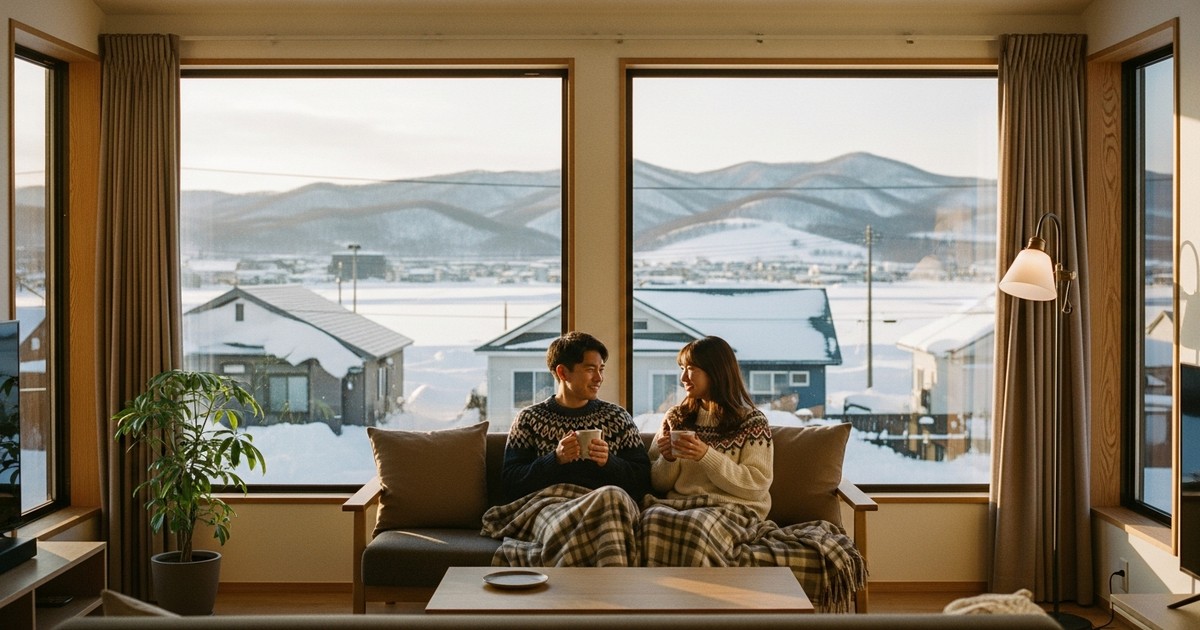
Furano is a classic two-season destination, with demand concentrated during the summer lavender-field season (July–August) and the winter ski season centered around Furano Ski Resort (December–March). Nightly rates for cottage-style properties can reach ¥30,000–¥50,000 during peak periods, with these busy seasons typically generating 60–70% of annual revenue.
The challenge lies in the off-season months of April–June and September–November, when occupancy at many properties falls below 20%—a level that, once fixed costs like utilities, management fees, and loan repayments are factored in, can push properties into the red. To address this, Stay Buddy designs special off-season packages targeting corporate training retreats and workation demand from local businesses, implementing measures that raise annual occupancy rates to 50–60%.
5 Reasons Stay Buddy Is the Trusted Choice Across Hokkaido’s Four Key Areas
Area-Specific Revenue Simulations and Investment Decision Support
Stay Buddy provides free, area-specific revenue simulations even before you acquire a property. For example, for a 1LDK unit in Sapporo’s Chuo Ward, we produce detailed projections covering estimated annual revenue of ¥2.5–3.2 million, along with the expected take-home amount after subtracting operating costs (cleaning fees, OTA commissions, consumables, etc.). For a Furano cottage, we build month-by-month simulations separating peak and off-peak periods, clearly identifying the minimum occupancy rate needed to keep annual cash flow positive.
These simulations are built on data from comparable properties Stay Buddy has actually managed in the past—not theoretical guesswork—which sets us apart from other companies. Because we go so far as to advise clients on “whether this property is even worth acquiring” as part of the investment decision process, we’ve earned strong trust from owners taking on their first vacation rental investment.
Multilingual Support and Round-the-Clock Guest Service
Inbound visitors to Hokkaido come from a wide range of countries, including China, South Korea, Taiwan, Thailand, and Australia. Stay Buddy provides 24-hour guest messaging support in four languages—English, Chinese (Simplified and Traditional), and Korean. We maintain an operational standard of responding to guest inquiries—whether about check-in instructions, nearby restaurant recommendations, or transportation issues—within an average of 15 minutes.
This rapid response directly translates into strong review scores, and properties managed by Stay Buddy maintain an average review score above 4.7. On Airbnb, scores above 4.8 make it easier to qualify for Superhost status, which boosts search rankings and creates a virtuous cycle that drives even more bookings.
Expertise in Hokkaido-Specific Property Maintenance
Winter maintenance is an unavoidable part of running a vacation rental in Hokkaido. Preventing frozen pipes, clearing snow from roofs, plowing parking areas, and regularly inspecting heating equipment are all maintenance tasks with no equivalent in mainland Japan. Frozen pipe repairs alone can cost ¥30,000–¥100,000 per incident, and neglecting preventive measures can lead to significant losses.
Stay Buddy leverages local contractor networks in each area to include pipe-draining services for freeze prevention and regular heating system maintenance as standard parts of our management service. In particularly cold regions like Asahikawa and Furano, we’ve standardized a workflow that always drains water pipes after guest checkout—and as a result, we’ve maintained a zero incident rate for frozen pipes.
Revenue Maximization Through Dynamic Pricing
Accommodation demand in Hokkaido fluctuates dramatically by season, day of the week, and local events. During Sapporo’s Snow Festival, nightly rates can be set at 2–3 times the normal rate, while Furano’s lavender season allows for rates 1.5–2 times higher than usual. Conversely, maintaining high prices during the off-season simply results in no bookings and lost revenue opportunities.
Stay Buddy combines AI-powered dynamic pricing tools with the experience of our operations staff to adjust rates on a daily basis. For example, for a Sapporo property, we might gradually raise prices starting 30 days before the Snow Festival, reaching peak pricing about a week before the event begins. This approach has delivered an average 15–25% increase in annual revenue compared to simple fixed-rate pricing.
One-Stop Support from Licensing to Launch
Starting a vacation rental requires filing notification under Japan’s Private Lodging Business Act (the “Minpaku Law”) or obtaining a license under the Hotel Business Act. In Hokkaido, individual municipalities impose their own additional regulations—for example, Sapporo City may require limits on the number of operating days in residential-only zones or advance explanations to neighboring residents. Handling these procedures on your own often means paying an administrative scrivener (gyoseishoshi) ¥150,000–¥300,000, and dealing with document revisions and follow-up requests that can push the timeline to launch out to 3–6 months.
Stay Buddy provides end-to-end support—from preparing the documentation needed for licensing, to arranging fire safety equipment installation, coordinating furniture and appliances, and creating OTA listings. Depending on the property’s condition, we’ve achieved launches in as little as about two months from initial consultation. Shortening the time to launch helps minimize lost revenue opportunities.
Checkpoints for Choosing the Right Area
When investing in a vacation rental in Hokkaido, area selection is the single biggest factor determining profitability. The first thing to verify is whether your intended target guest matches your property type. If you’re targeting business travelers in Sapporo, a compact unit within a 5-minute walk of a train station is advantageous. If you’re targeting families or long-stay guests in Furano, a whole-house rental with parking is a better fit. Acquiring a property without a clear target guest in mind often results in weak listing appeal once operations begin, leading to disappointing occupancy rates.
Equally important is your annual revenue-and-cost balance. In areas like Furano and Asahikawa, where seasonal swings are significant, you need to verify in advance whether peak-season revenue alone can cover your annual fixed costs. A good rule of thumb: calculate your total annual fixed costs (loan repayments, management fees, utilities, snow removal, etc.), and check whether four months of peak-season revenue can cover at least 80% of that total. If you meet this benchmark, all off-season revenue essentially becomes pure profit.
Cost Structure and Investment Payback Timeline for Management Services
Common Fee Structures for Vacation Rental Management
Vacation rental management fees generally fall into two categories: revenue-share (commission-based) and flat-fee models. Under revenue-share models, owners pay a commission of 10%–30% of monthly revenue (the exact rate varies by company and scope of service)—costs stay low during slower months, but commission amounts rise during peak season. Flat-fee models typically run ¥50,000–¥100,000 per month for a set range of services, but carry the risk of fixed costs continuing even during months with zero revenue.
Stay Buddy primarily uses a revenue-share model, which helps owners limit risk in the early stages. Cleaning fees are charged per guest checkout, typically ¥3,000–¥5,000 for a studio unit and ¥5,000–¥8,000 for a family-oriented property. Factoring in these operating costs, many owners can expect annual take-home income of ¥1.5–2 million for a studio unit in Sapporo, or ¥2–3.5 million for a cottage property in Furano.
Simulating Your Investment Payback Period
Dividing your total property acquisition cost and initial setup investment by your annual take-home income gives you an approximate payback period. For example, if you purchase a used condominium in Sapporo’s Chuo Ward (1LDK, priced at ¥12 million), spend ¥1.5 million on furniture, appliances, and interior work, and ¥300,000 on licensing-related costs, your total investment comes to roughly ¥13.8 million. With an annual take-home of ¥1.8 million, that translates to a payback period of about 7.7 years.
For a Furano cottage (property price of ¥25 million, initial setup costs of ¥2 million), a total investment of ¥27 million against an annual take-home of ¥3 million yields a payback period of 9 years. That said, in popular Hokkaido tourist destinations where property values tend to hold steady, an exit strategy that pursues capital gains through eventual resale—while continuing to operate the property in the meantime—is also worth considering. Stay Buddy provides support for developing this kind of mid- to long-term investment planning as well.
Get in Touch with Stay Buddy Inc.
Stay Buddy Inc. provides comprehensive vacation rental management services centered on Sapporo, Otaru, Asahikawa, and Furano in Hokkaido. From property selection consultation and revenue simulations to licensing support, guest communication, cleaning management, and pricing optimization once operations begin, we handle every step of the vacation rental process as a true one-stop partner.
If you’re thinking, “I want to start a vacation rental in Hokkaido, but I’m not sure which area is right for me,” “I already own a property but occupancy isn’t where it should be,” or “I live far away and on-site management is difficult,” please don’t hesitate to reach out. We offer free initial consultations and revenue simulations.
Hokkaido’s vacation rental market still has significant room to grow, and choosing the right management partner can dramatically improve your property’s profitability. Let Stay Buddy’s track record and expertise help you build a stable, successful vacation rental business. For more information, please contact us through the Stay Buddy Inc. official website.