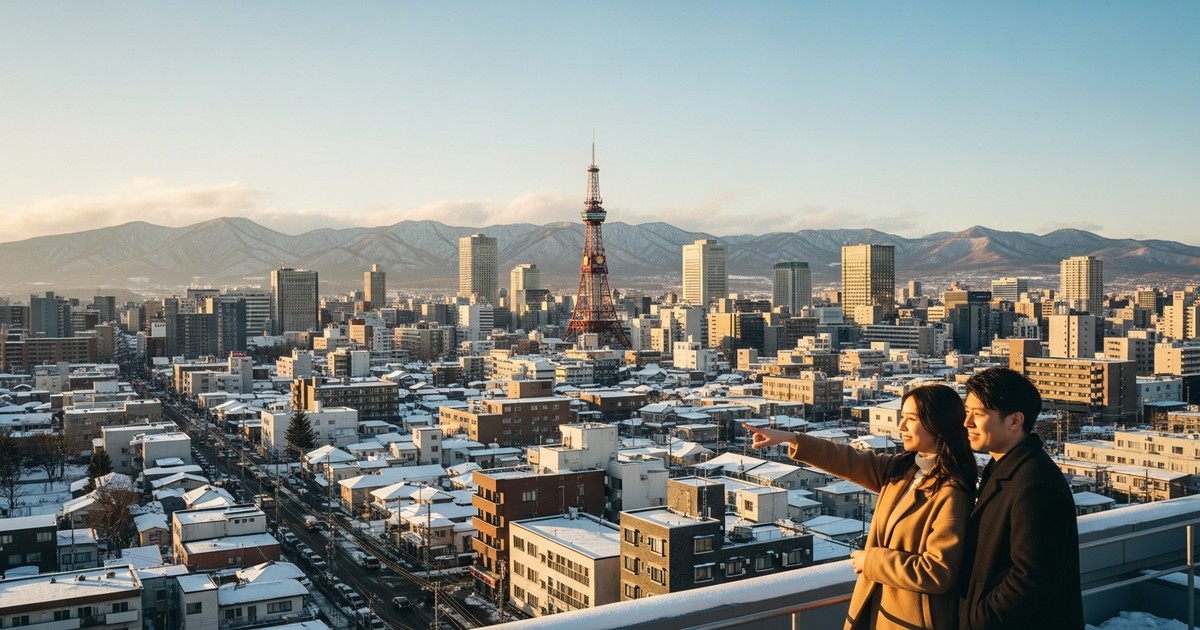
If you’re considering minpaku (short-term rental) investment in Sapporo, choosing the right area is the single biggest factor that will determine your returns. Tourist traffic patterns, seasonal demand fluctuations, property acquisition costs, and local regulations all vary dramatically from one neighborhood to the next. Sapporo’s minpaku market has been gaining attention in recent years thanks to growing numbers of domestic and international visitors, but not every area offers equal promise.
In this article, we’ll take a close look at Sapporo’s major districts, breaking down the strengths and weaknesses of each as investment targets, backed by concrete figures. We’ll walk through the criteria you need to avoid costly mistakes when choosing an area, and dig into practical checkpoints for selecting an actual property.
Whether you’re just getting started with minpaku investment or already operating a property and scouting for your next one, we hope this guide proves useful. Read on to the end.
Why Area Selection Determines Your Returns in Sapporo Minpaku Investment
When it comes to minpaku investment, choosing the right location matters even more than property specs or management know-how. Sapporo City spans roughly 1,121 square kilometers and is divided into 10 wards. However, genuine minpaku demand is concentrated in only a handful of these areas. If you search for Sapporo minpaku listings on platforms like Airbnb, you’ll notice that most of the properties with high booking rates cluster around Chuo Ward (Susukino area), the Sapporo Station vicinity, and areas near certain tourist attractions.
For example, even for an identical 1LDK unit, an area in Chuo Ward might command 8,000–12,000 yen per night, while a suburban area might only fetch 4,000–5,000 yen—a gap that can translate into a difference of over 1 million yen in annual revenue. Choosing a suburban area simply because acquisition costs are lower can backfire if occupancy falls below 30%, making it difficult to recoup your investment. Conversely, even with a higher acquisition cost in a central location, maintaining occupancy above 70% with premium pricing can realistically deliver yields exceeding 10%.
Investment Potential in Chuo Ward (Susukino/Odori Area)
Overwhelming Drawing Power from Sapporo’s Largest Entertainment District
Susukino is recognized as one of Japan’s three largest entertainment districts, packed with restaurants and nightlife venues. Odori Park hosts year-round events including the Snow Festival and Autumn Fest, drawing a steady stream of visitors from Japan and abroad. Minpaku properties in this area often maintain 60–80% occupancy year-round, and during peak season, nightly rates of 15,000–25,000 yen are achievable.
That said, property acquisition costs here are the highest in Sapporo. Even a single unit in a 20–30 year-old condominium building typically runs 10–15 million yen, while newer or renovated units can exceed 20 million yen. Additionally, many condominiums prohibit minpaku operations through their management bylaws, so checking these rules before purchase is essential. It’s estimated that only about 20% of condominium units clearly permit minpaku use in their management regulations.
Key Investment Considerations
Investing in Chuo Ward follows a “high cost, high return” model. While the initial investment is substantial, once operations gain traction, monthly revenue of 300,000–500,000 yen is well within reach. Specifically, a 1LDK to 2LDK property can generate annual revenue of 4–6 million yen, with net profit after expenses landing around 1.5–2.5 million yen. However, competition is fierce, so differentiating through interior quality, professional photography, and guest service excellence is essential.
Growth Potential in the Sapporo Station North Exit / Kita Ward Area
A Dual Play on Business and Tourism Demand
The area around Sapporo Station’s north exit is lined with Hokkaido University buildings and office towers. Beyond business travel demand, plenty of tourists visit for Hokkaido University campus tours and nearby restaurants. Business travelers help fill weekday occupancy while tourists cover weekends and holidays—an ideal demand structure that’s relatively easy to achieve in this area.
Property prices here run about 20–30% lower than in Chuo Ward, with a roughly 20-year-old 1LDK typically priced at 7–11 million yen. Nightly rates tend to be somewhat lower than Chuo Ward at 6,000–10,000 yen, but stable weekday occupancy from business travelers helps support annual occupancy rates of 55–70%. Annual revenue typically falls around 2.5–4 million yen, and given the lower acquisition cost, gross yields can match or even exceed those in Chuo Ward.
Anticipation Around the Shinkansen Extension
Plans are underway to extend the Hokkaido Shinkansen to Sapporo, and further development is expected around Sapporo Station as a result. Once the extension is completed, access from Honshu will dramatically improve, likely driving up accommodation demand. Acquiring a relatively affordable property now could position you to benefit from both future asset appreciation and minpaku revenue growth. That said, since the timing of the extension remains uncertain, it’s wise to base your investment decision on current cash flow and treat any future upside as a bonus rather than a guarantee.
The Steady Appeal of Nakajima Park / Hosui-Susukino Area
A Hidden Gem Balancing Tourism and Accessibility
The area around Nakajima Park sits just one subway stop from Susukino, yet offers a calm, green atmosphere surrounded by park scenery. Cultural facilities like Sapporo Concert Hall Kitara and the Hokkaido Museum of Literature dot the neighborhood, making it popular among families and couples. It’s especially favored by travelers who want to avoid Susukino’s bustle, as well as long-stay guests.
Property prices run 10–20% lower than central Susukino, with 1LDK units priced around 8–12 million yen. Nightly rates can be set at 7,000–11,000 yen, with occupancy expected to reach 55–70% annually. This area’s strength lies in its relatively small gap between peak and off-peak seasons. Beyond the summer tourist season, it also sees steady bookings during winter ski season and around conferences and events.
Effective for Long-Stay Guest Operations Too
The Nakajima Park area has supermarkets, convenience stores, and restaurants all within walking distance, making it well-suited for stays of a week or longer. Even setting a lower nightly rate of 4,000–6,000 yen for monthly stays, a 30-night booking can still generate 120,000–180,000 yen in revenue. This area’s appeal lies in combining short-term stays with long-term guests, which reduces the burden of cleaning and guest communication while delivering stable income.
The Cost-Performance Advantage of Shiroishi and Higashi Wards
A Low-Cost Entry Point for First-Time Investors
Shiroishi and Higashi Wards are just 10–15 minutes by subway from central Sapporo, yet property prices here are significantly lower. Some 25–35 year-old 1LDK units can be acquired for as little as 4–7 million yen, making this an attractive option for first-time investors looking to keep their initial outlay low. Even after budgeting 1.5–2.5 million yen for renovation, total investment can often stay under 10 million yen.
However, nightly rates in this area typically fall in the 4,000–7,000 yen range, and annual occupancy tends to hover around 40–55%. Realistic annual revenue lands around 1.2–2 million yen. At this level, after subtracting management fees and consumables, net profit comes to roughly 500,000–1,000,000 yen per year, meaning a payback period of 7–10 years should be expected. That said, thanks to the low acquisition cost, gross yields can reach 15–20% in some cases.
Success Depends on Sharp Target Positioning
Many successful minpaku properties in Shiroishi and Higashi Wards share a common trait: a clearly defined target guest. For instance, areas near dome-style arenas see surging demand during concerts and sporting events. Adjusting nightly rates to 1.5–2 times the base price on event dates can substantially boost monthly revenue. Acquiring a larger 2LDK to 3LDK unit and targeting group travelers is another effective strategy—achieving nightly rates of 10,000–15,000 yen can bring in revenue comparable to a 1LDK property in the city center.
A Niche Strategy for Minami Ward / Jozankei Area
Capturing Hot Spring Tourism and Outdoor Demand
The Jozankei Onsen area in Sapporo’s Minami Ward is a hot spring destination about 40 minutes by car from central Sapporo. It attracts an estimated 2.4 million visitors annually, including day-trip hot spring bathers, with demand peaking during the autumn foliage season and winter ski season. Renovated detached houses and traditional kominka (old folk houses) converted into minpaku properties are gaining attention, offering the appeal of premium nightly rates of 15,000–30,000 yen.
On the other hand, seasonal fluctuation is a clear challenge. There’s a significant gap in occupancy between peak season (October–March) and off-peak season (April–June). Some properties record 70–90% occupancy during peak periods, only to drop to 20–30% in the off-season. Averaged out over the full year, occupancy typically lands around 40–55%. The key investment question is whether high peak-season earnings can offset off-season costs.
Property Types That Stand Out
In the Jozankei area, success hinges on offering an experience distinct from hotels and traditional ryokan inns. Properties with unique features—detached houses with BBQ facilities, log cabins with open-air baths, or spacious kominka suited for large groups—tend to earn stronger reviews and attract repeat guests. Acquisition costs vary widely from 5–15 million yen, but keeping total investment (including renovation) under 20 million yen can put annual revenue of 3–5 million yen within reach.
5 Checkpoints to Avoid Mistakes When Choosing an Area
Research the Number and Price Range of Nearby Accommodations
Before settling on an investment area, always check the number of existing minpaku properties as well as hotels and ryokan in that area. Tools like AirDNA and Airbnb’s search functions let you see the number of listings, average occupancy, and average nightly rates for a given area. Areas with too much competition can drag you into price wars, while areas with too few listings may simply lack demand. As a general benchmark, if average occupancy for minpaku properties in an area exceeds 50%, that’s a sign demand is solid.
Distance to the Nearest Station or Bus Stop
Convenient access has a direct impact on booking rates for Sapporo minpaku properties. Data shows that properties within a 7-minute walk of a subway station tend to see occupancy rates 10–15 percentage points higher than those over 10 minutes away. Inbound tourists in particular rely heavily on public transit, so the advantage of a station-adjacent property is significant. In areas served only by bus routes, offering a property with parking to target rental car users is one way to compensate.
Condominium Bylaws and Local Ordinances
Sapporo City requires registration under the Private Lodging Business Act, with an annual operating cap of 180 days. In addition, if a condominium’s management bylaws prohibit minpaku use, your registration application won’t be accepted at all. Before purchasing a property, always check the management bylaws to confirm that minpaku use is explicitly permitted. Detached houses or properties that aren’t part of a condominium association make it easier to sidestep this constraint entirely.
Assessing Seasonal Fluctuation Risk
Sapporo is a city with strong seasonal tourism patterns. Demand peaks during the Snow Festival (February) and lavender season (July), but some areas see sharp drop-offs before and after these periods. When choosing an area, always project expected occupancy for the off-season as well as peak season. A realistic annual revenue estimate should be calculated as: 4 months of peak season at high occupancy + 8 months of off-season at lower occupancy.
Confirming Your Exit Strategy
Minpaku investment isn’t just about operating income—you should also factor in the potential future sale of the property. Properties in Chuo Ward or near Sapporo Station tend to convert easily into residential or rental use if you ever stop minpaku operations, helping preserve asset value. Suburban properties, by contrast, tend to have lower liquidity and can take longer to sell. Given the possibility that you might need to let go of a property before fully recouping your investment, it’s important to choose areas and property types that are easy to repurpose.
Talk to Stay Buddy Inc. About Minpaku Management in Sapporo
Succeeding with minpaku investment in Sapporo requires end-to-end support—from selecting the right area and acquiring a property, to filing registrations and managing day-to-day operations. Making investment decisions based on accurate demand data and competitive analysis for each area is the key to minimizing your risk of failure.
Stay Buddy Inc., a full-service minpaku management company, provides one-stop support covering everything from property selection advice and listing optimization to guest communication and cleaning coordination. We also offer revenue simulations tailored to specific areas within Sapporo, helping you make data-driven investment decisions.
Whether you’re wondering “will a property in this area actually turn a profit?” or “how much initial investment will I really need?”—we can answer these questions with concrete data backed by real results. If you’re considering minpaku investment in Sapporo, feel free to reach out to Stay Buddy Inc. for a consultation.