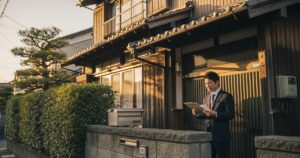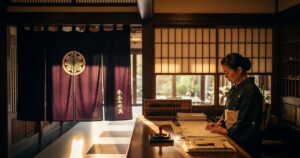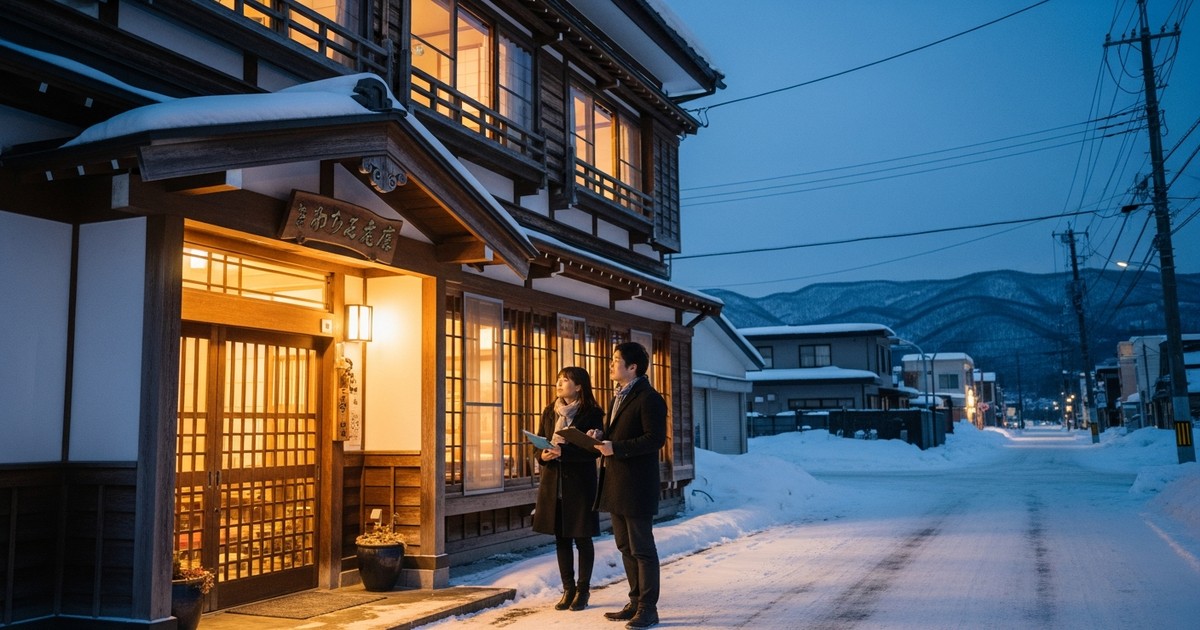
Finding a property for ryokan business in Asahikawa requires a different perspective than typical real estate investment. From zoning restrictions and Building Standards Act requirements to alignment with tourism demand, there’s a wide range of factors to check. Asahikawa, serving as the gateway to Asahiyama Zoo and the Daisetsuzan mountain range, welcomes over 5 million tourists annually, giving it solid, stable accommodation demand. However, choosing the wrong property can mean failing to obtain a license or struggling to attract guests.
This article systematically explains the concrete points to look for when finding a property eligible for ryokan business licensing in Asahikawa, along with the location-selection principles that determine profitability. If you’re considering entering the ryokan business in the Asahikawa area, please read through to the end.
Basic Conditions to Know Before Searching for Ryokan Business Properties in Asahikawa
Can the Property Meet Facility Requirements Under the Ryokan Business Act?
To obtain a ryokan business license, a property must meet the facility standards set out in the Ryokan Business Act and related ordinances and regulations. For example, in the case of simple lodging operations, requirements include a total guest room floor area of at least 33 square meters, adequate ventilation, natural lighting, and lighting fixtures, and a front desk (or equivalent function). In Asahikawa, you also need to check for any additional standards imposed under Hokkaido’s ordinances.
At the property viewing stage, it’s important to be able to roughly assess whether these requirements can be met. For instance, when converting a 40-year-old wooden detached house into a simple lodging facility, renovation costs to achieve fire-resistant or quasi-fire-resistant construction can run ¥3–5 million. Consulting with an architect or administrative scrivener before purchase, and building a business plan that accounts for renovation costs, can help you avoid unexpected expenses.
Checking Zoning Restrictions
Whether ryokan business operations are permitted depends on the zoning districts defined under the City Planning Act. Within Asahikawa City, ryokan business operations are, in principle, not permitted in Category 1 and Category 2 Low-Rise Exclusive Residential Districts, Industrial Districts, or Exclusive Industrial Districts. Commercial Districts, Neighborhood Commercial Districts, and Quasi-Industrial Districts allow operation without issue, and Category 1 and Category 2 Residential Districts are also eligible for licensing as long as the facility is 3,000 square meters or smaller.
The area around Kaimono Koen Dori, Asahikawa’s central shopping street, is designated as a Commercial District, making it the easiest area to work with for ryokan business properties. On the other hand, the residential areas around Asahiyama Zoo often fall under Low-Rise Exclusive Residential Districts, meaning that even if a property is available, obtaining a license can be difficult. When reviewing property listings, always check the zoning classification using Asahikawa City’s city planning map.
Location Selection Principles for Ryokan Business Properties in Asahikawa
Characteristics of the Area Around Asahikawa Station
Areas within walking distance of Asahikawa Station offer a location that can attract both business travelers and tourists. Asahikawa Station handles approximately 7,000 passengers per day, and its accessibility—about 1 hour and 25 minutes from Sapporo via JR limited express—is another strength. Commercial facilities and a bus terminal are concentrated around the station, with buses departing from here to Furano, Biei, and Asahiyama Zoo.
Properties in this area tend to be relatively expensive to acquire, with detached houses generally priced around ¥15–30 million and used condominium units around ¥3–8 million. However, because year-round occupancy can be expected, it’s possible to attract guests even with an ADR (average daily rate) of ¥6,000–10,000, and some facilities achieve annual occupancy rates of 60–70%.
Potential and Precautions for the Asahiyama Zoo Area
Asahiyama Zoo is Asahikawa’s largest tourist attraction, drawing approximately 1.4 million visitors annually. An accommodation facility near the zoo would be highly appealing to families looking to arrive right at opening time, before the crowds build up. In fact, some lodging facilities located within a 10-minute drive of the zoo achieve occupancy rates exceeding 80% during the summer season (June to September).
However, as mentioned earlier, many parcels around the zoo fall under Low-Rise Exclusive Residential Districts, and obtaining a ryokan business license is often not possible in these locations. Additionally, visitor numbers drop significantly in winter, with occupancy rates from November to March sometimes falling below 30%. If you’re searching for a property in this area, you’ll need to not only verify zoning but also plan in advance for a winter marketing strategy—such as targeting ski visitors or offering long-stay packages.
Considering Suburban and Hot Spring Areas
Asahikawa has the geographic advantage of easy access to Higashikawa Town, which borders hot spring resorts such as Asahidake Onsen and Tenninkyo Onsen. Asahikawa City itself also serves as a waypoint toward the Sounkyo area, and whole-house rental properties in suburban areas tend to be popular among guests who plan to travel by car. In suburban areas, detached houses can often be acquired for ¥5–12 million, making it possible to enter the market with a smaller initial investment.
The downsides of suburban properties include limited access via public transportation and fewer nearby restaurants or convenience stores. That said, in recent years demand from inbound travelers seeking to “experience rural Japanese living” has been growing, and whole-house rental properties with well-equipped kitchens are increasingly seeing bookings even at price points of ¥15,000–25,000 per night.
Specific Items to Check When Acquiring a Property
Building Structure and Fire Code Compliance
Obtaining a fire code compliance certificate is mandatory when applying for a ryokan business license. This document is issued by the jurisdictional fire department after inspecting the building and confirming that fire safety equipment—such as automatic fire alarm systems, emergency exit lighting, and fire extinguishers—meets required standards. When converting a standard residential property as-is, installing or upgrading fire safety equipment typically costs ¥500,000–1,500,000.
In particular, two-story wooden buildings may require securing evacuation routes on the second floor or installing partition walls to prevent fire spread. Since Asahikawa is a region with heavy snowfall and cold winters, design considerations are also needed to prevent situations such as snow blocking emergency exits. Consulting with the fire department before purchase to clarify the scope of necessary renovations can help you avoid budget overruns.
Water Supply, Drainage, and Infrastructure Conditions
Since ryokan business operations involve unspecified numbers of guests using water facilities, it’s essential to confirm whether the water supply and drainage capacity is sufficient. Central Asahikawa is served by public sewage systems, but many properties in suburban areas rely on septic tanks, and you’ll need to verify whether the septic tank’s treatment capacity can accommodate the expected number of guests. Replacing a septic tank typically costs ¥800,000–2,000,000.
Additionally, since temperatures in Asahikawa can drop below -20°C in winter, measures to prevent frozen water pipes are essential. Be sure to check the presence of drain valves, frost-protection heating tape, and the condition of insulation during property viewings. Installing an electric drain valve (at a construction cost of approximately ¥50,000–150,000) is also worth considering, in case guests are unfamiliar with manual winterizing procedures.
Relationships with Neighboring Residents
When applying for a ryokan business license, Asahikawa City may require prior explanation to neighboring residents. This is especially true when applying in residential zoning districts, where objections related to noise or garbage disposal are not uncommon. To prevent such issues before they arise, it’s worthwhile to walk through the surrounding neighborhood before purchasing a property to get a feel for the local living environment and the atmosphere of the neighborhood association.
Concrete measures include creating house rules in advance—covering things like quiet hours and garbage sorting rules—and sharing them with neighboring residents. Additionally, installing a sign with the manager’s contact information demonstrates that you have a system in place to respond quickly if problems arise. In fact, some facilities that provided thorough explanations to neighbors have reported nearly zero complaints after opening.
Revenue Simulation and Investment Decision Criteria
How to Estimate Revenue
When estimating revenue for simple lodging or ryokan business facilities in the Asahikawa area, you need to account for seasonal fluctuations in occupancy. Occupancy rates run approximately 70–85% in summer (June–September), 40–55% in winter (December–March, excluding the Asahikawa Winter Festival period), and 50–65% in spring and fall. Assuming an average nightly rate of ¥8,000, an average annual occupancy rate of 60%, and two guest rooms, annual revenue would come to approximately ¥3.5 million.
From this, you’ll need to deduct OTA (online travel agency) commissions of 12–15% of revenue, utility costs of ¥30,000–50,000 per month, cleaning fees of ¥3,000–5,000 per turnover, and supply and linen costs of roughly ¥10,000–20,000 per month. Total annual operating expenses come to roughly ¥1.5–2 million, leaving an operating profit—excluding loan repayments—of around ¥1.5–2 million per year as a benchmark. If the combined cost of property acquisition and renovation stays under ¥15 million, an investment payback period of 7–10 years is achievable.
Balancing Property Price and Renovation Costs
The price range for used detached houses suitable for ryokan business within Asahikawa City is approximately ¥10–25 million near the station and ¥3–10 million in the suburbs. On top of this, renovation costs to obtain a ryokan business license run ¥2–6 million, and initial furniture, appliances, and amenity procurement costs run roughly ¥500,000–1,000,000. Since total initial investment ranges widely from ¥6–30 million, decisions should be based on advance revenue simulations.
As a benchmark for investment decisions, a gross yield (annual projected revenue ÷ initial investment) of 15% or higher is generally considered a relatively safe line. Assuming the annual revenue of ¥3.5 million mentioned above, keeping initial investment under approximately ¥23 million becomes one target to aim for. That said, since real estate in Asahikawa tends to be priced lower than in Sapporo or major cities in Honshu, this is a fully achievable target depending on how carefully you select your property.
For Ryokan Business Property Searches in Asahikawa, Consult Stay Buddy Inc.
Finding a ryokan business property in Asahikawa and carrying the project through from license acquisition to operation requires broad knowledge of legal regulations, building standards, and regional characteristics. Stay Buddy Inc. provides minpaku and ryokan business operation management services, offering support from the property selection stage through license application assistance, and continuing on to guest acquisition, cleaning, and guest support after opening—all as a one-stop service.
In particular, we offer concrete, experience-based advice on the points where those entering the ryokan business for the first time tend to stumble—such as confirming zoning classifications, conducting preliminary consultations with fire departments and public health centers, and preparing revenue simulations. If you’re interested in operating an accommodation business in the Asahikawa area, please feel free to contact Stay Buddy Inc. first.
We provide a full support system to walk alongside you as a partner, from property selection through to stabilizing operations. Consultations are free of charge, so please take advantage of this opportunity as your first step toward launching a ryokan business in Asahikawa.