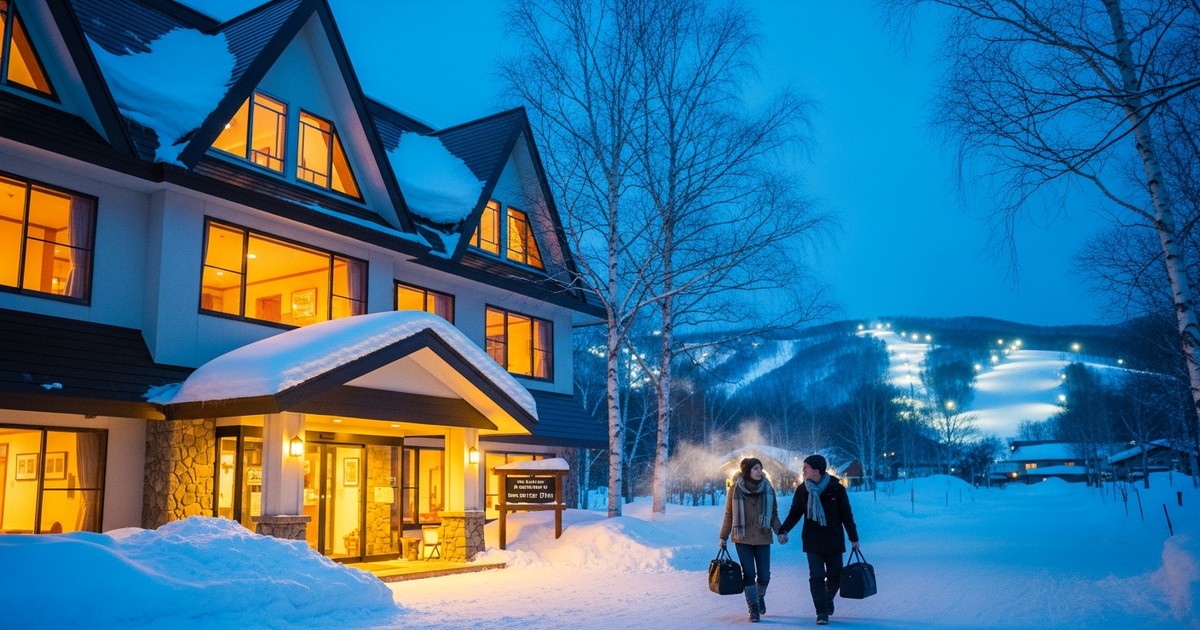
Why Accommodation Prices in Furano Soar During Winter Peak Season
Furano Ski Resort is highly popular among skiers from Japan and abroad, thanks to its high-quality powder snow and stunning scenery. It’s not unusual for accommodation prices in the Furano area to jump to two or three times their normal rates during the winter peak season. In this article, we’ll take a close look at the pricing strategies employed by accommodations around Furano, the reasons behind them, specific price ranges, and key points property owners can use to maximize revenue.
In recent years, the Furano lodging market has changed dramatically alongside growing inbound demand. In an area once dominated by pensions and small family-run inns, whole-house vacation rentals and condominium-style accommodations have increased, diversifying the price range as well. In this evolving market environment, setting the right price is directly tied to achieving both stable occupancy rates and solid profitability for owners.
This article is written primarily for those considering starting an accommodation business in Furano, as well as those already operating one and looking to reassess their pricing strategy. We’ll walk through seasonal supply-and-demand dynamics, ways of thinking about competitor analysis, and concrete approaches to setting rates.
Types of Accommodations Around Furano Ski Resort and Their Average Price Ranges
Winter Pricing for Hotels and Resort Facilities
At the large resort hotels representative of the Furano area, winter peak-season rates (late December through mid-February) for a twin room typically run between ¥25,000 and ¥50,000 per night. During peak periods such as New Year’s holidays or three-day weekends, an additional ¥10,000 to ¥20,000 is often added on top. Many properties boost their average revenue per guest through value-added packages, such as plans that include lift tickets or meals.
While large hotels can attract guests through superior facilities and brand strength, their high fixed costs mean they need strong winter occupancy to balance the books for the year. As a result, how they price the peak season plays an extremely important role in their overall annual revenue planning.
Winter Pricing for Pensions and Guesthouses
Many pensions and guesthouses are scattered throughout the area around Furano Ski Resort. During the off-season, these properties typically charge around ¥8,000 to ¥15,000 per night with two meals included, but during the winter peak season, this rises to roughly ¥12,000 to ¥25,000. These accommodations are popular among guests seeking a homely atmosphere and personal interaction with the owners, and they tend to attract a lot of repeat visitors.
That said, because pensions and guesthouses have limited capacity, raising the per-room rate is key to boosting revenue. Flexible pricing adjustments are essential—for example, offering multi-night discounts while still maintaining firm, higher rates on peak dates.
Winter Pricing for Whole-House Rentals and Condominium-Style Properties
One category that has grown rapidly in recent years is whole-house rentals and condominium-style accommodations. These are especially popular with inbound group travelers and families. During the winter peak season, nightly rates for a two-bedroom unit typically range from ¥30,000 to ¥60,000, while units with three or more bedrooms can reach ¥50,000 to ¥120,000. Since the per-person cost often works out cheaper than a hotel, demand from group travelers remains steady.
Many whole-house rental properties also charge cleaning and linen-change fees separately from the room rate, typically setting a cleaning fee of ¥5,000 to ¥15,000 per stay. This fee effectively boosts overall revenue.
Understanding Supply and Demand Dynamics and Price Fluctuations During Winter Peak Season
When Demand Peaks
Furano Ski Resort generally operates from late November through early May the following year, but demand for accommodation is most concentrated during the New Year’s holiday period (around December 23 through early January) and the best snow season (late January through mid-February). In particular, during the Lunar New Year period, the number of visitors from across Asia surges, and it’s not unusual for occupancy rates throughout the Furano area to exceed 90%.
On the other hand, demand tends to cool off slightly right after the season opens in late November, and again during the spring skiing season from March onward, as expectations for snow quality decline. Accurately grasping these demand waves and setting different rates for each period forms the foundation of maximizing revenue throughout the year.
Constraints on the Supply Side
Compared to neighboring Niseko or Asahikawa, the Furano area has a somewhat limited total number of accommodations. While Niseko has seen large-scale development, Furano has development restrictions in place to protect its natural environment and scenery, making rapid growth in room supply less likely. This limited supply is a major factor driving up prices during peak season.
Limited supply also has a flip side: existing properties are less likely to get caught up in price competition. With the right positioning and differentiation, properties can maintain confident, higher pricing while still securing steady bookings.
Concrete Pricing Strategies for Accommodation Owners
Introducing Dynamic Pricing
Dynamic pricing—adjusting room rates in real time based on demand fluctuations—is especially effective in an area like Furano with such pronounced seasonal swings. In practice, this means using management tools on booking platforms or pricing software to adjust rates daily, based on competitors’ vacancy status and booking pace.
For example, you might set a rule where if occupancy reaches 60% within two weeks of opening bookings, rates are raised by 10–15%; conversely, if occupancy remains below 50% just a week before check-in, rates are lowered by 5–10%. Properties that have implemented this kind of system have reported winter sales increases of 15–25% compared to before implementation.
Balancing Early-Bird and Last-Minute Discounts
Opening bookings three to four months before the winter season and offering early-bird discounts of 10–15% off the standard rate helps stabilize cash flow. Securing a certain number of bookings early on gives you the flexibility to sell remaining rooms at full peak-season rates.
Last-minute discounts, on the other hand, should be offered only when rooms remain unsold three to five days before check-in. A discount of around 15–20% is a good benchmark, but offering last-minute discounts too frequently can erode your brand value, so it’s important to treat this strictly as an inventory-management tool. Using OTA discount display features can help create a sense of value compared to the standard rate while encouraging bookings.
Boosting Revenue Per Guest with Multi-Night and Experience-Based Plans
The average stay for skiers visiting Furano Ski Resort is said to be two to three nights, but designing multi-night packages can encourage stays of four nights or longer. Plans such as “stay 3 nights, get the 4th night at 50% off” or “20% off the standard rate for a 5-night package” are effective at boosting overall occupancy.
Packages that combine accommodation with experience programs—such as snowshoeing, ice fishing, or cooking classes featuring local ingredients—are also highly popular, particularly among inbound guests. Since these experiences can add ¥5,000 to ¥10,000 per person on top of the room rate, they represent additional revenue that wouldn’t otherwise be captured through lodging fees alone.
Pricing Strategies to Capture Inbound Demand
Currency Exchange Rates and Overseas Price Perceptions
Many of the international visitors to Furano come from Australia, Southeast Asia, and Western countries. Considering that ski resort accommodation in Canada or Europe typically runs about ¥30,000 to ¥80,000 per night (converted to Japanese yen), Furano’s rates appear relatively affordable by comparison. Recognizing this price gap, many properties set rates 10–20% higher for overseas OTAs than for domestic listings.
Exchange rate fluctuations also influence pricing strategy. During periods of yen depreciation, bookings from overseas tend to increase, so it’s important to remain flexible and fine-tune rates for international guests based on currency trends. Since platforms like Booking.com and Expedia allow rates to be set by currency, properties should actively take advantage of this feature.
Multilingual Support and Communicating Added Value
Preparing property listing pages in English, Chinese (both Traditional and Simplified), and Korean is essential groundwork for attracting inbound guests. However, simply translating the content isn’t enough—it’s important to highlight selling points tailored to each market’s specific interests. For example, emphasize powder snow quality and expansive slopes for the Australian market, the combination of snow scenery and hot springs for Taiwanese and Hong Kong travelers, and Japanese cultural experiences alongside a tranquil environment for Western guests.
By communicating these points effectively, guests are more likely to perceive the price as justified, allowing properties to attract bookings without relying on discounts. In fact, one whole-house rental property saw bookings through overseas OTAs increase by more than 30% simply by adding multilingual support and refreshing its photos.
Designing the Price Gap Between Peak and Off-Season
Building a Year-Round Pricing Calendar
When operating accommodations in the Furano area, it’s essential to design a pricing calendar that covers not just the winter peak season but the entire year. In practice, it’s common to divide rates into four or five tiers. One useful benchmark is: off-season (April–June, October–November) as the base rate at 1.0x; the summer lavender season (July–August) at 1.3–1.5x; regular winter season (early to mid-December, late February to March) at 1.5–2.0x; and winter peak season (New Year’s holidays, January through mid-February) at 2.0–3.0x.
This kind of pricing structure makes it much easier to run annual revenue simulations. For example, if the base rate is set at ¥15,000 per night, winter peak rates would come to ¥30,000–¥45,000, while summer rates would be ¥20,000–¥22,500. At a 60% annual occupancy rate, estimated annual revenue would fall in the range of roughly ¥4 million to ¥6 million—figures you can use as the basis for expense planning and return-on-investment calculations.
Leveling Out Revenue with the Green Season
Furano isn’t just a winter destination—it also offers year-round tourism appeal, including summer lavender fields and autumn foliage. Securing steady occupancy during the green season allows properties to build a stable revenue structure that doesn’t rely too heavily on winter pricing. In fact, some properties offering packages that combine accommodation with summer outdoor activities—such as rafting, trekking, or hot air balloon rides—have achieved summer occupancy rates of 50–70%.
Once revenue is leveled out across the year, there’s less need to set extremely high peak winter prices, which in turn can help attract more repeat guests. And as more guests return for both winter and summer stays, the ratio of direct bookings tends to rise, reducing dependence on OTA commissions—creating a positive cycle for the business.
Contact Stay Buddy Co., Ltd. for Minpaku Management Support
In the Furano area, how skillfully a property is priced has a major impact on its profitability. There’s a wide range of tasks to manage—implementing dynamic pricing, providing multilingual support, optimizing OTA operations, and more—and handling all of this alone as an individual owner is far from easy.
Stay Buddy Co., Ltd. offers comprehensive management services for minpaku and other accommodation businesses, supporting everything from pricing strategy and guest acquisition to guest communication and cleaning arrangements. We bring proven expertise directly tied to revenue maximization, including data-driven pricing recommendations and multilingual listings designed to attract inbound guests.
If you’re interested in operating an accommodation business in a resort area like Furano, or if you’re already running one and looking to improve your profitability, please feel free to reach out to Stay Buddy Co., Ltd. We’ll propose an optimal management plan tailored to your property’s unique characteristics and local market conditions.