Leave Your Minpaku Management to the Experts
Free Online ConsultationIncorporating designs by Katsushika Hokusai, Japan’s most celebrated ukiyo-e artist, into your interior can become a powerful weapon in a fiercely competitive market.
Hokusai is an artist held in extremely high regard worldwide, well-known even among overseas travelers, with a devoted fan base both in Japan and abroad. By introducing interior elements featuring Hokusai’s iconic patterns, you can create an appealing space where guests can experience Japanese culture, making their stay even more special.
That said, when incorporating Hokusai-inspired designs, there are several points worth considering, such as design consistency, material selection, and cost. In this article, we’ll take a detailed look at the benefits of using Hokusai patterns in minpaku properties, along with real-world examples and important precautions. Please read on to the end.
1. Why Hokusai Patterns Are a Great Choice
1-1. Global Recognition and Artistic Value
Katsushika Hokusai is known for numerous masterpieces, including “Thirty-six Views of Mount Fuji” and “Hokusai Manga,” and enjoys tremendous international recognition simply as “HOKUSAI.” For example, it’s well documented that French artists such as Monet and Debussy were influenced by Hokusai’s ukiyo-e prints. Whenever Hokusai exhibitions are held at museums around the world, they draw crowds of enthusiastic fans, with admirers found throughout Europe, the Americas, and beyond.
Incorporating motifs from such an internationally renowned artist into your interior creates a special experience for overseas guests, allowing them to feel Japanese culture firsthand, while domestic guests may also appreciate enjoying the “familiar world of ukiyo-e” within the space.
1-2. A Fusion of Japanese Authenticity and Modern Style
One thing travelers often seek from a minpaku stay is the desire to “experience a distinctly Japanese atmosphere.” Beyond simply using tatami rooms or shoji screens, incorporating fabrics or wallpaper featuring Hokusai patterns as accent pieces makes it easier to emphasize a modern Japanese (wa-modern) aesthetic.
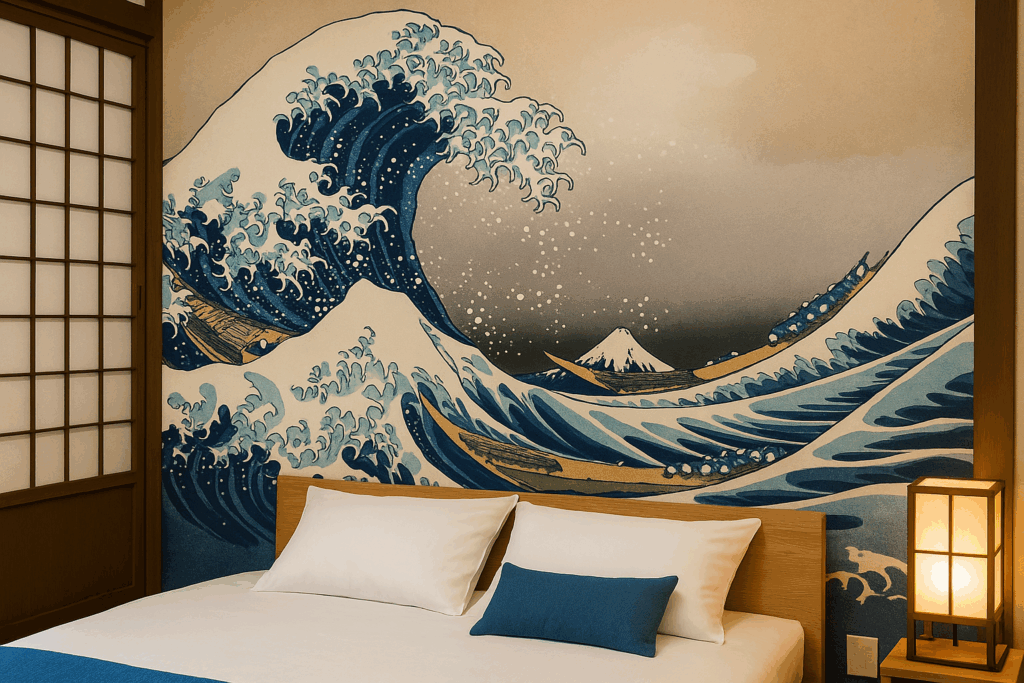
Hokusai’s most iconic works include “The Great Wave off Kanagawa” and “Fine Wind, Clear Morning” (also known as Red Fuji). Using these boldly as room accents can create a striking visual impact, delighting guests with the surprise and excitement of “That famous wave painting is right here in my room!”
1-3. Instagram-Worthy, Photogenic Appeal
These days, when guests share photos of their stay on social media, it can generate powerful word-of-mouth marketing and attract new bookings. Hokusai-inspired interiors offer the advantage of being highly photogenic thanks to their distinctive artistry and color palette. This can encourage sharing on social media, ultimately helping draw in new guests.
2. Benefits of Incorporating Hokusai Patterns into Minpaku Interiors
2-1. Differentiation Through Added Value
As the number of minpaku properties continues to grow, simply being clean and convenient risks getting lost in the crowd. By incorporating the unique element of Hokusai-inspired design, you can instantly transform your space into something extraordinary that evokes both “art” and “Japanese culture.” Having a distinctive identity that sets you apart from other properties can help justify higher nightly rates and make your listing stand out in search results.
2-2. Improved Guest Satisfaction
When guests come away with a strong impression that they “got to enjoy an art space unlike anywhere else,” they’re more likely to leave positive reviews. This appeal extends beyond fans of Hokusai’s wallpaper or fabric designs—it also resonates with guests who simply want a taste of Japanese culture. It’s an element with broad appeal that transcends nationality.
2-3. Potential for Collaboration with Local Communities
Hokusai left behind many works depicting landscapes from various regions of Japan, opening up possibilities for collaboration with local revitalization efforts and tourism programs. For example, you could partner with locations connected to Hokusai or ukiyo-e museums to organize ukiyo-e tours around the region. This could expand your minpaku’s revenue streams beyond accommodation alone, into experiential tours and events.
3. Precautions and Risks to Consider
3-1. Copyright and Usage Permissions
While copyright has generally expired on most of Katsushika Hokusai’s works, there are cases where the source image used for reproduction may itself be under copyright, or where restrictions apply to secondary use. Purchasing commercially available Hokusai-patterned wallpaper or fabric items poses no issue, but caution is needed if you plan to print images yourself to create decorative items.
Since some vendors or designers manage licensing for their products, be sure to check the terms of use in advance and obtain materials through proper, authorized channels.
3-2. Harmony with the Overall Interior
Hokusai patterns make an extremely bold visual statement, and covering an entire room in Hokusai motifs could end up feeling overwhelming rather than relaxing. Using the pattern sparingly as an accent—for example, applying it to just one wall, or incorporating it into cushions or curtains—allows you to achieve an elegant wa-modern effect.
The key is to pay attention to furniture style and color tones, striking a good balance between areas with bold patterns and areas with calmer, more subdued colors. Conversely, if the room is otherwise simple and all-white, boldly covering one wall with “The Great Wave off Kanagawa” wallpaper as a striking accent color could work beautifully.
3-3. Maintenance and Stain Prevention
Large-format Hokusai-patterned wallpaper and fabrics can be difficult to repair once stained or damaged. This is especially true for fabric items like cushions or sofa covers featuring Hokusai patterns—be sure to check the care labels and choose materials that can be cleaned easily or are resistant to fading. For wallpaper, it’s worth considering in advance whether partial replacement is possible in case a section peels or gets dirty, which will make future maintenance much easier.
Leave Your Minpaku Management to the Experts
Free Online Consultation4. Practical Ideas: How to Incorporate Hokusai Patterns into Your Minpaku
4-1. Using Wallpaper as an Accent Wall
Placing a large-format Hokusai-patterned wallpaper as an accent wall is the simplest and most effective approach. Simply applying a bold print from “Thirty-six Views of Mount Fuji” to the wall behind the bed headboard can completely transform the room’s atmosphere. Keep the other walls in white or soft neutral tones, and using the Hokusai pattern on just one wall draws the eye, creating an impression reminiscent of an art gallery.
4-2. Accenting with Cushion Covers and Rugs
If you’re hesitant to cover a large area with Hokusai patterns, another great option is incorporating them through fabric items such as cushion covers, rugs, or bed throws. Placing several Hokusai-patterned cushions on a living room sofa, or laying a patterned throw at the foot of the bed, can subtly evoke a **”wa-modern”** atmosphere.
4-3. Utilizing Decorative Items and Art Panels
Displaying Hokusai’s masterpieces as art panels is another simple and effective option. Framing a piece and hanging it on the wall, or propping it up in the entryway, can create a strong impact the moment guests step inside. Additionally, incorporating Hokusai patterns into small items like coasters and trays is a playful way to sprinkle Japanese flair throughout even the finer details.
5. Appealing to Guests Through Hospitality
5-1. Sharing Hokusai’s Story
Simply incorporating Hokusai patterns may not always spark guests’ interest on its own. That’s why it’s helpful to place a small booklet or information card summarizing Hokusai’s history, famous works, and interesting episodes from his life, helping guests gain a deeper appreciation for the art.
For overseas guests in particular, learning how Hokusai achieved worldwide acclaim or where he created his works can be a fascinating topic. Providing this kind of cultural context can be seen as a significant added value for your minpaku.
5-2. Designing Layouts with Photo Spots in Mind
When incorporating Hokusai patterns into your interior, it’s also effective to intentionally create spots that guests will want to photograph and share on social media. For example, combining a tatami space with Hokusai-patterned wallpaper styled like a hanging scroll can create a distinctly “Instagrammable” spot. When guests take and post their own photos, it generates promotional value that reaches a wider audience.
5-3. Linking to Local Experiences
For guests who enjoy the Hokusai-inspired interior, it’s a nice touch to introduce them to local museums, art galleries, or events related to ukiyo-e. If your area has a gallery specializing in ukiyo-e or offers craft experiences, it could be worth exploring collaborative promotions or ticket discounts.
By offering a total experience where “art and culture fill not just the room, but the entire local area,” you can further boost word-of-mouth buzz, potentially generating additional revenue from tours and experiential events beyond just accommodation.
6. Conclusion: Transform Your Minpaku into an Artistic Space with Hokusai Patterns
Using the art of world-renowned Katsushika Hokusai to add a wa-modern atmosphere and artistic flair to your minpaku property can be a major point of differentiation in a crowded market. Since Hokusai enjoys strong name recognition among overseas guests and easily piques their interest, this approach is also well-suited to capturing inbound demand.
There are various approaches to implementation—wallpaper, fabrics, and decorative items, among others—and when done well, they can offer guests “photos they can only take here” and “experiences found nowhere else.” Sharing the stories behind Hokusai’s works, or partnering with local museums and galleries, can transform the entire stay into a journey rich with cultural value.
That said, there are also important points to keep in mind, such as maintenance, cost, and harmony with the overall layout. The bolder the design, the greater the visual impact—but without careful balance against the rest of the interior, it could affect the comfort of the space, so careful planning is essential.
Even so, by making the most of Hokusai’s overwhelming artistry and worldwide recognition, you can genuinely expect to see improved guest satisfaction and review ratings. Why not reimagine your minpaku not just as a place to stay, but as an artistic space where guests can experience Japanese culture firsthand?
For Minpaku Interiors That Attract Guests, Consult Stay Buddy Inc.
If you’re interested in incorporating Hokusai-inspired or wa-modern design into your minpaku property, or would like further advice and support on interior design, please feel free to reach out to Stay Buddy Inc.
Drawing on our extensive track record in minpaku management, we offer comprehensive support—from proposing designs tailored to your property’s space and theme, to sourcing furnishings, creating cleaning manuals, and training staff. If you’re aiming to run a minpaku that skillfully incorporates the art of Katsushika Hokusai, one of Japan’s greatest cultural treasures, and leaves a lasting impression on your guests, please don’t hesitate to consult with Stay Buddy Inc.