Leave your minpaku management to the experts
Free Online ConsultationWhen it comes to running a minpaku (private lodging) business, your pricing strategy during peak season is one of the biggest factors determining overall profitability. Setting the right rates during high-demand periods—cherry blossom season, autumn foliage, major holidays, and the year-end/New Year period—can make or break your ability to offset revenue dips during the off-season. In fact, many hosts who raise their nightly rates by 1.5 to 2 times during peak season are able to stay profitable for the year even when their off-season occupancy falls below 50%.
That said, simply raising prices isn’t a magic solution. Price too high and bookings dry up; price too low and you leave money on the table. Effective pricing requires a strategic approach that factors in competitor trends, local event calendars, and guest booking behavior patterns all at once.
In this article, we’ll break down the characteristics of both peak and off-peak seasons in the minpaku business, then walk through concrete numbers and real-world examples to help you build a pricing strategy that maximizes annual revenue. Whether you’re just getting started or already running a property and struggling with pricing decisions, this guide is designed to give you actionable insights.
Understanding Your Peak and Off-Peak Seasons
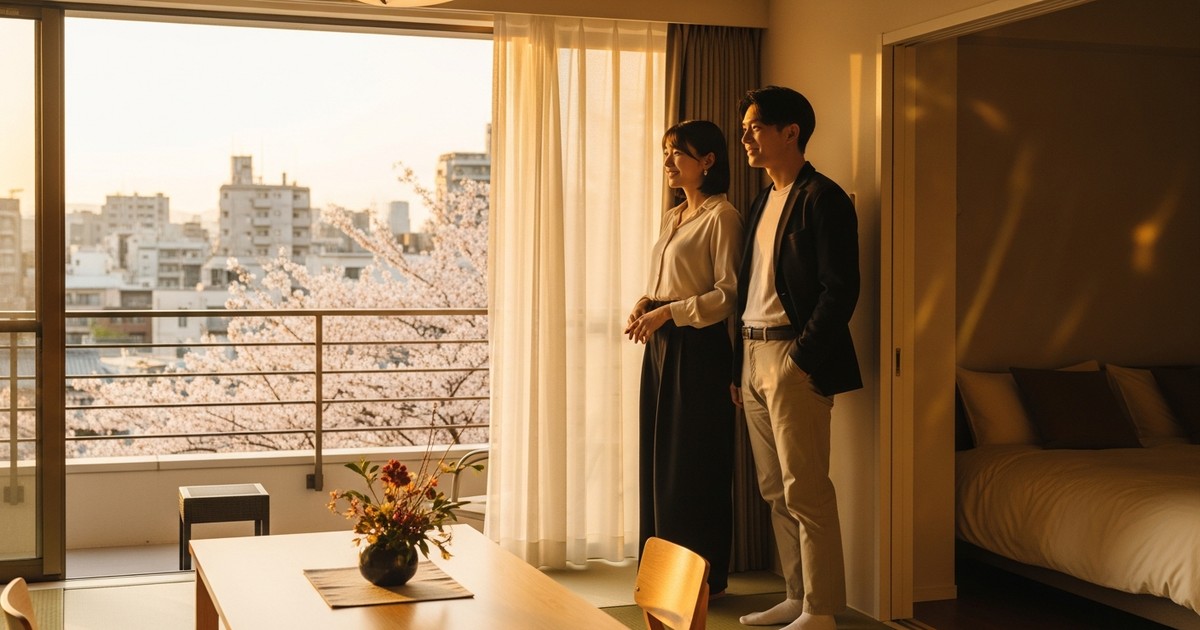
The first step in building a pricing strategy is accurately identifying the peak and off-peak seasons for your property’s specific location. Generally speaking, peak seasons for minpaku in Japan fall during late March to early April (cherry blossom season), July through August (summer vacation), October through November (autumn foliage), and late December through early January (year-end and New Year holidays). During these periods, demand rises sharply among both international and domestic travelers, and it’s not uncommon for urban properties to see average occupancy rates of 80–95%.
On the other hand, off-peak periods typically include mid-January through February, June (rainy season), and weekdays in September. Occupancy during these times often drops to 40–60%, and in areas heavily reliant on inbound tourism, it can fall into the 30% range. Quantifying this gap between busy and slow seasons is the starting point for setting appropriate prices. We recommend regularly checking regional lodging statistics and the occupancy status of comparable properties on Airbnb and Booking.com, then applying those insights to build an annual pricing calendar tailored to your own property.
Fundamental Pricing Strategies for Peak Season
Determine Your Peak-Season Markup Over Base Price
Start by setting a base price for the “normal” season—the period that’s neither particularly busy nor particularly slow. For example, if you’re charging ¥10,000 per night for a 1LDK unit during the normal season, a common benchmark for peak season is ¥15,000–¥20,000 (a 1.5x to 2x markup). During especially high-demand periods like cherry blossom season or the New Year holidays, you may be able to push rates up to 2.5x the base price and still fill your calendar. That said, the appropriate markup depends heavily on local competition, so always check comparable listings in your area.
Specifically, pull up 5–10 listings on Airbnb with similar layouts, locations, and guest capacity to your own, and calculate the median peak-season price among them. Set your price slightly above that median (5–10% higher), then fine-tune based on how bookings come in. This approach strikes a good balance between maximizing profit and maintaining occupancy.
Set Granular Prices by Day of the Week
Even during peak season, demand varies between Friday/Saturday and Tuesday/Wednesday. For instance, you might price weekends at ¥20,000 and weekdays at ¥15,000 during peak season—adjusting rates by day of the week helps you capture revenue you’d otherwise miss. Additionally, on days when specific events are happening nearby (fireworks festivals, major trade shows, sporting events, etc.), you can often add another 20–30% on top of your standard peak-season rate and still get bookings.
Both Airbnb and Booking.com offer calendar tools that let you set prices on a day-by-day basis. It’s important to use this feature to lock in prices at least three months in advance. If you wait until the last minute to make adjustments, you risk having bookings come in at a lower price than you’d like, resulting in missed revenue opportunities.
Protect Your Rates with Minimum Stay Requirements
Accepting one-night bookings during peak season can eat into your profit margin due to the added cleaning costs and labor involved. Setting a minimum stay of 2–3 nights during peak season is an effective way to address this. For example, consider a property priced at ¥18,000/night with a ¥5,000 cleaning fee. A one-night booking effectively nets you about ¥13,000, but a two-night booking works out to (¥36,000 − ¥5,000) ÷ 2 = ¥15,500 per night—a meaningful efficiency gain.
During periods of especially high demand for extended stays—like Golden Week or the year-end holidays—setting a minimum of 3 nights typically has minimal impact on occupancy. This strategy allows you to both reduce cleaning costs through fewer turnovers and maintain your effective per-night rate.
Pricing Tactics to Minimize Off-Season Losses
Know Your Break-Even Point Before Setting a Price Floor
Cutting prices carelessly during the off-season can leave you operating at a loss even with bookings coming in. Start by calculating your fixed costs per night—rent, utilities, Wi-Fi, management fees, insurance, and so on. For example, if your monthly fixed costs total ¥180,000 and you can operate up to 20 days per month (assuming 180 operating days per year), your fixed cost per night comes out to ¥9,000. Add a ¥3,000 cleaning fee, ¥500 in consumables, and OTA commission fees (3–15% of revenue), and you arrive at your break-even point.
If your break-even point turns out to be ¥13,000 per night, you should generally avoid pricing below that figure even during the off-season. That said, since fixed costs accrue regardless of whether the property is occupied, there are cases where accepting a booking slightly below your break-even point still minimizes losses more than leaving the unit vacant. The ability to make this call based on real numbers has a direct impact on your annual bottom line.
Boost Occupancy with Off-Season-Only Discount Plans
Offering discounts for extended stays or early bookings is an effective way to lift occupancy during the off-season. Common structures include a 10% discount for stays of 3+ nights, 20% off for 7+ nights, and 5% off for bookings made 30+ days in advance. Airbnb has built-in “weekly discount” and “monthly discount” features that apply automatically once configured.
For example, take a property normally priced at ¥12,000/night. Applying a 30% monthly discount, a 30-night stay would generate ¥252,000 in revenue—working out to ¥8,400 per night. While the per-night rate drops, since you only need to clean once a month, costs shrink dramatically, and your actual profit can end up higher than if you’d hosted several short-term stays instead. Since there’s consistent demand from business travelers and workation guests looking for extended stays during the off-season, designing pricing to capture this segment can be highly effective.
Leveraging Dynamic Pricing for Automated Rate Adjustments
Manually adjusting prices every single day simply isn’t realistic, so consider adopting a dynamic pricing tool. Popular options include PriceLabs, Wheelhouse, and Beyond Pricing, typically costing ¥2,000–5,000 per month depending on your number of listings. These tools automatically analyze competitor pricing trends, historical booking data, local events, and seasonal/day-of-week factors to recommend and apply optimal nightly rates in real time.
One host reported that after implementing PriceLabs, their average annual nightly rate increased by roughly 18% compared to manual pricing, while occupancy remained essentially unchanged. In cases where peak-season pricing had previously been too conservative, simply adopting a tool like this can boost monthly revenue by ¥30,000–50,000. Rather than handing everything over to the algorithm, the safest approach is to set your own minimum and maximum price boundaries and let the tool make automatic adjustments within that range.
Building a Pricing Calendar to Maximize Annual Revenue
Sync Your Pricing with a Local Event Calendar
To sharpen the accuracy of your pricing, it’s essential to build a local event calendar and run a pricing calendar in sync with it. Check tourism association websites and convention center schedules to identify major festivals, international conferences, trade shows, and sporting events. During trade show periods, for instance, nearby business hotels often fill up completely, driving overflow demand toward minpaku properties—making a 1.3x to 1.8x price increase over the normal rate quite feasible.
Review this calendar twice a year (every six months), adding newly announced events as they’re confirmed. Managing it in a tool like Google Sheets—with columns for date, event name, estimated demand level (high/medium/low), and set price—lets you accumulate valuable data you can reuse and refine in future years.
Refine Your Pricing by Comparing Year-Over-Year Data
From your second year of operation onward, you’ll be able to adjust prices by comparing occupancy rates, average nightly rates, and revenue against the same period the previous year. For example, if the first week of April last year had 100% occupancy at an average rate of ¥15,000, you can reasonably assume you could raise the price to ¥17,000–18,000 this year and still fill your calendar. Conversely, if occupancy in June last year was only 35%, lowering the price may not be the right first move—it might be better to prioritize improvements to your listing photos, title, and guest reviews before touching the price at all.
Repeating this cycle of data-driven decision-making will steadily improve the precision of your pricing over time, leading to consistent year-over-year revenue growth. Your first year will inevitably involve some trial and error, but building the habit of tracking your monthly numbers will make strategy planning far smoother from year two onward.
Peak-Season Revenue Techniques Beyond Pricing
Optimize Your Listing to Improve Search Ranking
No matter how high you price your listing during peak season, it won’t matter if guests never see it. Airbnb’s search algorithm ranks listings based on a combination of factors, including response speed, review ratings, booking rate, and cancellation rate. Refreshing your listing photos and polishing your description one to two months ahead of peak season can meaningfully improve your search ranking. Hiring a professional photographer typically costs ¥15,000–30,000, but in most cases, the resulting boost in booking rate pays back that investment within one to two months.
Other factors that influence search ranking include keeping your response time under an hour, enabling instant booking, and setting an appropriate cancellation policy. Getting these non-price factors right makes it easier to secure bookings even at higher rates.
Add Value Through Enhanced Amenities
Charging premium prices during peak season naturally raises guest expectations. Adding seasonal amenities is an effective way to meet those expectations. For instance, providing a portable fan and cooling towels in summer, or a blanket and humidifier in winter, can significantly boost guest satisfaction for an investment of just ¥2,000–5,000. More five-star reviews create a positive feedback loop, giving you the confidence to set even higher prices during the next peak season.
Creating your own local guide—a neighborhood map or list of recommended restaurants—and leaving it in the unit is another effective, nearly cost-free touch. It often leads to reviews praising the host’s thoughtfulness, which directly strengthens your listing’s competitiveness.
Struggling with Minpaku Pricing Strategy? Talk to Stay Buddy Inc.
Setting peak-season prices, managing off-season occupancy, and choosing the right dynamic pricing tool all require significant expertise and hands-on operational know-how to truly maximize minpaku revenue. For owners juggling a full-time job or other business, building and maintaining an optimal pricing strategy on your own can be an overwhelming amount of work.
At Stay Buddy Inc., our minpaku management service provides end-to-end support for everything from data-driven pricing strategy tailored to each property’s market, to day-to-day rate adjustments, listing optimization, and guest communication—all the operational tasks that directly impact your bottom line. We build a management system that lets you raise rates during peak season while maintaining strong occupancy during the off-season, maximizing your revenue across the entire year.
If you find yourself wondering, “Is my current pricing actually optimal?” or feeling like “I should be earning more during peak season but I’m leaving money on the table,” don’t hesitate to reach out to Stay Buddy Inc. We’ll provide concrete improvement recommendations based on your property’s specific situation and local market characteristics.