
Leave Your Minpaku Management to Us
Completely Free Online ConsultationWhen thinking about minpaku (vacation rental) revenue in Toya Lake, just how much potential does Toya Lake Town—one of Hokkaido’s leading tourist destinations—actually hold? With the striking scenery formed by the active volcano Mt. Usu and the mystical lake, its reputation as a hot spring resort, and year-round tourism demand across all four seasons, Toya Lake Town has plenty of appealing elements for minpaku owners.
That said, to start a minpaku business, you need to choose the framework that best fits your property from among three systems: the “Minpaku Act” (Private Lodging Business Act), the “Hotel Business Act,” and “special zone minpaku.” Each differs significantly in terms of profitability and procedural difficulty. Since the choice of system affects your annual occupancy rate and revenue ceiling, it’s essential to carefully compare your options before opening.
This article provides a comprehensive overview—from the actual tourism and accommodation demand in Toya Lake Town, to revenue simulations by property type, a comparison of legal frameworks, precautions when opening, and risks during operation. If you’re considering starting a minpaku business in the Toya Lake area, we hope you’ll find this a useful reference.
Area Overview and Accommodation Demand Affecting Minpaku Revenue in Toya Lake
Toya Lake Town is located in Abuta District, Hokkaido, and is an area that attracts domestic and international tourists year-round, centered around Toyako Onsen. It boasts abundant tourism resources that tend to generate repeat visitors, including the Mt. Usu Geopark, strolls along the lakeshore, snowy winter scenery paired with hot springs, and the summer fireworks display over the lake (held nightly from late April through the end of October in a typical year). Future improvements in access are also expected thanks to the planned extension of the Hokkaido Shinkansen to Oshamambe, which should help boost tourism demand over the mid-to-long term.
Since existing accommodation in the Toyako Onsen area is centered around large hotels and traditional ryokan, there’s steady demand for niche lodging experiences that large hotels struggle to provide—such as whole-house rentals for families and groups, or pet-friendly accommodations. Typical nightly rates per room run around 10,000 to 25,000 yen for properties near the Toyako Onsen resort district, while whole-house rentals with good views can command 20,000 to 40,000+ yen per night. The proportion of foreign tourists (particularly from Taiwan, South Korea, China, and Western countries) is also high, meaning that capturing inbound demand could allow for even higher pricing.
Revenue Forecasts by Property Type: Minpaku Simulations for the Toya Lake Area
When starting a minpaku business in the Toya Lake area, initial investment, occupancy rates, and projected annual revenue vary significantly depending on the property type. Below, we simulate three representative property types using realistic figures, all based on the assumption of obtaining a Hotel Business Act license (simple lodging house). Note that under the Minpaku Act (Private Lodging Business Act), there’s an annual operating cap of 180 days, meaning that even at the same nightly rate, maximum revenue can be less than half of what’s possible under the Hotel Business Act.
Condominium/Apartment Type
Since hotels and ryokan dominate the lodging landscape within Toya Lake Town, running a minpaku out of a condominium unit is relatively less common. However, there are cases where a newer unit near the Toyako Onsen area is converted from a rental or purchased for operation. Expected occupancy rates are roughly 75–85% during peak season (July–September and the year-end/New Year holidays), 30–45% during the off-season (November–March), and around 50–60% on an annual average basis. If the nightly rate per room is set at 12,000 yen, annual revenue would be approximately 1.08 million yen operating under the 180-day cap of the Minpaku Act, or roughly 2.0–2.5 million yen if operating year-round (365 days) under a Hotel Business Act license. Initial investment, including interior finishing and equipment, typically runs 1.5–2.5 million yen.
Detached House / Whole-House Rental Type
The property type with the highest revenue potential in the Toya Lake area is the whole-house rental of a detached home. It’s well-suited to families and group stays, and many operators set nightly rates between 25,000 and 40,000 yen. When summer, holidays, and the winter hot-spring season overlap, annual occupancy rates of 55–65% can be expected. At a nightly rate of 30,000 yen and 60% occupancy, projected annual revenue comes to approximately 6.57 million yen (365 days × 60% × 30,000 yen). Initial investment ranges from 3 to 6 million yen assuming renovation of an existing property, and can exceed 8 million yen for new construction or major remodeling. A key advantage of obtaining a Hotel Business Act license (simple lodging house) is that it enables year-round operation, allowing for faster investment recovery.
Kominka (Traditional Japanese House) Renovation Type
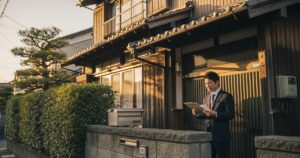
Vacant homes and kominka (traditional Japanese houses) are scattered throughout the rural areas surrounding Toya Lake, and renovating these into lodging facilities has drawn attention in recent years. Their strengths lie in the ease of creating a sense of “escape from the everyday” through distinctly Hokkaido-style wooden architecture, expansive gardens, and wood-burning stoves—making it easier to differentiate the guest experience. Nightly rates for a whole house range widely from 20,000 to 50,000 yen, and premium pricing is achievable depending on the concept. On the other hand, insulation and equipment renovation costs specific to kominka can add up, with initial investment sometimes reaching 5 to 12 million yen. Assuming an occupancy rate of around 45–55%, at a nightly rate of 35,000 yen and 50% occupancy, projected annual revenue comes to approximately 6.39 million yen (365 days × 50% × 35,000 yen). In cases where the property acquisition cost is low (such as free transfers or bargain purchases), high investment returns can be expected over the mid-to-long term.
Differences Between the Minpaku Act, Hotel Business Act, and Special Zone Minpaku, and Their Application in Toya Lake
There are three main legal frameworks for operating a minpaku business, each differing in maximum operating days, application difficulty, and facility requirements. You’ll need to choose carefully based on your property’s location and operating style. Note that for the specific scope of ordinance application and eligibility to apply under each system in Toya Lake Town, please be sure to check directly with the Toya Lake Town office or the relevant Hokkaido authority.
The Minpaku Act (Private Lodging Business Act) operates under a notification system, with relatively simple procedures, but caps annual operating days at 180. In the Toya Lake area, local ordinances may further restrict operating days or designated zones, so the actual number of days you can operate needs to be determined on a case-by-case basis. The Hotel Business Act (simple lodging house) operates under a licensing system, which raises the application bar, but allows for year-round operation (365 days). Properties must meet structural and facility standards (room size, lighting, ventilation, etc.), and the process from initial consultation to license acquisition can take several months. Special zone minpaku is a system that applies only within National Strategic Special Zones, so whether Toya Lake Town falls within a designated special zone must be confirmed with the local government. If maximizing revenue is your goal, obtaining a Hotel Business Act license (simple lodging house) for year-round operation is a realistic option worth considering.
Points to Note When Opening a Minpaku Business in Toya Lake
When opening a minpaku business in the Toya Lake area, you should first check the property’s zoning designation and applicable ordinances before deciding which legal framework to pursue. For an application under the Hotel Business Act (simple lodging house), the general process is: preliminary consultation with the public health center → facility renovation → license application → inspection → commencement of operation. You should allow roughly 2–4 months from application to license approval. Installing fire safety equipment (automatic fire alarms, emergency exit lighting, fire extinguishers, etc.) is legally mandatory, and since the required equipment varies depending on the building’s total floor area and structure, prior consultation with the fire department is also essential.
As a rough guide to initial costs: interior and equipment expenses (furniture, appliances, linens) typically run 1–3 million yen, fire safety equipment installation runs 200,000–800,000 yen, and costs related to the license application (administrative scrivener fees, drawing preparation, etc.) run roughly 100,000–300,000 yen. In total, costs commonly reach 1.5–5 million yen or more, so it’s important to plan your budget with some margin. Consideration for neighboring residents is also important—establishing clear rules in advance regarding noise, parking, and garbage disposal, and carefully greeting neighbors and explaining your management arrangements, can help prevent trouble down the line.
Operational Risks and Strategies for Sustaining Minpaku Occupancy in Toya Lake
One of the biggest risks in operating a minpaku business in the Toya Lake area is seasonal fluctuation. While demand rises during summer (July–September), holiday periods, and the winter hot-spring season, off-peak times such as early spring and November can see fewer bookings. To offset off-season occupancy, effective strategies include offering long-stay plans, tapping into workation demand, and setting up multi-night discounts. Additionally, introducing dynamic pricing aligned with local event schedules—such as the Toya Lake Marathon and winter sports events—can help maximize revenue during peak periods.
As a countermeasure against cancellation risk, it’s standard practice to set the cancellation policy on booking platforms to “moderate to strict” in order to minimize revenue loss from last-minute cancellations. To prepare for potential guest-related issues (such as property damage or noise complaints), be sure to check what host protection programs your platform offers, and consider taking out personal liability insurance and facility liability insurance. By outsourcing cleaning and check-in services to local staff or a management company, owners can maintain consistently high-quality operations even while living far from the property. Utilizing a property management company can help sustain occupancy rates and improve review scores, contributing to long-term revenue stability.
For Minpaku Startups and Revenue Improvement in the Toya Lake Area, Consult Stay Buddy
Stay Buddy Co., Ltd. specializes in minpaku and hotel business management services across Japan, including Hokkaido. For owners interested in starting a minpaku business in the Toya Lake area, we offer end-to-end support—from diagnosing your property’s revenue potential, to assisting with legal applications, to marketing and operational management after opening. We’re happy to provide free consultations for questions like “I don’t know which system to apply under” or “I’d like a revenue simulation.”
If you’re already operating a minpaku business and struggling with low occupancy rates or the heavy burden of daily operations, please don’t hesitate to reach out. Many owners are able to improve revenue through pricing strategy reviews tailored to the Toya Lake area’s market characteristics and through optimization of OTA (online travel agency) listings. We provide concrete advice grounded in real-world results.
Starting and operating a minpaku business involves a wide range of tasks—understanding legal frameworks, preparing the property, attracting guests, and handling guest communications. Managing all of this alone as an owner is no easy task. By leveraging Stay Buddy’s support, owners can focus on maximizing their property’s earning potential while leaving the complex operational work to professionals.
For minpaku startups or revenue improvement in Toya Lake, please feel free to reach out via Stay Buddy Co., Ltd.’s free consultation form. Our team, well-versed in the characteristics of the local area, will propose the optimal plan tailored to your property.