Leave Your Vacation Rental Management to the Experts
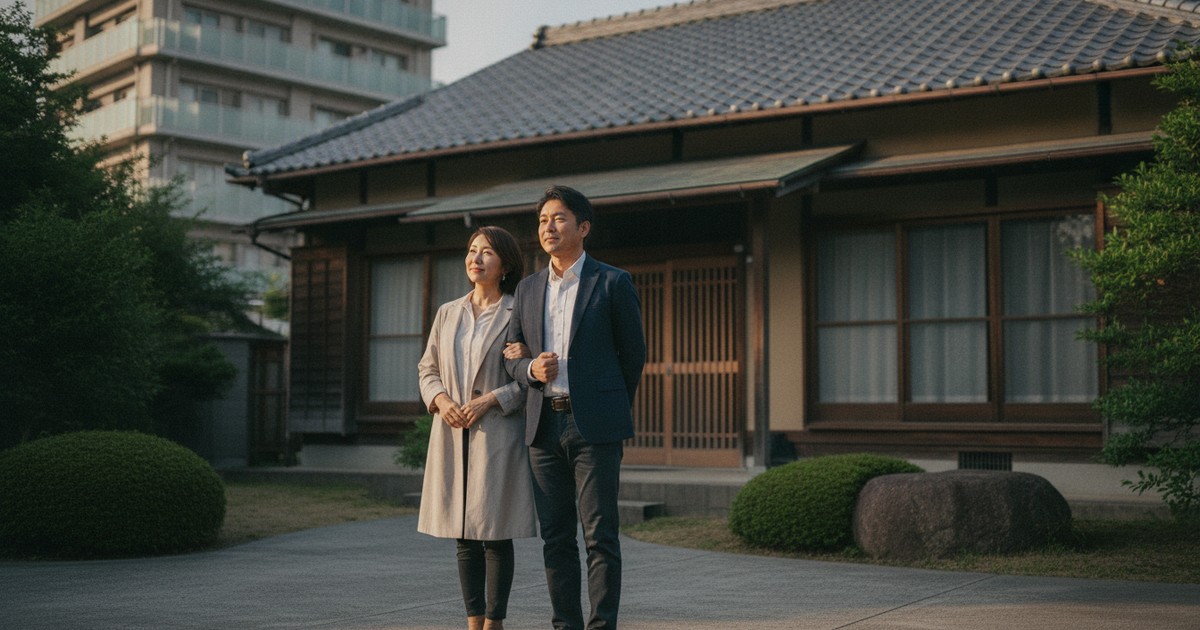
Free Online ConsultationWhen overseas owners ask us which property type is easier to get a license in Japan — a detached house or an apartment — the honest answer is that the building type is rarely the deciding factor. What actually determines your path is the licence category you are pursuing, and the municipality sitting above you. That said, the two property types do create meaningfully different operational and regulatory friction, and if you are buying remotely and cannot visit, those differences compound quickly.
The Two Licence Paths: Minpaku Law vs Hotel Business Act
Most overseas owners start with the Housing Accommodation Business Act (the Minpaku Law, enacted 2018), which permits short-term letting up to 180 nights per calendar year under a minpaku notification. This is the most accessible route on paper. The second route is a full ryokan business licence under the Hotel Business Act, which removes the 180-day cap but requires the property to meet structural, fire safety, and sanitation standards that most residential apartments were not built to satisfy.
A third route — national strategic special zones (tokku minpaku) — existed in designated cities to bypass the 180-day cap. However, as of 29 May 2026, Osaka City has permanently closed new applications for tokku minpaku. Existing certified operators may continue, but this route is no longer available to new applicants in Osaka. For any new opening in Osaka, you are looking at the Minpaku Law or a full ryokan licence.
Where Detached House vs Apartment Licensing Actually Diverges
For a minpaku notification, the structural compliance requirements are theoretically identical regardless of building type. In practice, apartments create a layer of friction that detached houses do not: condominium management rules (管理規約). Under the Housing Accommodation Business Act, prefectures and municipalities can restrict minpaku further, but so can a building’s own management association. We have seen owners purchase an apartment, begin the notification process, and then discover that the 管理規約 explicitly prohibits short-term letting — a restriction that does not appear in the sales particulars and that the overseas buyer’s agent either missed or did not flag. The notification cannot proceed regardless of what the municipality allows.
Detached houses carry no equivalent veto. If the property complies with local zoning (用途地域) — minpaku is prohibited in certain purely residential zones under some municipal ordinances — and satisfies the Fire Service Act requirements for smoke alarms, emergency lighting, and guest capacity signage, the notification path is straightforward. That is a meaningful operational advantage for a remote owner who cannot afford to discover blocking issues late.
For a ryokan licence, the gap widens further. A detached house can sometimes be retrofitted to meet the structural separation, washing facilities, and front-desk equivalency requirements under the Hotel Business Act. A standard apartment in a multi-unit building almost never can, because the licence requires dedicated guest facilities and compliance with building standards that assume the whole structure is being operated as accommodation.
What the Fire Service Act Actually Requires On the Ground
This is where remote ownership creates real exposure. Under the Fire Service Act (消防法), minpaku properties must install interconnected smoke detectors, fire extinguishers in prescribed locations, and — above a certain guest capacity or floor area — emergency evacuation lighting. The exact thresholds vary by municipality and fire station jurisdiction.
Here is a situation we handle regularly: a cleaning vendor arrives for a turnover between guests and notices that a smoke detector has been knocked off the ceiling bracket — probably by a guest moving luggage. Our cleaner calls it in, we photograph it and log it, and we arrange a replacement before the next check-in. That is a routine judgement call. But if the property owner is in Europe and has no operator on site with authority to act and spend, that detector stays broken until someone notices it during a compliance inspection. Prefectural fire departments do conduct inspections, and a failed inspection can trigger suspension of the minpaku notification. For a non-resident owner, the risk of an unmanaged lapse is not hypothetical.
Non-Resident Tax and Revenue Remittance
Regardless of property type, a non-resident owner receiving rental income from Japan is subject to Japanese income tax withheld at source — typically 20.42% under the Income Tax Act, applied to gross rent if no tax agent (納税管理人) is appointed. Appointing a 納税管理人 (a resident tax representative) is mandatory for non-residents who own income-producing property. Without one, the obligation falls on the tenant or, in a management arrangement, potentially on the operator — which creates a liability most operators will not accept without explicit agreement.
Management company fees across the industry typically run in a range of around 10–25% of revenue, depending on the scope of services, property type, and the specific company. A low-touch operator handling only booking and cleaning coordination sits toward the lower end; a full-service operator covering licensing renewals, compliance monitoring, guest communication, and local emergency response will sit toward the higher end. Ask any company you are evaluating to specify precisely what is included and excluded, and what triggers additional charges. A fee structure that looks competitive can become expensive if maintenance callouts, licence renewal administration, and tax agent coordination are billed separately.
Revenue is denominated in JPY. For overseas owners, exchange rate timing and remittance method matter. Monthly payouts converted at spot rate and wired internationally incur transfer fees and currency risk. Some owners prefer quarterly accumulation; either way, clarify the remittance schedule and whether the operator deducts Japanese consumption tax (currently 10%, applicable once the operator crosses the registration threshold) before or after calculating their fee.
Supervising a Management Company You Cannot Visit
The operational reality for a non-resident is that you are running a licensed accommodation business through a proxy. The licence is in your name (or the operator’s name as your agent), the compliance obligations are yours, and the guests’ experience reflects on your property. Distance does not transfer liability.
Concrete questions to put to any prospective management company before signing:
- Who physically holds the keys and responds to guest emergencies at 2 a.m.? Is that an employee or a subcontracted call centre?
- How is the annual minpaku usage report (annual reporting is required under the Housing Accommodation Business Act) prepared and filed, and who signs it?
- What is the documented process when a neighbour complaint is received? Under the Minpaku Law, operators are required to take measures to prevent guest conduct from causing neighbourhood nuisance — failure to act on complaints can result in notification suspension.
- How are inspection results, compliance notices, and local authority correspondence communicated to you, and within what timeframe?
- Is the 納税管理人 appointment handled by the company, and at what additional cost?
Neighbour complaints are a real operational pressure, more so for detached houses than apartments. A detached house in a quiet residential street with guests dragging luggage at midnight generates complaints that an apartment building — where some noise is expected — absorbs more easily. We have had situations where a neighbour complaint escalated to the ward office within 48 hours of a guest arrival, requiring us to make a direct call to the complainant, adjust check-in instructions, and document the resolution to show the local authority that we had acted. That kind of response requires someone physically reachable in the same time zone with authority to act.
Which Type Should an Overseas Owner Choose?
If the goal is a minpaku notification with the least friction and the most operational flexibility, a detached house in a minpaku-permissible zone, in a municipality without heavily restrictive local ordinances, gives you the cleaner path. There is no 管理規約 risk, the fire compliance retrofits are generally simpler, and you are not dependent on a management association’s goodwill.
If you are looking at an apartment, commission a specific check of the 管理規約 before purchase — not a general legal review, a targeted check for short-term letting prohibitions. This is a standard part of our pre-acquisition advisory work, and it has saved several overseas clients from a dead-end purchase.
The licence category matters more than the building type. But the building type determines how smoothly the licence category can be executed — and for a remote owner who cannot walk the property, that execution risk is the part that deserves the most scrutiny upfront.
If you own or are acquiring a property in Japan and want a frank assessment of its licensing path and what on-the-ground management would actually involve, speak to us at Stay Buddy. We operate properties; we do not just advise on them.
Leave Your Vacation Rental Management to the Experts
Free Online ConsultationShuhei Makigi
Representative Director, Stay Buddy Co., Ltd.
Registered Housing Accommodation Management Business — Ministry of Land, Infrastructure, Transport and Tourism No. F03862. Stay Buddy operates short-term rentals and licensed hotels across Japan, supporting overseas investors with compliant, high-performing properties.
Written by the Stay Buddy Japan team. This content was produced with AI assistance and reviewed for accuracy.