If you’re considering starting a vacation rental business in Otaru City, chances are you’ve searched for information under keywords like “Otaru vacation rental income.” Otaru is one of Hokkaido’s premier tourist destinations, drawing travelers from both Japan and abroad, making it an attractive stage for a vacation rental business. At the same time, tourist numbers fluctuate significantly by season, so securing stable year-round income requires a well-thought-out operational strategy.
This article provides a comprehensive breakdown based on Otaru’s tourism demand data—covering revenue forecasts by property type, an overview of relevant regulations, key considerations when starting up, and ongoing operational risks. We’ve packed in everything you need to know before opening, so please read through to the end.
An Overview of Otaru’s Local Market and Accommodation Demand Data That Shape Vacation Rental Income
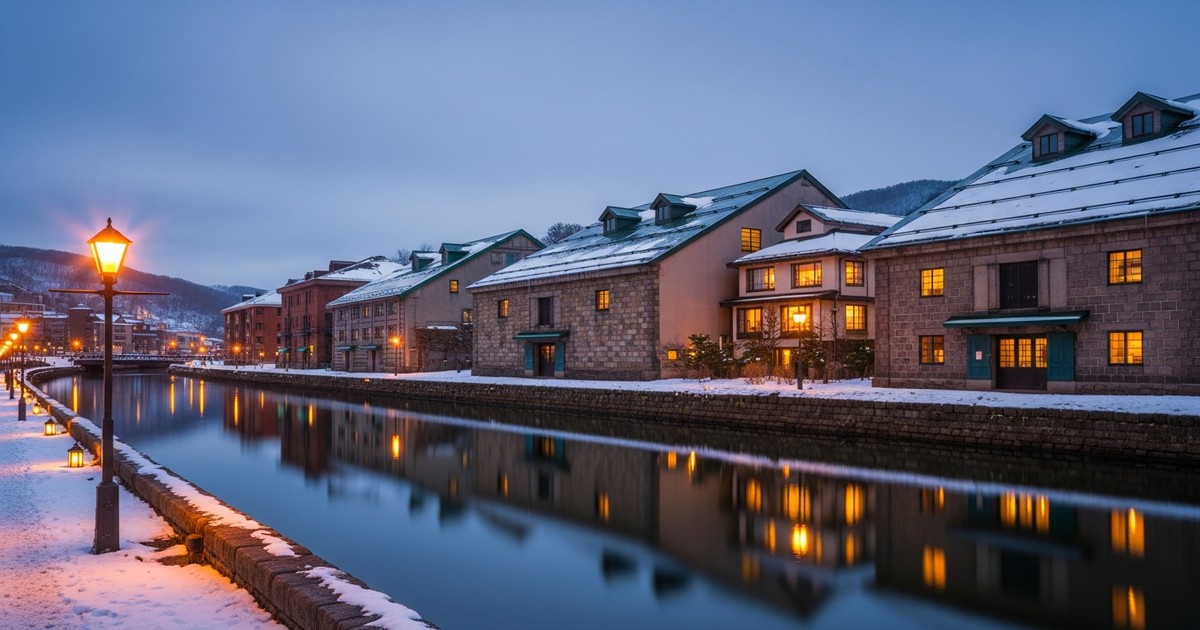
Located in west-central Hokkaido, Otaru City boasts some of Japan’s finest tourism assets, including the iconic Otaru Canal lined with stone warehouses, glassware and music box workshops, and markets serving fresh seafood. Combined with plans to extend the Hokkaido Shinkansen and convenient access from New Chitose Airport, the city attracts travelers from Japan and overseas year-round. According to Hokkaido tourism statistics, Otaru’s annual number of visitors hovered around 7 million before the pandemic, with occupancy rates at lodging facilities tending to spike during periods of strong inbound demand from Asia—particularly from Taiwan, China, and Hong Kong.
As for typical nightly rates, standard hotel and ryokan rooms run around ¥8,000–¥15,000 per night, while vacation rental properties range from ¥10,000 to ¥30,000 per night depending on location, amenities, and capacity. Properties near the canal area or Sakaimachi Street can command premium pricing, and since families or small groups staying together enjoy a lower per-person cost, vacation rentals have a strong competitive edge in this market. That said, occupancy rates vary widely between summer (July–August) and winter (December–February), making it essential to factor off-season strategies into your annual revenue projections.
Revenue Forecasts by Property Type: Occupancy Rates, Average Nightly Rates, and Estimated Annual Income
When starting a vacation rental in Otaru, initial investment costs, expected occupancy rates, and nightly rates vary significantly depending on the type of property. Below, we’ve calculated revenue models for three representative property types. Please note these are rough estimates that will vary based on location, amenity quality, and operational approach.
Factoring in seasonal fluctuations, occupancy rates diverge sharply between the high season (July–September and December) and the off-season (February–April). While high-season occupancy can reach 70–80%, off-season rates can drop to as low as 20–35%, making an annual average occupancy rate of 45–55% a realistic baseline.
Single-Unit Apartment/Condo Type
Common around Otaru Station and along the canal, 1LDK to 2LDK single-unit condos represent a relatively low-barrier entry point into the vacation rental business, thanks to comparatively modest upfront investment. Including renovation, furniture/appliances, and fire safety equipment, initial investment typically runs ¥1.5–3 million. With a capacity of 4–6 guests, nightly rates typically fall between ¥15,000 and ¥20,000. Assuming an average annual occupancy rate of 50%, annual revenue would come to approximately ¥2.7–3.65 million. After deducting management fees, utilities, cleaning costs, and platform commissions (roughly 3–5% of revenue), you can expect net annual income of around ¥1.8–2.5 million.
For condo units, checking the management association’s bylaws is essential, as many buildings prohibit vacation rental use—so be sure to verify this in advance. Ongoing attention to noise levels affecting upstairs, downstairs, and adjacent units will also be key to sustainable operation.
Detached House Type
Detached houses allow for higher guest capacity, and operating as a whole-house rental makes it easier to capture demand from group travelers and families. For a 2LDK–4LDK house accommodating 6–10 guests, nightly rates can be set between ¥25,000 and ¥45,000. Initial investment varies depending on the scope of renovation but typically runs ¥3–6 million. At an average annual occupancy rate of 50%, annual revenue would come to approximately ¥4.55–8.2 million, with net income after expenses expected to fall in the ¥2.8–5 million range.
Building good relationships with neighbors is especially important for detached house properties. Addressing issues like trash disposal, parking, and nighttime noise before opening can prevent long-term disputes. For older properties, insulation and equipment renovation costs can add up quickly, so we recommend conducting a building inspection before acquiring the property.
Traditional Japanese House (Kominka) Type
Otaru City has numerous historic stone and wooden buildings dating back to the Meiji and Taisho eras scattered throughout the city. Renovated into vacation rentals, these kominka properties offer rarity and high experiential value that can support premium pricing. For kominka properties accommodating 6–12 guests, nightly rates of ¥40,000–¥80,000 are not uncommon. However, initial renovation costs range widely from ¥5–15 million, with the risk of costs rising further if seismic reinforcement, insulation work, and barrier-free accessibility are added. Even at an average annual occupancy rate of 40–45%, annual revenue can reach ¥5.8–13 million, and once initial costs are recovered, profitability tends to be strong.
Renovating kominka properties is also valued from a cultural preservation standpoint, but depending on the building’s condition, the renovations needed to meet building standards under the Hotel Business Act can sometimes become extensive. From a cost management perspective, it’s essential to consult with an architect and the local health center before applying, to align your renovation plans with permit requirements.
Overview of Regulations: Differences Between the Minpaku Act, the Hotel Business Act, and Special Zone Vacation Rentals
There are three main legal frameworks to understand when operating a vacation rental. The first is the Private Lodging Business Act (commonly known as the “Minpaku Act”), which caps annual operating days at 180 and requires notification to the prefectural government. The second is the Hotel Business Act (Simple Lodging category), which has no 180-day cap and allows year-round operation, but requires a permit from the local health center and compliance with facility standards (lighting, ventilation, fire safety equipment, etc.). The third is the Special Zone Vacation Rental system (under the National Strategic Special Zones Act), which applies only in specific areas designated by the national government.
The specifics of how each of these frameworks applies in Otaru, along with any additional municipal ordinances, can involve legally complex judgment calls regarding permit eligibility and area designations. In particular, under the Minpaku Act, municipalities have the authority to further restrict operating days through local ordinances, so please be sure to confirm the specific ordinance details and operational rules directly with Otaru City Hall or the relevant health center. Legal interpretation must be assessed on a case-by-case basis, as applicable regulations vary depending on the property’s zoning designation, building structure, and operational format.
Key Considerations When Starting Up: The Permit Application Process and a Breakdown of Initial Costs
The first step in launching a vacation rental business is deciding on your operational format. For applications under the Hotel Business Act (Simple Lodging), the typical process involves: preliminary consultation with the health center → confirmation of facility standards → notification to the fire department → permit application to the health center. Obtaining approval typically takes 1–3 months, so this timeline needs to be coordinated alongside your renovation schedule. Notifications under the Private Lodging Business Act (Minpaku Act) are filed with the prefectural government, and can be processed relatively quickly once documentation is complete—though this too requires confirming fire safety equipment and selecting a management company in advance.
Major components of initial costs include property acquisition or renovation work (¥500,000–¥15 million), furniture, appliances, and bedding (¥300,000–¥800,000), fire safety equipment installation (¥100,000–¥300,000), permit application fees (a few tens of thousands of yen), initial setup for a vacation rental management system, and professional photography (¥30,000–¥80,000). Explaining your plans to neighbors in advance is also a crucial step before opening—distributing informational notices or greeting neighbors individually can help prevent disputes down the road. Since your relationship with neighbors can even affect post-opening reviews, it’s worth taking a courteous, thoughtful approach.
Ongoing Operational Risks: Seasonal Fluctuations, Handling Trouble, and Strategies for Sustained Occupancy
One of the biggest risks in running a vacation rental in Otaru is seasonal fluctuation. Bookings tend to concentrate during the summer tourist season (July–September) and the winter canal illumination period (December–January), while tourist numbers drop off in early spring (February–April), sometimes pushing occupancy rates down to just 20–30%. To smooth out these revenue swings, effective strategies include leveraging dynamic pricing during the off-season, targeting long-stay guests visiting for skiing, and tapping into business travel and workation demand.
Common operational risks include guest-caused noise or trash issues, damaged furnishings, and no-show checkouts or unresponsive guests. To prepare for these, it’s important to have house rules translated into multiple languages (Japanese, English, Chinese, Korean), implement a security deposit or damage protection service, and establish a 24-hour emergency contact system. Additionally, heavy reliance on OTAs (such as Airbnb and Booking.com) carries the risk that algorithm changes or platform policy shifts could suddenly cause bookings to plummet—so listing across multiple channels while also building your own brand presence on social media is key to maintaining steady occupancy. Clearly defined cancellation policies and guidance on travel insurance are also practical measures that reduce risk for both guests and owners.
Considering Starting a Vacation Rental in Otaru? Talk to Stay Buddy
Stay Buddy Inc., a vacation rental management company, offers one-stop support for every stage of running a vacation rental business—from property selection consultations and permit application support to guest communication, cleaning management, and revenue maximization. In an area like Otaru with significant seasonal fluctuation, having an experienced management partner can make a real difference in stabilizing your income.
Whether you’re unsure which property type suits you best, feel overwhelmed by complex legal procedures, or simply don’t have time to manage operations yourself, Stay Buddy’s support lets you move forward with confidence at every stage—from startup through ongoing operation. Drawing on our proven track record operating in the Hokkaido region, we offer free revenue simulations tailored to Otaru’s unique market characteristics.
Your first consultation is completely free, and we welcome inquiries even if you don’t yet own a property. Whether you’re looking to start a vacation rental business in Otaru, improve your current operation, or simply generate extra income through vacation rentals, feel free to reach out no matter your situation. Our Stay Buddy staff will listen carefully to your needs and propose the best plan for you.
Please take advantage of our free consultation via the inquiry form or by phone below. Stay Buddy is fully committed to supporting your success in launching a vacation rental business in Otaru.