Why Experience Content Matters for Monetizing Vacation Rentals in Hokkaido
If you run a vacation rental in Hokkaido, combining accommodation with “experience content” can dramatically expand your monetization opportunities. Offering experiences alongside a stay isn’t just about boosting guest satisfaction—it’s a key strategy that directly drives up your average revenue per guest and encourages repeat bookings.
In recent years, platforms like Airbnb have seen rapid growth in their “Experiences” category, with more and more guests booking accommodation and experiences together. Hokkaido, in particular, is a favorite among inbound tourists, and it’s not unusual for guests to spend an additional ¥5,000–¥15,000 per person on authentic local experiences. Even at a property charging ¥10,000 per night, adding experience content can boost total revenue per booking by 1.5 to 2 times.
In this article, we’ve handpicked five local experience contents that are genuinely popular among Hokkaido vacation rental guests, and we’ll walk through the specifics of each one along with practical ways to monetize them. Whether you’re just starting out in the vacation rental business or already running one and looking to increase revenue, you’ll find plenty of useful insights here.
#1: Farming and Dairy Farming Experiences
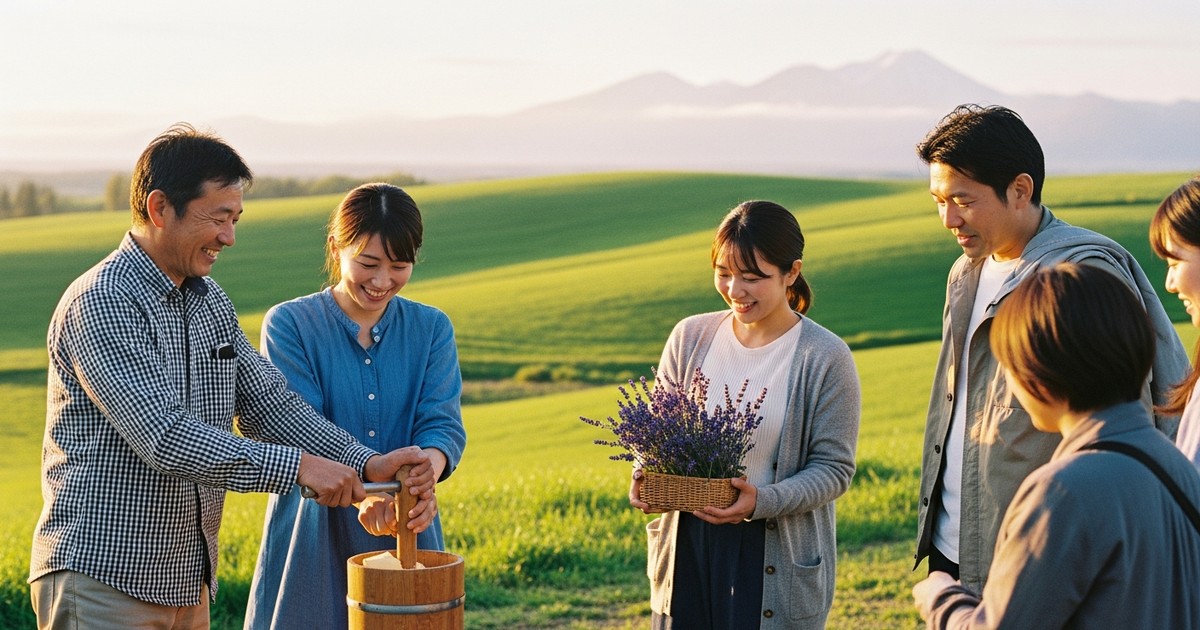
When guests think of Hokkaido, vast farmland and pastures are usually the first thing that comes to mind—which is exactly why farming and dairy experiences remain consistently popular. Activities like hand-milking a cow or harvesting seasonal vegetables are a huge hit not just with domestic guests from urban areas, but also with inbound visitors from across Asia, Europe, and North America. In areas like Tokachi and Furano, several vacation rental properties partner with nearby farms to offer these programs, typically charging ¥3,000–¥5,000 per person.
The key to monetization lies in how you structure the partnership with local farmers. Hosts don’t need to run the farming activity themselves—it’s far more efficient to outsource guest acceptance to a local farm and earn a referral commission of 20–30% of the experience fee. For example, if a group of four joins a ¥5,000 farming experience, the total revenue is ¥20,000, with the host taking home ¥4,000–¥6,000. If 20 groups participate per month, that translates to an extra ¥80,000–¥120,000 in monthly revenue on top of accommodation income. Changing up the experience content by season also helps you attract bookings year-round.
#2: Seafood Market Tours and Sushi-Making Experiences
Hokkaido’s fresh seafood is renowned worldwide, and experiences where guests tour local markets to pick out ingredients before making their own sushi consistently score extremely high satisfaction ratings. Tours built around accessible markets—like Sapporo’s Nijo Market or Hakodate’s morning market—are especially popular with inbound guests. On Airbnb’s Experiences category, several sushi-making experiences in the Sapporo area have racked up hundreds of reviews with average ratings hovering around 4.9—an exceptionally high benchmark.
Pricing typically runs ¥8,000–¥12,000 per person, and profit margins remain healthy even after deducting ingredient costs. If you host the sushi-making experience in your rental’s own kitchen, there’s essentially no need for additional equipment investment. Even if you hire a local sushi chef or cook as an instructor at a fee of ¥10,000–¥15,000 per session, you’ll still turn a solid profit as long as you have four or more participants. For instance, with six guests at ¥10,000 each, total revenue comes to ¥60,000; after subtracting ¥12,000 in ingredient costs and a ¥15,000 instructor fee, you’re left with ¥33,000 in profit.
#3: Outdoor and Nature Activities
Outdoor experiences that showcase Hokkaido’s natural beauty are popular year-round. From canoeing, rafting, and trekking in summer to snowshoeing and smelt fishing in winter, the ability to offer distinct activities across all four seasons is one of Hokkaido’s unique strengths. Areas like Niseko, Furano, and Shiretoko are home to numerous outdoor guide operators, many of whom have solid track records partnering with vacation rental hosts.
The easiest way to monetize this is by partnering with local activity operators and handling guest referrals and booking arrangements. Referral commissions from partners typically run 10–20%. For a canoeing experience priced at ¥8,000 per person with four participants (¥32,000 total), the host’s share would be ¥3,200–¥6,400. You can boost profits further by adding a transportation service with an extra charge of ¥3,000–¥5,000 per group. In winter, snowshoe tours run ¥6,000–¥10,000 per person and smelt fishing runs roughly ¥5,000–¥7,000 per person, directly helping strengthen bookings during the off-season. Packaging different activities by season also makes your listing page more appealing and helps improve booking rates.
#4: Cooking Classes Featuring Local Ingredients
Cooking classes centered on Hokkaido-grown ingredients enjoy tremendous support from food-focused guests. Experiences where guests actually cook and eat Hokkaido’s regional specialties—like Genghis Khan grilled mutton, Ishikari nabe hot pot, or soup curry—offer a depth of satisfaction that simple dining out can’t match. Guests from Asian countries in particular often express a strong desire to “learn authentic Japanese home cooking,” making them especially eager to join cooking classes.
Pricing generally runs ¥5,000–¥8,000 per person, and since you can use your rental’s existing kitchen as-is, upfront investment is minimal. If you teach the class yourself, profit margins are exceptionally high—for four guests at ¥6,000 each, that’s ¥24,000 in revenue, and after ¥6,000 in ingredient costs, ¥18,000 in profit. If cooking isn’t your forte, outsourcing to a local culinary expert or homemaker at a fee of ¥8,000–¥12,000 per session is also an effective model. Preparing recipe cards in Japanese, English, and Chinese makes for a delightful souvenir and can generate word-of-mouth buzz through social media shares.
#5: Traditional Craft and Cultural Workshops
Workshops that connect guests with local traditions and culture—like Ainu wood carving, Otaru glasswork, or felting with Hokkaido-produced wool—remain consistently popular. Guests staying three nights or longer, in particular, tend to seek out hands-on “making” experiences that deepen their understanding of the region beyond simple sightseeing, and these workshops tend to generate glowing reviews afterward.
Pricing ranges from ¥4,000 to ¥10,000 per person, but the fact that guests get to take home a finished piece adds real perceived value, making them less price-sensitive. A common approach is partnering with local craftspeople or artists to hold workshops in a room at the rental property or at a nearby studio, with the host providing the space and handling guest acquisition in exchange for 30–40% of the revenue. If four guests join at ¥7,000 each, held 10 times a month, total revenue comes to ¥280,000, of which ¥84,000–¥112,000 goes to the host. Since this also gives the artist a stable income stream, it’s a model that lends itself well to win-win partnerships.
Practical Tips for Maximizing Revenue Through Experience Content
Combining Platform Listings with Direct Bookings
Listing on platforms like Airbnb Experiences, Asoview, and Jalan Experiences lets you attract guests through channels separate from your accommodation bookings. That said, platform fees can run as high as 15–20% of revenue, so it’s worth directing repeat guests and direct inquiries toward booking through your own website or LINE to cut down on those fees. If you can maintain a roughly 7:3 ratio between platform bookings and direct bookings, you could save several hundred thousand yen in fees annually.
Smart Pricing and Packaging Strategies
Bundling experiences into a package with accommodation tends to boost booking rates more than selling experiences on their own. For instance, offering a “2 nights, 3 days + farming experience + sushi-making experience” package at ¥35,000 per person gives guests a sense of savings of around ¥5,000 compared to booking separately, while ensuring the host secures revenue from multiple experiences at once. Keeping the discount rate to around 10–15% helps boost conversion without eating too far into profits.
Multilingual Support and a Review-Building Strategy
Given Hokkaido’s high proportion of inbound guests, making sure your experience descriptions and guidance are available in at least English—and ideally Chinese (Simplified and Traditional) and Korean as well—has a direct impact on revenue. Translation costs run roughly ¥20,000–¥50,000 per language, but with booking rates from overseas guests improving by 20–30% in some cases, the return on investment is well worth it. Politely asking guests to leave a review after their experience also helps improve your ranking in platform search results, driving further bookings. Data shows that booking rates rise noticeably once you pass 50 reviews, so it can be worthwhile early on to prioritize running as many experiences as possible—even at the expense of profit—to build up that review count.
Considering Experience Content for Your Vacation Rental? Talk to Stay Buddy Inc.
Planning and launching experience content calls for a different skill set than running accommodations alone. From negotiating partnerships with local businesses to setting prices, listing on platforms, and handling multilingual support, there’s a lot to manage. Taking all of this on by yourself can be a heavy burden—working with experienced professionals lets you build revenue efficiently and effectively.
Stay Buddy Inc., a vacation rental management company, offers experience content planning and implementation support in addition to full property management services. We provide end-to-end support—from designing content that leverages the unique characteristics of Hokkaido and other regions, to developing partnerships and managing reservations.
If you feel that “accommodation revenue alone isn’t quite enough” or you’re interested in experience content but aren’t sure where to start, please don’t hesitate to reach out to Stay Buddy Inc. Based on your current property details and regional characteristics, we’ll propose the optimal plan along with a concrete revenue simulation.