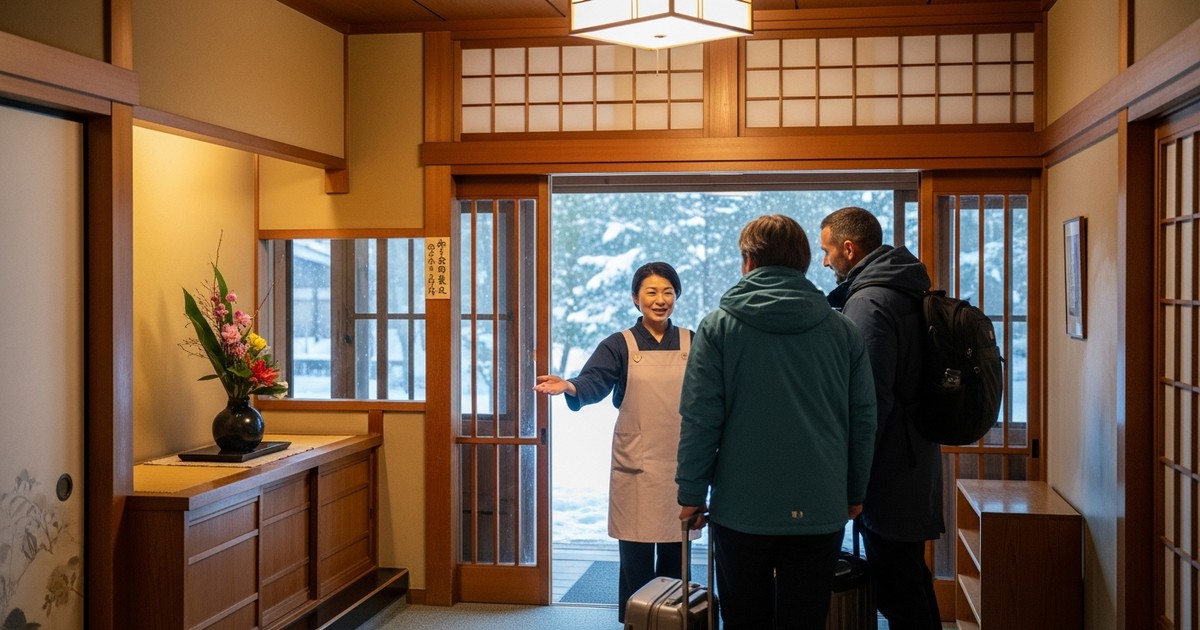
If you operate a vacation rental or ryokan in Hokkaido, you’ve likely fielded all kinds of questions from international guests. Given the barriers of language and cultural differences, preparing answers to frequently asked questions in advance can make a huge difference for smooth operations and guest satisfaction. In this article, we’ll count down the top 10 questions international guests most commonly ask about vacation rentals, based on real feedback from hosts on the ground.
Hokkaido is a popular destination for international tourists year-round. In 2019, the region recorded approximately 9 million overnight stays by inbound visitors, and demand for vacation rental accommodations remains strong. In popular areas like Niseko, Furano, Otaru, and Sapporo, inquiries in English, Chinese, and Korean are a daily occurrence.
Let’s dive into the top 10 questions from international guests, starting from number 10. We’ll also cover sample responses and practical solutions you can apply to your own property.
#10: Is there a convenience store or supermarket nearby?
Most international guests want to pick up drinks, snacks, or daily essentials shortly after arrival. Since many vacation rentals in Hokkaido are located in suburban areas, the distance to the nearest convenience store or supermarket is crucial information. “Is there a convenience store nearby?” is a question that comes up frequently, both in pre-booking inquiries and messages after check-in.
An effective solution is to create a guide listing nearby shops within walking or driving distance, complete with exact distances and travel times. For example, specifying “Seicomart: 3-minute walk (about 200m)” or “AEON: 10-minute drive” gives guests much greater peace of mind. Some properties that include Google Maps screenshots or pinned maps in their house manuals report that this question has virtually disappeared.
#9: Can I sightsee without renting a car?
Because Hokkaido is such a vast region, many international guests worry about whether public transportation alone is enough to get around. This is especially true for travelers from Taiwan or Hong Kong, who often don’t hold an international driving permit, making “Can I get around without a car?” a classic question. While central Sapporo is well covered by the subway and streetcar network, areas like Niseko and Furano have limited bus service, so honest information is essential.
Specifically, it helps to share links to JR Hokkaido route maps and bus timetables, along with information on free shuttle buses to ski resorts during winter. Properties that offer paid pickup services from the nearest station or bus stop typically charge around 1,500–3,000 yen per trip. Presenting multiple transportation options can also boost your booking conversion rate.
#8: Can I change my check-in or check-out time?
International flights arrive and depart at all hours, with many landing at New Chitose Airport early in the morning or departing late at night. As a result, flexibility around check-in and check-out times is a major concern for international guests. “Can I check in early?” and “Can I have a late checkout?” are among the most common questions received after a booking is confirmed.
An effective approach is to clearly state whether early check-in or late check-out is available, along with any additional fees, in advance. For example, listing something like “Standard check-in at 3:00 PM, early check-in available from 1:00 PM (additional 2,000 yen)” or “Late checkout until 12:00 PM (additional 1,500 yen)” in your listing can significantly reduce the number of inquiries you need to handle. Properties using self-check-in smart locks tend to offer greater flexibility with timing, which often translates into higher review ratings.
#7: Do you have heating or underfloor heating? Is it warm even in winter?
Hokkaido winters routinely drop below -10°C, making indoor heating one of the top concerns for guests from Southeast Asia and other warmer regions. Questions like “Is the place warm enough in winter?” and “Does the room have heating?” spike especially for bookings made between November and March.
Since Hokkaido homes often use different heating systems than the rest of Japan—such as central heating or kerosene stoves—briefly explaining how these systems work can reassure guests. It’s helpful to include specific temperature figures, such as “All rooms feature central heating, keeping the temperature at a comfortable 22°C year-round” or “The living room has underfloor heating, so you’ll stay cozy even during a blizzard outside.” Providing a manual with photos and English instructions for operating heating equipment can also help prevent late-night emergency calls.
#6: What’s the Wi-Fi speed and password?
Whether free Wi-Fi is available, and how fast it is, is one of the key factors international guests consider when choosing accommodation. With more travelers adopting a “workation” style—working remotely while traveling—questions like “What’s the Wi-Fi speed?” and “Is the internet fast enough for video calls?” have become increasingly common.
In some rural areas of Hokkaido, fiber-optic internet isn’t available, so providing honest speed information helps build trust. If you have fiber-optic internet, note something like “approximately 100 Mbps download,” or for mobile routers, “approximately 20–30 Mbps download.” It’s also best practice to always include the Wi-Fi password in your check-in instructions and display a printed card with the password inside the unit. Posting instructions in English for restarting the router in case of connectivity issues can significantly reduce the number of inquiries hosts receive.
Mid-List Recap: Questions #5 Through #1
So far we’ve covered questions #10 through #6, which mostly centered on basic property information. From #5 onward, the questions shift toward Japanese culture and experiences unique to Hokkaido. Some properties have cut their inquiry volume in half simply by preparing response templates in advance and incorporating this information into their house manuals and listing descriptions.
Now, let’s move on to the top 5 most frequently asked questions.
#5: How do I sort the trash?
Japan’s garbage sorting rules are notoriously complex for foreign visitors. Sorting categories vary by municipality across Hokkaido—in Sapporo, for instance, waste is divided into burnable, non-burnable, recyclables, and plastics. “How do I sort the trash?” is a question that comes up in almost every stay.
An effective solution is to attach multilingual, illustrated labels to your trash bins. Creating labels in English, Chinese, and Korean, along with photos of specific items, dramatically improves comprehension. In municipalities that require designated garbage bags, it’s also a thoughtful gesture to provide a few bags in advance. In Sapporo, a designated 5-liter garbage bag costs only about 10 yen each, so for just a few dozen yen, you can significantly boost guest satisfaction.
#4: How do I use a hot spring or bath?
Hokkaido is home to some of Japan’s most famous hot spring destinations, including Noboribetsu, Jozankei, Tokachigawa, and Sounkyo, and many international guests look forward to experiencing an onsen. However, Japanese bathing etiquette—like washing your body before entering the bath, not putting your towel in the tub, and the fact that swimsuits aren’t allowed—doesn’t exist in most other cultures, making “How do I use a Japanese onsen?” a standard question.
If your property has an onsen or communal bath, the bare minimum is to post English-language bathing etiquette guidelines in the changing room. If you’re recommending a nearby day-use hot spring, be sure to include the admission fee (typically 500–1,500 yen), whether towel rentals are available, and the facility’s tattoo policy. Since some international guests with tattoos are still turned away from certain bathhouses, providing information in advance about facilities that offer “tattoo cover stickers” or “private baths” can help prevent awkward situations.
#3: How do I get there from the airport or station?
Detailed directions from New Chitose Airport to the property are among the most important pieces of information international guests want before booking. It’s no exaggeration to say that nearly every guest asks, “How do I get to the property from the airport?” When multiple transportation options are available—such as JR, bus, and taxi—guests want to be able to compare travel time and cost across each option.
For a property in central Sapporo, for example, it’s ideal to present all three options: “JR Rapid Airport train: about 37 minutes from New Chitose Airport to Sapporo Station, 1,150 yen,” “Airport limousine bus: about 80 minutes, 1,100 yen,” and “Taxi: about 60 minutes, 15,000–18,000 yen.” Last-mile directions from Sapporo Station or the nearest station to your property are equally important—specifying exact exit numbers, such as “8-minute walk from the North Exit of Sapporo Station” or “2-minute walk from Exit 3 of Susukino Subway Station,” helps guests avoid getting lost. Some properties that automatically send an English-language route guide PDF upon booking confirmation report almost zero inquiries on the day of arrival.
#2: Can you recommend any restaurants or sightseeing spots?
Many international visitors to Hokkaido have high expectations for the region’s cuisine, including seafood rice bowls, Genghis Khan grilled lamb, ramen, and soup curry. Questions like “Can you recommend good restaurants nearby?” and “What are the must-see spots?” come up repeatedly, both before and during a guest’s stay. On Airbnb, reviews praising a host’s restaurant recommendations tend to translate directly into higher ratings—data suggests this can boost a property’s overall score by 0.2 to 0.3 points.
Organizing recommendations by category, budget, and distance makes them easier for guests to use. Including specific price ranges and travel times—such as “Seafood rice bowl: XX Market (10-minute walk, 1,500–3,000 yen),” “Genghis Khan grilled lamb: XX (5-minute taxi ride, around 2,500 yen per person),” or “Ramen: XX (3-minute walk, from 900 yen)”—is key. Sharing seasonal sightseeing recommendations separately can also help encourage repeat visits. We recommend using Google Maps’ “share list” feature, which lets you send your curated list of recommendations straight to a guest’s smartphone with a single tap.
#1: How do I check in and get the key?
The single most common question from international guests concerns check-in procedures and how to receive the key. Nearly 100% of guests ask something along the lines of “How do I check in?” or “Where do I pick up the key?” Because a high percentage of vacation rentals in Hokkaido operate without an on-site host (self-check-in), clearly explaining how to use smart locks or key boxes in advance is essential.
If you use a smart lock, it’s effective to set the timing of the passcode notification for around noon on the day of check-in, and send it via message along with a link to a video walking through the process. For key boxes, take photos from multiple angles showing exactly where the box is located, and pair the visual with clear instructions, such as “The black box to the left of the entrance—the code is XXXX.” Even for in-person check-ins, clearly communicating the meeting location and contact information ensures a smooth handoff, even with guests who don’t speak the language well. Problems with key handoffs are one of the leading causes of negative reviews, so investing extra care here is truly the key to successful operations.
Practical Tips for Streamlining International Guest Communication
Looking at the full top 10 list, most questions fall into three categories: basic property information, the surrounding area, and explanations of Japanese culture. This means that by preparing this information in advance as a multilingual house manual, you can dramatically cut down on the time spent handling individual inquiries. In fact, one vacation rental in Sapporo that created a digital guidebook in English, Chinese, and Korean saw its average monthly guest inquiries drop from 42 to just 11.
Adding an FAQ section to your OTA listing (such as Airbnb) that addresses these common questions can also ease pre-booking concerns and improve your booking conversion rate. Ideally, you’ll save standard answers as templates and leverage translation tools or AI chatbots to build a support system that comes close to 24-hour availability. This kind of systemization delivers especially significant benefits for owners managing multiple properties, not just a single listing.
Have Questions About Managing Your Vacation Rental? Talk to Stay Buddy Inc.
Serving international guests well requires far more than language skills alone—it demands cultural sensitivity and a solid grasp of local rules and regulations. In a region like Hokkaido, where the guest demographic and types of questions shift with the seasons, experience-based, detail-oriented operations are essential.
Stay Buddy Inc. offers full-service vacation rental and ryokan management, providing one-stop support that covers multilingual guest communication, house manual creation, listing optimization, and cleaning arrangements.
Whether you’re looking to build a better system for supporting international guests or improve your bottom line, feel free to reach out to Stay Buddy Inc. with any questions about managing your rental property. Our experienced team will work with you to propose the best plan for your specific property.