Why Does Occupancy Drop So Sharply in Winter for Asahikawa Vacation Rentals?
Many owners running vacation rentals in Asahikawa struggle with the steep decline in occupancy during winter. It’s not uncommon for a property that reaches 70–80% occupancy during the summer high season to fall into the 30% range come winter. This extreme seasonal swing is deeply rooted in Asahikawa’s unique climate and tourism structure.
While Asahikawa serves as a gateway to Asahiyama Zoo and the Daisetsuzan mountain range, driving strong summer tourism demand, the harsh cold becomes a major obstacle in winter, causing visitor numbers to drop sharply. Average temperatures in January and February reach as low as -7 to -8°C, and icy roads and blizzards make travel unpredictable, which in turn affects guests’ accommodation choices. Many guests, feeling uneasy about the facilities compared to hotels, tend to avoid vacation rentals during the winter months.
That said, with the right countermeasures, it’s entirely possible to improve winter occupancy rates. In this article, we’ll dig into the specific factors behind the winter slump and offer practical guidance on what to demand from your property management company.
Three Reasons Occupancy Plummets in Winter for Asahikawa Vacation Rentals
Let’s first break down the structural factors behind the winter occupancy decline. Understanding these causes precisely will also clarify what to request from your management company.
The Absolute Number of Tourists Decreases
Asahikawa City sees a significant gap in tourist numbers between summer (June–September) and winter (December–February). According to city statistics, roughly 60% of annual visitors are concentrated between May and October. Asahiyama Zoo also sees overwhelmingly more visitors in summer—while the zoo does stay open in winter, visitor numbers during that season are less than half of summer’s. Naturally, fewer tourists overall means fewer bookings for vacation rentals.
Furthermore, most tourists who visit Asahikawa in winter come for skiing or snowboarding, but the major ski resorts are concentrated in Furano and Niseko, giving visitors little incentive to stay long in Asahikawa itself. Kamui Ski Links is mainly used by locals, and it’s hard to say it generates significant lodging demand from out-of-town visitors.
Concerns About Cold-Climate Facilities Can Rule Out Your Property
In Asahikawa, where temperatures can drop to nearly -20°C, the reliability of heating equipment directly affects guests’ accommodation choices. For vacation rentals, guests tend to worry more than they would at a hotel about whether the heating is adequate, whether pipes might freeze, and whether snow removal is properly handled. If these concerns lead to negative reviews, it creates a vicious cycle that further discourages winter bookings.
In one real case, a property relying solely on air conditioning for heat received a review saying “it was too cold inside to sleep,” and bookings the following season dropped 40% year-over-year. Properties without cold-climate heating equipment such as FF (forced-flue) stoves or underfloor heating are at a significant disadvantage in the winter listing competition.
Listing Content That’s Still Set Up for Summer
One easily overlooked issue is that OTA (online travel agency) listings often aren’t updated to match the season. If your photos only show summer scenery and your description doesn’t mention winter appeal or cold-weather features, guests searching for Asahikawa accommodations in winter simply won’t notice your listing.
Airbnb’s algorithm factors recent booking rates and review update frequency into search rankings. When bookings dry up in winter and your ranking drops, it becomes even harder to attract bookings—a negative spiral. Optimizing your listing for each season is essential to maintaining occupancy year-round.
Measures to Request from Your Management Company to Improve Winter Occupancy
Now that we’ve clarified the causes, let’s look at exactly what measures you should request from your property management company. Rather than vaguely asking them to “improve occupancy,” making specific requests like the ones below is what actually drives results.
Developing and Executing a Seasonal Pricing Strategy
The first step toward boosting winter occupancy is introducing dynamic pricing. Keeping the same rates as the summer high season means bookings simply won’t come in during the low-demand winter months. A good benchmark is researching nearby hotels’ winter rates and setting your nightly rate at around 60–70% of your summer price. For example, if a property charges ¥12,000 per night in summer, dropping it to around ¥7,000–8,500 in winter will make it more competitive in search results.
However, simply lowering prices can squeeze your profits, so it’s effective to combine this with extended-stay discounts—for example, 15% off for stays of 3+ nights and 25% off for stays of 7+ nights. This kind of structure helps balance occupancy and revenue. Ask your management company to review and adjust pricing on a monthly basis.
Winter-Specific Listing Optimization
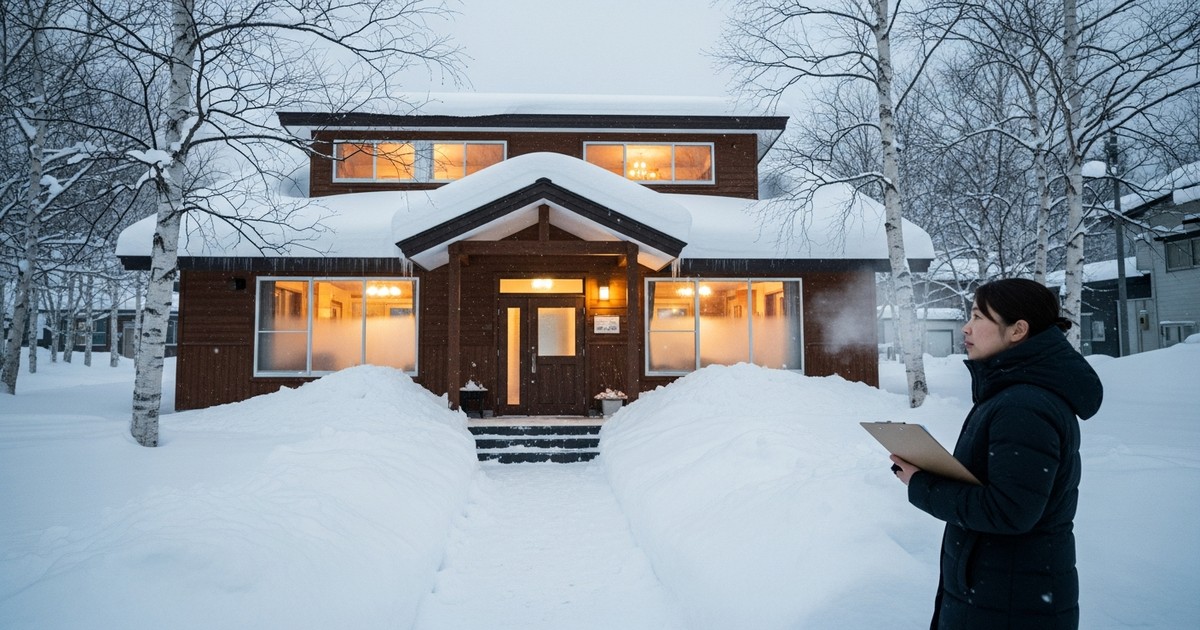
Switching your listing photos and description to a winter theme is a highly cost-effective measure. Simply adding photos of the property’s exterior in a snowy landscape, a cozy-looking interior, or a kitchen set up for hot pot dinners can boost click-through rates from winter guests. One report found that a property that swapped in seasonally appropriate photos saw a 25% increase in views.
Your description should include specific details that ease winter concerns, such as “equipped with an FF stove that keeps the room at 25°C,” “snow removal handled every morning at the entrance,” and “double-pane windows prevent condensation.” Make sure your management company includes a full listing refresh at least twice a year (before summer and before winter) as a standard part of their service.
Switching Target Audiences and Marketing Accordingly
While tourists are your primary target in summer, it’s important to shift your target audience in winter. Strong candidates include business travelers, workation users, winter event attendees (such as those visiting the Asahikawa Winter Festival), and foreign travelers on extended stays.
Workation demand in particular can be captured just by improving Wi-Fi speed and desk setups. Simply listing “200Mbps download Wi-Fi speed” or “workspace with desk and monitor included” can make it much easier to secure one- to two-week bookings. Ask your management company to analyze your winter target audience and adjust your OTA listing content accordingly.
Proposing Facility Investments and Calculating ROI
Upgrading heating equipment and cold-weather protection requires upfront investment, but it directly translates to improved occupancy. Installing an additional FF stove typically costs ¥150,000–250,000 including installation, while underfloor heating runs about ¥300,000–500,000 per room. Replacing windows with double-pane glass costs roughly ¥50,000–80,000 per window, offering both insulation benefits and reduced utility costs.
A strong management company will be able to calculate how much these facility investments would improve winter occupancy and how many months it would take to recoup the cost. For example, if investing ¥200,000 in improved heating raises winter occupancy from 30% to 50%, that could generate an additional ¥40,000–60,000 in monthly revenue, paying back the investment in 4–5 months. Ask your management company to provide this kind of data to support investment decisions.
Key Points to Check When Choosing a Management Company
When selecting a management company to handle your winter strategy, there are a few key points worth confirming. Not every company is well-versed in operating vacation rentals in cold climates, so check the following before signing on.
Do They Have Experience Operating in Cold Climates?
Whether a company has experience operating in Hokkaido—especially inland areas like Asahikawa—is the single most important thing to verify. Know-how built in warmer regions won’t be enough to handle cold-climate-specific challenges like emergency response for frozen pipes, arranging snow removal, or managing winter utility costs. A company with real experience should be able to show you past winter occupancy data.
Specifically, ask questions like: “What is the winter occupancy rate for properties you manage in Asahikawa or similarly cold regions?” and “What measures have you implemented in winter, and how effective were they?” If a company can’t answer with concrete numbers or examples, you can reasonably conclude they lack sufficient cold-climate management experience.
Can They Present Season-Specific Operating Plans?
A management company that runs the same strategy year-round isn’t well-suited for Asahikawa vacation rentals. Check whether they can present a season-specific operating plan that adjusts pricing, target audience, listing content, and cleaning arrangements between summer and winter.
Ideally, look for a company that follows a twice-yearly strategy review cycle—switching to a summer plan in April–May and a winter plan in October–November. A company that also provides monthly reports visualizing occupancy, revenue, and expenses, and proposes improvement actions for the following month, will be able to get ahead of the winter slump proactively.
Is Their Emergency Response System Solid?
Winter in Asahikawa brings issues like entrances buried in heavy snow, burst frozen water pipes, and malfunctioning heating equipment. These problems must be addressed within hours to protect guest safety, and failing to do so can also lead to negative reviews.
Confirm whether the management company has a 24-hour emergency contact line and partnerships with local equipment repair services and snow removal contractors. Clarifying “how many hours after a problem occurs can you provide on-site support?” before signing a contract will help maintain guest satisfaction through the winter and lead to repeat bookings and positive reviews in the following years.
A Mindset for Getting Through Winter and Maximizing Annual Revenue
The most important perspective for running a vacation rental in Asahikawa is to minimize winter losses while securing overall annual profit. Looking at winter in isolation can feel discouraging, but the right business approach is to evaluate it together with summer high-season profits.
For example, consider a property with average monthly revenue of ¥250,000 during summer (May–October) and ¥100,000 during winter (November–April), for an annual revenue of ¥2.1 million. If improving winter occupancy raises average monthly revenue to ¥150,000, annual revenue rises to ¥2.4 million—a ¥300,000 increase for the year. If that ¥300,000 exceeds the additional cost of management fees and facility investments, then it’s well worth pursuing these measures.
Also, completely shutting down a property in winter causes its OTA search ranking to drop significantly, which can negatively affect summer bookings the following year as well. Continuing to operate even at lower occupancy and accumulating reviews is key to maximizing revenue across the whole year. We recommend asking your management company to create an annual revenue simulation like this, so you can make winter operating decisions based on solid numbers.
If You’re Struggling with Vacation Rental Management in Asahikawa, Consult Stay Buddy Inc.
The winter occupancy decline affecting Asahikawa vacation rentals can be significantly improved by partnering with a management company that has the right strategy and execution capability. However, the reality is that few companies are truly equipped to handle the unique challenges of cold-climate operations.
Stay Buddy Inc. draws on extensive experience in vacation rental management to provide comprehensive operational support, including strategies for handling seasonal fluctuations. From pricing strategy and listing optimization to facility investment proposals and emergency response, we offer concrete measures designed to maximize owners’ revenue.
If you’re thinking “I need to do something about my winter occupancy,” “I’m unhappy with my current management company’s response,” or “I want to start a vacation rental in Asahikawa but I’m worried about winter finances,” please reach out to Stay Buddy Inc. We’ll provide a concrete improvement plan tailored to your property’s specific situation and area characteristics.