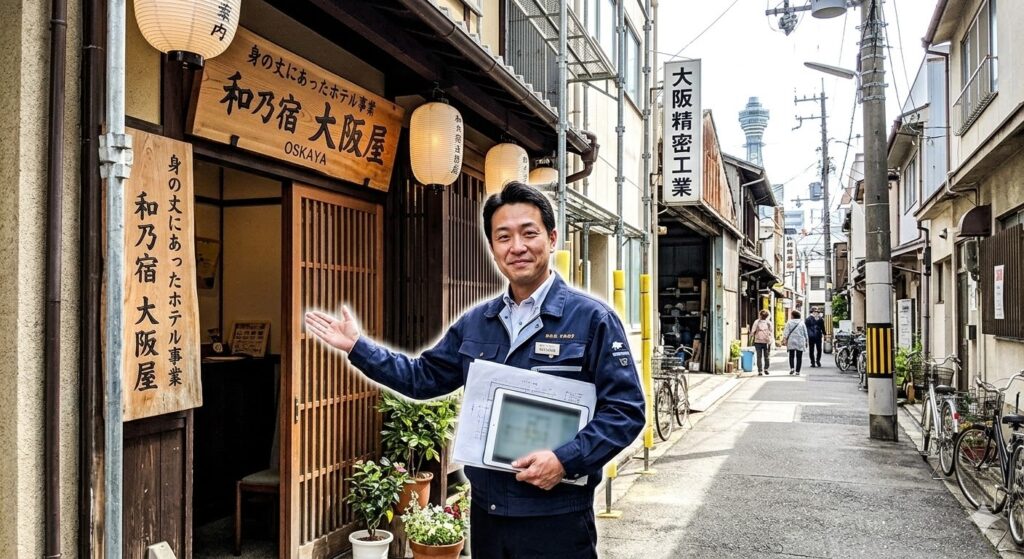
Leave Your Minpaku Management to the Experts
Free Online ConsultationA Diversification Strategy for SMEs: How to Start a Hotel Business That Fits Your Scale
To the business owners out there whose existing revenue has plateaued and who are searching for a new pillar of growth: have you ever considered entering the hotel or lodging industry as a diversification option?
Let’s get straight to the conclusion of this article. The biggest secret for small and medium-sized enterprises (SMEs) to succeed in diversifying into the lodging business isn’t building a massive, multi-hundred-million-yen hotel—it’s starting small, with a lodging facility that fits your company’s actual scale, using vacant houses or old apartments. By combining the unique strengths of your core business with your accommodation’s concept, and outsourcing all the complicated legal checks and on-site operations to professionals, you can pursue an “asset-light” strategy: start small and hand off the operations. This approach lets you spread the risk away from your core business while capturing stable revenue from the massive growth market that is inbound tourism.
Below, we’ll thoroughly explain the concrete steps SMEs need to take to avoid failure in the hotel business, as well as how to build a strategy that leverages your company’s own strengths.
Why the Lodging Business Is Well Suited to SME Diversification
Among the countless business models out there, why are more and more companies from unrelated industries entering the lodging business? It’s because this field offers management advantages that are extremely appealing to SMEs.
It’s Easy to Create Synergy with Your Existing Business
A lodging facility is the ultimate showroom—one where guests experience the space firsthand over the course of hours or even days. For example, a furniture manufacturer could furnish the guest rooms entirely with its own products, while a construction company could use the space to showcase its superior craftsmanship. Beyond direct revenue from lodging itself, this model makes it easy to generate synergy that feeds straight back into your core business’s branding and product sales—a major advantage.
Direct Access to a Growth Market
As Japan’s domestic market shrinks, inbound demand from foreign tourists visiting Japan remains one of the few markets expected to keep growing over the long term. Starting a lodging business means that even a small company in a regional area can open a direct channel to earn foreign currency from customers around the world. This allows you to build a resilient revenue base that’s less vulnerable to fluctuations in the domestic economy.
Early Stabilization of Cash Flow
The lodging business operates much like a cash business, with payment received at the time of booking or check-in. There’s no risk of unpaid receivables, which is common in business-to-business transactions—day-to-day occupancy translates directly into cash flow in hand. It can serve as an excellent secondary engine for stabilizing the finances of your core business.
How to Start a Hotel Business at a Scale That Fits, Avoiding Costly Mistakes
Suddenly buying land and building a full-scale new hotel is far too risky for an SME. Here’s a safe way to enter the market at a scale that fits your company.
Start Small with a Detached House or Small Apartment
The golden rule is to start small—using the Private Lodging Business Act or the “simple lodging” (kan’i shukusho) category under the Hotel Business Act—with a single detached house, a row house, or one unit in a small apartment building. At this scale, you can get started with an initial investment in the tens of millions of yen, well within reach. And even if you need to withdraw from the business down the line, the property can easily be sold as an ordinary rental unit or detached house, keeping your investment risk to a minimum.
Cutting Initial Investment Through Vacant House Renovation
Rather than new construction, we recommend purchasing a used property and renovating it. Old traditional houses and vacant properties, in particular, not only keep acquisition costs low but also offer a distinctly Japanese experience that’s highly appealing to foreign tourists—making for powerful content in its own right. The lower your initial investment, the higher your yield, and the sooner you can recoup your investment.
Outsource All On-Site Operations
The single most important element of a small start is your operational structure. You should never have your own employees handle cleaning, reservation management, or middle-of-the-night guest inquiries. Not only would this disrupt your core business operations, but amateur handling can invite poor reviews that sink the whole venture. From day one, it’s an absolute requirement for success to fully outsource on-site operations to a management company that specializes in the lodging business.
Common Pitfalls for Newcomers from Other Industries—and How to Avoid Them
When SMEs enter the lodging business, their lack of specialized knowledge often leads them into predictable traps. It’s essential to understand these pitfalls in advance and take steps to avoid them.
The Fatal Mistake of Overlooking Legal Barriers
The scariest scenario is discovering, only after purchasing a property, that it legally cannot be converted into a lodging facility. To obtain a hotel business license, you must clear every legal hurdle—changing the building’s designated use under the Building Standards Act, meeting strict road-access requirements, and satisfying fire safety equipment requirements under the Fire Service Act, among others. Buying a property on impulse based on design appeal or projected yield alone is extremely dangerous.
A Lack of Guest Perspective Born from Success in the Core Business
Ironically, the more successful an owner is in their core business, the more likely they are to assume that guests will come simply because they’ve poured their own preferences into the property. But the lodging industry is an unforgiving service business. No matter how beautiful the interior design, if there are water droplets left in the bathroom or the internet connection is slow, guests will leave harsh reviews without hesitation. Thoroughly maintaining basic quality from the guest’s point of view matters more than anything else.
Thorough Due Diligence by Specialists
To avoid these pitfalls, always commission a legal compliance survey from specialists such as architects or administrative scriveners before signing a property purchase agreement. And from the planning stage onward, bring in a consultant or management company well-versed in lodging industry trends as a partner, refining your business plan with a professional eye—this is the only way to prevent needless losses.
How to Build a Concept That Leverages Your Company’s Strengths
Once you’ve cleared the legal hurdles and established your operational structure, it’s time to translate your company’s strengths into your property’s concept. There are ways for SMEs to express their individuality that major hotel chains simply can’t replicate.
Construction and Real Estate Companies: A Showroom for Your Own Craftsmanship
Construction companies and contractors can create designer spaces that fully showcase their own technical skills. By using carefully chosen wood finishes and installing the latest smart home features, you let guests directly experience your craftsmanship during their stay. This creates a powerful pathway that connects not just profits from the lodging business itself, but also new leads for your core business’s home sales or renovation orders.
Food and Retail Businesses: An Experiential Hub
A company running a restaurant business could serve breakfast in the guest rooms using the same ingredients found on its restaurant menu, or sell its original seasonings as souvenirs. Apparel or general goods retailers could furnish guest rooms with their own room-wear and amenities, and build a system that lets guests purchase items they love through an online shop. In this way, every minute of a guest’s stay can be transformed into an experience of your own brand.
Beating the Big Players with a Sharp, Small-Scale Property
Major hotels tend to aim for broad appeal, which often results in inoffensive, generic design. But with a whole-house rental or a small hotel with just a few rooms, you can compete with a sharply defined concept aimed at a very specific target audience. A unique property that vividly reflects your company’s philosophy and strengths is more likely to go viral on social media, allowing you to carve out a distinctive position without getting dragged into price competition.
Conclusion: The Right Way to Diversify—Start Small, Grow Big
For SMEs, entering the lodging business is by no means out of reach. Follow the right steps, and it can become a solid pillar of revenue.
- Start small with a small detached house or a renovated vacant property, rather than a large-scale hotel.
- Thoroughly outsource areas outside your expertise—such as legal hurdles and on-site operations—to professionals.
- Combine the technology or products from your core business with the property’s concept to create a unique strength.
- Never skip due diligence before acquiring a property, eliminating the risk of fatal mistakes.
Start with just one small property, and once you’ve built up know-how and capital, scale to a second and third property. This steady, step-by-step approach is the optimal answer for SME diversification at a scale that fits.
Full Support for Your Small Start in the Lodging Business—Trust Stay Buddy
You want to start a lodging business that leverages your company’s strengths, but you’re not sure where to begin. You want a professional to check whether the property you’re considering can legally be used as a lodging facility. You want to focus on your core business, so you’d like to hand off everything after opening—from reservation management to cleaning to guest support.
Leave everything to us, from launching your new venture to day-to-day operations. We at Stay Buddy Inc. are a team of professionals specializing in lodging business consulting and minpaku management services focused on Osaka City. We’ve guided numerous companies from unrelated industries through successful entries into the lodging business, walking alongside them from the very earliest planning stages.
As your ultimate business partner, we offer the following value:
Reliable pre-purchase legal compliance surveys and risk elimination, conducted through our partner architects and administrative scriveners. Concept design and financial planning built on thorough market analysis, crafted to maximize the strengths of your core business. Hotel-grade linen supply and a rigorous, proprietary cleaning management system. Revenue maximization through data-driven dynamic pricing, backed by complete 24/7, 365-day operational management.
You focus on pouring your company’s strengths into the property and on making key business decisions. We’ll handle every bit of the complicated legal procedures and the hands-on realities of daily operations, flawlessly.
To turn a new venture—where failure isn’t an option—into a fast, reliable pillar of revenue, Stay Buddy will generously share every bit of know-how we have. Start with a free feasibility assessment or concept consultation—reach out to us anytime, with no obligation. We’ll do everything we can to support your company’s new challenge.