
Leave Your Vacation Rental Management to the Experts
Free Online ConsultationWinter Bathroom & Kitchen Cleaning Tips That Actually Work: How to Keep Mold and Limescale to a Minimum
For owners running vacation rentals and lodging facilities in Osaka, managing wet areas in winter is one of the most demanding tasks of the year. As temperatures drop and guests favor hot showers and baths, bathrooms and kitchens are constantly exposed to steam, creating serious risks of mold and limescale buildup.
Let’s start with the conclusion of this article.
The key to winning the battle against winter wet-area grime lies in two things: sterilizing with water above 50°C (122°F), and thorough drying (wiping everything completely dry). Understanding the condensation and temperature differentials unique to winter, and physically removing moisture before dirt has a chance to set in, is the only way to maintain your cleanliness scores and keep repair costs down.
In the hospitality business, any lapse in bathroom or kitchen cleanliness immediately earns a property the label “unhygienic,” dealing a fatal blow to guest satisfaction. In this article, we break down the mechanics behind winter-specific grime and share the efficient cleaning and prevention techniques that professionals rely on.
Why Winter Wet Areas Are So Prone to Mold and Limescale
In winter, the gap between outdoor and indoor temperatures widens dramatically, causing condensation throughout the building. Wet areas in particular become breeding grounds for grime for the following reasons.
Persistent High Humidity from Steam and Condensation
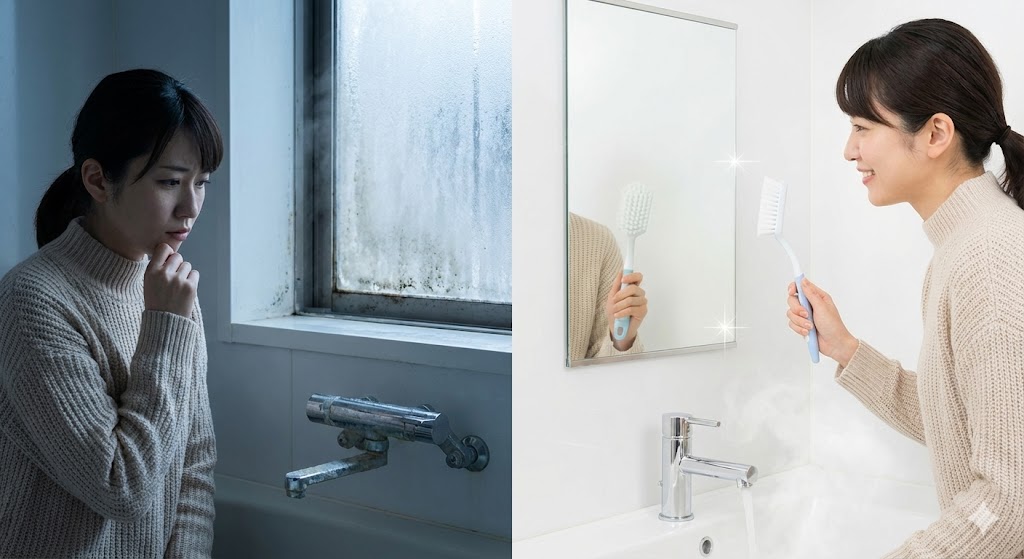
Mold is the most troublesome issue in winter bathroom cleaning. As guests use hot water, bathroom temperatures rise and heavy steam clings to walls and ceilings. Meanwhile, the reverse side of walls (facing outdoor air) stays cold, so condensation lingers for extended periods. Mold thrives explosively when three conditions are met—moisture, warmth, and nutrients (like body soil or soap scum)—and winter bathrooms check every box perfectly.
Limescale Crystallization from Rapid Evaporation
Limescale forms when mineral content in tap water—like calcium and magnesium—crystallizes after the water evaporates. Because heating systems dry out the air in winter, water droplets on faucets and mirrors evaporate quickly, leaving behind hard limescale deposits (scale patterns). Once it hardens, ordinary detergents are no match for it.
Professional Sterilization Techniques to Eliminate Mold at the Root
It’s not enough to simply scrub away visible mold—creating an environment where mold struggles to grow in the first place is essential.
Kill Mold at the Source with Water Above 50°C
Mold spores are vulnerable to heat and are said to die when exposed to water at 50°C (122°F) or hotter for five seconds or longer. Make it a habit to finish every cleaning session by blasting hot water into every corner of the walls and floor. That said, leaving hot water running raises the room temperature and creates conditions mold loves, so it’s a firm rule to always finish with a blast of cold water to bring the bathroom temperature down quickly.
Run the Exhaust Fan 24/7 and Clean the Filter
Many vacation rental owners turn off the exhaust fan to save on electricity, but this backfires badly. Winter is exactly when the fan should run continuously. Additionally, winter brings more airborne fibers and dust from clothing, which clogs exhaust fan filters more easily. A clogged filter drastically reduces ventilation efficiency, trapping moisture and inviting mold—so cleaning the filter once a month is an absolute must.
Keep Limescale at Bay: Cleaning Tips to Make Mirrors and Faucets Sparkle
Whether the “spots meant to shine” in a wet area actually shine can completely flip a guest’s impression of cleanliness.
Using Acidic Cleaners and a “Citric Acid Wrap”
Since limescale is alkaline, acidic cleaners are effective against it. For stubborn, built-up limescale, try a “citric acid pack”: soak a paper towel in citric acid solution and press it onto the affected area, like a wrap. Let it sit for about 15 minutes, then scrub with a sponge to break down the buildup without damaging the surface. Keep in mind that acid isn’t safe for marble or certain metals, so always confirm the material carefully before applying.
Get Ahead of the Problem with a Coating Agent
Finish off your cleaning by applying an off-the-shelf water-repellent coating to sinks and faucets, so that water droplets bead up and roll off instead of sticking around. This dramatically reduces the effort needed to remove limescale next time you clean.
The Ultimate Final Wipe-Down: Don’t Let It All Go to Waste
What truly separates professionals from amateurs in cleaning comes down to one single thing: whether you finish by wiping everything dry with a cloth.
Leave Not a Single Drop of Moisture Behind
No matter how carefully you scrub with detergent, if moisture remains at the end, it will evaporate and turn back into limescale, feeding future mold growth. Using a microfiber cloth, dry every surface completely—mirrors, faucets, wall tiles, the floor, and even the frequently overlooked back side of the shower hose.
Making a Visual Impression on Guests
A faucet or mirror that’s been wiped completely dry catches the light and gleams. The moment a guest opens the bathroom door and sees that sparkle, it instantly conveys the reassuring sense that “this property is cared for down to the last detail.” It’s the ultimate hospitality touch to cut through winter’s dreary atmosphere.
Conclusion: Prevention Is the Best Revenue Strategy for Winter Wet-Area Cleaning
Neglect wet-area maintenance in winter, and by early spring you could be facing severe mold damage that requires costly professional remediation.
- End every cleaning session with hot-water sterilization followed by a cold-water rinse.
- Run the exhaust fan 24/7 and prevent the filter from clogging.
- Break down limescale with acid and prevent buildup with a coating agent.
- Finish with a thorough wipe-down to eliminate all remaining moisture.
By sticking to this routine, you can keep your wet areas clean and guest-pleasing all winter long. A spotless bathroom and kitchen form the strongest possible foundation for building up a stream of 5-star reviews.
Leave Thorough Winter Cleaning and Wet-Area Management to Stay Buddy
“Ever since winter hit, mold keeps popping up in the corners of the bathroom and it’s driving me crazy.”
“No matter what I do, the limescale won’t come off, and guests have marked down our cleanliness score.”
“I want my cleaning staff to consistently deliver a professional-level, completely dry finish.”
If any of these concerns sound familiar, we’d love to hear from you.
We are Stay Buddy Inc., a team of vacation rental management and cleaning professionals specializing in properties throughout Osaka City.
We’re far more than just a cleaning company.
- Our own advanced cleaning manuals, built on deep knowledge of how grime behaves in each season
- Hotel-standard wipe-down techniques that keep mirrors and faucets gleaming
- Property-specific ventilation and hygiene advice designed to prevent mold before it starts
- Photo-based reports that give owners a clear, detailed view of on-site cleanliness
These strengths have helped us guide numerous owners’ properties to top ratings as “the cleanest wet areas in town.”
To protect a truly relaxing, spotless space for your guests even through the harshest winter conditions—start with a free property assessment and quote. We look forward to hearing from you.