Leave Your Vacation Rental Management to Us
Free Online Consultation10 Essential Points for Winter Vacation Rental Cleaning
As temperatures drop and the air turns dry, winter is the season that demands the most meticulous attention in vacation rental operations. Unlike summer, winter brings a unique set of risks—heavier strain on heating equipment, the need for infection control measures, and mold problems caused by condensation, to name just a few.
The moment guests step in from the cold outside, they become extremely sensitive to “warmth” and “cleanliness.” Falling short of these expectations at this critical moment can instantly translate into a negative review. On the flip side, mastering the cleaning essentials unique to winter is a golden opportunity to significantly boost your credibility as a host.
In this article, we’ll thoroughly break down the “10 must-follow checkpoints” for winter vacation rental cleaning, covering hygiene, equipment maintenance, and hospitality considerations.
Why Is Winter Cleaning “Harder Than Summer”?
Before diving into the specific points, let’s understand why winter cleaning presents unique challenges.
First, there’s the **”slower drying time”**. Linens and freshly mopped floors take longer to dry, which slows down overall work efficiency. Second is the“ventilation dilemma”. Cleaning requires opening windows, but if the room temperature drops too much in the cold, it can leave the next guest feeling uncomfortable upon arrival. Finally, there’s“how dirt becomes visible”**. Winter sunlight hits at a lower angle, streaming deep into rooms and making dust that’s normally invisible suddenly stand out.
With these challenges in mind, let’s look at the 10 points that professionals put into practice.
[Hygiene & Environment] Thoroughly Eliminating Hidden Dirt and Viruses
1. Combating “Condensation and Mold” on Windows and Frames
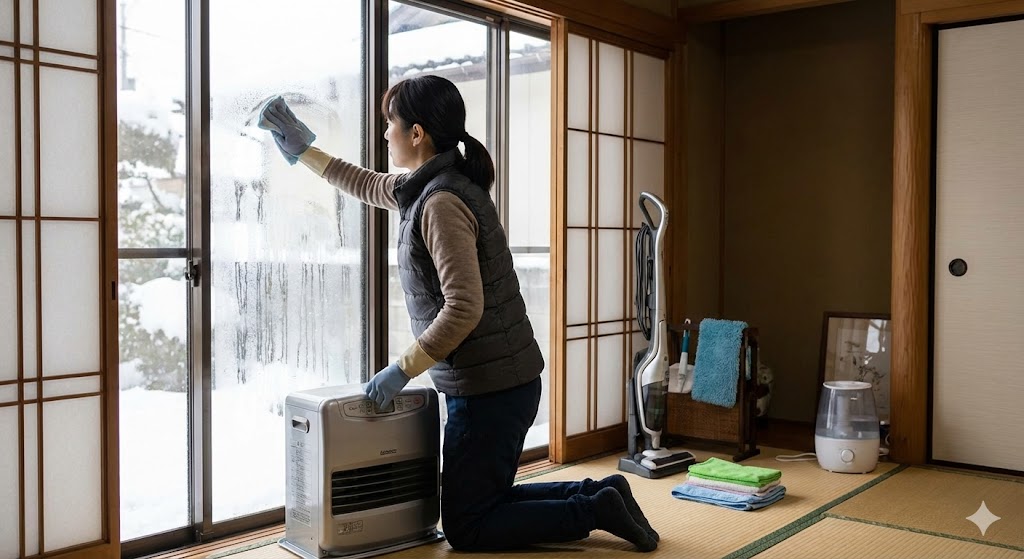
The number one enemy to watch out for in winter vacation rental cleaning is “condensation.” The temperature difference between the warm indoor air heated by your heating system and the cold outside air causes large amounts of moisture to form on window glass.
If left unaddressed, this leads to black mold growing on window frame rubber seals and curtains. Once mold takes hold, it’s difficult to remove and gives guests a strong impression of uncleanliness. During cleaning, always wipe window moisture completely dry with a cloth, and remove any water or dust that has accumulated in the window track grooves. Disinfecting with alcohol spray is also effective for preventing mold.
2. Balancing “Ventilation” with “Maintaining Room Temperature”
Ventilation is fundamental to cleaning, but it requires extra care in winter. As mentioned above, leaving windows wide open right up until cleaning is finished will leave the room freezing cold.
Open the windows to air out the room when you start cleaning, but it’s best to close the windows and turn on the heater 30 minutes to an hour before check-in (unless you’re controlling this remotely via a smart remote or similar device). Having guests feel “warm” the instant they arrive is the ultimate winter hospitality touch. At the same time, winter is also a season when lingering odors from hot pot dishes and similar meals tend to cling to the room, so be sure to also run the ventilation fan on high and use deodorizing spray.
3. Disinfecting “High-Touch Surfaces” as an Infection Control Measure
Winter is peak season for infections like influenza and norovirus. Guests are more attuned to hygiene than usual during this time.
**High-touch surfaces**—door knobs, light switches, remote controls, refrigerator handles, toilet levers, and the like—should be carefully wiped down with alcohol or hypochlorous acid water that has disinfecting properties, rather than regular cleaning detergent. Adding visual reassurance, such as placing a “Disinfected” card, can also be an effective touch.
4. Removing Slime Buildup from Humidifier “Tanks and Filters”
Humidifiers are essential in dry winter conditions, but neglecting their maintenance turns them into breeding grounds for “pink slime (red mold)” and bacteria. If a humidifier emits an unpleasant odor or ends up spreading mold spores, it completely defeats its purpose.
With every cleaning, always empty and dry out the water tank, and wash away any slime buildup on the filter and tray. If mineral deposits have hardened, soaking them in a citric acid solution is essential. Keep in mind that the cleanliness of the humidifier directly impacts guests’ health—it’s a critical detail, not an optional one.
[Equipment & Amenities] Maintaining Devices That Support a Comfortable Stay
5. Cleaning the Air Conditioner Filter and Testing Its Operation
In winter, air conditioners run full-time as heaters. A dust-clogged filter dramatically reduces heating efficiency, leading directly to complaints like “the room won’t warm up even when I raise the temperature.” Dust also serves as a food source for mold, causing musty odors to be blown out along with the warm air.
Increase your cleaning frequency beyond normal—remove dust from the filter once every two weeks, or every single cleaning if usage is high. After cleaning, always run a test cycle to check for unusual noises or smells and confirm that warm air is flowing properly.
6. Removing “Hair and Dust” from Futons and Blankets
Winter bedding—blankets, down comforters, and the like—is bulkier and prone to static electricity, which makes it easy for hair and lint to get tangled in it. Compared to swapping out summer sheets, spotting and removing these particles takes noticeably more time.
Make liberal use of a lint roller and thoroughly check inside duvet covers and deep within blanket fibers. Be especially careful when using dark-colored linens, as even tiny specks of dust tend to stand out.
7. Thorough Vacuuming of Carpets and Rugs
Many properties lay down rugs and carpets as a defense against the cold. However, compared to hardwood flooring, these surfaces tend to trap dust mites and dust much more easily.
Don’t just run the vacuum over the surface—brush against the grain of the pile to lift out debris trapped deep within. Also visually check for food stains or other spots, and spot-clean if necessary. A rug that lacks a fresh, clean look drags down the entire room’s impression, making it feel “dirty.”
[Hospitality & Risk Management] Considerations Unique to Winter
8. Managing Mud and Water Stains Near the Entrance
In winter—especially in snowy regions or during rainy stretches—guests are more likely to track in mud and moisture from their shoes. If the entryway floor is dirty, it creates a poor first impression the instant guests step inside.
Choose a highly absorbent entrance mat, and when cleaning, always shake it out outdoors to remove sand and then vacuum it. Wipe the entryway floor with a damp cloth to completely remove mud stains. It’s also worth providing disposable slippers, so guests don’t have to walk on a cold floor in just their socks.
9. Confirming “Frost Prevention” Measures for Water Pipes
For properties in cold-climate regions, frozen water pipes are a critical problem that can force you to suspend operations entirely. Cleaning staff need to reliably follow procedures such as opening/closing drain valves and confirming that anti-freeze heaters are powered on.
In particular, when a property will sit vacant for several days after a guest checks out, make sure your protocol calls for draining the pipes without exception. Toilet and water heater plumbing should be checked in the same way.
10. Checking Amenities and Consumables Are Winter-Ready
As a final step in cleaning, confirm that your amenities are suited to winter needs.
Examples include restocking bath salts, offering a good selection of warm drinks (coffee, black tea, green tea, etc.), and having extra blankets on hand. Also, since guests tend to spend more time indoors in winter—and consume more consumables like toilet paper and tissues as a result—it’s a golden rule to stock up on extras. That little bit of added thoughtfulness that makes guests think “I’m so glad I came despite the cold” is exactly what boosts your review scores.
Conclusion: “Prevention” and “Thoughtfulness” Are the Keys to Winter Cleaning
Winter vacation rental cleaning isn’t just about removing dirt—it’s an essential task that protects guests from environmental factors like cold, dryness, and viruses.
Putting the 10 points introduced here into practice may take more time than your usual cleaning routine. But sparing no effort and paying attention to every detail ultimately prevents equipment breakdowns, protects guest comfort, and builds up the valuable asset of glowing reviews.
“Pay the most attention to what’s hardest to see.” Keep this mindset front and center, and you’ll get through winter vacation rental operations with flying colors.
Let Our Professionals Perfect That “Winter Prep” for You
“Instructing staff every single time on condensation prevention and filter cleaning is exhausting…”
“I’m worried about maintaining cleaning quality throughout the winter months…”
“I want to build a proper cleaning manual that includes infection control measures.”
If any of these concerns sound familiar, please come talk to us.
As professionals in vacation rental management, Stay Buddy Inc. delivers high-quality cleaning management built on a deep understanding of the risks that come with each season.
We provide:
- ① A rigorous cleaning checklist tailored to winter-specific dirt and risks
- ② Standardized infection control measures built into a safe, reliable cleaning operation
- ③ Total support ranging from heating equipment checks to comfortable room temperature management
We deliver all of this as a seamless, one-stop service—so owners never have to lift a finger, while guests enjoy the very best stay experience.
Cleaning is the cornerstone of vacation rental management.
Why not partner with us to build a cleaning and operations system that consistently earns top reviews, even in the harshest winter conditions?
Feel free to reach out for a free consultation to start. We’re here to help you maximize the value of your property.