Leave Your Vacation Rental Management to Us
Completely Free Online ConsultationMaking the Most of Vacant Homes: How to Start a Whole-House Rental in a Traditional Japanese Kominka
Far from the hustle and bustle of the city, sitting on a wooden veranda listening to the songs of insects, and having a sky full of stars all to yourself at night… Staying in a “kominka”—a traditional Japanese farmhouse that embodies the country’s original landscape—is, for many people, a once-in-a-lifetime experience they long to try.
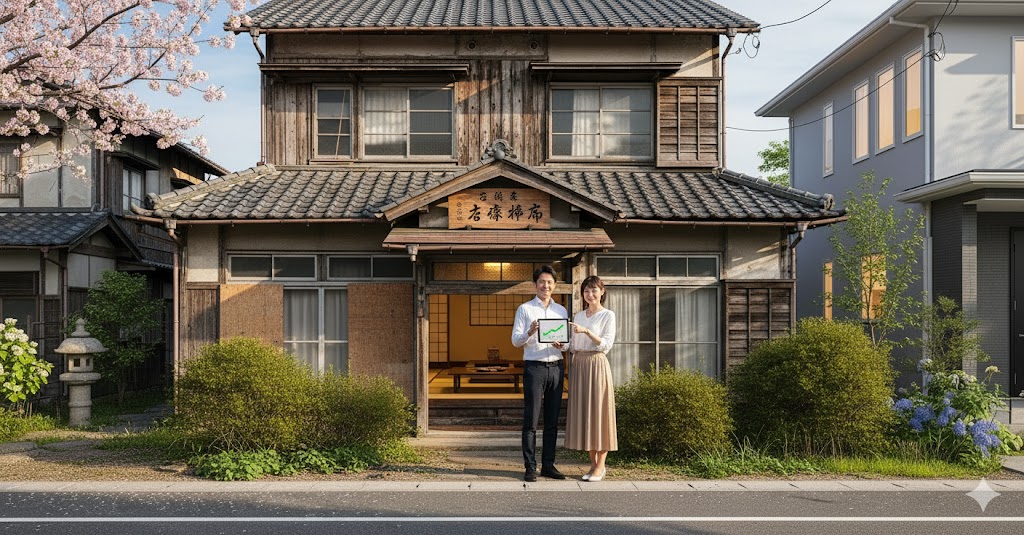
Reviving an abandoned old farmhouse in the countryside and breathing new life into it as a whole-house rental accommodation. This is an incredibly appealing business venture where social significance and tremendous business opportunity coexist.
Let us share the conclusion of this article upfront.
The key to succeeding with a whole-house kominka rental is to maximize the “story” that the building holds and produce it not as mere lodging, but as an “experiential content.”
In this article, we’ll thoroughly explain the concrete steps to turn your dream of restoring an old Japanese farmhouse into a sustainable business, along with the crucial points you absolutely must not overlook.
Why Is “Whole-House Kominka Rental” So In-Demand Right Now?
- 1. A One-of-a-Kind “Extraordinary Experience”: Gleaming thick beams and central pillars, earthen floors, sunken hearths, and beautiful transom windows. The dignified, warm atmosphere of a kominka offers an overwhelming sense of the extraordinary that modern, efficient homes simply cannot replicate. For inbound foreign tourists who admire traditional Japanese lifestyles in particular, this alone becomes premier tourism content.
- 2. The Luxury of Complete Private Space: A whole-house rental allows guests to enjoy completely private space and time with just their family or friends, without worrying about other guests as they would at a hotel or ryokan. This “freedom” has garnered overwhelming support, especially from travelers who have come to prioritize privacy in the wake of the pandemic.
- 3. The Experiential Value of “Doing Nothing”: The greatest value a rural kominka offers is “the luxury of doing nothing.” Reading on the veranda, watching a bonfire, or simply spending quiet time—these moments themselves become the ultimate detox experience, freeing guests from the stress of daily life.
【7 Steps to Opening】The Complete Roadmap for Starting a Whole-House Kominka Rental
Reviving an old Japanese farmhouse cannot be accomplished by passion alone. Steadily clearing each of the following 7 steps, one by one, is the path to success.
STEP 1: Establish the Core “Concept” of Your Business
- Clarify Your Target Audience: Specifically envision “who” you want to spend “what kind of time” in this space. Whether it’s “a three-generation family enjoying uninterrupted quality time together,” “a group of friends who want to gather around the hearth and talk,” or “a creator who wants to focus on their work in a quiet environment”—the clearer your target audience, the more consistent your subsequent space design and marketing strategy will be.
- Put the Experience into Words: Express the appeal of your accommodation in short, heartfelt phrases like “The luxury of doing nothing in a 100-year-old farmhouse” or “A farmhouse stay experiencing rural mountain village life.”
STEP 2: 【Most Important】Finding a Property and Assessing “Renovation Costs”
- How to Find a Property: The “Akiya Bank” (vacant house databases) operated by local municipalities are the most reliable source of information. You may find properties priced below market value. Local real estate agencies and NPOs sometimes also have information on hidden gems.
- The Renovation Cost Trap: The most important thing in kominka restoration is not being seduced by a low purchase price. The real cost lies in the **”renovation expenses”** incurred after purchase. In particular, ①seismic reinforcement, ②improving insulation performance, and ③complete renovation of wet areas (bath, toilet, kitchen) are essential to ensure guest safety and comfort, and it’s not uncommon for these to total several million to over 10 million yen. Accurately estimating these costs as part of your initial investment forms the foundation of your business plan.
STEP 3: Confirming Legal Regulations and Assembling a Team of Experts
- Confirming the Law: If you aim to operate 365 days a year, obtaining a **”Hotel Business Law (Simple Lodging)”** license is essential. From the property-hunting stage, you need to verify whether the zoning and the building’s structure can meet the requirements of the Hotel Business Law.
- Building Your Expert Team: Kominka restoration and obtaining a hotel business license are not things you can complete alone. Assembling a trustworthy team of experts early on—an architect with extensive experience in kominka renovation, an administrative scrivener (gyoseishoshi) well-versed in the hospitality business, and a skilled local carpenter or construction firm—is key to the project’s success.
STEP 4: Data-Driven Business Planning and Funding
- Financial Simulation: Research the room rates and occupancy rates of nearby competing facilities to forecast realistic revenue. From there, subtract the initial investment (including renovation costs) and all operating expenses to calculate your payback period and rate of return.
- Fundraising: Based on this business plan, make maximum use of loans from the Japan Finance Corporation and national/local **”vacant house renovation subsidies”** to cover any shortfall in personal funds.
STEP 5: 【Restoration】Translating Your Concept into “Space”
- Deciding What to Keep and What to Change: While preserving as much as possible of the “character” the kominka possesses—its pillars, beams, and fixtures—thoroughly pursue modern comfort in areas guests directly interact with, such as wet areas and bedroom insulation that affects sleep quality. This “fusion of old and new” is what enhances guest satisfaction.
- Facilities as Experience Devices: Amenities like sunken hearths, wood-burning stoves, traditional cast-iron baths, verandas, and wooden decks are not mere functional features—they are important “experience devices” that immerse guests in the narrative of “living in a traditional farmhouse.”
STEP 6: 【Most Important】Building “Good Relationships” with Local Residents
Business in the countryside cannot succeed without coexisting with the local community.
- Advance Courtesy Visits: Before construction begins and before opening, be sure to make polite courtesy visits to the local neighborhood chief and residents, explaining your business plans and making an effort to gain their understanding.
- Contributing to the Community: Actively participate in local festivals and cleanup activities. Adopting the stance of becoming “a member of the community” leads to long-term trust. Establishing and clearly communicating strict rules to prevent noise and trash-related trouble caused by guests is also an important responsibility of the host.
STEP 7: Marketing Strategy — Building a Fanbase Without Relying Solely on OTAs
- Sharing Your Story on Social Media: Use Instagram, note, and other platforms to continuously share the restoration process of your kominka, everyday life in the local area, and beautiful scenery. This isn’t mere advertising—it’s an activity that builds a “fanbase” of people who resonate with your values.
- Independent Booking Channels: By encouraging direct bookings through your own website or via social media DMs, you can reduce the commission fees paid to OTAs and increase your profit margin.
In Summary: Whole-House Kominka Rentals Are a Business That Creates the “Future” of a Community
A whole-house kominka rental is not merely a real estate utilization technique. It is an extraordinarily creative and socially meaningful “business” that preserves Japan’s disappearing beautiful traditional landscape, generates a new flow of people and vitality in the community, and etches unforgettable memories into the hearts of visitors.
The path is by no means smooth, but along the way lies tremendous fulfillment and a fundamental richness that you will never find in urban business.
Shall We Turn That “Dream” into a “Business” Together?
“I dream of restoring an old farmhouse, but I don’t know where to start…”
“I have no idea how much the renovation costs will actually be.”
“Getting a hotel business license seems far too complicated to handle alone…”
Please feel free to bring those feelings and worries to us for consultation.
We at Stay Buddy Co., Ltd. are operational professionals who have successfully guided numerous vacation rental properties to success in urban Osaka, while also being business development professionals who can help establish your dream as a sustainable **”business.”**
We will:
- ①Elevate your dream into a data-backed “business concept,”
- ②Navigate complex “legal regulations” together with our partner experts (architects and administrative scriveners),
- ③Support the creation of a “business plan” that will convince financial institutions and assist with fundraising,
- And **④support your “customer acquisition strategy”** even after operations begin,
**providing one-stop support throughout every process necessary** to make your dream of a “whole-house kominka rental” a reality.
When your “passion” is combined with our “business development expertise,” a wonderful accommodation is sure to be born.
Please reach out to us for that very first blueprint. We look forward to hearing from you.