Leave Your Vacation Rental Management to Us
Free Online ConsultationAmong the many complaints hosts face when running a vacation rental, one of the trickiest—and one most likely to escalate into disputes with neighbors—is noise. Guests’ voices, footsteps, and everyday living sounds can leak outside, while noise from outside can seep into the room. Either way, this compromises guest comfort and can lead to complaints from nearby residents.
“What do I do if I get a noise complaint?”
“What kind of soundproofing measures should I actually take for a vacation rental?”
“I don’t want to do major construction work, but is there anything effective I can do?”
If any of these thoughts sound familiar, you’re not alone. Noise problems can lower guest satisfaction and hurt your reviews—and in the worst cases, they can even lead to administrative guidance or a suspension of your business license. The good news is that proper soundproofing measures can dramatically reduce these risks.
In this article, we’ll introduce 5 items you can use for soundproofing your vacation rental to prevent noise trouble before it starts and create a comfortable environment for both guests and neighbors. We’ll focus mainly on items that are easy to install and don’t require major construction, so please read through to the end and put these tips to use in your own rental operation.
Why Soundproofing Matters So Much for Vacation Rentals
Soundproofing in vacation rental management isn’t just a matter of equipment investment—it’s a key factor in the long-term sustainability of your business.
1. Higher Guest Satisfaction and Better Reviews
For any accommodation, a quiet, calming environment is fundamental to guest comfort. If guests are bothered by outside noise (traffic, neighbors’ activities, etc.), or if their own sounds leak outside, they can’t relax and end up feeling stressed instead.
- Quality sleep: Being able to sleep soundly in a quiet environment has a huge impact on how satisfied guests feel with their stay.
- Privacy protection: Keeping indoor conversations from leaking outside also helps protect guest privacy.
- Better reviews: A quiet, comfortable environment translates directly into positive reviews. Comments like “It was quiet and comfortable” or “Noise was never an issue” help drive future bookings.
2. Preventing Disputes With Neighbors and Building Good Relationships
Noise is one of the most common reasons neighbors file complaints about vacation rentals. This is especially true in Japan’s densely packed residential areas and apartment buildings, where everyday sounds carry easily and can quickly turn into disputes between residents.
- Preventing complaints: When guests’ voices, footsteps, or sounds from showers and washing machines leak outside, it can disturb neighbors. Proper soundproofing measures help prevent these complaints from happening in the first place.
- Avoiding administrative action or business suspension: If complaints from neighbors escalate, they may be reported to local authorities or booking platforms like Airbnb, potentially leading to administrative guidance, corrective orders, or even suspension of your business in the worst-case scenario.
- Coexisting with the community: Taking soundproofing measures shows consideration for local residents—an essential step toward earning trust and coexisting peacefully with the community.
3. Maintaining Property Value
Chronic noise issues can hurt the property’s overall reputation and potentially its market value. Implementing soundproofing measures and maintaining sound operations helps protect your property’s value over time.
Understanding Types of Noise and How It Travels
To take effective soundproofing measures, it’s important to understand the different types of noise and exactly where they’re coming from or leaking through.
1. Types of Noise
- Airborne sound: Sound that travels through the air—voices, TV or music, pets barking, traffic noise, or conversations from outside.
- Structure-borne sound (vibration noise): Sound that travels through the building structure itself—footsteps, doors opening and closing, objects being dropped, or vibrations from washing machines and air conditioner outdoor units.
2. Common Entry and Exit Points
Noise typically travels in and out through the following areas:
- Windows: Thin glass, gaps around the sash.
- Doors: Thin door panels, gaps under the door, gaps around the frame.
- Walls: Wall thickness and materials, presence or absence of soundproofing material.
- Floors: Floor structure, presence or absence of carpets or rugs.
- Vents and exhaust fans: Sound traveling through ventilation openings.
- Plumbing: Sound traveling between floors through drain pipes and similar fixtures.
5 Items You Can Use for Vacation Rental Soundproofing
Here are five soundproofing items you can install relatively easily, without any major construction work.
1. Heavy-Duty Soundproof or Blackout Curtains
Windows are one of the easiest places for sound to leak out—or in. Installing heavy curtains can effectively reduce airborne noise.
- Effect: Reduces outside noise (traffic, conversations, etc.) from entering while also minimizing indoor sound from leaking out. The blackout effect is a bonus, helping guests sleep more soundly.
- How to choose:
- Material: Look for thick fabric, high-density weaves, or multi-layer construction. Choose curtains explicitly labeled as “soundproof curtains” with acrylic-coated backing.
- Size: Curtains that extend beyond the window frame on all sides (especially ones long enough to reach the floor) prevent sound from escaping through gaps and boost overall effectiveness.
- Installation: Types that cover the top of the curtain rail, or those designed with a “return” seam to eliminate gaps between the curtain and window, tend to work even better.
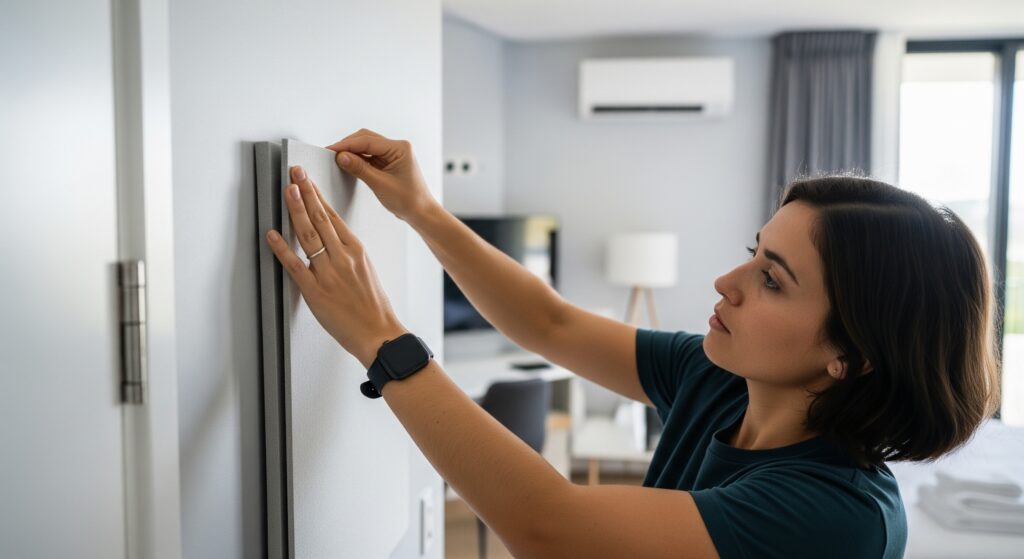
2. Soundproofing Sheets and Sound-Absorbing Panels
These are effective for reducing noise that leaks through walls and doors.
- Soundproofing sheets: Made from highly sound-blocking materials (rubber, asphalt-based composites), these sheets prevent sound from passing through and are applied directly to walls or doors.
- Effect: Reduces sound leaking through to the other side of a wall or blocks outside noise from entering.
- How to choose and use: Thinner sheets offer limited effectiveness, but many come as easy DIY-friendly adhesive options. Thicker sheets are more effective but heavier and sometimes trickier to install.
- Sound-absorbing panels: Made from sound-absorbing materials (urethane foam, glass wool, etc.), these panels reduce echo within a room and soften the way sound resonates.
- Effect: Reduces conversations or TV sounds from leaking outside while also cutting down on indoor echo, making it easier for guests to talk comfortably and relax.
- How to choose and use: Some come in stylish panel designs that double as interior decor. Choose based on your needs—whether mounting on walls or placing behind furniture.
3. Door Gap Seals and Door Sweeps
Gaps around doors are a surprisingly major source of noise leakage.
- Door gap seals: Tape or strips designed to seal the gap between the door frame and the door itself.
- Effect: Significantly reduces the leakage or intrusion of airborne noise like voices and TV sound. Also improves heating and cooling efficiency as a bonus.
- How to choose and use: Select the right material (foam, rubber, brush-style, etc.) and thickness based on your door’s material and the size of the gap.
- Door sweeps (draft stoppers): Items designed to seal the gap under a door.
- Effect: Prevents sound from leaking through the often-large gap at the bottom of a door. Particularly effective against footsteps and low-frequency sounds.
- How to choose and use: Options include adhesive strips, sweeps that slide under the door, and automatic types that open and close with the door’s movement.
4. Thick Rugs and Carpets
These are extremely effective at reducing structure-borne noise from the floor, like footsteps.
- Effect: Absorbs the sound of footsteps or dropped objects, reducing how much noise transmits to the floor below or neighboring rooms. Also provides a sound-absorbing effect that reduces indoor echo.
- How to choose:
- Material and thickness: Longer pile and thicker construction generally mean better sound absorption. Look for products specifically labeled “soundproof rug” or “soundproof carpet.”
- Size: Covering the entire floor of rooms prone to footstep noise—like living rooms and bedrooms—maximizes effectiveness.
- Placement: Prioritize high-traffic areas like living rooms, dining areas, or any space where guests move around frequently.
5. Noise Sensors and Smart Home Devices
Beyond physical soundproofing, “monitoring” tools that help guests stay mindful of noise levels—and prevent excessive noise before it happens—are also worth considering.
- Noise sensors: Devices that continuously monitor indoor sound levels and automatically alert the host when noise exceeds a preset decibel (dB) threshold.
- Effect: Lets you objectively track noise levels without infringing on guest privacy (no audio is recorded). If excessive noise occurs, you can quickly reach out to guests, helping prevent issues before they escalate.
- How to choose and use: If installing outdoors or in shared areas, be mindful of relevant laws and regulations. Also, be sure to clearly disclose the presence of sensors to guests in advance and secure their understanding.
- Smart home devices (smart speakers, etc.): Providing sound-related services—like a “quiet hours” reminder or bedtime background music—can indirectly support your noise management efforts.
Leave Your Vacation Rental Management to Us
Free Online ConsultationImportant Considerations and Management Tips When Implementing Soundproofing Measures
When introducing soundproofing items, keep the following points and ongoing management tips in mind.
1. Complete Soundproofing Is Extremely Difficult
No matter how expensive the soundproofing items you install, it’s important to understand that completely blocking sound is extremely difficult. Soundproofing measures are meant to “reduce” noise and “soften” resonance—not eliminate sound entirely. Chasing perfection can lead to ballooning costs and make practical, day-to-day operation difficult.
2. Balancing Cost and Effectiveness
Choose items based on a balance of cost and effectiveness that fits your property’s situation and your budget. A good approach is to start with affordable, high-impact items (curtains, gap seals, rugs, etc.) and consider additional investment as you see results.
3. Consideration and Communication With Guests
While implementing soundproofing measures, don’t forget to also communicate clearly with your guests.
- Include noise rules in your house rules: Clearly state guidelines like “please keep quiet late at night” or “loud conversations and parties are prohibited,” and reinforce these reminders again at check-in.
- Disclose noise sensors: If you’ve installed a noise sensor, always inform guests of this in advance and operate it with privacy in mind.
- Provide clear emergency contact information: Make sure your contact details are clearly displayed so guests can reach you immediately if there’s a complaint from neighbors or if outside noise becomes an issue.
4. Regular Inspection and Cleaning
Soundproofing items can wear down or get dirty over time.
- Regular inspections: Periodically check for frayed curtains, peeling gap seals, or damaged sound-absorbing panels.
- Cleaning: Fabric items in particular tend to collect dust and odors, so make sure to clean them regularly (washing, vacuuming, etc.).
5. Check With Your Landlord First If You’re Renting
If you’re operating a vacation rental in a leased property, soundproofing work that involves drilling into walls or major renovations may be prohibited under your lease agreement. Be sure to check with your landlord or property management company in advance. It’s generally safest to start with easy-to-install items that don’t require permanent changes.
Summary
In vacation rental management, noise issues are a critical challenge that directly affect guest satisfaction, relationships with neighbors, and ultimately the sustainability of your business. That said, you don’t need major construction work to significantly reduce these risks—simply introducing the right soundproofing items can make a real difference.
Using the “5 Items for Vacation Rental Soundproofing” introduced in this article as a guide,
- Heavy-duty soundproof or blackout curtains
- Soundproofing sheets and sound-absorbing panels
- Door gap seals and door sweeps
- Thick rugs and carpets
- Noise sensors and smart home devices
By effectively using these items, you can reduce outside noise from entering your property, minimize indoor sound from leaking out, and provide guests with a peaceful, comfortable environment.
That said, remember that completely blocking sound is extremely difficult. Weigh cost against effectiveness and choose measures suited to your property’s unique characteristics. It’s equally important to clearly communicate house rules to guests and remain considerate of your neighbors throughout the process.
Proper soundproofing is a form of “invisible hospitality” that leads to better guest reviews and stronger relationships with the surrounding community. Prepare thoroughly, and aim to run a vacation rental you can operate with confidence and peace of mind.
Have Questions About Vacation Rental Soundproofing or Property Management? Talk to Stay Buddy
“I’m not sure which items to choose for soundproofing my rental.”
“I want effective soundproofing without any major construction work.”
“I want to prevent noise disputes with neighbors before they happen.”
“I’d like to learn management strategies that reduce guest complaints and boost satisfaction.”
If you’re dealing with any of these concerns around noise management or property operations, we’re here to help.
At Stay Buddy, our team offers comprehensive support tailored to your property—from soundproofing recommendations and item selection advice, to streamlined cleaning and maintenance, and proven strategies for earning great reviews from guests.
Let’s work together to build a vacation rental you can run with confidence and comfort. Feel free to reach out to us anytime—we’d love to hear from you.