Leave Your Vacation Rental Management to Us
100% Free Online ConsultationConverting an Old Farmhouse into a Guesthouse: Success Hinges on How Accurately You Estimate Renovation Costs
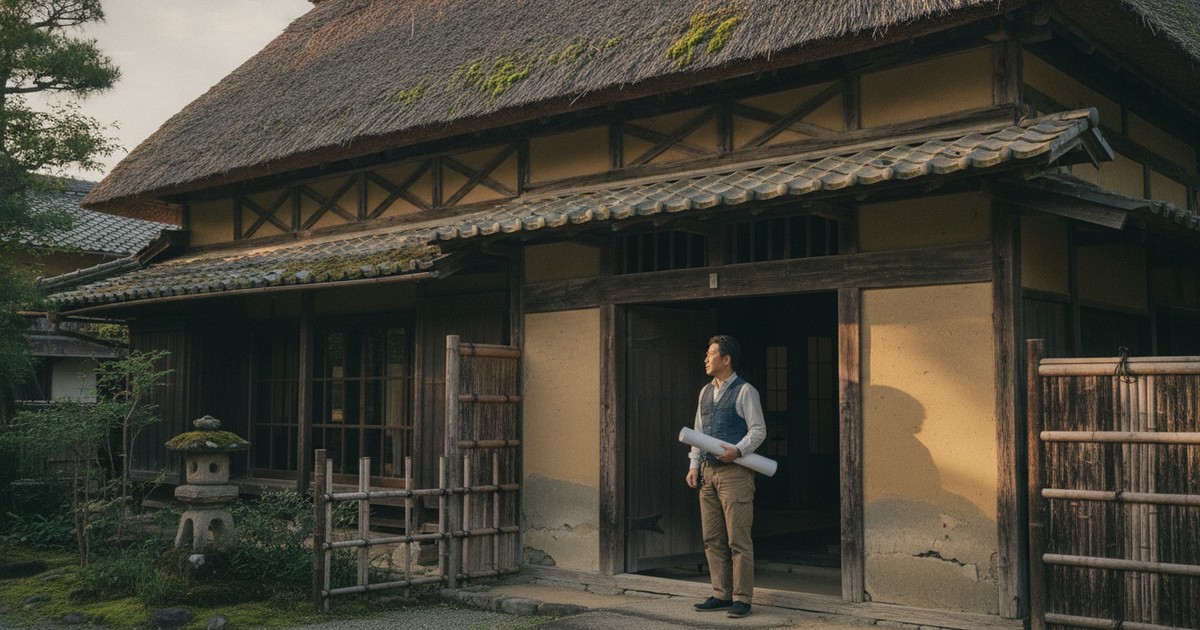
Stay Buddy regularly hears from owners who want to convert an old farmhouse (kominka) into a vacation rental. Properties like these—wooden houses over 50 years old, with spacious earthen-floored entryways and old sunken hearths—draw strong demand, especially from international visitors. Yet time and again, owners break ground without first understanding the true scope of renovation costs and the hurdles involved in obtaining an inn/hotel business license. Here, we lay out the realities of renovation costs for converting an old farmhouse into a guesthouse, along with the practical issues involved in securing that license.
Renovation Cost Breakdown and Price Ranges
Structural, Insulation, and Utility Groundwork
Old farmhouses tend to be poorly insulated and draughty, so insulation upgrades are essentially unavoidable if you want to operate the property as a modern lodging facility. The main work items include adding insulation to floors, walls, and ceilings, replacing windows with double-glazed sashes, and renewing the plumbing. For a property with 100–150㎡ of total floor area, these upgrades alone often run ¥5 million to ¥15 million, with significant variation depending on the building’s condition and local construction rates. If the roof needs re-thatching/re-covering or the foundation requires reinforcement, costs can climb even higher.
Fire Safety Compliance Work
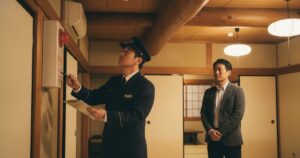
If you’re seeking a license under the Hotel Business Act, you’re required to install equipment that meets fire safety code standards. This typically includes automatic fire alarms, emergency exit lighting, and fire extinguishers, and wooden farmhouses often need additional fire-prevention measures given the fire-spread risk posed by their interior materials. Construction costs can vary considerably depending on the outcome of prior consultations with the local fire department, so consulting with the fire department before breaking ground—and getting their guidance in writing—is an essential step in practice. You should budget roughly ¥1 million to ¥4 million for fire safety equipment work alone.
Accessibility and Sanitary Facilities
To obtain a ryokan/hotel business license under the Hotel Business Act, the property must meet the room-size standards and bathroom/toilet installation requirements set out in prefectural ordinances. Old farmhouses often have layouts that don’t align well with modern lodging-facility standards, which frequently means adding or relocating plumbing fixtures. If new bathroom or toilet installations are required, expect an additional ¥1 million to ¥3 million in costs.
Hotel Business Act License or Private Lodging Business Act (Minpaku Law)? Decide Before You Proceed
When converting an old farmhouse into a guesthouse, the first decision you need to make is whether to operate under a “ryokan/hotel business license” per the Hotel Business Act or as “registered lodging” under the Private Lodging Business Act (the so-called Minpaku Law). The Minpaku Law caps the number of operating days at 180 per year, so if you’re aiming for year-round operation, obtaining a license under the Hotel Business Act is a prerequisite. Also, depending on the zoning district, a Hotel Business Act license may not be obtainable at all—so the first order of business is confirming the applicable zoning designation with your local municipal office.
Three Common Sticking Points in Obtaining a Hotel Business License
Zoning Districts and Change-of-Use Procedures Under the Building Standards Act
Since old farmhouses were originally built as private residences, using them as a ryokan or hotel may require a “change of use” procedure under the Building Standards Act. For buildings with total floor area exceeding 200㎡, a confirmation application is required, and you’ll need to verify that the structure meets current standards for structural strength, lighting, and ventilation. The older the building, the greater the gap tends to be from current standards—raising the risk of needing corrective construction work.
Municipality-Specific Supplementary Ordinances
The Hotel Business Act is a national law, but licensing authority rests with prefectures (or, in cities with public health centers and special wards, the local municipality), and many of these authorities impose their own ordinances that add stricter room-size or facility requirements. The standards required can differ depending on where the farmhouse is located, even for otherwise similar properties. We strongly recommend consulting with the public health center before engaging a construction company.
Neighbor Consent and Resident Briefings
While many municipalities don’t legally require it, briefing neighboring residents in advance is, in practice, directly tied to preventing disputes. In one old-farmhouse project Stay Buddy was involved with, a neighboring landowner raised concerns just before the license application was filed—pointing out that guest foot traffic would affect adjacent farmland—and this pushed the application timeline back by roughly two months. Based on that experience, we now build early neighbor outreach into our standard process, running it in parallel with preliminary consultations at the public health center.
What to Consider When Modeling Renovation Cost Recovery
For a farmhouse conversion that costs ¥10 million to ¥25 million or more in renovations, realistically modeling your return on investment hinges heavily on how you set your nightly rate. If you can successfully market the rarity and experiential value of an old farmhouse, nightly rates in the ¥30,000–¥80,000 range are achievable in some cases—but occupancy will vary widely depending on location, competition, and seasonality. As shown in the Japan Tourism Agency’s Accommodation Travel Statistics Survey, small regional properties tend to show pronounced seasonal swings in occupancy, with peak-month and off-peak-month occupancy rates often differing by a factor of two or three. A simulation that assumes an average annual occupancy rate of 50–70% tends to be overly optimistic. When evaluating whether your renovation budget makes financial sense, we recommend modeling your finances using a conservative estimate of off-peak occupancy.
Considering Converting or Operating an Old Farmhouse as a Guesthouse? Talk to Stay Buddy
As a company specializing in vacation rental and hotel operation management, Stay Buddy has been involved end-to-end in farmhouse conversion projects—from the earliest stages through license application support and ongoing operational management after opening. We draw on hands-on experience to help owners make informed decisions, from scrutinizing the scope of renovation work, to sitting in on preliminary consultations with public health centers and fire departments, to planning neighbor outreach.
“I’m not sure which license type fits my property.” “I want to know whether my renovation cost estimate is reasonable.” “I’m already operating, but occupancy is falling short of projections.” Whatever stage you’re at, we’re ready to help. For your first free consultation, just share your property’s location, age, and current status, and we’ll walk through the specific issues at play and offer our guidance.
If you get the preparation and the licensing sequence right, an old farmhouse conversion can become a lodging property with a competitive edge no other property can match. To move forward with a clear, accurate understanding of the costs and licensing hurdles involved, start with a free consultation from Stay Buddy.