
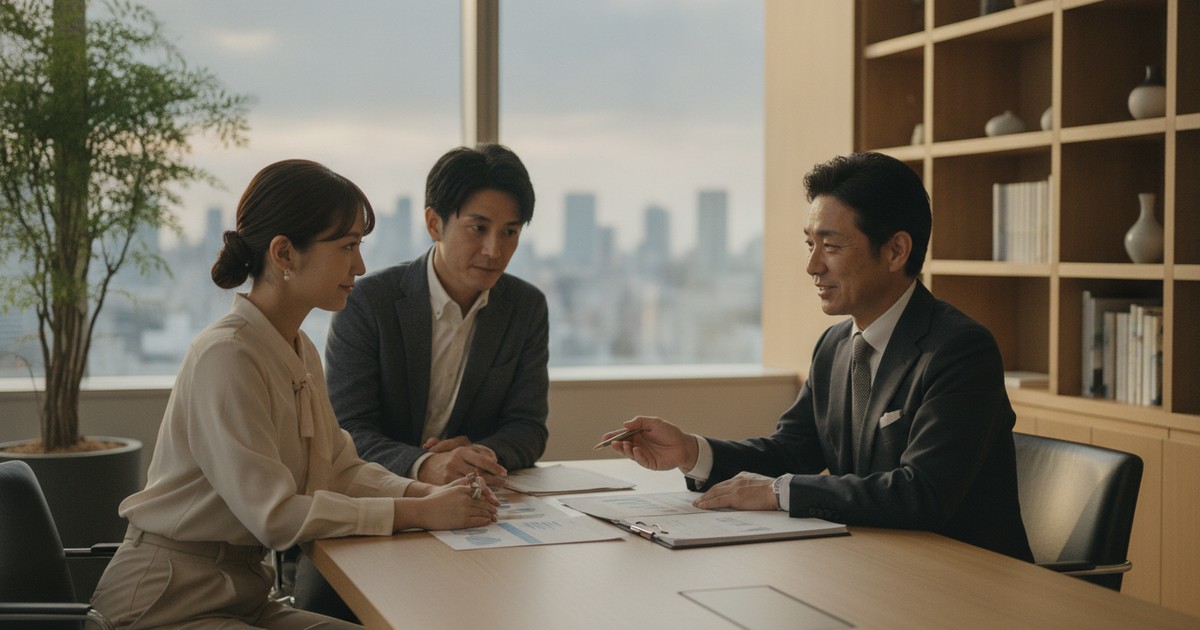
Leave Your Vacation Rental Management to the Experts
Free Online ConsultationIf you own property in Japan and live abroad, the decision to choose a management company in Japan is not primarily about finding someone to list your place on Airbnb. It is about finding someone who will make judgement calls on your behalf — at 2 a.m., in Japanese, without calling you first — and get them right. This article is written from the ground up, by operators who run properties daily, not from a checklist assembled at a desk.
What kind of licence does your property actually need?
The regulatory category determines everything: who can manage the property, what restrictions apply, and what your liability exposure looks like. There are three main routes for short-term rental in Japan.
Under the Housing Accommodation Business Act (the Minpaku Law, enacted 2018), a residential property can be rented to guests for up to 180 nights per calendar year. The operator must be registered with the relevant municipal authority, post emergency contact information on-site, maintain a guest ledger, and meet basic fire-safety requirements under the Fire Service Act. Many municipalities impose additional restrictions — some limit operation to weekends only, others require owner residency during guest stays.
A ryokan business licence under the Hotel Business Act removes the 180-day cap and allows year-round operation, but the property must satisfy more demanding structural, fire-safety, and sanitation standards set by the prefecture. The application process is longer and the upfront cost higher, but for owners targeting full-time occupancy, it is the correct category.
A third route — the national strategic special zone (tokku minpaku) scheme — allowed shorter minimum stays (as low as two nights) in designated zones. As of 29 May 2026, Osaka City has permanently closed new applications for tokku minpaku. Existing certified facilities may continue operating, but no new tokku minpaku can be started in Osaka. Any management company that tells a new Osaka client they can operate under tokku minpaku is either misinformed or not being straight with you. For new openings in Osaka, the relevant routes are the standard Minpaku Law registration or a full ryokan licence.
Ask any prospective manager to confirm in writing which licence category applies to your specific property and why. If they cannot answer that question precisely, stop the conversation.
How to choose a management company in Japan: what to actually ask
Most owner due diligence stops at “what is your commission rate?” That is the least important question on the list.
Management fees for short-term rental properties in Japan typically fall in the range of 10–25% of gross revenue, depending on the scope of services included, the property type, and the company’s own cost structure. A company quoting 12% may be excluding cleaning coordination, linen, and guest communication outside business hours. A company quoting 22% may be covering all of those — including 24/7 emergency response and licence renewal — which for a non-resident owner is not optional coverage, it is the whole point. Always ask for a line-by-line breakdown of what is and is not included.
Beyond fees, the questions that reveal operational competence are:
- Who physically enters the property, and when? Ask for the name of their cleaning vendor and whether they have a fixed team or use a rotation. A fixed team is worth more than it sounds — they notice when something changes.
- How do you handle a neighbour complaint at night? You want a specific answer about who is called, in what order, and what authority they have to act without escalating to you.
- What is your process for a failed check-in? Guests arriving at 23:00 with a smart-lock code that is not working is not a hypothetical. It happens.
- How do you report revenue to me, and in what currency? Non-resident owners are subject to Japanese withholding tax on domestic-source income. The Japan Tourism Agency and National Tax Agency guidance on this is clear: rental income paid to a non-resident is subject to withholding at source under the Income Tax Act. Your manager needs to be handling this correctly, not leaving it to you to sort out retrospectively.
Remote oversight: what trust actually looks like from 5,000 miles away
Here is something that happens in practice. We manage a property in Kyoto where the cleaning team completes a same-day turnover between an 11 a.m. checkout and a 3 p.m. check-in. One afternoon the outgoing guest had removed a smoke detector — we never established why — and the incoming guest reported it missing at check-in. By the time the message came through our channel manager, we had forty minutes. The call was: send the cleaning team back with a replacement unit sourced from our supplies at the building, and log the incident in the guest record, or delay check-in, contact the owner for approval, and potentially lose a booking. We replaced the unit, documented everything, informed the owner in the morning report, and the guest checked in on time. The owner was in Vancouver.
That is not an exceptional scenario. It is a routine one. The owner in that situation had chosen a company with on-the-ground stock, a defined decision framework, and staff who understood that waiting costs more than acting. They knew this because before signing they had asked: “What is the largest decision you would make without contacting me, and what is the threshold where you stop and call?” A good operator has a clear, honest answer to that question.
Remote oversight also means your reporting has to be readable without a phone call to interpret it. Monthly statements should show gross revenue, platform fees, management fees, cleaning costs, maintenance deductions, and net remittance — separately, line by line. If a statement requires a follow-up email to understand, the reporting is not fit for purpose.
Non-resident tax and currency: the part most owners underestimate
Japanese rental income paid to a non-resident owner is, in most cases, subject to withholding tax at source under the Income Tax Act. The applicable rate varies depending on treaty status between Japan and the owner’s country of residence — Japan has tax treaties with many countries, and the treaty provisions affect both the rate and the filing obligation. This is not something your property manager should be deciding; it is something a Japanese tax accountant (税理士) should be advising on. What your manager should be doing is withholding correctly, issuing the required documentation (源泉徴収票 or equivalent), and not remitting gross amounts to overseas accounts without any deduction and telling you to sort it yourself.
Remittance in JPY versus your home currency matters more than it might appear. JPY has been volatile against USD, GBP, AUD, and EUR over recent years. Some managers remit in JPY to a Japanese account you hold; others remit converted amounts internationally. Neither is inherently superior, but you need a clear agreement on timing and method — and you need to understand that conversion at point of remittance means your effective yield fluctuates with exchange rates, not just with occupancy.
Occupancy expectations and seasonal reality
A manager who quotes you a flat annual occupancy figure without caveats is not describing Japan’s short-term rental market accurately. Occupancy for well-located properties in major tourist cities typically ranges from around 60–85% across the year, but those averages conceal sharp seasonal swings. Golden Week (late April to early May), autumn foliage season in November, and the new year period in Kyoto and Tokyo can run at or near full capacity. February and mid-June (rainy season) are materially softer.
Under the Minpaku Law’s 180-day annual cap, a property that peaks in autumn and spring may exhaust its permitted nights by October if not managed carefully. That is a real operational constraint that requires active calendar management — it is not a detail to revisit at year-end.
Work with Stay Buddy
Stay Buddy operates vacation rentals and ryokan in Japan on behalf of overseas owners. We handle licensing, compliance, guest operations, and reporting — and we give you a direct line to the people physically managing your property, not a dashboard and a delay. If you are assessing options for a property you own or are considering, contact us to discuss the specifics of your situation.
Leave Your Vacation Rental Management to the Experts
Free Online ConsultationShuhei Makigi
Representative Director, Stay Buddy Co., Ltd.
Registered Housing Accommodation Management Business — Ministry of Land, Infrastructure, Transport and Tourism No. F03862. Stay Buddy operates short-term rentals and licensed hotels across Japan, supporting overseas investors with compliant, high-performing properties.
Written by the Stay Buddy Japan team. This content was produced with AI assistance and reviewed for accuracy.