Leave Your Vacation Rental Management to the Experts
Free Online ConsultationNoise complaints are one of the fastest ways to lose a minpaku license in Japan — and for overseas owners who cannot get on a plane at short notice, they are also the hardest problem to manage before they escalate. The Japan Tourism Agency’s notification framework under the Housing Accommodation Business Act (Minpaku Law, enacted June 2018) requires prefectural governors to suspend or revoke a facility number when a property causes repeated nuisance to neighbours. That process can begin with a single formal objection to the local ward office. Understanding how noise complaints feed into Japan’s licensing machinery is not optional if you own property here from abroad.
Why Noise Complaints Carry Regulatory Weight Under Japan’s Minpaku License Framework
Unlike many jurisdictions where noise is handled through civil dispute or a council fine, Japan routes neighbour objections directly through the licensing authority. Under Article 14 of the Housing Accommodation Business Act, prefectural governors hold the power to order business suspension for facilities that “cause trouble to residents in the surrounding area.” Ward offices in cities like Kyoto, Osaka, and Tokyo’s special wards actively solicit neighbour feedback — some post notice periods during which residents can formally object before a facility number is issued. If a complaint arrives post-licensing, it becomes part of the property’s administrative record and can support a suspension order if violations continue.
Condominium buildings add a separate layer. The Building Unit Ownership Act (区分所有法) allows management associations (管理組合) to pass house rules banning minpaku operations entirely, and courts have upheld those bans even against licensed operators. We have seen properties with valid facility numbers rendered inoperable because the management association passed a minpaku prohibition rule mid-tenancy. As a non-resident owner, you are unlikely to hear about an upcoming association vote until after it has happened.
What Actually Happens When a Noise Complaint Is Filed
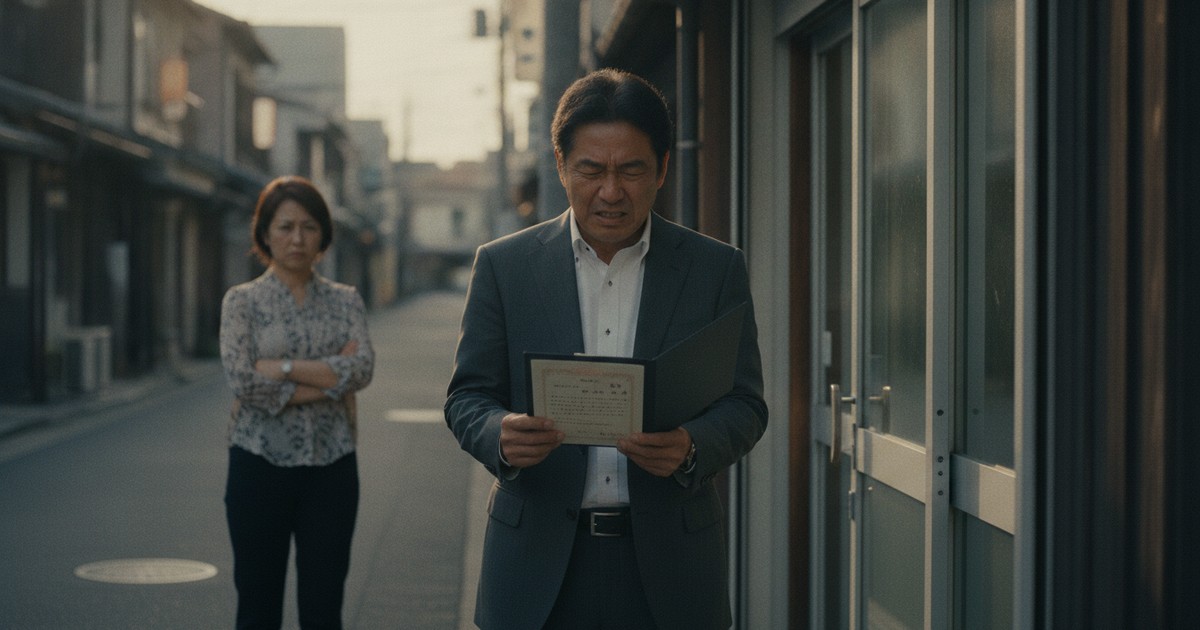
Here is a specific situation we dealt with at a property in Kyoto’s Higashiyama area. A guest group — four adults, arriving late from a flight delay — came in just after midnight, talking loudly in the corridor while working out the key box. A neighbour two doors down filed a written complaint with the ward office the following morning. By the time our local coordinator was notified, the ward had already logged it against our facility number.
The judgement call was this: do we contact the ward proactively, or wait to see if they reach out? We contacted them the same day. We submitted a written account of the incident in Japanese, acknowledged the disturbance, outlined what we had already changed — adding a quiet-hours instruction card inside the property in Japanese, English, and Chinese, and adjusting our pre-arrival messaging to explicitly flag the 22:00 noise curfew that applies in that residential zone. The ward officer told us directly that a proactive written response, submitted before they had to request one, was a material factor in the complaint being logged as resolved rather than escalated.
For overseas owners: if your management company’s response to a complaint is to wait and see, that is the wrong approach. The Japanese administrative preference for early, formal, written acknowledgement is real and consistent.
The 180-Day Cap and Seasonal Pressure Points
The Minpaku Law’s 180-day annual operating cap concentrates bookings into peak windows — Golden Week (late April to early May), Obon (mid-August), and the autumn foliage season (late October through November, depending on location). Higher occupancy density in shorter periods means more guest turnover, more late arrivals, more corridor noise, and proportionally more neighbour exposure per calendar month. A property that runs quietly through winter can generate two or three complaints in a single busy week in November.
Operators who manage purely for occupancy rate without adjusting guest communication protocols for peak periods are setting owners up for licensing risk. We revise pre-arrival messages, noise-curfew reminders, and check-in time windows each season — not annually.
What Non-Resident Owners Cannot See From Abroad
The gaps a remote owner faces are structural, not just informational. You cannot attend a management association meeting. You cannot read a hand-delivered letter from the ward office if no one intercepts it. You cannot judge whether your management company’s relationship with the local neighbours is functional or merely untested.
Specific questions worth putting to any management company you are evaluating:
- How do you receive and handle ward office correspondence sent to the property address?
- What is your documented protocol when a noise complaint is received — who decides, and within what timeframe?
- Have any of your managed properties received complaints or suspensions? What was the outcome?
- Do you attend management association (管理組合) meetings for properties you operate, or receive minutes?
- How do you communicate incident reports to overseas owners, and in what language?
Management fees in Japan’s short-term rental sector typically run between 10–25% of gross revenue, depending on the scope of service — whether the company handles only booking and guest communication, or also takes responsibility for licensing compliance, cleaning supervision, and regulatory correspondence. A company charging toward the lower end of that range may not have the staffing to handle ward office relations with the speed Japanese administrators expect. That is a cost-of-complaint worth factoring in before choosing on price.
Ryokan Licensing as an Alternative — and Its Own Neighbour Dynamics
Some overseas owners pursue a ryokan business licence under the Hotel Business Act (旅館業法) rather than operating under the Minpaku Law, partly to escape the 180-day cap. The ryokan licence has no annual operating-day limit and allows daily rental without the minpaku restrictions — but the licensing process is more demanding, requires a facility inspection, and in many prefectures involves a prior consultation with the local public health centre (保健所) that explicitly includes consideration of neighbourhood impact.
In dense residential areas, local governments may require documented evidence that neighbours have been informed, or may impose condition clauses relating to noise, waste, and guest management as part of the licence grant. A ryokan licence does not make you immune to neighbour complaints — it simply routes those complaints through a different authority (the public health centre rather than the prefectural governor’s minpaku desk).
On the tokku minpaku question: national strategic special zones (tokku minpaku) were designed to allow operation beyond the 180-day cap in designated zones. As of 29 May 2026, Osaka City has permanently closed new applications for tokku minpaku. Existing certified facilities may continue, but no new tokku minpaku can be started in Osaka. Owners considering new openings in Osaka should plan around the Minpaku Law or ryokan licence instead.
Protecting Your License From Abroad: Practical Structure
The most durable protection against complaint-driven licence loss is not guest screening — it is having a local point of contact who is reachable, accountable, and empowered to act without waiting for your approval across time zones. Under the Minpaku Law, the designated administrator (住宅宿泊管理業者) must be registered with the Ministry of Land, Infrastructure, Transport and Tourism (MLIT). That registration is publicly searchable. Verify it before signing anything.
Beyond registration, the practical architecture matters: who holds the physical key contact in the neighbourhood, who responds to the ward within hours rather than days, and who tells you what happened and why — not what you want to hear, but what occurred. Overseas owners who receive only monthly revenue summaries are flying without instruments. Ask for incident logs, complaint records, and any regulatory correspondence as a standing deliverable, not on request.
Non-resident tax obligations run in parallel and do not pause during a licensing dispute. Under Japan’s tax rules for non-resident property owners, rental income is subject to Japanese income tax with withholding obligations that typically apply to the payer (your management company) if you are a non-resident. That withholding, typically at 20.42% on gross rental payments under the Income Tax Act, continues regardless of whether your property is suspended. Get this confirmed by a Japanese tax accountant (税理士) who works with non-resident property income before you start operating.
Working With Stay Buddy
We operate minpaku and ryokan properties directly — cleaning handovers, regulatory correspondence, ward office relations, and incident response are things we do on the ground, not tasks we outsource and monitor remotely. If you own property in Japan and want to understand what responsible licensed operation actually looks like — including honest assessments of whether your property and location are well-suited to short-term rental — contact Stay Buddy. We will tell you what we see, not what makes the deal easier to close.
Leave Your Vacation Rental Management to the Experts
Free Online ConsultationShuhei Makigi
Representative Director, Stay Buddy Co., Ltd.
Registered Housing Accommodation Management Business — Ministry of Land, Infrastructure, Transport and Tourism No. F03862. Stay Buddy operates short-term rentals and licensed hotels across Japan, supporting overseas investors with compliant, high-performing properties.
Written by the Stay Buddy Japan team. This content was produced with AI assistance and reviewed for accuracy.