
Author
Stay Buddy Inc.
Leave Your Vacation Rental Management to Us
Free Online ConsultationWhen traveling, you’ll find a range of accommodation options, from vacation rentals to traditional guesthouses. But how many people can actually explain the differences between the two? In this article, we’ll compare the characteristics of vacation rentals and guesthouses, breaking down the pros and cons of each in detail.
What Is a Vacation Rental (Minpaku)?

A vacation rental (known in Japan as “minpaku”) refers to a type of accommodation where a house, condo unit, or even an entire property is rented out to travelers. Owners often use these spaces—houses or rooms they aren’t actively using—as a way to generate income, and the model has been gaining more attention every year.
A defining feature of vacation rentals is that they typically offer guests a genuinely lived-in, homey space. This gives travelers the chance to experience local life in a way that feels authentic to the destination. Hosts and guests also tend to be in close contact, which often means guests can pick up local tips directly from their host or simply enjoy the personal connection.
For operators, one of the biggest appeals is that startup costs tend to be relatively low. Since existing homes are often used as-is, there’s usually no need for major renovations or heavy equipment investment. That said, operators must run their business in compliance with Japan’s Minpaku Law (the Private Lodging Business Act) and follow the specific regulations set by their local municipality—an important point to keep in mind.
What Is a Guesthouse (Minshuku)?

A guesthouse (“minshuku”), on the other hand, falls under the “simple lodging” category defined by Japan’s Hotel Business Act. Typically, an owner converts their own home into a lodging facility and offers it to travelers. Guesthouses are commonly found in tourist areas and regional towns, and they’re known for offering a stay that reflects the local culture and character of the area.
Operating a guesthouse requires obtaining a license under the Hotel Business Act. Securing this license means clearing a range of regulations, including those under the Building Standards Act and the Fire Service Act. On top of that, guesthouses—much like hotels and ryokan—must meet certain equipment and fire-safety standards, which means both the initial investment and the day-to-day management burden tend to be higher compared to vacation rentals.
What’s the Difference Between a Vacation Rental and a Guesthouse?
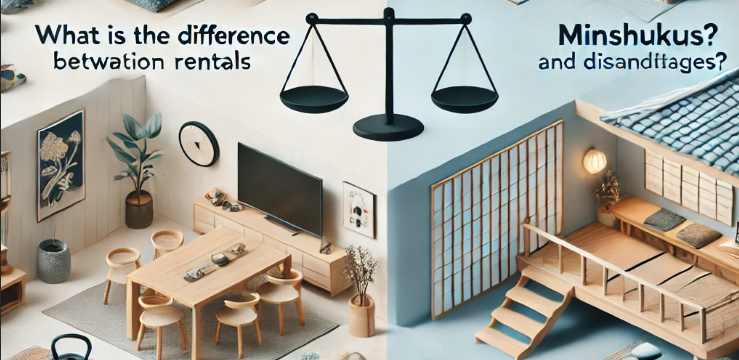
Let’s take a closer look at how vacation rentals and guesthouses compare across several key aspects.
Equipment Investment
For vacation rentals, it’s generally considered sufficient to have the basic amenities needed for daily living—a bed, kitchen, bathroom, Wi-Fi, and so on—which keeps initial investment relatively low. Guesthouses, however, must comply with Hotel Business Act requirements, meaning owners need to invest in safety equipment such as fire extinguishing systems, fire doors, and clearly secured evacuation routes. As a result, guesthouses typically require a higher upfront investment than vacation rentals. Many guesthouses also serve local meals to guests, which can require kitchen facilities that meet specific hygiene standards.
How to Get Started
Vacation rentals can be launched under one of several legal frameworks: the Minpaku Law (Private Lodging Business Act), the National Strategic Special Zone Law, or the Hotel Business Act. Under the Minpaku Law, for example, operating days are capped at 180 per year, and some regions impose their own additional restrictions. Special zone vacation rentals can operate for longer periods, but they’re only available in designated areas.
Opening a guesthouse, on the other hand, requires obtaining approval from the prefectural governor under the Hotel Business Act. This approval process involves passing inspections based on the Fire Service Act and the Building Standards Act. Regulations around cleaning and hygiene management within the facility are also strict, meaning guesthouses generally require more procedures and preparation than vacation rentals.
Level of Owner Involvement
With vacation rentals, owners can choose to handle everything themselves, or they can outsource tasks like cleaning and reservation management to a property management company. This flexibility is a big reason why many people run vacation rentals as a side business.
Guesthouse owners, by contrast, typically handle the day-to-day management of the property and guest interactions themselves. Because of this, running a guesthouse tends to be a full-time endeavor, requiring strong hospitality skills and hands-on operational know-how.
Vacation rentals and guesthouses clearly differ in terms of operating style, legal regulations, and target guests. It’s important to fully understand the characteristics and requirements of each before choosing the operating style that best suits you.
Pros and Cons of Vacation Rentals
The biggest advantage of vacation rentals is the ability to generate income from an empty house or unused room. Leaving a vacant property untouched can mean rising property taxes and ongoing deterioration of the building, driving up maintenance costs over time. By turning that same property into a vacation rental, owners can offset those expenses and turn a liability into a source of income. This makes it an especially attractive option for making the most of properties that would otherwise sit idle.
That said, vacation rentals do come with drawbacks. Under the Minpaku Law, the number of days a property can be rented out each year is capped, which places a ceiling on potential earnings. In addition, if local regulations and management systems aren’t well established, running the business can become more complicated. Understanding these constraints and operating strategically is essential for success.
Pros and Cons of Guesthouses
One of the defining strengths of a guesthouse is the sense of security that comes from having the owner on-site, along with the ease of communication with guests. Because the owner interacts with guests directly, it’s easier to understand their needs and preferences, which helps improve the overall quality of service. This close contact also helps prevent issues like property damage or theft before they happen. What’s more, since there are no restrictions on the number of days a guesthouse can operate, owners can run the business long-term and potentially earn more than they would with a vacation rental.
That said, running a guesthouse comes with its own set of challenges. Many guesthouses see a surge in guests during peak seasons and weekends, which can make it difficult for owners to take time off. Maintaining a comfortable stay for guests also requires regular cleaning and equipment maintenance, and these upkeep costs add to the overall cost of running the business. Weighing these burdens carefully while striving for efficient operations is key to success.
[In Closing] Thinking of Starting a Vacation Rental? Talk to Stay Buddy Inc.
Having read this far, you may be thinking, “A vacation rental with lower startup costs sounds like the way to go.” But running a vacation rental business involves a lot of complex and challenging work—permit applications, interior design, cleaning, guest messaging, and more. Handling all of that on your own can be an enormous burden.
At Stay Buddy, we offer a service that lets you hand off all of these tasks to us. If you’re even a little interested, or if you have any concerns about running a vacation rental, feel free to reach out for a consultation. We’ll put together a proposal tailored specifically to your property.