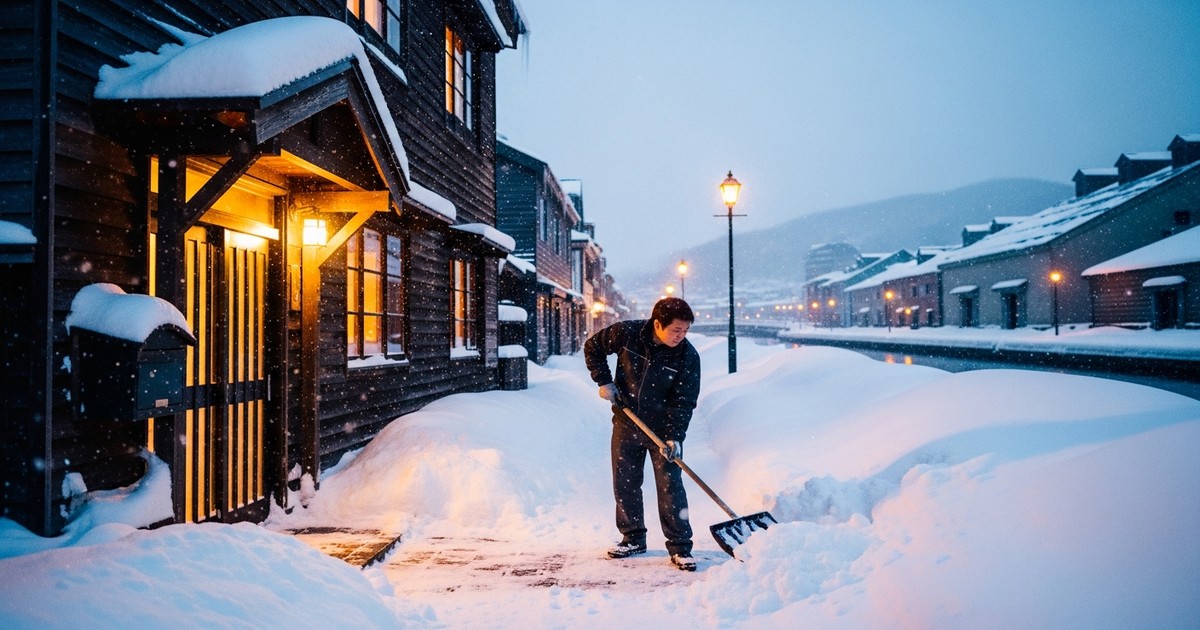
When running a vacation rental in Otaru, how you manage your property during the winter season (November through March) is arguably the single most critical factor affecting both profitability and property preservation. As one of Hokkaido’s heaviest snowfall regions, Otaru can see cumulative annual snowfall exceeding 600cm in some years—requiring a completely different approach to risk management than vacation rental operations on Japan’s main island of Honshu.
At the same time, winter is also a season of strong demand, particularly among international travelers drawn by the snow-covered scenery of the Otaru Canal, the ski slopes at Mt. Tenguyama, and events like the Otaru Snow Light Path Festival. With the right management system in place, it’s entirely possible to maintain occupancy rates of 70–80% while setting nightly rates 1.3–1.5 times higher than in summer.
This article takes a detailed look at the winter-specific management challenges facing Otaru vacation rentals and offers concrete solutions. Whether you’re a self-managing owner or considering hiring a management company, you’ll find practical knowledge here for achieving stable rental income through the Otaru winter.
5 Winter Risks and Management Costs for Otaru Vacation Rentals
The Burden of Snow Accumulation and Removal
Otaru averages roughly 180cm of snowfall in January alone, and it’s not unusual for 30–50cm to fall in a single night. If snow removal around entrances, parking areas, and emergency exits is neglected, guest safety cannot be guaranteed—potentially exposing owners to liability for accident-related damages in worst-case scenarios. Hiring a snow removal company on a seasonal contract typically costs ¥30,000–60,000 per property per month. Spot requests run ¥5,000–10,000 per visit, and in months with heavy snowfall, total costs can exceed ¥100,000.
Roof snow removal is another factor that shouldn’t be overlooked. For wood-frame detached houses, once the snow load exceeds 300kg per square meter, there’s a real risk of serious structural damage—a particular concern for properties over 30 years old. Roof snow removal typically costs ¥30,000–80,000 per session, and 2–4 sessions are usually needed per season.
Frozen and Burst Water Pipes
In Otaru, minimum temperatures drop below -10°C several times a month between December and February, making frozen pipes a serious, recurring problem every year. When frozen pipes burst, repair costs start at ¥30,000–50,000 for minor incidents but can climb to ¥500,000–1,000,000 or more if water damage spreads to walls and flooring.
The essential preventive measure is draining the water system (mizunuki) whenever the property is unoccupied. While Hokkaido homes are equipped with drain valves for this purpose, guests from Honshu are almost universally unfamiliar with how to operate them. Beyond explaining the process at check-in and providing multilingual instruction manuals, it’s highly effective to install IoT temperature sensors (¥2,000–3,000/month) that send alerts when indoor temperatures drop below 5°C.
Rising Heating Costs
Heating must run around the clock throughout Otaru’s winter. For properties with kerosene central heating, fuel costs run ¥30,000–60,000 per property per month. Even during vacancy periods, minimal heating is required to prevent freezing—it can never be switched off entirely. Managing kerosene tank levels is also critical: a standard home tank holding roughly 400 liters can run empty within 2–3 weeks during the coldest stretches of winter.
Signing up for automatic kerosene delivery eliminates the worry of running out, though some plans add a fixed monthly fee—making it worthwhile to calculate annual fuel costs before choosing a contract type. For properties relying solely on air conditioning for heat, electricity bills can spike to ¥40,000–80,000 per month, meaning the type of heating system in place can dramatically affect your overall financial picture.
Transportation Disruptions and Guest Support
Heavy snow can cause suspensions and delays on the JR Hakodate Main Line, and it’s not uncommon for the trip between Sapporo and Otaru to take more than twice the usual time. Winter frequently brings complications such as significantly delayed check-ins or guests unable to secure transportation from the airport. Smart lock installation for self-check-in is essential, but without round-the-clock multilingual support in place as well, guest satisfaction—and review scores—will suffer.
Inbound guests in particular tend to lack local knowledge of bus routes and alternative transportation options. Preparing guidance materials in advance—covering alternate routes when JR service is disrupted, taxi company contact information, and safe walking routes to the nearest convenience store—can dramatically reduce the cost of handling issues as they arise.
Risk of Exterior Building Damage
Falling icicles that injure people, exterior wall cracking from repeated freeze-thaw cycles, and collapsing snow eaves (seppi) are all winter-specific risks affecting the outside of a building. Icicles can grow to over a meter in length, and a fall from that height can cause serious injury. Regular patrol inspections are essential for early detection and response—outsourcing patrols 2–4 times a month typically costs ¥3,000–5,000 per visit.
Liability can also arise if falling snow damages a neighbor’s fence or vehicle. Facility liability insurance is a must; annual premiums typically run ¥10,000–30,000 depending on property size. Operating without insurance during the winter season represents a serious business risk.
The Limits of Self-Managing Winter Operations
Physical Constraints for Owners Living Elsewhere
For owners who don’t live in Otaru, self-managing winter operations is, in practical terms, extremely difficult. You can’t rush to the property every time heavy snow is forecast, and emergencies like frozen pipes tend to strike in the middle of the night or early morning, demanding an immediate response. Even owners based in Sapporo may find the drive to Otaru taking over two hours during heavy snowfall, making timely snow removal and emergency response nearly impossible.
Hiring a local partner or caretaker independently is an option, but finding someone for seasonal, winter-only work is difficult—and it’s nearly impossible to find one person who can single-handedly cover snow removal, equipment inspection, and guest support. The result is often a patchwork of contracts with multiple vendors and individuals, which tends to scatter management effort and drive up costs.
The Cost of Delayed Emergency Response
Property management companies in Otaru often share stories of cases where a mere six-hour delay in discovering a burst pipe allowed water damage to spread under the floor, ballooning repair costs from ¥300,000 to ¥800,000. On top of that, forced closures during repairs mean lost bookings during the high-rate winter season—2–4 weeks of downtime can translate into ¥200,000–400,000 in lost revenue.
Delayed snow removal carries similar risks. If the entrance isn’t cleared by the time a guest arrives for check-in, it can lead to cancellations or negative reviews. On Airbnb, a rating that drops below 4.0 significantly hurts search ranking, and booking rates can suffer for months afterward. A single winter mishap can end up affecting revenue well into the following season.
The Benefits of Outsourcing Winter Management to a Rental Management Company
Integrated Snow Removal and Facility Management
Outsourcing to a management company means snow removal vendor arrangements, kerosene refill tracking, frozen pipe prevention measures, and emergency response are all handled under one roof. Because these companies typically manage multiple properties in the same area, they’re often able to negotiate more favorable contract terms with snow removal vendors—in some cases reducing per-property costs by 20–30% compared to what an individual owner could secure on their own.
Management companies equipped with IoT sensors and remote monitoring cameras (limited to common areas, with privacy in mind) can also dramatically shorten the time between anomaly detection and response. Some companies have a track record of catching early signs of pipe freezing through indoor temperature data and dispatching local staff to drain the system before a burst ever occurs.
Optimizing Winter Pricing and Occupancy
Winter nightly rates in Otaru tend to run somewhat lower than in Niseko or Sapporo, which makes it easier to attract budget-conscious skiers and long-stay workation travelers looking for a good deal. Management companies monitor nearby accommodation pricing trends and local event calendars daily, using dynamic pricing to set optimal rates.
For example, rates can often be set at 1.5–2 times the usual level during the Snow Light Path Festival, while the period after the festival ends—from late February through early March—typically sees a demand drop, making early-bird and extended-stay discounts an effective strategy for maintaining occupancy. Making these fine-grained, day-by-day pricing adjustments requires specialized expertise and tools—precisely the area where a management company’s strengths shine brightest.
Multilingual Guest Support Systems
Many of the guests visiting Otaru in winter are inbound travelers from across Asia and Australia. Building a 24-hour English, Chinese, and Korean support system as an individual owner simply isn’t realistic—but a management company can offer round-the-clock support, including handling middle-of-the-night issues, using multilingual staff and chatbots.
Winter brings a spike in inquiries like “I don’t know how to use the heater,” “there’s no water coming out” (a side effect of pipe draining), or “I can’t find my way in the snow.” How quickly and accurately these are handled has a major impact on review scores. In fact, properties that introduced multilingual support have reported average winter review ratings improving from 4.3 to 4.7.
Understanding the Costs of Building a Winter Management System
Typical Management Fees
When using a vacation rental management service in the Otaru area, standard fees typically run 10–30% of revenue (varying by company and scope of service). For a property generating ¥300,000 in monthly winter revenue, management fees would come to ¥45,000–75,000. This usually covers guest support, cleaning coordination, and listing management, but some companies charge extra for snow removal and equipment management as add-on services—so it’s essential to confirm before signing whether winter-specific management tasks are included.
Adding up a seasonal snow removal contract (¥30,000–60,000/month), kerosene costs (¥30,000–60,000/month), IoT monitoring (¥2,000–3,000/month), and patrol inspections (¥12,000–20,000/month), additional winter management costs come to roughly ¥70,000–140,000 per month. Combined with management fees, total winter management costs typically run ¥120,000–220,000 per month.
Balancing Costs and Revenue
For a detached-house vacation rental operating in Otaru during winter, nightly rates typically range from ¥15,000–30,000, and with monthly occupancy of 60–80%, monthly revenue can fall anywhere between ¥270,000 and ¥720,000. After subtracting management costs, net income can be estimated at ¥50,000–150,000 during low-occupancy periods and ¥300,000–500,000 during high-occupancy periods.
What matters is comparing these figures against the losses that can result from neglecting winter management. Factor in ¥500,000 in repair costs from a burst pipe, ¥200,000 in lost revenue from a two-week closure, and declining sales the following season due to a damaged review record—the total losses can easily exceed ¥1,000,000. Viewed against that backdrop, a monthly management cost of ¥120,000–220,000 is a reasonable investment.
For Vacation Rental Management in Otaru, Talk to Stay Buddy Inc.
Managing a vacation rental in Otaru through the winter demands a range of specialized tasks—snow removal, freeze prevention, heating management, guest support—that simply don’t come up in standard rental operations. Handling all of this thoroughly and cost-effectively calls for the support of a management company with a proven track record of winter operations in Hokkaido.
Stay Buddy Inc. brings extensive experience in vacation rental management and can propose winter management plans tailored to each property’s location and equipment. From building out a snow removal system to advising on freeze-prevention equipment and developing winter dynamic pricing strategies, we provide comprehensive, one-stop support.
Whether you’re looking to outsource management just for the winter, want to review your current management setup, or are planning to start a vacation rental in Otaru but feel uneasy about the winter season, please feel free to reach out to us first. Based on your property details, we can provide winter revenue simulations and rough management cost estimates.
Stay Buddy Inc. is committed to helping you turn Otaru’s winter into a revenue opportunity. We look forward to hearing from you through our official website or by phone.