If you’re serious about generating revenue from minpaku (private lodging) in Hakodate, the starting point has to be data—not gut feeling. Hakodate’s minpaku market benefits from strong tourism demand and can deliver stable occupancy, but a lack of understanding around seasonal fluctuations and regulatory requirements often leads to unexpected losses. In this article, we take a “Hakodate minpaku revenue” perspective and break down a revenue model based on occupancy rate and average daily rate, along with the operational pitfalls owners actually encounter.
Whether you’re an owner looking to launch a minpaku business in Hakodate or you already own a property and are weighing whether to monetize it, we’ll walk you through everything from revenue projections by property type to regulatory considerations and risk management.
Area Overview and Demand Data Shaping Minpaku Revenue in Hakodate
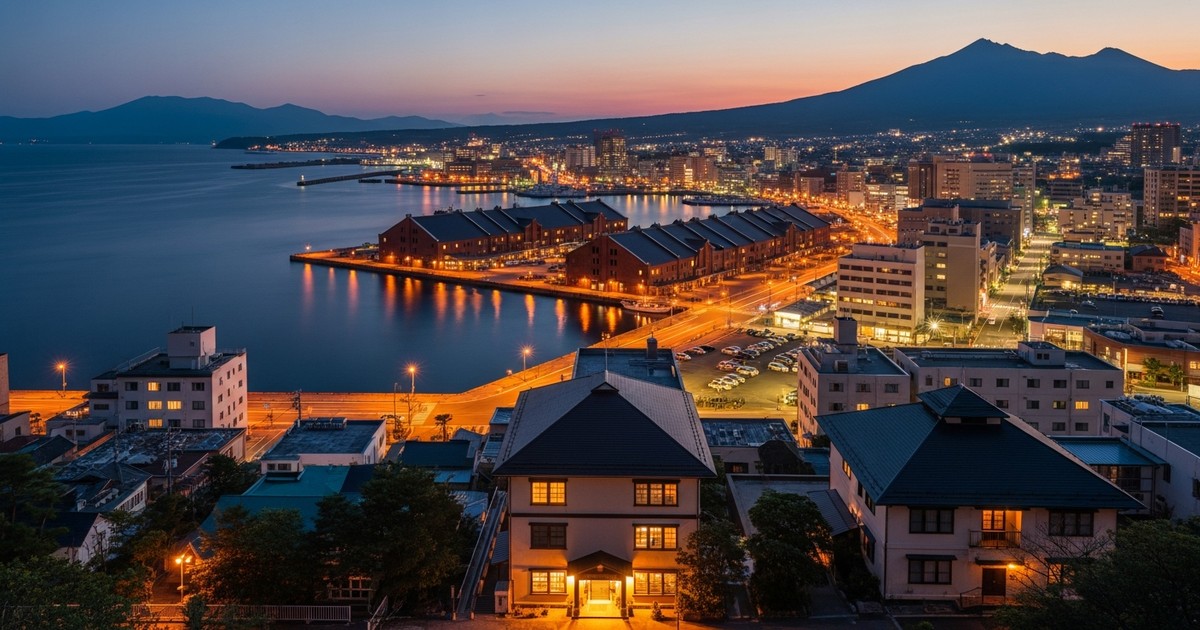
Located in southern Hokkaido, Hakodate is one of Japan’s premier tourist destinations, boasting attractions such as the night view from Mt. Hakodate, the historic streets of the Motomachi/Western District, Hakodate Morning Market, and Trappistine Convent. Throughout the year, the city draws large numbers of domestic and international travelers, with official tourism statistics from the City of Hakodate showing annual visitor numbers exceeding 4 million. Since most visitors have clear sightseeing objectives, lodging demand flows steadily not only into ryokan and hotels but also into minpaku properties.
In terms of nightly rates, minpaku properties in Hakodate’s key areas (the Western District and Bay Area) typically command 8,000 to 15,000 yen per night. During peak season (July–August, year-end/New Year, Golden Week), rates of 15,000 to 25,000 yen or more per night aren’t uncommon, while during the off-season (part of November through February), some properties drop to around 6,000 yen. OTA search data confirms that Hakodate ranks just behind Sapporo and Otaru in minpaku demand within Hokkaido, with solid demand from international travelers as well. Visitors from Taiwan, Hong Kong, and Southeast Asia in particular show strong interest in accommodations that capture “the essence of Hakodate,” making premium pricing genuinely achievable with the right differentiation strategy.
Revenue Models for Hakodate Minpaku by Property Type
In Hakodate, minpaku revenue varies significantly depending on property type—affecting initial investment, occupancy rate, and average daily rate. Below, we break down three representative property types with concrete figures for each revenue structure. Note that all models represent net revenue after deducting management fees, OTA commissions (roughly 15–20% of sales), utilities, and consumable supplies.
Apartment/Condo Type
The most standard approach is converting a roughly 20-year-old apartment or condo in Hakodate (1LDK to 2LDK layout) into a minpaku property. There are two models: the “sublease type,” where a rental unit is leased and then re-rented, and the “owned property type,” using a unit you already own—the latter being more advantageous financially. A realistic annual average occupancy rate falls between 55–65% (85% during peak season, 30–40% during off-season), with an average daily rate of 10,000–13,000 yen being a realistic benchmark. Monthly revenue would be roughly 18–20 booked nights × 11,000 yen = approximately 198,000–220,000 yen, with net take-home after OTA commissions, cleaning fees, and consumables typically landing around 130,000–150,000 yen per month. Initial investment for furniture, appliances, bedding, Wi-Fi, and similar setup typically runs 500,000–1,000,000 yen. Checking the condominium association’s bylaws is essential, as properties with minpaku-prohibition clauses cannot be operated.
Standalone House Type
Standalone house minpaku in Hakodate tends to center on older Western-style buildings in the Western District or whole-house rentals in the suburbs. Because you’re renting out the entire property, these units naturally appeal to groups and families, allowing you to set a higher average daily rate. For a property accommodating 3–4 guests, rates of 25,000–40,000 yen per night are achievable in some cases. While occupancy tends to run lower than apartments (roughly 45–55% annual average), the higher per-booking rate means monthly revenue can reach 13–16 booked nights × 30,000 yen = approximately 390,000–480,000 yen. After expenses, monthly net take-home typically lands in the 200,000–300,000 yen range. Initial investment—including renovation, furniture, appliances, and exterior improvements—often exceeds 2,000,000–5,000,000 yen, so a careful payback period calculation is essential.
Kominka/Historic Building Type
Hakodate’s Western District retains buildings dating back to the Meiji and Taisho eras, and minpaku properties created by renovating these kominka (traditional Japanese houses) offer powerful differentiation. They tend to earn high praise from domestic and international travelers seeking “authentic Hakodate” experiences, with some properties commanding ultra-premium rates of 40,000–70,000 yen per night. However, initial investment is the heaviest of the three types—renovation, seismic reinforcement, and facility upgrades can easily reach 5,000,000–15,000,000 yen. Occupancy fluctuates significantly depending on reputation and word-of-mouth, but properties that build a repeat customer base or gain travel media coverage can achieve 60–70% annual occupancy. As one example, monthly revenue based on 15 booked nights × 50,000 yen = 750,000 yen, with some owners netting 350,000–450,000 yen per month even after expenses. That said, properties with cultural heritage value may face restrictions on renovation, so advance verification is essential.
Regulations and Registration Categories to Consider When Opening a Minpaku in Hakodate
Operating a minpaku legally requires notification or licensing under either the Private Lodging Business Act (the “new minpaku law”) or the Hotel Business Act. This applies equally in Hakodate, and operating without proper registration exposes you to administrative guidance or penalties. Since each framework differs in permitted operating days, facility standards, and procedural complexity, it’s important to choose the category that matches your property and operating style.
The Private Lodging Business Act caps annual operating days at 180 and uses a relatively simple notification-based system. The Hotel Business Act (as a simple lodging facility), by contrast, has no cap on operating days and allows year-round operation, but requires meeting facility standards and fire safety equipment requirements, making the approval process somewhat more demanding. Please check directly with the municipality regarding any additional restrictions under Hakodate City ordinances or operating limitations in specific areas. Whether a property can open for minpaku business may also depend case-by-case on zoning classification, condominium bylaws, and road access conditions. If you’re uncertain how these regulations apply to your situation, we strongly recommend consulting with the relevant government office or a specialist early on.
Key Considerations and Initial Cost Estimates When Launching a Minpaku in Hakodate
The first step toward opening is confirming the property’s legal eligibility. This involves checking the zoning classification (residential, commercial, etc.), verifying whether the condominium’s bylaws permit minpaku use, and confirming the status of fire safety equipment (automatic fire alarms, emergency lighting, etc.)—all of which can be done in parallel. Once these are cleared, it’s most efficient to move on to preparing notification and application documents. For notification under the Private Lodging Business Act, required documents typically include a floor plan of the residence, a description of sanitation management procedures, and an emergency response plan; a licensed administrative scrivener (gyoseishoshi) can handle this process on your behalf for roughly 100,000–150,000 yen.
Initial costs vary considerably by property type, but general ranges are 500,000–1,200,000 yen for apartment/condo types, 1,500,000–5,000,000 yen for standalone houses, and 5,000,000 yen or more for kominka-type properties. Breaking this down further: furniture, appliances, bedding, and towels typically run 300,000–500,000 yen; Wi-Fi setup, 30,000–50,000 yen; photography, OTA listing setup, and initial advertising, 50,000–100,000 yen; and application processing fees, roughly 100,000–150,000 yen. Greeting neighbors and distributing informational notices before opening also helps prevent trouble once operations begin. Establishing check-in/check-out procedures (such as smart locks) and posting emergency contact information are important measures that provide peace of mind to both neighbors and guests.
Risks You’ll Face While Operating a Minpaku in Hakodate—and How to Sustain Occupancy
One of the biggest risks in operating a minpaku in Hakodate is seasonal fluctuation. Demand tends to concentrate in summer (July–August) and winter (around December), and while spring and autumn are relatively stable, occupancy can dip below 30% during parts of January–February and October–November. To smooth out this variation, dynamic pricing—aggressively lowering rates during the off-season to prioritize occupancy—can be highly effective. OTA smart pricing features or external tools (such as PriceLabs or Beyond Pricing) can automate fine-grained weekly or monthly price adjustments.
To manage cancellation risk, setting a “strict” cancellation policy on OTA platforms ensures you receive a degree of compensation even when cancellations occur. It’s also essential to carry minpaku-specific insurance (such as liability insurance for private lodging management operators) to protect against guest-caused property damage or noise disputes. Maintaining cleaning quality is another key to sustained occupancy, making it important to establish an early relationship with a reliable local cleaning company. Since maintaining a review rating of 4.5 or higher directly impacts OTA search rankings and booking volume, building an operational system that ensures a consistently high-quality guest experience is essential for long-term revenue stability.
Considering Monetizing Your Minpaku in Hakodate? Talk to Stay Buddy
Stay Buddy Inc. offers comprehensive minpaku management services covering everything from license application support to day-to-day cleaning, guest communication, and revenue management. Even in a tourism destination like Hakodate, we can propose revenue-maximization plans tailored to the specific characteristics of your property type and location. Whether you’re unsure which registration category applies to you or want to see a revenue simulation before deciding, we’re happy to help during your first free consultation.
Drawing on our track record of supporting numerous owners through both business launch and ongoing management, we’ll walk you through Hakodate-specific market rates, seasonal demand patterns, and risk mitigation strategies using concrete data and real-world examples. Even if you’re only at the “just want to hear more” stage, we welcome your inquiry.
Whether you already own a property or are still searching for one, let’s take the first step toward minpaku revenue success in Hakodate together with Stay Buddy. You can reach us through the contact form on our website or by phone. We look forward to hearing from you.