Leave Your Minpaku Management to Us
Free Online ConsultationRunning a Small-Capacity Minpaku? You Must Capture Remote Work Demand
If you’re operating a minpaku, especially a small-capacity property geared toward couples or solo guests, do you find yourself struggling to boost occupancy and revenue? While the recovery in tourism demand is certainly welcome, it often skews toward specific seasons, and standing out amid heavy competition can be challenging.
“I want more stable bookings…”
“I want to fill weekday vacancies, but how?”
“I’d love to attract business travelers too.”
If any of these thoughts sound familiar, you’re not alone. In fact, a major market that could become a pillar of revenue for small-capacity minpaku is currently expanding: **”remote work demand.”**
Remote work, which spread rapidly due to the COVID-19 pandemic, is now becoming firmly established as a new way of working. As a result, there’s a rapidly growing need for spaces “away from home where people can focus” and for options that let travelers “work while enjoying an extended stay in a new destination.”
In this article, we’ll dive into strategies for reliably capturing remote work demand to dramatically boost occupancy rates for your small-capacity minpaku.
- Why remote work demand is becoming a new pillar for minpaku
- The benefits hosts gain from remote-work-friendly minpaku
- 5 conditions remote workers look for in a minpaku
- Concrete strategies for capturing remote work demand
- Operational tips for succeeding with remote-work-friendly minpaku
Read on to the end and use this guide to transform your small-capacity minpaku into a special space that guests choose as a place to work—and build a stable revenue foundation in the process.
Why Remote Work Demand Is Becoming a New Pillar for Minpaku
The spread of remote work has fundamentally changed how people use accommodations, opening up fresh business opportunities for minpaku.
1. Diversifying Work Styles and the Rise of “Workations”
Triggered by the COVID-19 pandemic, more companies adopted remote work, normalizing location-independent working styles. This has fueled the popularity of a new travel style known as the **”workation”**—working while on vacation in a new destination, or refreshing oneself while working as an extension of everyday life.
Unlike typical tourists, the workation crowd seeks accommodations with “an environment where they can actually work”—a need that traditional hotels and ryokan often can’t fully satisfy, but minpaku can.
2. The Need for a “Focus-Friendly Environment”
Many people find it difficult to concentrate while working remotely from home due to family presence, household noise, and distractions. Cafes and co-working spaces are alternatives, but they often fall short when it comes to privacy, extended usage, or ease of joining web meetings.
This is where minpaku offering **”a private space to focus and work”** emerges as a compelling new option.
3. Boosting Occupancy on Weekdays and During Off-Peak Seasons
Tourist demand tends to concentrate on weekends and long holidays, but remote workers are active on weekdays too. As more companies adopt “hybrid work” models—coming into the office only a few days a week—more people are using minpaku during weekday gaps or while traveling for regional work.
By capturing this remote work demand, you can fill weekday vacancies, boost occupancy during off-peak seasons, and secure stable revenue year-round.
4. The Potential for Long-Term Stays
For workations or focused work purposes, many guests seek not just a short stay of a few days, but an extended stay lasting weeks or even months. This reduces the burden of cleaning and check-in/check-out procedures while providing the benefit of stable, lump-sum income.
The Benefits Hosts Gain from Remote-Work-Friendly Minpaku
Capturing remote work demand brings a host of benefits to hosts as well.
1. Stabilizing and Increasing Revenue
- Higher Weekday Occupancy: By capturing demand on weekdays—when tourist numbers are lower—you reduce vacancies and boost your property’s overall occupancy rate.
- Stable Income from Long-Term Stays: As long-term guests increase, monthly income becomes more stable while cleaning and management workload decreases.
- Maintaining Higher Rates: Since guests place real value on having a proper work environment, properties are less likely to get caught in price wars and can more easily maintain higher rates.
2. Reduced Risk of Trouble
Since remote workers stay for business purposes, they tend to be more disciplined and compliant with house rules compared to general tourists.
- Fewer Noise Complaints: Since many guests are focused on work, the risk of noise trouble from late-night partying or loud gatherings tends to be lower.
- Careful Use of the Property: Just as they treat their own work equipment with care, these guests tend to use property facilities and amenities carefully, lowering the risk of damage or soiling.
- Consideration for Neighbors: With many long-term stayers among them, there’s often a heightened awareness of maintaining good relations with local residents.
3. Strong Reviews Driving New Bookings
Positive reviews about a well-equipped work environment resonate with other remote workers, driving new bookings. Specific comments like “The Wi-Fi was great, so I got a lot done” or “It was a really focus-friendly environment” become powerful magnets for attracting the next remote-working guest.
Leave Your Minpaku Management to Us
Free Online Consultation5 Conditions Remote Workers Look for in a Minpaku
So, what specific conditions do remote workers actually look for in a minpaku? Focus on strengthening these five key areas.
1. Fast, Reliable Wi-Fi
For remote work, internet connectivity is the lifeline. Dropped connections or slow speeds can disrupt web meetings and stall work altogether, seriously hampering a guest’s ability to get things done.
- Fiber-Optic Internet: Essential. Mobile Wi-Fi alone has limits on stability and speed.
- Speed and Stability: Provide a fast, stable connection that can handle multiple devices simultaneously without issue. Consider reviewing your service plan or upgrading to a higher-performance router.
- Ethernet Port: If possible, install a wired LAN port—guests seeking the most stable connection will appreciate it.
2. A Comfortable Workspace and Chair
A comfortable environment that can withstand hours of work is essential.
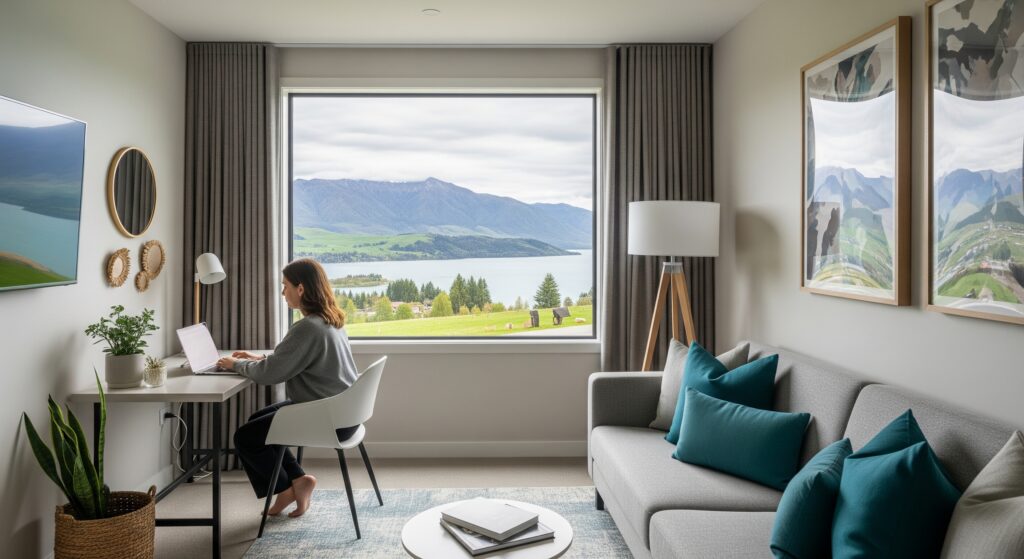
- A Spacious Desk: Provide a desk large enough to spread out a laptop, monitor, and documents.
- A Comfortable Chair: Choose an ergonomic office chair or a high-quality dining chair that won’t cause fatigue during long sitting sessions. Standard dining chairs are often inadequate for business use.
- Power Outlets: Make sure there are enough outlets or power strips near the desk so guests never have trouble charging their devices.
- Lighting: A desk lamp that brightly illuminates the workspace can boost productivity.
3. A Quiet, Focus-Friendly Environment
An environment conducive to concentration is extremely important for remote workers.
- Noise Reduction: Consider thick curtains or double-glazed windows to block outside noise (traffic, voices, etc.). Rugs and sound-absorbing materials can also help reduce indoor echo.
- A Sense of Privacy: Ensure the space feels private, so guests can work without worrying about other guests or residents.
- House Rules: Clearly communicate house rules about late-night noise and encourage guests to keep things quiet.
4. Well-Equipped Facilities and Amenities
Guests want facilities and amenities that support a comfortable stay, both for work and daily living.
- Kitchen Facilities: For guests staying long-term or planning to cook, provide basic cookware, dishes, a microwave, and a rice cooker—plus extras like a coffee maker or electric kettle, which are always appreciated.
- Washer/Dryer: Essential for long-term guests. Be sure to provide detergent and fabric softener too.
- A Printer: A printer for basic printing needs helps guests handle unexpected documents, boosting satisfaction for business use.
- Cleaning Supplies: Keep basic cleaning tools on hand (a vacuum, floor wipes, disinfecting wipes, etc.) so long-term guests can tidy up themselves.
- Stocked Consumables: Always keep an ample supply of consumables like toilet paper, tissues, and soap.
5. The Appeal of Location and Surrounding Area
Guests also have strong needs for downtime and refreshment beyond work hours.
- Surroundings: Nearby greenery, a quiet park, or spots for walking and jogging all add appeal as refreshing elements.
- Accessibility: Good access to a train station and proximity to convenience stores or supermarkets add to everyday convenience.
- Unique Experiences: Share information about local cafes, restaurants, and community events, and propose refreshing activities guests can enjoy between work sessions.
Concrete Strategies for Capturing Remote Work Demand
Now let’s look at concrete strategies for capturing remote work demand, based on the conditions above.
1. Optimizing Your Listing
- Include Keywords in the Title and Description: Incorporate keywords like “ideal for workations,” “perfect for remote work,” “high-speed Wi-Fi included,” and “focus-friendly environment” into your title and description to improve search visibility.
- Dedicated Photos and Videos: Post photos highlighting the desk area, Wi-Fi environment, and the room’s quiet atmosphere. Lifestyle-style images showing a guest actually working can also be highly effective.
- Clear Facility Listings: Clearly list details that matter to remote workers, such as Wi-Fi speed, desk dimensions, chair type, and whether a monitor is available.
2. Offering Specialized Plans
- Long-Term Stay Discounts: Set up discount plans for one-week, two-week, or one-month stays.
- Day-Use Plans: Consider offering daytime rentals without an overnight stay (essentially operating as a rental workspace). This can help fill weekday vacancies.
- Workation Packages: Partner with nearby co-working spaces or cafes, or bundle in local activities, to create packages specifically designed for workation travelers.
3. Promoting to Your Target Audience
- Leverage Social Media: Use hashtags like “#workation,” “#remotework,” and “#workandtravel” on Instagram and X to showcase your property’s appeal.
- List on Remote-Work-Focused Sites: Reach out to websites and media outlets that feature accommodations geared toward workations and remote work.
- Approach Companies: Consider pitching your property to companies that encourage remote work or run employee training programs, positioning it as an employee benefit facility or business travel base.
4. Providing Guest Information and Support
- A Workation Guide: Create a guide featuring local co-working spaces, focus-friendly cafes, refreshing walking routes, and recommended lunch spots—useful info that remote workers will appreciate.
- Emergency Support: Establish a clear support system that can quickly resolve issues like Wi-Fi outages or equipment failures that could disrupt a guest’s work.
Operational Tips for Succeeding with Remote-Work-Friendly Minpaku
Even after you’ve captured remote work demand, there are tips for maintaining guest satisfaction and running a stable operation.
1. Impeccable Cleaning and Hygiene
Since the space serves as both a workplace and lodging, cleanliness is extremely important. Pay special attention to cleaning the desk area and bathroom/kitchen thoroughly—mold and dust can seriously undermine concentration.
2. Regular Equipment Checks and Maintenance
Regularly check and maintain equipment essential to remote work—Wi-Fi speed, the condition of the desk and chair, printer ink levels, and more—to ensure everything is always in good working order.
3. Acting on Guest Feedback
Feedback from remote-working guests offers valuable hints for improvement. If you receive specific requests—like “I wish there was better lighting for web meetings” or “A monitor would be great”—use them to guide future equipment investments.
4. Flexible Check-In/Check-Out
For long-term stays and similar situations, offering flexible check-in/check-out times based on guest needs can significantly boost satisfaction.
5. Consideration for Neighbors
As long-term stays increase, maintaining good relationships with neighbors becomes even more important. Enforce house rules around noise and trash disposal, and ask guests for their cooperation.
Contact Stay Buddy for Minpaku Marketing Strategy and Operations Consulting
“I want to capture remote work demand with my small-capacity minpaku, but I don’t know where to start.”
“I’d like specific advice on setting up high-speed Wi-Fi and a comfortable workspace.”
“I want to learn about marketing strategies and promotional methods aimed at remote workers.”
“I want to boost occupancy and maximize revenue for my minpaku.”
If you have concerns like these about minpaku marketing strategy or operations, we’re here to help.
At Stay Buddy, our expert team offers comprehensive support for your minpaku operation—from optimizing your property for remote work demand and selecting the right equipment and furnishings, to crafting effective listings, building marketing strategies, and sharing operational know-how for earning glowing guest reviews.
Let’s work together to bring a new form of minpaku to life—one that blends “working” and “staying” seamlessly. Feel free to reach out to us today.