Leave your vacation rental management to us
Free Online ConsultationIf you run a vacation rental, you may occasionally receive unexpected messages from guests during certain seasons or times of year. One of the most troubling reports a host can receive is, “There are ants in the room!” Even a single ant can cause significant discomfort for guests and undermine their sense of cleanliness and comfort.
“Wait, ants?! Where did they even come from…”
“I need to deal with this quickly, but what should I do?”
“What if the guest leaves a bad review because of this…”
Many hosts have probably had these exact thoughts. An ant infestation can seriously affect how clean your property appears to guests, potentially harming your ratings and reviews. However, with the right knowledge and a quick response, you can minimize the damage and protect guest satisfaction.
In this article, we’ll walk you through 5 effective solutions hosts should use when ants appear in their vacation rental. From prevention strategies to emergency response and long-term solutions, we’ve covered everything you need. Please read through to the end to make the most of this guide for your property management.
Why Do Ants Appear in Vacation Rentals? Understanding the Causes
Understanding why ants show up in the first place is the first step toward taking effective action. Given the nature of short-term rentals, there are several factors that can attract ants.
1. Leftover Food and Drink Spills
When guests leave food or drinks on tables or floors, or fail to wipe up spills properly, it creates a powerful attractant for ants. Sugary and oily foods, in particular, are irresistible to them. Areas that are often overlooked during cleaning—like around the sink or in the gaps around trash cans—also require special attention.
2. Improper Trash Management
Leaving garbage bags containing food waste indoors for extended periods, or using trash cans that aren’t properly sealed, allows ants to detect the scent and make their way inside. This is especially true in summer, when garbage decomposes quickly and attracts not just ants but other pests as well.
3. Gaps and Cracks in the Building
Ants can squeeze through incredibly small openings. Gaps around window frames, doors, small cracks in walls, and spaces around pipes all offer countless entry points for ants. Older buildings and wooden structures in particular tend to have more of these vulnerabilities.
4. Entry from Plants or the Garden
If your property is a standalone house with a garden, or is located near trees or a park, ants may enter from these outdoor areas. If you keep houseplants indoors, ants can also enter through the bottom of the pots.
5. Damp or Moist Areas
Ants also need moisture to survive. Areas with water leaks, condensation-prone window frames, and the area around bathroom drains all provide comfortable environments for ants to thrive.
5 Solutions for When Ants Appear in Your Vacation Rental
So what should you actually do if ants do show up? Here are five practical solutions tailored to different situations.
1. Identify the Source and Clean Thoroughly
Once you spot ants, first follow the ant trail to identify where they’re coming from and what they’re heading toward, so you can pinpoint the source and entry point.
- Identify the entry point: Determine where the ants are coming in—gaps in walls, window frames, drains, electrical conduit holes, and similar spots.
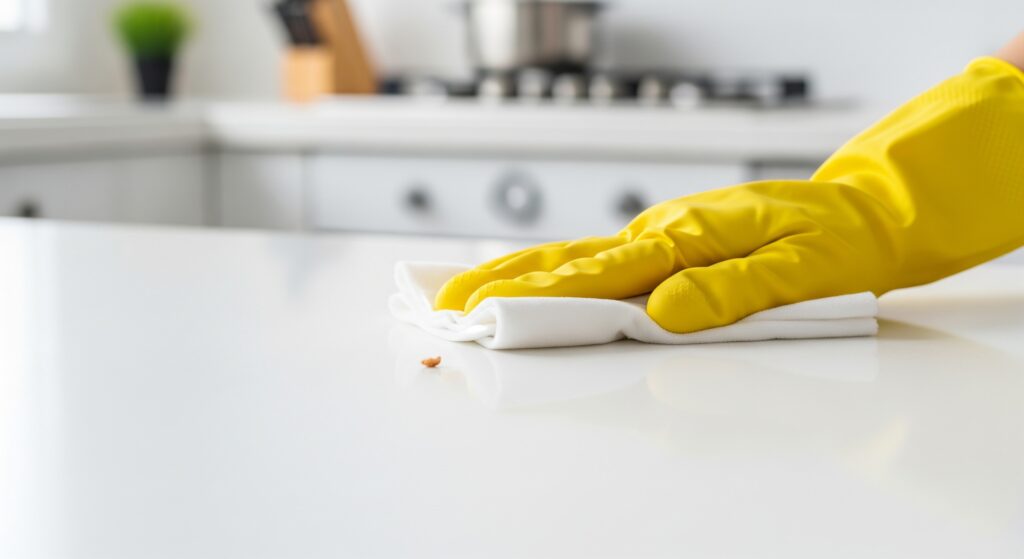
- Clean the ant trail: Ants leave behind pheromone trails to guide others to the same path. To eliminate this scent, thoroughly wipe the area with a cloth soaked in alcohol spray or detergent. This prevents other ants from following the same route.
- Remove food debris: Check every corner of the room for food scraps or spilled drinks that may be attracting the ants, and clean thoroughly. Don’t forget to check the sink drain and the back of shelves as well.
- Dispose of trash properly: If the trash can is the source, immediately seal the bag, take it outside, and wash out the trash can itself.
2. Use Store-Bought Insecticides and Ant Bait
To temporarily eliminate visible ants and work toward a more permanent solution, use commercially available pest control products effectively.
- Direct-spray insecticide: Effective for immediately eliminating a visible line of ants. Spray directly onto the ant trail or into wall gaps where they’re passing through.
- Caution: Avoid using this while guests are staying at the property. The lingering smell or chemical residue could affect guests who are sensitive to such substances. Use this method during cleaning or between guest stays.
- Ant bait traps: This is the most effective long-term solution. Ants carry the bait back to the colony, ultimately eliminating the entire nest.
- Placement: Set bait traps along the ants’ entry points or in areas where they tend to gather. Place them out of guests’ reach or in inconspicuous locations.
- Types: Available in gel or solid form. It can take anywhere from a few days to a week to see results, so don’t give up if you don’t notice an immediate effect.
- Safety considerations: If children or pets may be present, choose enclosed bait station types to prevent accidental ingestion.
3. Seal Off Entry Points
Once you’ve identified where the ants are entering, it’s crucial to physically seal off those gaps.
- Sealant or caulk: Use sealant or caulk to fill gaps around window frames, small wall cracks, and spaces around pipes where ants might be entering.
- Fine-mesh screens: Check window and door screens for tears or gaps, and repair or replace them with finer-mesh screens if needed.
- Door gap prevention: If there’s a gap under a door, install a door sweep or draft-blocking strip to prevent entry.
- Vent covers: If ants are entering through vents, installing a fine-mesh insect screen can also help.
4. Use Natural Repellents for Prevention
Preventing ants from approaching in the first place is also important. These methods are great if you want to avoid chemicals or maintain ongoing prevention.
- Peppermint oil: Ants dislike the smell of peppermint. Spray diluted peppermint oil along ant trails and entry points, or soak a cotton ball in it and place it nearby for effective results.
- Vinegar: Vinegar water also erases ant pheromone trails and helps keep ants away.
- Coffee grounds: Sprinkling damp coffee grounds along entry points makes it harder for ants to approach.
- Chili pepper or cinnamon: The strong scent that ants dislike makes sprinkling these powders a useful temporary deterrent.
- Commercial repellents: Place sprays or sheets containing ant-repelling ingredients (some with natural compounds) near entry points.
These methods can be used regularly as a preventive measure to keep ants away, as well as to eliminate their pheromone trails.
5. Consider Hiring a Professional Exterminator
If the ant infestation is severe, or if self-managed methods and store-bought products aren’t resolving the issue, don’t hesitate to consult a professional pest control company.
- Identifying the root cause: Professionals are experts at identifying the ant species and pinpointing the exact location of the nest and entry points.
- Powerful extermination: They use industrial-grade products and specialized techniques not available to consumers, efficiently eliminating the entire colony.
- Recurrence prevention: Beyond extermination, many companies also offer advice and measures (such as pest-proofing construction work) to prevent future infestations.
- Saving time and effort: Rather than spending your own time addressing the issue, hiring a professional allows for a swift and reliable resolution.
For high-occupancy rental properties in particular, where ant issues need to be resolved quickly, calling in the professionals is a highly effective option.
Preventive Measures to Keep Ants Out of Your Vacation Rental
Preventing ants before they appear is far more important than dealing with them afterward. Make these preventive habits part of your regular routine.
1. Manage Food and Drinks Carefully
- Store food in sealed containers: Sugar, sweets, bread, grains, and other ant-favorite foods should always be stored in airtight containers.
- Dispose of leftover drinks immediately: Empty and rinse out cups and dishes with leftover drinks right away.
- Wipe down tables and kitchen surfaces: After meals or cooking, thoroughly wipe down tables and kitchen counters to remove any food crumbs or oily residue.
2. Manage Trash Properly
- Use sealed trash cans: Choose trash cans with tightly fitting lids to keep out pests.
- Dispose of food waste right away: Food waste is especially attractive to ants, so seal it in plastic bags and take it out to the designated collection area as soon as possible. Be sure to clearly communicate trash disposal rules to guests staying for extended periods.
3. Regularly Inspect and Repair Building Gaps
- Seasonal inspections: Check window frames, door gaps, wall cracks, and areas around pipes each season for potential ant entry points.
- Repair early: Seal even small gaps immediately with sealant or putty as soon as you notice them.
4. Eliminate Moisture and Keep Areas Dry
- Ensure proper ventilation: Run the exhaust fan or open windows after using the bathroom or cooking to remove excess moisture from the room.
- Repair leaks promptly: Regularly check faucets and pipes for leaks, and repair them immediately if found.
- Use a dehumidifier: During particularly humid seasons, use a dehumidifier to maintain appropriate indoor humidity levels.
5. Manage Houseplants and Their Placement
If you keep houseplants, ants can sometimes enter through the bottom of the pots.
- Check drainage holes: Lining the drainage holes with mesh netting can help prevent ants from entering.
- Clean drip trays: Check whether water is pooling in the plant’s drip tray, and clean it regularly.
- Regular checks: Periodically inspect the area around your plants for any signs of ants.
Conclusion
An ant infestation can be a real headache for hosts, but with the right response strategies and preventive measures, you can minimize the risk and continue offering guests a comfortable stay.
When ants do appear, remember these steps:
- Identify the source and clean thoroughly
- Use store-bought insecticides and ant bait
- Seal off entry points
- Use natural repellents for prevention
- Consider hiring a professional exterminator
Taking these steps quickly is crucial. In particular, using ant bait for a thorough extermination and sealing off entry points are both essential for preventing future infestations.
By consistently applying preventive measures—careful food and drink management, proper trash disposal, regular building inspections and early repairs, moisture control, and houseplant care—you can prevent ant infestations from happening in the first place.
How you handle ant issues reflects both your property’s overall cleanliness and your attentiveness as a host. By always keeping the guest experience in mind and providing a comfortable, hygienic environment, you can earn great reviews and build a stable, successful vacation rental business.
Contact Stay Buddy for Pest Control and Property Management Support
“I’m struggling with ant problems at my vacation rental.”
“I’d like advice on pest control in general.”
“I want to revamp my cleaning process to achieve more thorough hygiene standards.”
“I want to learn management techniques that reduce guest complaints and boost satisfaction.”
If you’re facing challenges like these related to pest control or property management, we’re here to help.
At Stay Buddy Inc., our specialized team offers comprehensive support for your vacation rental operations—from developing hygiene management plans (including pest control), providing clear instructions to cleaning staff, and responding quickly to issues as they arise, to sharing proven management know-how that boosts guest satisfaction.
Let’s work together to create a clean, comfortable guest experience that drives stable, long-term revenue for your rental business. Feel free to reach out to us anytime.