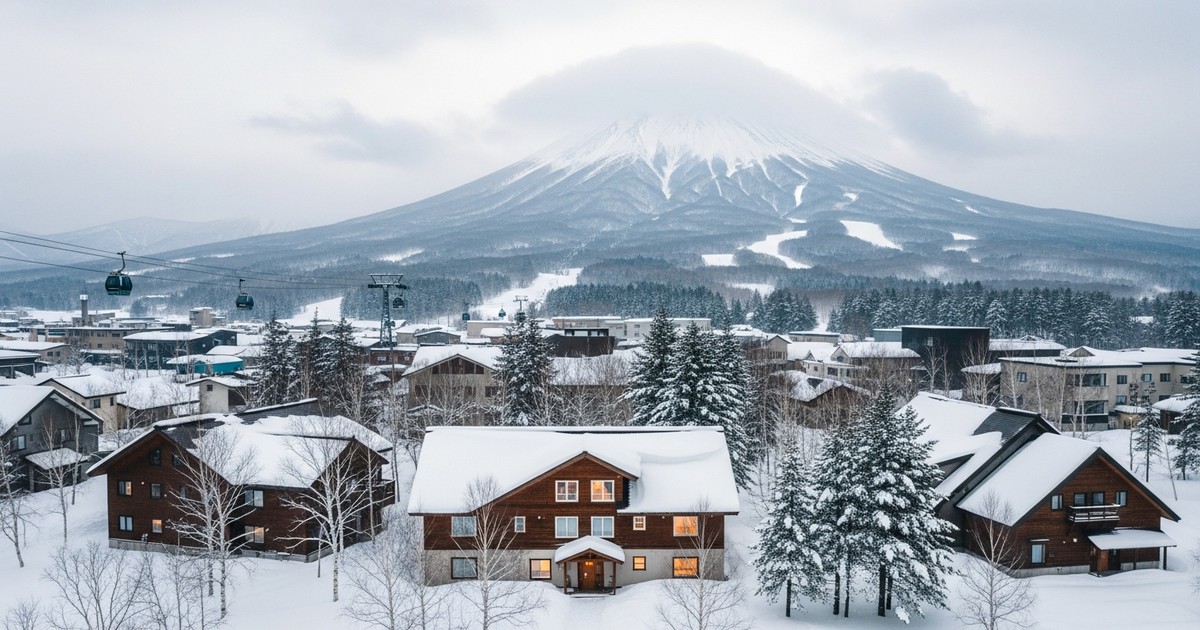
As one of Hokkaido’s premier ski resort destinations, Niseko Town draws large numbers of visitors from Japan and abroad throughout the year. Thanks to strong inbound demand and a traveler base with high spending power, the area offers an environment well-suited to maximizing vacation rental income in Niseko—one of the key reasons so many investors and property owners have their eyes on this market.
That said, launching a vacation rental here comes with its share of hurdles, including regulatory compliance, neighbor relations, and managing the risks of seasonal fluctuation. This article walks through everything from demand data to revenue projections by property type, along with a pre-launch checklist.
Whether you’re considering starting a vacation rental business in Niseko Town or you already own a property and are looking to make it profitable, we’ve put together practical, actionable information to help you move forward.
Area Overview and Demand Data Shaping Vacation Rental Revenue in Niseko Town
Niseko Town is home to a cluster of ski resorts, including Niseko Annupuri, and attracts a steady stream of international visitors each season chasing some of the world’s best powder snow. According to data from the Hokkaido Tourism Organization, the broader Niseko area—including Kutchan Town and Niseko Town—sees over 3 million visitors annually, with an inbound tourist ratio that ranks among the highest in Japan. Because so many long-stay travelers come from Australia, Europe, North America, and other parts of Asia, nightly rates tend to be considerably higher than in most other regions—arguably the area’s defining characteristic.
During peak season (late December through early March), it’s not unusual for whole-house rentals to command 50,000 to over 200,000 yen per night, making vacation rental-style accommodations especially well-regarded here. Demand does taper off during the off-season (May through October), though summer outdoor activities like rafting, hiking, and cycling have been gradually driving more year-round bookings. Because accommodation supply is limited during peak periods, reservations often fill up months in advance—putting the supply-demand balance firmly in favor of vacation rental owners.
Revenue Projections by Property Type for Niseko Vacation Rentals
Vacation rental income in Niseko Town varies significantly depending on property type. Since initial investment size, expected occupancy rate, and pricing all differ by property, it’s important to run revenue simulations tailored to the type of property you own or plan to acquire. Below, we break things down across three categories: condominiums, detached houses, and traditional farmhouses.
Because land and construction costs in Niseko Town rank among the highest in Hokkaido, setting a realistic payback period for your initial investment is foundational to any long-term operating plan. The figures below are general guidelines only and will vary based on a property’s location, age, and level of amenities.
Condominium-Type Properties
The Niseko area has seen extensive development of ski-resort condominiums, many of which are owned and operated unit by unit. For 1LDK to 2LDK layouts, peak-season nightly rates typically range from 30,000 to 80,000 yen. Assuming an occupancy rate of 70–85% during the three-to-four-month winter peak, combined with modest off-season bookings, annual occupancy often settles around 30–45%. Annual revenue tends to fall in the 2 million to 4 million yen range, with net income after management fees, cleaning costs, and platform commissions (roughly 15–20% of sales) typically landing between 1.5 million and 2.8 million yen. Initial investment—excluding property acquisition costs—for interior finishing, furniture, and appliances usually runs 2 million to 4 million yen.
Keep in mind that some condominium management associations prohibit vacation rental operations altogether, so it’s essential to review the building’s management regulations before acquiring a unit. The overall condition of common areas also has a direct impact on guest reviews, making cleanliness and upkeep in shared spaces an important point of differentiation.
Detached House / Whole-House Rental Type
Whole-house detached rentals see the highest demand in Niseko Town. Targeting groups of three to six people or families, these properties can command nightly rates of 50,000 to over 200,000 yen. Some properties reach 80–90% occupancy during the winter peak, generating the bulk of their annual revenue in just a few months. Assuming an annual occupancy rate of 40–55%, total yearly revenue can reach 5 million to 12 million yen. However, initial investment—including property acquisition, renovation, and equipment—often exceeds 20 million to 50 million yen, making a realistic payback timeline closer to 5–10 years.
Detached houses offer better guest privacy, making them well-suited to long-stay guests and larger groups. That said, running costs for building maintenance, snow removal, and heating tend to be higher than for condominiums, so careful expense planning is essential.
Traditional Farmhouse / Renovated Property Type
Scattered throughout the area surrounding Niseko Town are traditional farmhouse-style buildings, and some owners have chosen to renovate and brand these properties around a distinctive aesthetic. Renovation costs vary widely depending on the property’s condition, but many owners invest 2 million to 8 million yen to create a differentiated offering. Nightly rates are comparable to detached houses, but by emphasizing an “authentic, local experience,” these properties often earn strong reviews and build repeat guest loyalty. Annual revenue realistically falls in the 2 million to 6 million yen range, depending on property size.
Farmhouse-style properties often face challenges around insulation and aging infrastructure, and given Niseko Town’s cold climate, investing in efficient winter heating and freeze prevention is essential. While starting costs can be lower, owners should budget carefully for the risk of unexpectedly high maintenance and repair expenses.
Understanding the Regulatory Framework for Launching a Vacation Rental in Niseko Town
There are three main paths to operating a vacation rental in Japan: registration under the Private Lodging Business Act (the “Minpaku Law”), a license under the Hotel Business Act (Ryokan Gyo Law), and the Special Zone Vacation Rental system, which applies only in designated areas. The Minpaku Law caps operating days at 180 per year and involves a relatively simple registration process, but that day limit means obtaining a license under the Hotel Business Act may be the better route for maximizing revenue in certain cases. The Hotel Business Act comes with stricter facility and equipment requirements, but has no cap on operating days.
Whether local ordinances apply to your property, and whether certain zoning districts allow for vacation rental applications, can vary depending on the municipality. We strongly recommend confirming directly with Niseko Town Hall or the relevant Hokkaido prefectural office which licensing category applies to your property and whether any additional local restrictions apply. Choosing the right operating format requires case-by-case judgment, and consulting with a specialist such as a licensed administrative scrivener (gyoseishoshi) can help the application process go more smoothly.
Pre-Launch Checklist and Key Considerations for Opening a Vacation Rental in Niseko Town
Before launching, key steps include confirming the property’s zoning classification (properties in certain low-rise residential zones may not be eligible for a Hotel Business Act license) and reviewing any applicable management regulations. Next, you’ll need to complete the appropriate license application or registration based on your chosen operating format, and confirm that fire safety equipment (smoke detectors, fire extinguishers, etc.) meets required standards. As a rough guide to initial costs, budget for registration/application fees (100,000–200,000 yen if outsourced to an administrative scrivener), fire safety equipment installation (50,000–200,000 yen), and furniture, appliances, linens, and other amenities (500,000–2,000,000 yen).
Neighbor relations are another critical piece of pre-launch preparation. This is especially true for whole-house rentals, where late-night noise and parking issues are common sources of complaints. Creating clear house rules in both Japanese and English, and making sure guests are walked through them at check-in, can prevent many potential problems before they start. Introducing yourself to neighbors in advance and sharing emergency contact information also go a long way toward ensuring smooth, stable operations over the long term.
Common Risks During Operation and Strategies for Sustained Occupancy
The single biggest risk facing vacation rental operators in Niseko Town is seasonal fluctuation. Demand differs dramatically between winter and summer, so annual financial planning needs to be built around a “seasonal revenue model” that concentrates earnings during peak periods. To fill off-season vacancies, consider bundling packages around summer activities like golf, rafting, and cycling, or introducing mid-to-long-stay plans. Listing on multiple platforms—such as Airbnb and Booking.com—and using dynamic pricing tools can also help boost overall occupancy rates.
To guard against cancellation risk, consider setting a strict cancellation policy and looking into travel or vacation rental insurance. Given Niseko’s high proportion of inbound guests, having a multilingual emergency response system in place is especially important for handling any issues that arise. If you don’t have an on-site manager, partnering with a vacation rental management service to handle check-ins, cleaning, and complaint resolution can help you maintain stable operations even if you live far from the property.
Get a Free Consultation with Stay Buddy About Vacation Rental Revenue in Niseko Town
Stay Buddy Co., Ltd. has a dedicated team that supports everything from vacation rental and hotel business licensing to day-to-day operational management. In an area like Niseko Town, where seasonal swings are dramatic and inbound guest support is essential, handling pricing, multilingual communication, and cleaning logistics all on your own is no small task. By tapping into Stay Buddy’s expertise, you can build a solid foundation for stable revenue right from the start.
Whether you’re unsure which operating format best suits your property, want a detailed cost estimate, or would like to hand off operations entirely, we’ll listen to your specific situation and propose the plan that fits best. We’re also happy to consult with those who don’t yet own a property—including advising on how to think about property selection from the ground up.
Your first consultation with us is completely free. If you’re ready to take the next step toward generating vacation rental income in Niseko Town, please don’t hesitate to reach out to Stay Buddy. A dedicated representative will be glad to assist you.