Leave your vacation rental management to us
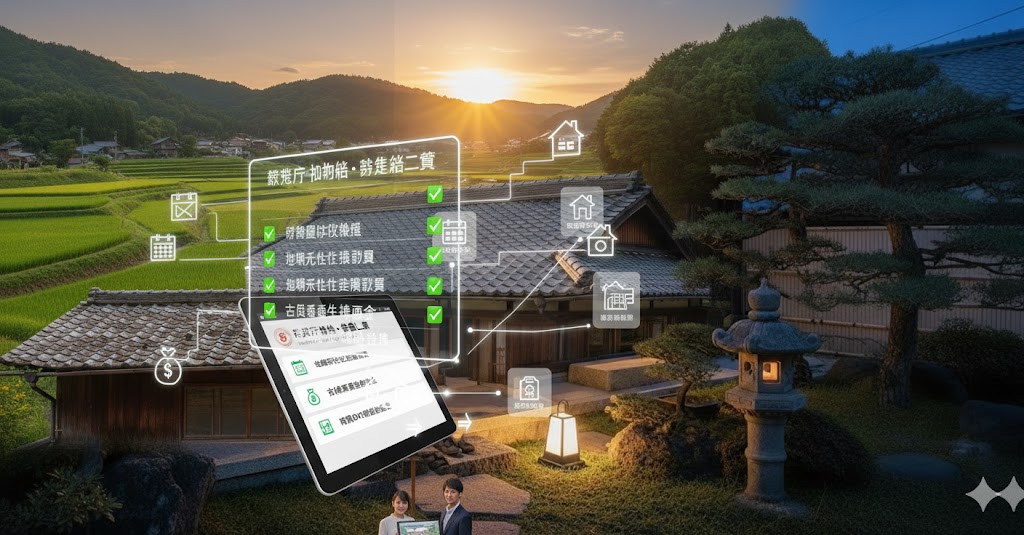
Completely Free Online ConsultationA Complete List of Subsidies for Reviving Vacant Homes
Vacant homes continue to increase across Japan. Simply owning one means paying property taxes and maintenance costs, and if left unattended, it not only loses value but can also threaten the local landscape and safety.
“I can’t just leave it like this. I want to make use of it somehow, but renovation costs are enormous…”
For vacant home owners facing this urgent dilemma, the non-repayable “subsidy” programs offered by national and local governments can truly be a lifesaver.
Let’s start with the conclusion of this article.
From demolition to renovation to business use (such as vacation rentals), there is a surprisingly wide variety of subsidies available for vacant homes. However, this information can be hard to find, and the application procedures are complex.
In this article, we’ll provide a comprehensive guide covering the types of subsidies that can powerfully support your vacant home revitalization project, smart ways to find them, and the essential precautions you must take to avoid application failures.
Why “Not Knowing” About Subsidies Costs You: The Reality of Vacant Home Revitalization
Reviving a vacant home—especially one that has aged significantly—costs far more than you might expect.
- Demolition costs: Even for wooden houses, this typically exceeds ¥1 million.
- Renovation costs: Seismic reinforcement, insulation upgrades, and complete plumbing/kitchen replacements can easily run from several million to over ¥10 million yen.
Covering such expenses entirely out of pocket is no easy feat. However, by taking advantage of subsidies, you can reduce this burden by hundreds of thousands to millions of yen. In other words, your knowledge of subsidies fundamentally determines the feasibility of your project—and ultimately, its profitability.
[By Purpose] Main Types of Subsidies for Vacant Home Revitalization
Subsidies come in various forms depending on their purpose. Here, we’ll introduce them by their main categories.
(*Note: Subsidy programs may change each fiscal year, end early once budget limits are reached, and vary in implementation by local government. Always check the official website for the latest information.)
Category 1: Subsidies for “Demolition and Removal” of Vacant Homes
- Purpose: To promote the demolition of “specified vacant homes” that pose risks such as collapse and negatively impact the surrounding environment.
- Eligible expenses: Demolition costs for severely deteriorated homes that are difficult to repurpose.
- Approximate subsidy amount: Roughly 1/2 to 4/5 of demolition costs, with an upper limit of approximately several hundred thousand to ¥1 million yen.
Category 2: Subsidies for “Renovation” of Vacant Homes
This is the most abundant and accessible category of subsidy. It’s further divided based on the purpose of use.
2-1. Renovation for Residential Use
- Purpose: To revitalize vacant homes as housing for relocating individuals, families raising children, and others.
- Eligible expenses: Interior and exterior renovation costs, seismic retrofitting costs, energy-efficiency renovation costs (insulation upgrades, high-efficiency water heater installation, etc.), barrier-free renovation costs, and more.
- Approximate subsidy amount: Roughly 1/2 to 2/3 of renovation costs, with an upper limit of approximately several hundred thousand to several million yen.
2-2. Renovation for Business Use (Vacation Rentals, Shops, etc.)
- Purpose: To revitalize vacant homes as bases for businesses that contribute to regional revitalization, such as lodging facilities (vacation rentals/inns), cafes, shops, and coworking spaces.
- Eligible expenses: In addition to the residential renovation items listed above, costs for equipment necessary for the business may also be covered in some cases.
- Approximate subsidy amount: Roughly 1/2 to 2/3 of renovation costs, with an upper limit often set in the **several-million-yen range (e.g., ¥2 million to ¥10 million)**—typically higher than subsidies for residential use.
2-3. Large-Scale Renovation Subsidies Led by the National Government
- Example: Long-Term Quality Housing Renovation Promotion Program
- Purpose: To support improving the performance of existing homes (earthquake resistance, energy efficiency, etc.) and renovating them into “long-term quality housing” that can be used well for many years.
- Eligible expenses: Performance-improving renovation work that meets certain standards.
- Approximate subsidy amount: Up to several million yen, depending on the scope of work.
- Example: Regional Timber Green Housing Program
- Purpose: To support the construction of wooden homes that use local timber and excel in energy efficiency and other performance metrics.
- Eligible expenses: New construction or renovation of eligible wooden homes by certified local small and medium-sized construction firms.
- Approximate subsidy amount: Up to around ¥1-2 million yen.
Category 3: Subsidies for “Clearing Out Belongings and Cleaning” Vacant Homes
- Purpose: To support the removal and disposal of large amounts of household items and belongings (leftover items) inside vacant homes.
- Eligible expenses: Costs for removing, transporting, and disposing of household items.
- Approximate subsidy amount: Roughly 1/2 of the cost, with an upper limit of tens of thousands to several hundred thousand yen. Often bundled together with renovation subsidies.
Category 4: Subsidies for “Promoting Relocation and Settlement”
- Purpose: To support urban residents who purchase or rent vacant homes in rural areas and settle there.
- Eligible expenses: Purchase costs for vacant homes, renovation costs, moving costs, and more.
- Approximate subsidy amount: Several hundred thousand to over ¥1 million yen. Many local governments offer more generous subsidies for families raising children compared to single individuals.
[Practical Guide] 3 Ways to Find the Right Subsidy for You
1. Thoroughly Research Local Government Websites
This is the most basic and important method.
- Search keywords: Search for terms like “[City/Town Name] vacant home subsidy” or “[Prefecture Name] vacant home renovation subsidy.”
- Departments to check: Multiple departments may be involved, including urban planning, building guidance, regional development, and tourism. It’s also effective to search the local government’s website homepage using keywords like “vacant home countermeasures” or “relocation and settlement.”
2. Use National Subsidy Search Websites
These are useful for finding information that spans multiple government ministries.
- Example: The Housing Renovation Support Program Search Site (operated by the Housing Renovation Promotion Council) lets you search for housing renovation subsidy programs offered by local governments across Japan, by region and type of support.
3. Consult with Experts
If you’re not confident in gathering and interpreting information on your own, getting professional help is the most reliable approach.
- Architects and renovation companies: When commissioning renovation work, ask them about any subsidies you might be able to use.
- Administrative scriveners (gyoseishoshi): Some specialize in handling subsidy application procedures on your behalf.
- Vacation rental management companies and similar experts: If you want to use a vacant home for a specific business purpose (such as a vacation rental), consultants and operators well-versed in that field are likely to have deep knowledge of relevant subsidy information.
[Most Important] 4 Precautions to Avoid Failure When Applying for Subsidies
1. Always Apply Before “Signing Contracts or Starting Work”!
This is the absolute golden rule of subsidy applications. If you sign a construction contract or begin work before the subsidy has been officially approved, that work becomes ineligible for the subsidy. All planning must be built around the subsidy from the start—prioritizing the application and approval process above all else.
2. Always Keep Budgets and Timelines in Mind
Subsidies always come with an annual “budget cap” and a defined “application period.” It’s not uncommon for popular subsidies to reach their budget limit and close applications shortly after opening. Staying up to date on the latest information and applying swiftly as soon as you’re prepared is crucial.
3. Don’t Underestimate the Complex Paperwork and Procedures
Subsidy applications require numerous specialized documents—business plans, construction quotes, drawings, tax payment certificates, and more—and the procedures can be complicated. Applications are frequently rejected due to incomplete documentation. If you’re uncertain about applying on your own, don’t hesitate to seek support from a professional (such as an administrative scrivener).
4. Check Whether Subsidies Can Be “Combined”
National subsidies, prefectural subsidies, and municipal subsidies can sometimes be combined and used together. Be sure to carefully read the guidelines for each subsidy program and check with the relevant department about whether combining them is possible and what precautions apply when doing so.
Conclusion: Subsidies Are a “Battle of Information”—Use Them Wisely to Realize Your Dream
Subsidies for vacant home revitalization are truly information known only to those in the know. No one will tell you about them if you just wait around. You have to actively seek out information, correctly understand the programs, and apply through the proper steps. That effort will bring your dream of utilizing your vacant home dramatically closer to reality.
Why not make wise use of this valuable, non-repayable funding to transform your vacant home into new value that brightens your community?
Let Our Professionals Build the Optimal “Subsidy Strategy” for You
“There are so many types of subsidies—I don’t know which ones I can use…”
“Preparing application documents and dealing with government offices seems like such a hassle…”
“I want to combine subsidies and loans to create the most advantageous funding plan”
Please feel free to consult with us about these concerns.
We at Stay Buddy Inc. are more than just a vacation rental management company. We are real estate utilization professionals who unlock the full potential of dormant properties and transform them into revenue-generating “businesses.”
We will:
- ①Research national and local government subsidy programs best suited to your vacant home utilization plan (vacation rental, leasing, or other business) and propose the most advantageous combination.
- ②Fully support the preparation of compelling business plans and application documents—together with our partner administrative scriveners—to maximize your chances of approval.
- ③Work with you to design the optimal funding strategy—not just through subsidies, but also incorporating financing options such as loans from the Japan Finance Corporation—to minimize your out-of-pocket costs.
Maximizing the “tailwind” that subsidies provide, and guiding your vacant home revitalization project to success.
That is our mission. Leave the tedious research and paperwork to us professionals, and focus your energy on realizing your business dream. We look forward to hearing from you.