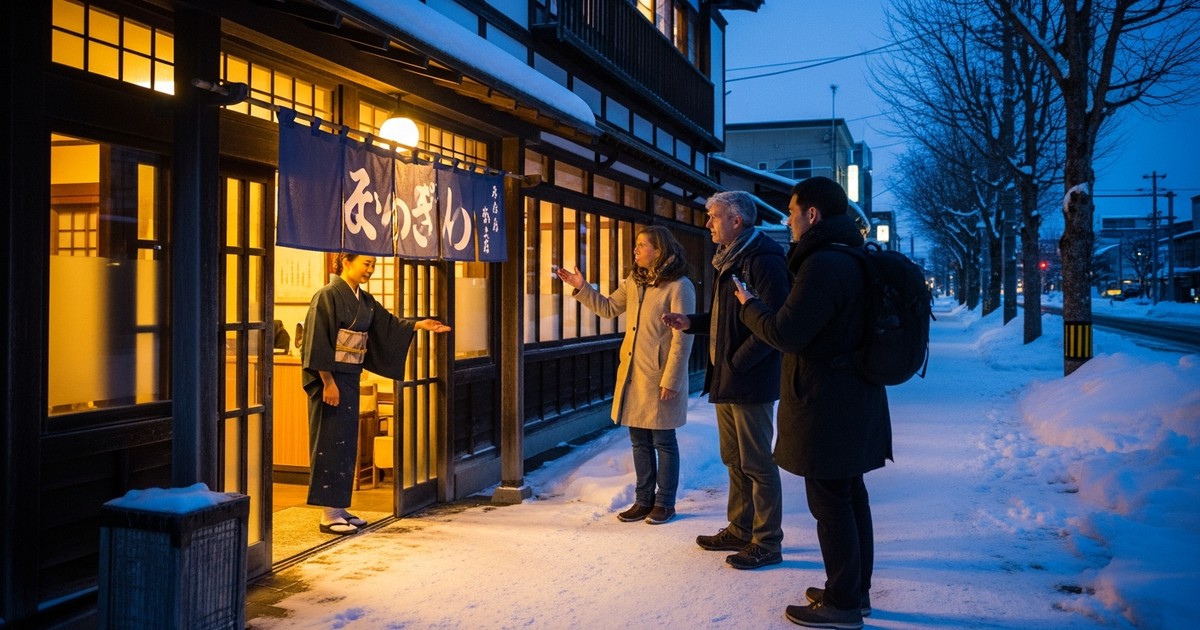
More and more people are looking to obtain a hotel business (ryokan gyo) license in Asahikawa to capture growing inbound demand. As Hokkaido’s second-largest city and the gateway to Asahiyama Zoo and Daisetsuzan National Park, Asahikawa welcomes over five million tourists annually. In recent years, foreign visitors have increasingly spread out beyond Sapporo, Otaru, and Niseko, with Asahikawa now drawing more attention as well. Obtaining a simple lodging (kan’i shukusho) license under the Hotel Business Act opens the door to legally and stably operating an accommodation business in this growing market.
This article systematically covers everything from the basics of hotel business regulations in Asahikawa to the steps for opening a simple lodging facility and concrete inbound marketing strategies. Whether you’re just starting to consider a lodging business in Asahikawa or already own a property and are exploring how to use it, you’ll find valuable insights here.
The Current State of Asahikawa’s Hotel Business and Inbound Market
Before the pandemic, Asahikawa recorded around three million overnight stays annually, with roughly 150,000 of those being foreign visitors. Travelers from Taiwan, China, South Korea, Thailand, and other parts of Asia made up the primary customer base, drawn mainly by winter snowscapes and summer trekking in the Daisetsuzan mountains. Asahikawa boasts excellent accessibility: about 1 hour and 25 minutes from New Chitose Airport via JR limited express, plus direct flights to Asahikawa Airport from Tokyo and Nagoya, along with a track record of international charter flights.
On the other hand, accommodation in Asahikawa is dominated by business hotels, with limited supply of the whole-house rentals and Japanese-style simple lodgings that foreign travelers tend to prefer. Searching “Asahikawa” on Booking.com or Airbnb reveals far fewer whole-house listings compared to Sapporo—supply simply hasn’t kept pace with demand. This supply-demand gap represents the biggest business opportunity for those looking to obtain a hotel business license and open an accommodation facility in Asahikawa.
The Basics of Simple Lodging Operations Under the Hotel Business Act
Business Categories Under the Hotel Business Act and the Position of Simple Lodgings
The Hotel Business Act defines three categories of operation: ryokan/hotel business, simple lodging business, and boarding house business. Of these, simple lodging business applies to facilities structured for shared use by multiple guests, with a basic requirement that the total floor area of guest rooms be at least 33 square meters. Even when operating in a whole-house minpaku style, obtaining a simple lodging license under the Hotel Business Act is the typical approach.
Under the Private Lodging Business Act (the “new minpaku law”), operators are limited to 180 operating days per year, but obtaining a simple lodging license under the Hotel Business Act allows for year-round operation—365 days a year. In an area like Asahikawa with clearly defined winter and summer peak seasons, whether you can operate year-round makes a significant difference to annual revenue. For example, assuming an average nightly rate of ¥15,000 and a 60% occupancy rate, a property limited to 180 days under the minpaku notification system would generate about ¥2.7 million in annual revenue, whereas a simple lodging operating 365 days would generate about ¥3.285 million—a difference of roughly ¥600,000.
Procedures Required for License Applications in Asahikawa City
To obtain a simple lodging business license in Asahikawa, you must apply through the Asahikawa City Public Health Center. Before applying, it’s essential to confirm the zoning classification of your property, as hotel business operations are generally not permitted in exclusively residential zones. The area around Kaimono Koen (Shopping Park) and near Asahikawa Station, at the heart of the city, falls under commercial zoning, making it a prime candidate for site selection.
In terms of concrete steps, you’ll first consult with the public health center in advance to confirm whether the building’s structure and facilities meet the required standards. Next, you’ll need to obtain a fire code compliance certificate from the fire department and complete a change-of-use procedure under the Building Standards Act (a building confirmation application is required for buildings over 100 square meters), before submitting a formal business license application to the health center. In Asahikawa, the application fee for a simple lodging license is ¥22,000. Processing typically takes about two to four weeks from application to approval, though it can take longer if building renovations are required.
Initial Costs and Revenue Simulation for Opening a Simple Lodging in Asahikawa
Estimated Initial Costs for Property Acquisition and Renovation
Used single-family homes within a 10-minute drive of central Asahikawa can be found in the ¥5–15 million range. Compared to Sapporo, property prices run roughly one-third to one-half as much, making the investment payback period more favorable. If you purchase a wooden house that’s over 30 years old and convert it into a simple lodging, interior renovation costs typically run ¥3–6 million. Major line items include plumbing renovations, fire safety equipment installation, Wi-Fi setup, and furniture/bedding purchases.
Total initial investment typically falls in the ¥8–20 million range. Municipal subsidy programs may also be available—it’s worth regularly checking for vacant-house utilization or tourism promotion support programs offered by Asahikawa City or Hokkaido Prefecture.
Annual Revenue Simulation
Here’s a projected P&L for operating a whole-house simple lodging accommodating four guests in Asahikawa. Assuming a nightly rate ranging from ¥12,000–¥18,000 depending on season (averaging ¥15,000 annually) and a 55% annual occupancy rate, annual revenue comes to approximately ¥3.01 million. Subtracting operating expenses—cleaning fees (¥5,000 per turnover, totaling around ¥1 million based on occupied nights), OTA commissions (15% of revenue, about ¥450,000), utilities (¥20,000/month, ¥240,000/year), consumables (¥150,000/year), and property tax plus insurance (¥200,000/year)—yields an annual operating profit of roughly ¥970,000.
If the property was acquired and renovated for ¥12 million, a simple calculation puts the payback period at about 12 years. However, if occupancy can be raised to 65%, annual revenue increases to about ¥3.56 million, profit rises to about ¥1.52 million, and the payback period shortens to roughly 8 years. This illustrates just how crucial occupancy rate improvements can be.
Concrete Strategies for Successful Inbound Guest Acquisition
Multilingual OTA Listings and Photo Optimization
The majority of foreign travelers book accommodations through online travel agencies (OTAs) such as Booking.com, Agoda, and Airbnb. Creating listing pages in at least four languages—English, Chinese (both Traditional and Simplified), and Korean—with native-checked copy rather than machine translation directly boosts booking rates. In fact, Airbnb’s own data shows that listings with professional photography can see booking rates increase by up to 40%, so it’s worth investing in wide-angle interior shots and seasonal exterior photos.
Highlight Asahikawa-specific selling points with concrete access information, such as: 20 minutes by car to Asahiyama Zoo, 1 hour by car to the Furano-Biei area, and 50 minutes by car to the Asahidake Ropeway in Daisetsuzan. Incorporating keywords like “powder snow” and “minus 20-degree extreme cold experience” for winter, and “lavender fields” and “trekking” for summer, also improves search visibility.
Offering Asahikawa-Exclusive Experiences
Pairing accommodation with experience-based offerings is an effective way to raise your average nightly rate. For example, Asahikawa is famous as the birthplace of “Asahikawa ramen”—simply preparing a multilingual map of local ramen shops for guests can boost satisfaction significantly. Beyond that, offering region-specific options like winter smelt fishing experiences or tours of Asahikawa furniture workshops can generate an additional ¥3,000–5,000 in revenue per booking.
Earning strong reviews is equally important. On Airbnb, maintaining Superhost status boosts search ranking and is associated with an average 20% increase in bookings. Fundamental practices for improving reviews include sending thoughtful, multilingual check-in instructions, providing local recommendations, and maintaining thorough cleaning standards.
Leveraging Google Business Profile and Your Own Website
Relying solely on OTAs means paying commissions of 12–18% of revenue, which eats into profits. Registering your property on Google Business Profile and building a system to capture direct bookings via Google Search and Google Maps can help reduce this commission burden. Maintaining your own booking website and pricing it 5–10% below OTA rates is also an effective strategy for locking in repeat guests.
On the social media front, posting on Instagram and Xiaohongshu (Red) is effective for reaching foreign travelers. Visually striking content—like Asahikawa’s winter scenery or the penguins’ walk at Asahiyama Zoo—tends to spread widely and boosts awareness of your property. Be sure to include both English and Chinese hashtags on your posts, and always tag your location.
Risks and Countermeasures for Operating a Hotel Business in Asahikawa
Winter Facility Management and Heating Costs
Asahikawa is one of Japan’s coldest regions, with average January temperatures around -7°C and lows that can dip below -20°C on some days. Costs for heat-trace cables to prevent frozen pipes, along with heating oil, can reach ¥30,000–50,000 per month during winter. Since a minimum level of heating must be maintained even when guests are away, it’s important to reflect this cost appropriately in your nightly rates. Setting winter rates 20–30% higher than summer rates is a common approach.
Snow removal for parking areas and building entrances is another operational challenge to plan for. Contracting a snow removal service on a monthly basis typically costs ¥80,000–150,000 for the season (December through March). For remotely managed properties, failing to secure a snow removal provider in advance can lead to safety issues for guests and potential trouble.
Building Good Relationships With Neighbors
When operating an accommodation facility in a residential area, guest noise or failure to follow trash disposal rules can become sources of friction with neighbors. When applying for a hotel business license in Asahikawa, you may also be expected to explain your plans to nearby residents and seek their understanding.
As a countermeasure, prepare multilingual house rules (no noise after 10 PM, trash sorting guidelines, etc.) and make sure guests review them at check-in. It’s also wise to greet the local neighborhood association before opening and share emergency contact information, enabling a swift response if issues arise. Operating in strict accordance with municipal guidelines is the foundation for sustaining your business over the long term.
For Consultations About Your Asahikawa Accommodation Business, Contact Stay Buddy Inc.
Obtaining a hotel business license and operating a simple lodging in Asahikawa requires managing a wide range of tasks in a coordinated way—property selection, license applications, interior design, OTA management, multilingual support, and day-to-day cleaning operations. Handling all of this on your own while running your primary job is no small feat.
Stay Buddy Inc., a minpaku management company, provides one-stop support for everything an accommodation business needs—from assistance obtaining hotel business licenses to OTA optimization, inbound guest support, and cleaning arrangements. We also create revenue simulations and assess property profitability, so you can consult with us from the earliest stages of your investment decision.
If you want to tap into Asahikawa’s tourism demand and growing inbound market, please feel free to reach out to Stay Buddy Inc. first. Our experienced staff will propose the optimal operating plan based on your property’s characteristics and local market conditions.