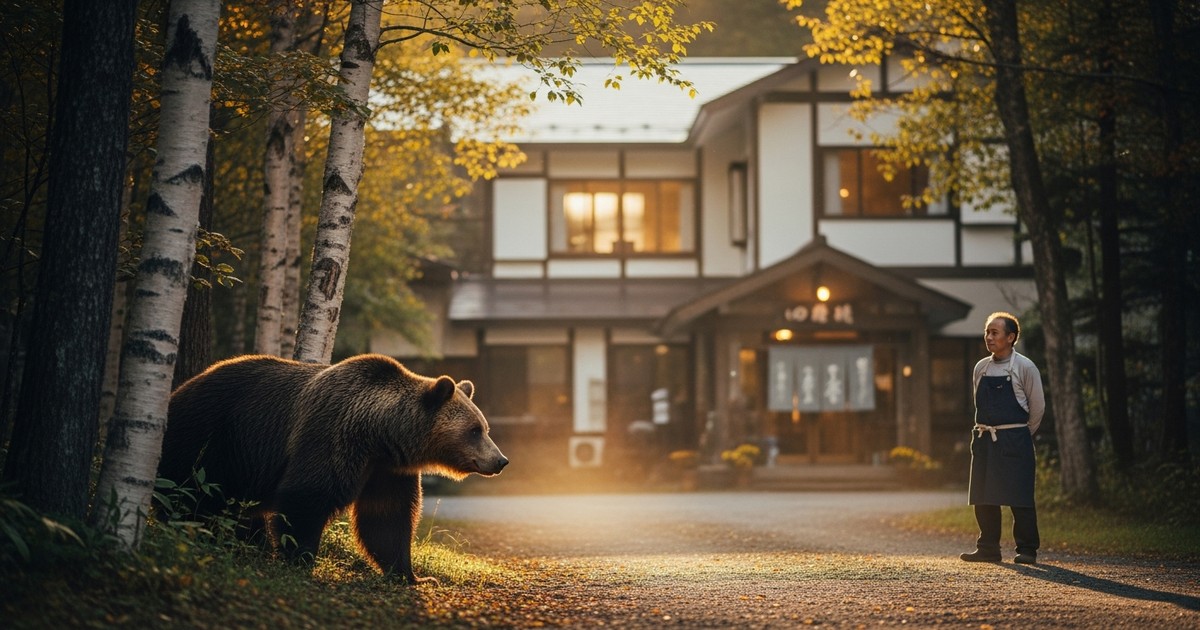
For anyone operating a minpaku (vacation rental) or ryokan (traditional inn) business in Hokkaido, taking precautions against brown bears is an unavoidable topic. Hokkaido is home to an estimated 12,000 brown bears, and in recent years the number of sightings in urban areas has been on the rise. While the great outdoors is a major draw for tourists, ensuring guest safety must remain the top priority for operators. This article explains the characteristics of areas in Hokkaido where brown bear countermeasures are essential for minpaku operations, along with concrete steps you can take.
Properties located in mountainous areas or adjacent to forests face a risk of bear encounters that is incomparably higher than in urban areas. Most guests come from other parts of Japan or overseas and typically lack sufficient knowledge of or vigilance toward brown bears. As an operator, implementing proper countermeasures and providing clear information is critical both for preventing accidents and for building a base of repeat guests.
Below, we walk through practical knowledge that every minpaku or ryokan operator should know: how to identify areas prone to bear sightings, specific equipment-based countermeasures, methods for informing guests, and how to coordinate with local authorities.
Characteristics of Areas Requiring Brown Bear Countermeasures for Minpaku Operations in Hokkaido
Brown bears do not appear in every part of Hokkaido. However, even in a major city like Sapporo, bear sightings are reported almost every year in the mountainous fringes of the Minami and Nishi wards. According to Hokkaido’s 2023 statistics, bear sighting incidents across the prefecture totaled roughly 3,500, with several resulting in injuries to people. When selecting a location for a minpaku property, it is essential to check historical sighting data for the area.
Areas considered particularly high-risk include the Shiretoko Peninsula (around Shari Town and Rausu Town), the foothills of the Daisetsuzan mountain range (around Kamikawa Town and Higashikawa Town), the area along the Hidaka mountain range (around Hidaka Town and Niikappu Town), the Shakotan Peninsula through the Shiribeshi region (around Yoichi Town and Niki Town), and the Jozankei area in Sapporo’s Minami Ward. In these regions, any property located within a 500-meter radius of a forest or river should be considered high-risk.
Shiretoko Peninsula and the Eastern Hokkaido Region
The Shiretoko Peninsula is a registered UNESCO World Natural Heritage site and has the highest density of brown bears in Japan. It is estimated that roughly 0.3 to 0.5 bears inhabit each square kilometer, and sightings near residential areas in the Utoro district of Shari Town occur on a near-daily basis. If you operate a minpaku in this area, bear countermeasures should be treated as a fundamental part of your facility’s infrastructure. Something as simple as how food waste is managed can dramatically affect how often bears appear, so be sure to implement the specific measures described later in this article.
The Daisetsuzan and Kamikawa Region
The Kamikawa region, home to Mt. Asahidake and Sounkyo, sees strong demand for minpaku as a base for hiking and skiing. Brown bears begin their activity in late April and appear frequently along riverbanks through the autumn salmon run season. If you operate a minpaku property in the rural areas of Higashikawa Town or Biei Town, having fruit trees or corn fields on your property can attract bears. Neglecting to manage the surrounding environment poses a danger not only to your guests but also to local residents, making cooperation with the community essential.
Sapporo’s Minami Ward and the Jozankei Area
Sapporo is a major city with a population of approximately 1.97 million, yet most of Minami Ward’s land area is covered by forest and mountains. Jozankei Onsen, which attracts around 2.4 million visitors annually, is a popular destination with strong demand for new minpaku openings. However, brown bear sightings within Sapporo city limits average around 200 incidents per year, with the vast majority concentrated in Minami Ward. Because the boundary between this area and the urban center is somewhat blurred, guests can easily let their guard down—making an arrival briefing especially important here.
Concrete Equipment-Based Measures to Keep Brown Bears Away from Your Property
The foundation of any bear countermeasure strategy is “removing attractants.” Brown bears have an extraordinarily keen sense of smell and are believed to be able to detect food odors from as far away as 2 kilometers. In other words, a minpaku property with inadequate waste management is, in effect, creating its own risk of attracting nearby bears. Below are specific equipment installations and operational rules that every property should adopt.
Installing Bear-Resistant Waste Storage
Standard plastic bins or netted trash collection stations are no match for a brown bear’s strength. An adult brown bear can exert roughly 500 kilograms of force with its forelegs, meaning a simple lid will be easily destroyed. What’s recommended instead is a sealed, steel or stainless-steel waste storage container. In North America, purpose-built units known as “bear-proof containers” are widely used, and comparable products are available in Japan for roughly ¥50,000 to ¥150,000 per unit. Position the storage container at least 10 meters from the building to avoid creating a path that draws bears toward the structure.
Installing Outdoor Lighting and Sensors
Brown bears are generally crepuscular, meaning they are most active from dusk through early morning. Installing motion-activated LED lights around the perimeter of your property can help deter bears from approaching. Each unit typically costs between ¥5,000 and ¥15,000, and depending on the size of your property, installing 4 to 8 units is a reasonable benchmark. Adding infrared trail cameras allows you to monitor nighttime wildlife activity and adjust your countermeasures based on observed patterns. Trail cameras generally cost between ¥8,000 and ¥20,000 per unit.
Installing Electric Fencing
In areas with particularly high bear activity, such as the Shiretoko Peninsula or along the Hidaka mountain range, installing an electric fence around the perimeter of your property is also an effective option. Electric fencing is widely used in Hokkaido’s agricultural sector, with installation costs typically running ¥30,000 to ¥80,000 per 100 meters. Electric fences are highly effective at directly preventing incursions—in one case in Shari Town, bear intrusions onto the property dropped to zero after installation. That said, to protect the safety of guests and pets, it’s important to consult a specialist regarding warning signage and fence layout design.
Providing Guest Information and Conducting Safety Briefings
Just as important as equipment-based measures is providing guests with clear information. International guests in particular tend to underestimate the danger posed by brown bears, and there have been reports of guests taking risky actions—such as approaching a bear to take a photo. A multi-layered approach that combines a check-in explanation with posted signage throughout the property is essential.
Creating a Check-In Briefing Sheet
Include a dedicated page in your guest welcome guide covering brown bear precautions. At minimum, this should cover four points: “times of day when bears are active (dusk through early morning),” “what to do if you encounter a bear (do not run—maintain eye contact and back away slowly),” “never leave food or trash outdoors,” and “how to properly dispose of barbecue leftovers.” Preparing this in four languages—Japanese, English, Chinese, and Korean—will cover the vast majority of your guests. If you outsource the translation of a template to a professional service, expect to pay roughly ¥20,000 to ¥50,000 for all four languages.
Using Signage and Pictograms Throughout the Property
Post bear-safety rules in three key locations: the entryway, the kitchen, and the trash collection area. Using pictograms in addition to written text allows guests to understand the rules intuitively, regardless of language. If you design your own A3-sized poster visually conveying three key messages—”always dispose of trash in the storage container,” “never leave food outdoors,” and “avoid going out alone at night”—printing costs run just a few hundred yen per sheet. Laminating the poster will make it durable enough for outdoor display.
Lending Bear Bells and Bear Spray
For guests planning to hike or cycle in the surrounding area, we recommend offering a free bear bell lending service. Bear bells cost between ¥500 and ¥2,000 each, so even purchasing ten would cost less than ¥20,000 upfront. You should also consider keeping bear spray recommended by Japan’s Ministry of the Environment (such as Counter Assault) on hand at your property. Each canister costs roughly ¥8,000 to ¥12,000, but it can serve as a last line of defense to protect a guest’s life in an emergency. Be sure to also provide an instruction card explaining how to use it.
Building a Cooperative Framework with Local Government and the Community
It is not realistic for a minpaku operator to handle brown bear countermeasures entirely alone. Coordination with municipal bear-sighting reporting systems and local hunting associations is essential. The Hokkaido Prefectural Government publishes “Bear Advisories” and “Bear Sighting Information” on its website, with the Environmental Life Division of each regional promotion bureau serving as the point of contact.
As a concrete first step, consult with the town or city office where your property is located regarding bear countermeasures for minpaku facilities. Municipalities with high bear activity, such as Shari Town and Kamikawa Town, sometimes offer operator-focused countermeasure manuals or subsidy programs. For example, some municipalities offer subsidies covering 50 percent of the cost of installing electric fencing, up to a maximum of ¥200,000. It’s also worth sharing your contact information with the local hunting association, as this can help ensure a smoother emergency response if a bear does appear.
Legal Responsibilities and Insurance Coverage Every Minpaku Operator Should Understand
Minpaku and ryokan operators bear legal responsibility for the safety of their guests. The Hotel Business Act stipulates obligations regarding hygiene and safety management, and the Private Lodging Business Act likewise requires operators to implement safety measures. If a guest is injured by a brown bear and it is determined that the operator failed to take reasonable precautions, the operator could be held liable for damages.
Enrolling in facility liability insurance is essential. Standard facility liability insurance policies typically cost between ¥10,000 and ¥50,000 per year in premiums, with plans commonly covering up to ¥100 million in personal injury liability. In addition, keeping records of the equipment investments and guest information you’ve provided as part of your bear countermeasures serves as evidence, should the need arise, that you fulfilled your duty of reasonable care. Be sure to keep photos and records documenting the installation date of your waste storage container, the content of your posted signage, and distribution records for your briefing sheets.
A Seasonal Schedule for Brown Bear Countermeasures
Because brown bear behavior patterns vary significantly by season, your countermeasures should be adjusted accordingly throughout the year. Rather than applying the same measures year-round, focusing your efforts during periods of elevated risk allows you to allocate your limited budget and labor more efficiently.
Spring (April–June): The Post-Hibernation Alert Period
Brown bears emerge from hibernation between late April and May and travel over wide areas in search of food. During this period, some bears are especially hungry and more aggressive, and this season also overlaps with wild vegetable foraging season, raising the risk of accidents. Once fruit trees on your property begin to bloom, be sure to install protective netting before the fruit ripens, or arrange to harvest the fruit early. This is also the time to inspect the batteries and wiring of any electric fencing.
Summer through Autumn (July–October): Peak Activity Season
Brown bear activity peaks between July and October. September and October in particular see a surge in sightings along rivers and near forests, as the salmon run overlaps with the ripening of tree nuts and berries. In areas where minpaku occupancy rates rise during this period, be sure to increase the level of caution communicated to guests. Effective measures include adding a note about bear awareness to booking confirmation emails, conducting check-in briefings in person, and setting motion sensor lights to their highest sensitivity.
Winter (November–March): Time to Review Your Measures
Brown bears typically enter hibernation around December and remain inactive until roughly March. While the direct risk from bears is lower during this period, it’s the ideal time to repair equipment and review your countermeasures ahead of the next season. Completing tasks such as repairing electric fencing, checking waste storage containers for wear, and updating signage during the off-season means you won’t be caught off guard when bears emerge from hibernation in spring.
Talk to Stay Buddy Inc. About Brown Bear Countermeasures for Your Minpaku Property
Operating a minpaku in Hokkaido offers strong appeal thanks to the region’s natural beauty and drawing power, but safety management—including brown bear countermeasures—requires specialized knowledge and ongoing effort. From selecting a property location to preparing guest guidance materials and filing the necessary paperwork with local authorities, handling everything alone can be a significant burden.
Stay Buddy Inc., a vacation rental management company, provides comprehensive support covering everything operators need—from safety advice tailored to a property’s specific location and environment, to the creation of multilingual guest briefing materials, to day-to-day facility management. Drawing on our extensive experience, we can offer concrete recommendations for the unique risk factors associated with properties in Hokkaido.
Building a solid safety management framework, including brown bear countermeasures, directly contributes to higher guest satisfaction and better reviews. Creating an environment where guests can stay with peace of mind ultimately leads to higher occupancy rates and improved revenue.
If you’re considering opening or improving a minpaku operation in Hokkaido, please feel free to reach out to Stay Buddy Inc. We’ll propose the optimal management plan tailored to your property’s specific circumstances.