Leave Your Vacation Rental Management to Us
Free Online ConsultationVacation Rental Success Starts with a Cohesive “World” Built Through Interior Design
Countless property photos fill vacation rental booking sites. Among them all, what makes a guest stop scrolling, feel captivated, and think, “I have to stay here”? Cleanliness? Affordability? Location? These matter, of course, but the true differentiator lies elsewhere.
Let’s get straight to the point.
The greatest weapon for winning in today’s vacation rental business is a cohesive “world” created through interior design and decor. Vacation rentals are no longer simply about providing a place to sleep. This is a business of selling “experiential value”—the enjoyment guests find in the time they spend within that space—and that value is created through a meticulously crafted atmosphere, down to the smallest detail.
In this article, we’ll explain concrete methods for “world-building” that will help your property stand out from the competition and leave a lasting impression on your guests’ memories.
Why a “Clean Room” Alone No Longer Wins Today
There was a time when clean spaces with the basic amenities were enough to sustain a vacation rental business. But now that the market has matured, the landscape has changed dramatically.
Reason 1: The Commoditization of Vacation Rentals
The number of vacation rental properties has exploded, and especially in urban areas, “generic” rooms with white walls and unremarkable furniture are everywhere. To guests, these properties all look the same. The inevitable result is fierce price competition, which squeezes profitability.
Reason 2: Guests Are Seeking “Experiences”
With the rise of social media, particularly Instagram, the criteria for choosing accommodations have shifted dramatically. “What kind of photos can I take here?” and “What extraordinary experience awaits me?” have become critical factors in choosing a hotel or rental property. Guests don’t just want to stay somewhere—they want to enjoy, document, and share the time they spend in that space.
Reason 3: A Strong Concept Justifies Premium Pricing
“I want to stay here even if it costs a bit more, just to experience this space.” A concept powerful enough to inspire this kind of thinking generates value that goes far beyond price alone. A truly unique space becomes a powerful tool for escaping price wars and achieving stable, high-value, high-occupancy performance.
[A 3-Step Approach] Building an Unforgettable “World” for Your Vacation Rental
So how do you go about creating a compelling atmosphere? There’s no need to overthink it. Let’s build your narrative following these three steps.
STEP 1: Define Your Concept (The Story)
Everything begins with envisioning a story: “who” you want to welcome to your property, and “what kind of experience” you want them to have.
- Narrow your target audience: Rather than “anyone welcome,” define a specific guest persona—such as “a couple in their 30s escaping the hustle of city life,” “two friends who love art,” or “a family with young children.”
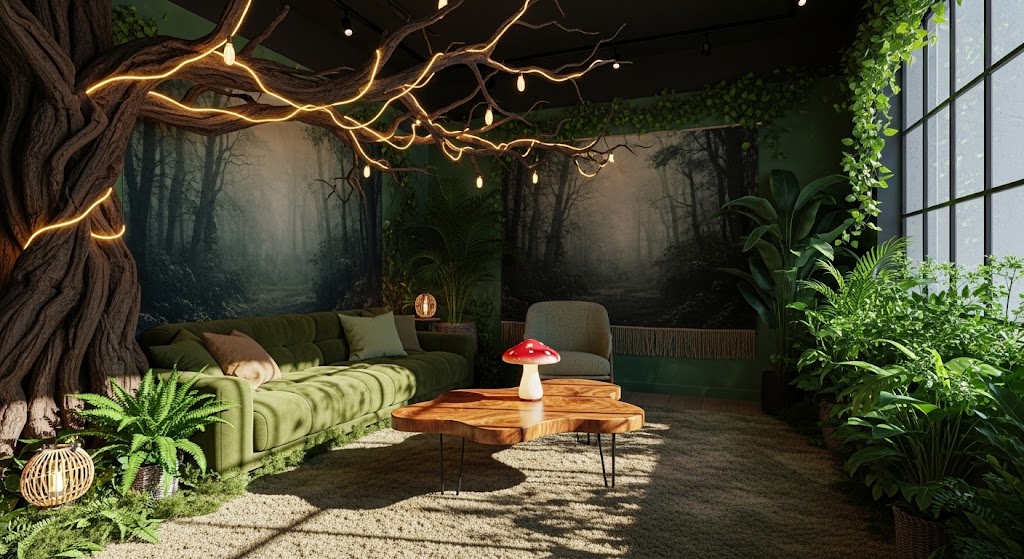
- Put your theme into words: Try expressing the experience you want to offer your target guests in a short phrase. Ideas like “quiet reading time in a traditional Japanese house,” “a private theater immersing you in the world of film,” or “a weekend spent as if living in a Scandinavian forest cabin” give you a clear direction—the more specific, the less room for confusion later when selecting interior elements.
- Leverage your property’s unique character: Incorporating elements like the view from the window, the building’s history, or local characteristics into your concept adds richer depth to your story.
STEP 2: Choose Your Key Colors and Materials
Once your concept is set, translate it into the colors and textures of your space.
- Limit your key colors to three: A base color that dominates the overall space (walls, ceiling, etc./70%), a main color that takes center stage through furniture and curtains (25%), and an accent color that adds playfulness through cushions and small decor items (5%). Keeping this ratio in mind creates a cohesive, well-balanced space.
- Create consistency through materials: Choose the primary materials for your space based on your concept. For example, “Japanese modern” might call for solid wood, washi paper, and diatomite plaster, while “industrial” might favor iron, concrete, reclaimed wood, and leather. Unifying your material palette instantly elevates the authenticity of your world.
STEP 3: Deepen the Story with Furnishings
With your concept as the script and your colors and materials as the set design, it’s finally time to bring in the cast—your furnishings and decor.
- Statement furniture: Sofas, beds, dining tables—large pieces of furniture that occupy significant visual space—define the skeletal structure of your world.
- Lighting that sets the mood: Combining ceiling lights with indirect lighting that creates shadow and depth, striking pendant lights, and floor lamps for task lighting can dramatically transform the atmosphere of a space.
- Small details that reinforce the concept: From cushions and rugs to art, houseplants, tableware, and even a single book—every item is a prop in your story. With the mantra “the devil is in the details,” maintain a strict policy: if it doesn’t fit the concept, it doesn’t belong.
In Practice: Popular Concept Examples and Interior Design Points
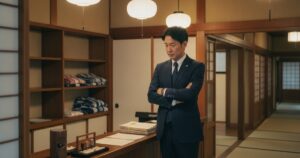
Example 1: Japanese Modern (Target: International tourists, couples seeking tranquility)
- Key points: Embrace traditional Japanese architectural elements like tatami mats, shoji screens, and wooden lattices, while combining them with modern furnishings such as low-profile sofas, simple beds, and refined indirect lighting. Key colors include white, black, gray, and earth tones drawn from wood and soil. Eliminate unnecessary decoration to create a serene space reminiscent of Zen.
Example 2: Scandinavian Natural (Target: Groups of friends, young couples, families)
- Key points: Build a bright space based on white or light gray, and add warmth with wooden furniture such as oak. Layer in playful accent colors—mustard yellow or smoky blue, for example—through cushions and artwork. The appeal lies in the cozy, warm atmosphere epitomized by the Danish concept of “hygge.”
Example 3: Industrial (Target: Style-conscious younger groups, groups of male travelers)
- Key points: Use exposed concrete walls and intentionally visible piping as design elements. Signature pieces include black iron furniture, weathered reclaimed wood tables, and substantial leather sofas. An advanced technique is adding a touch of warmth to this rugged, cool aesthetic with houseplants and fabric accents.
Pitfalls to Avoid When Building Your Concept
- Eliminate signs of everyday life entirely: Colorful detergent bottles, tangled power cords, and notices taped haphazardly to walls—these everyday-life elements pull guests out of the extraordinary and back into the mundane. Finding ways to store these items out of sight is essential.
- Watch out for self-indulgent “overkill”: Getting too caught up in your concept can turn your space into something resembling a theme park. Overly quirky designs or excessive decoration can actually make a space feel uncomfortable. Keep the overall balance in mind, and remember the importance of calming “negative space.”
- Consider durability and maintenance: Furniture and materials that look stylish but break easily or are difficult to clean aren’t suitable for vacation rentals. Since your space will be used by many different guests, choose items with as much attention to durability and ease of cleaning as to design.
Conclusion: A Well-Crafted Concept Is Your Most Powerful Marketing Tool
Building a distinctive concept for your vacation rental isn’t just a matter of personal interior decorating taste. It’s a highly strategic business activity that gives your property a “story,” offers guests a genuine “experience,” and creates a “decisive advantage” over your competitors.
A meticulously crafted atmosphere translates into compelling photos that shine on OTA sites, becoming an incredibly powerful “marketing tool” that captures guests’ hearts and keeps them coming back.
Ready to Turn Your Concept into a Profitable Strategy?
“I understand the importance of having a concept, but I don’t know what kind of atmosphere would actually ‘win’ for my property or area.”
“I have design ideas, but I’m not sure how to translate them into actual revenue.”
These concerns are ones every host who wants to succeed in the vacation rental business will inevitably face. Even the most beautiful concept, if it doesn’t function as a viable business, remains nothing more than a personal indulgence.
At Stay Buddy, Inc., your vacation rental management partner, we’ve accumulated vast amounts of data through operating numerous properties, giving us deep insight into “which areas and which concepts generate the highest revenue.”
We don’t simply help you create a stylish space. We conduct data-driven market analysis to plan and design a “winning concept” that maximizes your property’s potential, oversee the interior design direction, and provide ongoing pricing strategy to maximize revenue after launch—all as a comprehensive, one-stop service. We are profitability professionals.
Why not work with us to transform your “vision” into sustainable “profit”? If you’re interested in moving beyond intuition-based interior decisions toward a data-driven, strategic approach to space design, please feel free to reach out for a consultation.