Leave Your Minpaku Management to the Experts
Free Online ConsultationMinpaku (private lodging) holds strong potential as a profitable business, but it also carries the risk of trouble arising over noise, garbage, parking, and similar issues. Especially in shared apartment buildings or densely populated residential areas, friction with neighbors can become a major problem, sometimes making it difficult to continue operating at all.
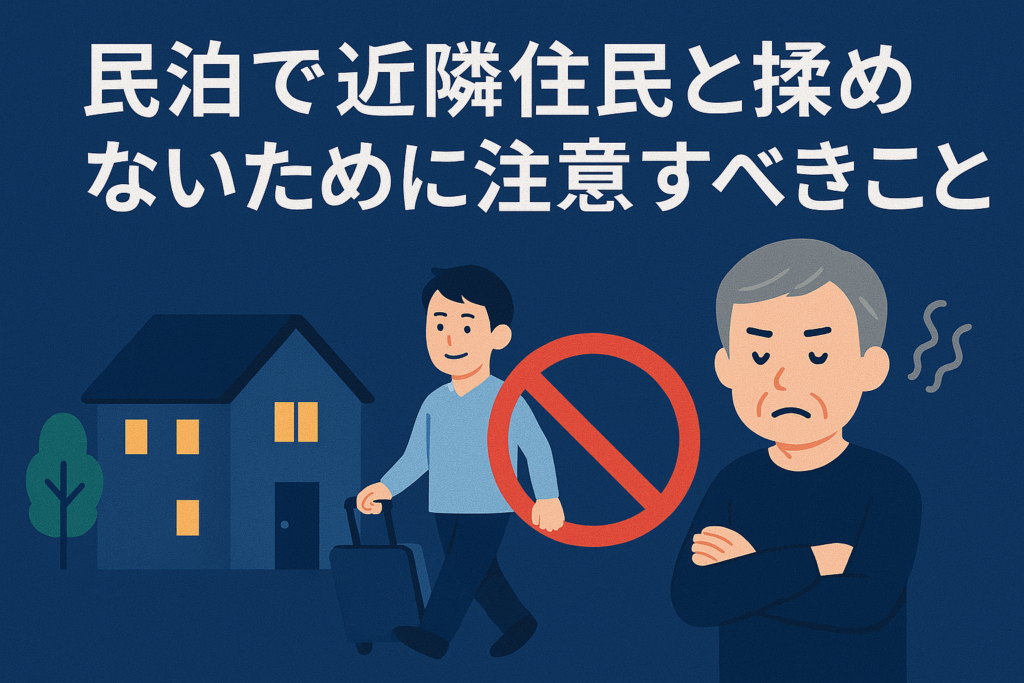
This article focuses on the theme of “what to watch out for to avoid disputes with neighbors when running a minpaku property,” and provides a comprehensive summary of the precautions and considerations owners should keep in mind. Beyond simply following municipal regulations and laws, we’ll explain in detail the ideas and communication methods that help guests enjoy their stay comfortably while minimizing the burden placed on neighboring residents.
1. Why Minpaku Tends to Cause Trouble with Neighbors
Friction with neighbors is a common part of life in shared housing or densely populated areas, not just with minpaku. However, minpaku differs significantly from regular rental housing in that “guests come and go on a short-term basis.” The fact that the people using the property—tourists, business travelers, and so on—have vastly different daily rhythms and cultural backgrounds is one of the key factors that increases the likelihood of trouble.
1-1. Differences in Daily Rhythms and Culture
When overseas tourists use a minpaku property, their sense of timing and behavior can differ greatly from that of the host or neighboring residents. Guests unfamiliar with the Japanese residential environment often cause problems—arriving late at night and eating or partying into the small hours, or making loud noises when departing early in the morning.
In addition, if guests don’t speak Japanese, or if the stay begins without them fully understanding the rules about noise or garbage disposal—even when explained in English—neighboring residents are more likely to become suddenly confused and file complaints.
1-2. Issues Concerning Garbage Disposal and Use of Shared Areas
When running a minpaku property in an apartment or condo building, many people share common areas such as the entrance, hallways, and garbage collection points. Rules that regular residents are used to—such as which day to put out the trash, how to sort it, and what hours noise restrictions apply—are often completely unknown to short-term guests.
As a result, trouble arises, such as guests talking loudly in the hallway late at night or leaving garbage in the wrong place or at the wrong time. Since a decline in the security or cleanliness of shared areas directly affects the daily lives of other residents, dissatisfaction tends to build up quickly.
1-3. Concerns Over Security and Privacy
Because minpaku properties see an unspecified number of guests coming and going, neighboring residents and condo management associations may view them as a security risk.
Not knowing who might show up and when leaves many residents feeling uneasy or resistant. Concerns about privacy—such as “Is the key handover method secure?” or “Could someone bypass the elevator or auto-lock system?”—tend to arise easily, so owners and managers need to give this careful consideration.
2. Complying with Laws and Municipal Rules
When operating a minpaku property, it’s essential to properly comply with laws such as the Private Lodging Business Act (the “Minpaku Law”) and the Hotel Business Act (for simple lodging establishments).
If neighboring residents file a complaint with the local municipality, it can reveal that the property is operating illegally without the proper permits, potentially forcing a suspension of business. Operating a minpaku property in a properly licensed, officially recognized manner also plays a significant role in easing the concerns of local residents.
2-1. Filing Notifications and Obtaining Permits
- Private Lodging Business Act: Allows operation for up to 180 days per year. Requires submitting a notification form and completing the necessary documentation before undergoing review by the municipality.
- Hotel Business Act (Simple Lodging): No limit on operating days, but requirements such as fire safety equipment tend to be stricter.
- Special Zone Minpaku: A form of operation conducted under local ordinances in areas designated as National Strategic Special Zones.
The explanations given to neighbors and the conditions of operation vary depending on which system you choose, so be sure to check the latest information on your municipality’s website or at their information desk.
2-2. Municipal Ordinances and Explanatory Meetings
Since the Private Lodging Business Act came into effect, many municipalities have established their own ordinances that specifically define matters such as operating days, business hours, and how to notify neighboring residents in advance. In urban areas especially, strict rules are sometimes put in place to prevent disputes with residents, such as requiring “a manager to be reachable within a certain range” or specifying “response times for phone inquiries.”
In some cases, ordinances require holding preliminary briefings or notifying neighboring residents in advance, so be sure to follow your local municipality’s guidance. Taking these steps makes it easier to gain the understanding of neighboring residents and can be expected to reduce trouble down the line.
2-3. Displaying the Required Signage
When operating under the Private Lodging Business Act, you must post a sign on the property indicating that it has been properly registered under the law.
This gives both local residents and guests reassurance that the property is “operating through proper, official procedures.” Be sure to post the sign somewhere clearly visible from outside, such as the entrance or gate, and to clearly display the required information (such as the notification number).
3. Communicating the Rules to Guests
3-1. Noise and Etiquette in Shared Housing
To prevent noise-related trouble, it’s important to clearly communicate to guests, from day one of their stay, things like “quiet hours” and “no talking or gathering in shared areas of the building.” It’s effective to prepare a house rules manual written in multiple languages, including English, and to explain the rules verbally at check-in as well.
Guests need to be especially mindful of loud voices and TV or music volume during nighttime hours (after 10 or 11 p.m.), so consider setting up a system to send periodic reminders through an app or tablet.
3-2. Clarifying Garbage Disposal and Sorting Rules
Garbage issues are a frequent source of complaints with minpaku properties. The following measures can help avoid disrupting residents’ daily routines:
- Providing designated garbage bags and labels: Keep various types of garbage bags on hand in advance so guests don’t have to guess.
- Photo-illustrated manuals: Use visuals to show sorting procedures for each category, such as burnable trash, plastics, and PET bottles.
- Collection day calendars: Post them on the wall in both English and Japanese, or provide them through a digital guide.
To prevent guests from leaving trash behind in the room when they check out, be sure to also clearly explain the garbage disposal location and method for checkout day.
3-3. Security Precautions
You need to clearly explain building-specific security rules, such as how to handle keys, how to use the auto-lock system, and restrictions on access to shared areas. This is especially important for guests from overseas, who may be unfamiliar with the layout of Japanese apartment buildings and the general sense of security in Japan—so clear explanations in English or other languages are essential.
Spelling out specific prohibited behaviors—such as “making noise in the elevator,” “knocking on other residents’ doors,” or “looking through other people’s mailboxes”—helps prevent misunderstandings.
4. Consideration and Communication with Neighbors
4-1. Advance Greetings and Regular Updates
Ideally, before starting a minpaku business, you should personally inform neighboring residents and the building’s management association about when and how you’ll be starting operations. In some areas this is a legal requirement, but even where it isn’t, simply having the owner or manager show their face and greet the neighbors goes a long way toward putting residents at ease.
Additionally, providing periodic updates on how operations are going and explaining what measures are being taken to prevent trouble helps build a relationship where residents feel they can reach out if something comes up.
4-2. A Contact Point for Handling Complaints
If there’s no easy way for neighboring residents to get in touch when issues like guest noise or garbage arise, frustration can build up and lead them to post complaints on social media or go directly to the local municipality. Ideally, you should have a system in place that allows 24-hour contact through multiple channels—phone, email, messaging apps, and so on. If the owner lives far away, it’s also effective to entrust this contact point to a trusted management or agency company.
4-3. Expressing Gratitude and Participating in Local Events
To highlight the ways minpaku contributes to the local economy and gain residents’ understanding, active engagement is key—for example, supporting local festivals or shopping district events, or joining community clean-up activities.
Small, everyday gestures—like giving a modest year-end gift as a token of “thank you for your continued support,” or responding sincerely whenever an issue does come up—go a long way toward preventing bigger problems down the road.
5. Trouble Beyond Noise and Garbage, and How to Handle It
5-1. Parking and On-Street Parking Issues
It’s also common to hear of trouble where guests arriving by car park without permission in open spaces near the property, on other people’s land, or in shared areas. If the owner hasn’t secured a parking space, guests have no choice but to search for a nearby coin-operated parking lot on their own.
Prepare information in advance—such as “We recommend XX Parking, a 5-minute walk away and open 24 hours”—and make a strong request that guests not park without permission. It’s also effective to put up signs or markings on the property reading “No Parking” or “Private Property – Unauthorized Parking Prohibited.”
5-2. Boundaries with Neighboring Properties and Shared Hallways
In detached houses where the boundary with the neighboring property is unclear, or in condo buildings with narrow shared hallways, guests may accidentally walk onto neighboring land or leave belongings in the wrong place. If the property boundary is hard to identify, marking it with a fence or plantings and clearly instructing guests not to enter the neighboring property can help prevent trouble.
In condo buildings, guests may also leave large suitcases in the shared hallway, blocking foot traffic, so setting up a dedicated luggage storage area can reduce stress for other residents.
5-3. Handling Mailboxes and Flyers
Short-term guests may check out without sorting through mail or flyers that have accumulated. A cluttered mailbox can make neighboring residents feel uneasy about security, or give the impression that the property is being left unattended.
It’s a good idea to establish a rule where cleaning staff or a management agency regularly checks the mailbox, disposing of misdelivered mail or unwanted flyers. Even when there are long-term guests staying, be sure to note in the manual that they are responsible for managing their own mailbox.
6. Making Use of Management and Operation Companies
6-1. Benefits of Hiring Professionals
If you’re a busy owner, or live far from your property, it can be difficult to handle all the communication with neighbors and guest support on your own. Hiring an operation or management company offers benefits such as:
- 24-hour availability: Able to respond promptly to things like nighttime noise complaints.
- Multilingual support: Able to communicate with guests in English, Chinese, and other languages.
- Accumulated know-how: Smooth handling of neighbor relations and trouble prevention based on past experience.
6-2. Scope of Services and Costs
The scope of services offered by management companies is wide-ranging, including check-in and check-out support, cleaning and linen changes, responding to guest inquiries, and handling complaints from neighboring residents. Costs vary depending on the number of properties and scope of services, but it’s common for a portion of revenue to be paid as a commission.
While there is a cost involved, it can significantly reduce the time and effort spent dealing with trouble and help avoid worsening relationships with neighbors—making it well worth considering.
6-3. Points to Consider When Choosing a Management Company
When choosing a company, it’s a good idea to check their track record, customer reviews, staff responsiveness, availability of nighttime support, and multilingual capability. It’s also important to consider whether they’re well-versed in local characteristics and municipal rules. A company with deep local ties often has valuable insight into the neighborhood and local government processes, which tends to make communication with residents go more smoothly.
7. Conclusion: Avoiding Trouble with Neighbors for Safe, Secure Minpaku Operations
Trouble with neighbors is one of the biggest concerns in the minpaku business, and if left unaddressed, it carries the risk of leading to a suspension of operations or damage to your reputation. It’s essential to properly follow laws and ordinances, thoroughly communicate the rules to guests, and have a contact system in place that allows you to respond immediately should complaints arise.
Small acts of communication—like explaining your plans and greeting neighbors in advance, or regularly expressing gratitude—can be the key to preventing major trouble down the line. It’s also ideal to take measures related to the property’s structure and facilities, such as noise and garbage countermeasures and security precautions, to create a space where both guests and residents can coexist comfortably.
By making good use of management and operation companies, owners can lighten their own workload while offering guests an even higher quality of service. Cooperating with the local community and paying close attention to the details are essential to running a minpaku business without friction with neighbors. Why not take this opportunity to review your operating setup, with the goal of building a comfortable relationship between guests, owners, and residents alike?
For Minpaku Inquiries, Contact Stay Buddy Inc.
If you’d like to run a successful minpaku business while avoiding trouble with your neighbors, please feel free to consult Stay Buddy Inc.
From legal compliance and operational management to guest etiquette guidance and emergency response, we offer detailed support backed by extensive accumulated know-how across a wide range of areas. Let’s work together to build a minpaku business that maintains good relationships with the local community while pursuing safety, security, and strong profitability. Please don’t hesitate to get in touch.